After a breast reduction, the incision line is supposed to stay closed while the tissue underneath heals. Sometimes it doesn’t. A small gap can open along part of the scar, and the area may look pink, moist, or slightly raw. This is wound separation, which is more common than most patients expect.
The real question is not just whether it happened, but how to tell when it’s a normal part of recovery and when it needs attention. Some separation heals on its own with simple wound care. Other cases point to infection, poor blood supply, or tension on the closure, and those need a prompt call to the surgeon. Knowing the difference protects both the result and the healing timeline.
The signs below come straight from how this complication actually behaves in practice, not from vague reassurances.
What Wound Separation Looks Like After Breast Reduction
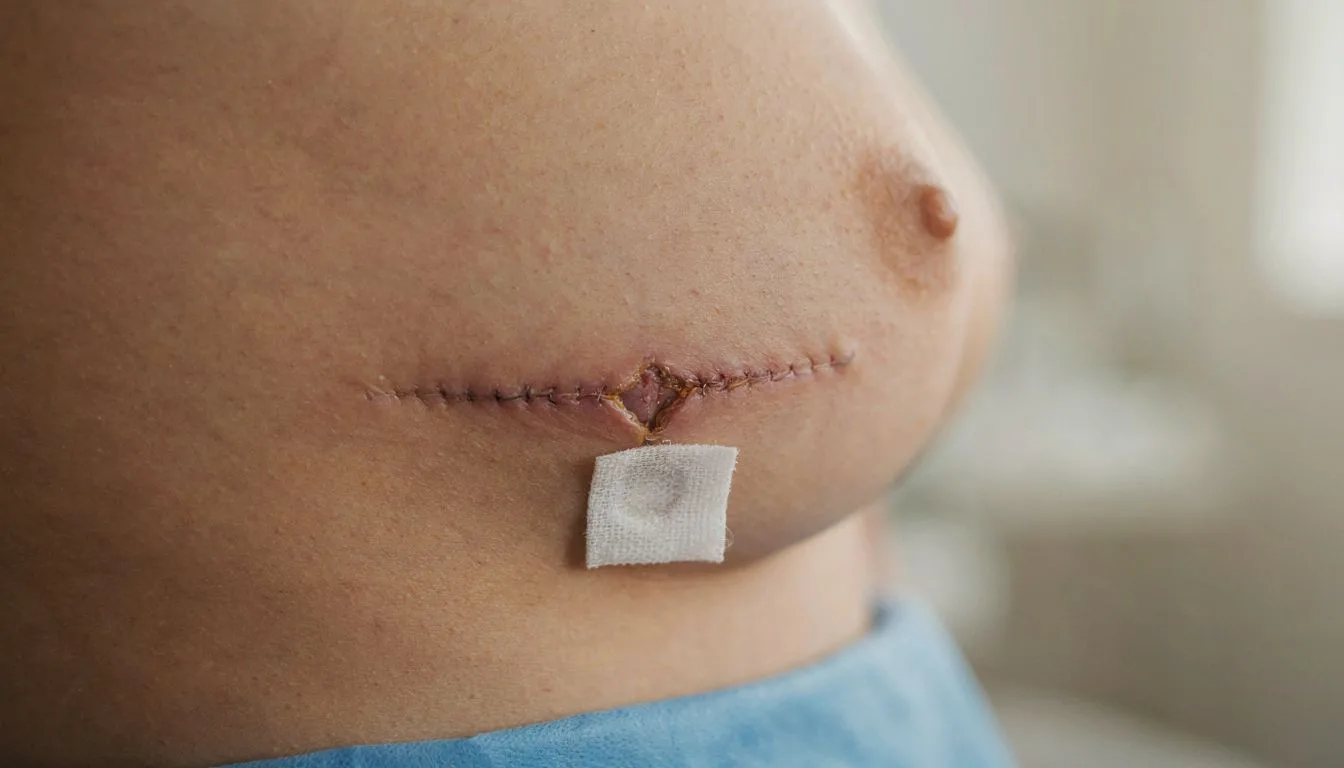
Most patients picture wound separation as a dramatic split in the skin, but in reality it tends to start small and easy to miss. The earliest clue is usually a soft, damp area along the incision where the edges no longer sit flush. You might notice a thin pink or straw-colored fluid seeping onto your bra or gauze, sometimes with a faint sweet or metallic smell. The skin around that spot often looks darker, slightly swollen, or has a yellowish film that won’t wipe away.
As the opening widens, a small slit or triangular gap becomes visible, and you may see a layer of yellow, pink, or reddish tissue underneath. This is granulation tissue, and although it can look alarming, it is part of the normal healing response. Some people describe the area as feeling tender, tight, or burning, while others feel almost nothing at all because numbness is common after surgery.
The location also gives useful information. Separation most often appears at the T-junction, where the vertical and horizontal incisions meet under the breast, because that point carries the most tension during healing. Taking a daily mirror check, with good lighting and a handheld mirror if needed, helps you catch these changes early and describe them accurately when you contact your surgical team.
Why Incisions Can Open During Healing
An incision on the breast has a lot working against it from day one. The skin here is thin, the area moves every time you breathe or shift position, and tension pulls in several directions at once. Knowing the forces at play helps you understand why even a well-closed wound can fall apart during the early weeks of recovery.
Several factors decide whether the edges of an incision stay pressed together or drift apart. They rarely work alone; usually a combination of them nudges the wound past its limit:
- Tension along the suture line from the weight of the new breast shape, especially at the T-junction where three flaps of skin meet.
- Reduced local blood supply after surgery, which slows the delivery of oxygen and nutrients the new tissue needs to knit together.
- Swelling that builds under the incision and pushes the edges outward before they have fully fused.
- Sudden movements of the arms or chest that stretch the fresh scar before collagen has had time to organize.
- Small collections of fluid (seroma) or blood (hematoma) that separate the wound surfaces and prevent them from bonding.
- Underlying conditions such as diabetes, smoking, or poor nutrition that weaken the healing response throughout the body.
Most openings trace back to one of these issues. Identifying which one is at work is the first step your surgical team will take, because the cause shapes both the fix and how long recovery will take.
Warning Signs That Need a Call to Your Surgeon
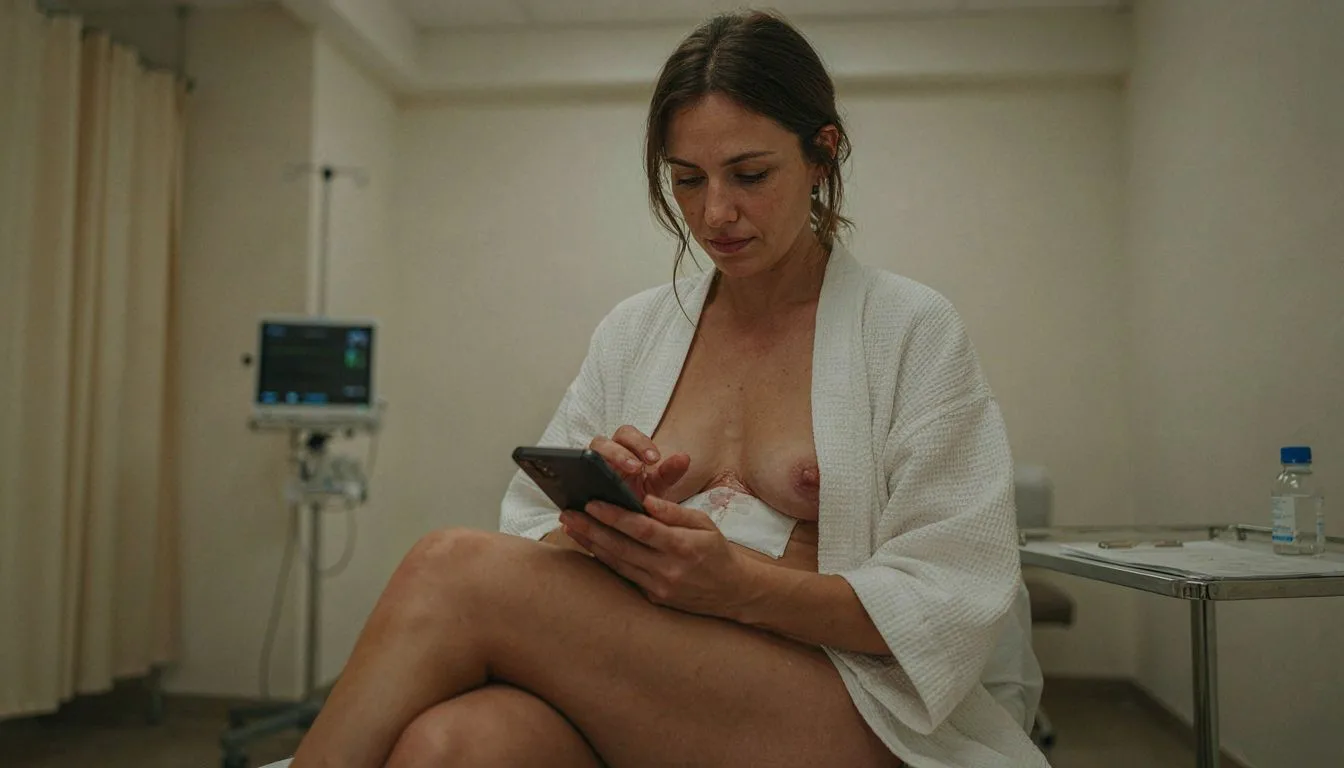
Some changes along an incision are normal parts of healing, but others are signals that the recovery has taken a turn and needs a professional eye. The key is learning to tell everyday soreness from a pattern that points toward a true wound separation after breast reduction.
A steady increase in pain after the first week, rather than a slow decrease, is one of the earliest red flags. So is any new swelling that makes one breast look noticeably fuller or more tense than the other. Fluid leaking from the incision line — especially if it is yellow, cloudy, or faintly sweet-smelling — suggests the open area is collecting more than just old blood.
Color changes matter as well. Skin around the opening that turns deep red, dusky, or develops a dark border should be photographed and reported the same day. Fever above 38 °C (100.4 °F), chills, or a general feeling of being unwell can point to infection riding alongside the separation, and that combination moves the situation up the urgency list.
Other cues are subtler but equally worth mentioning: a faint foul odor from the dressing, a sudden gush of fluid when standing up, or separation that visibly widens over twenty-four hours. Patients often describe feeling that something has “given way” inside the breast, a popping or tearing sensation that was not part of the earlier recovery.
Because wound separation after breast reduction can shift quickly from a small gap to a deeper opening, calling the surgeon’s office early — even for a concern that turns out to be minor — almost always saves time, discomfort, and uncertainty later.
How Doctors Decide the Right Treatment
Once your surgeon sees the open spot, the next step is figuring out how deep it goes and whether it is still healing underneath. Most clinics start with a quick in-person exam, gently lifting the edges of the wound to check the tissue beneath. From there, the decision tree usually branches in three directions, based on what they find.
If the separation is shallow and clean, with healthy pink tissue at the base, local wound care is often all that is needed. This usually means gentle cleansing, applying an ointment your surgeon recommends, and covering the area with a non-stick dressing. The opening then heals from the inside out through secondary intention, and your surgeon simply tracks its progress at follow-up visits.
When the gap is wider or the tissue looks sluggish, your surgeon may add treatments that actively support closure. Options can include specialized dressings that manage moisture, topical agents that encourage granulation, or, in select cases, a short course of negative pressure therapy to draw the edges closer together. Antibiotics are reserved for clear signs of infection, not used routinely for every open spot.
A small number of separations need a return to the operating room. This is most likely when the wound is large, the underlying support tissue has given way, or healing has stalled despite good home care. In that setting, your surgeon refreshes the wound edges and re-closes the area, sometimes with adjusted tension along the suture line to lower the chance of reopening.
Caring for an Open Area at Home
Once your surgeon has confirmed that the opening is small and not hiding anything deeper, most of the healing actually happens in your own hands at home. The daily routine around the incision becomes the deciding factor between a spot that closes in a week and one that drags on for a month. Think of each change as a small investment rather than a chore: a clean surface, gentle support, and steady conditions give your body room to lay down new tissue.
The habits below are the ones that consistently make a difference while the gap is still open.
- Keep the wound clean with the cleanser your surgeon recommends, usually a gentle saline rinse rather than soap or alcohol, and pat — never rub — the area dry with a clean gauze pad.
- Apply the prescribed dressing in the order you were taught, changing them only as often as instructed so the new tissue is not torn off with the old one.
- Wear a supportive, non-underwire bra day and night to take tension off the suture line and keep the edges of the opening gently approximated.
- Avoid lifting, pushing, or reaching above shoulder height for the first stretch, because arm movement pulls on the chest and widens the gap.
- Sleep on your back with a small pillow under each arm so you do not roll onto the incision during the night.
- Watch the edges and the surrounding skin each time you change the dressing, and call the office if redness, drainage, or pain starts to creep outward.
Patience matters as much as technique here. New pink tissue fills in slowly, and minor setbacks — a little extra drainage one day, a slightly wider edge the next — are common as long as the trend over a week is improvement. Give your body the calm, predictable conditions it needs, and stay in close contact with your team so small problems can be corrected before they grow.
What to Expect During Recovery and Follow-Up
Healing from an open incision is rarely a straight line. Most small areas close gradually over two to six weeks, with the edges drawing inward week by week. Early on, you may notice light pink or yellow drainage, mild tenderness around the rim, and a thin scab that softens during dressing changes. As granulation tissue fills the gap, the spot often looks shallow and beefy red before fading to a softer pink.
Your surgeon’s follow-up schedule is the anchor of the whole process. Visits are usually spaced every one to two weeks until the area is closed, then stretched out to monitor scar maturation over the next several months. Bring a list of questions, photograph the wound between visits if your team asks you to, and report any new drainage, odor, or widening right away rather than waiting for the next appointment.
Patience matters more than speed here. Pushing activity too soon can reopen a fragile edge, while protecting the site lets new tissue build a stronger foundation for the final scar.
FAQs
How do I know if my incision is starting to open after a breast reduction?
You'll usually notice it before you see it. A warm, tight, or pulling sensation along part of the incision, sometimes with a pinkish widening of the scar line or a small gape that wasn't there the day before, is often the first sign. If you spot any fluid leaking, a sudden gap in the closure, or an area that looks like it's splitting apart, treat it as wound separation starting and reach out to your surgeon the same day.
What signs of wound separation mean I should contact my surgeon right away?
Call your surgeon promptly if you notice increasing redness, warmth, or swelling around the edges of the separation, especially with red streaks spreading outward. Drainage that turns yellow, green, or foul‑smelling, a sudden fever or chills, or rapidly widening of the wound gap are also clear warning signs. Even persistent pain that is getting worse rather than better, or any tissue that looks dark or dusky, warrants an urgent call so your team can evaluate the area before it progresses.
Can wound separation after breast reduction heal on its own, or will I always need treatment?
Small areas of wound separation often close on their own with proper wound care, but larger openings or those that persist beyond a couple of weeks usually need medical treatment to heal properly. The depth, location, and amount of tension on the incision all influence whether it can resolve without intervention. If the wound is draining, enlarging, or showing signs of infection, it's important to have it evaluated rather than wait for it to close on its own.