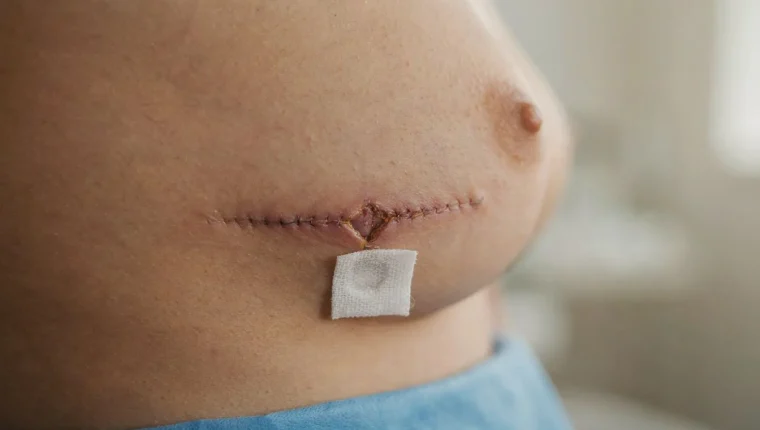
Most patients feel well enough to travel a few days after breast reduction in Turkey, but a long flight to Canada requires more than feeling decent. Air pressure, cabin humidity, limited mobility, and swelling can interfere with healing if you board the plane too soon.
The honest answer is that the decision depends on your surgical details, your recovery progress, and how your surgeon evaluates your readiness. A typical safe window for flying back to Canada after breast reduction in Turkey falls somewhere between 5 and 10 days post-op, assuming there are no complications such as wound healing issues, hematoma, or infection. Short-haul flights feel very different from a 10-hour journey across the Atlantic, so the duration of your specific route matters just as much as the surgery itself.
Pre-flight medical clearance and surgeon approval
Before you even think about booking that flight home, the most important conversation you need to have isn’t with the airline, it’s with your surgeon. Getting pre-flight medical clearance from the doctor who performed your procedure isn’t just a formality; it’s a safety checkpoint designed to catch problems that aren’t obvious to you yet, like a small seroma, delayed bleeding risk, or early-stage wound separation that compression alone won’t fix.
Your surgeon will likely want to see you in person around day five or six, which conveniently lines up with the earliest realistic travel window. At that visit, they’re checking incision integrity, drain output (if any remain), and your overall mobility. They will also review your in-flight medication plan, confirm whether your compression garment fits properly for several hours of wear, and write a brief medical letter summarizing your procedure, drain status, and clearance date. That letter becomes your passport through airport security questions and your safety net if anything feels off mid-flight.
If your surgeon hesitates or asks for an extra day, take that seriously. The clearance is the green light that turns a hopeful departure into a genuinely safe one.
Timeline for safe air travel after breast reduction surgery
The question of when it is actually safe to fly after breast reduction surgery is less about a single universal date and more about how the body signals recovery. Surgeons in Turkey generally look for two milestones before clearing patients for international flights: stable wound closure and the absence of fresh drainage from incision lines or drain sites.
Most surgical teams prefer a minimum waiting period that allows bruising to fade, initial swelling to plateau, and any drain tubes to be removed. Patients often ask whether earlier travel is possible when drains are out, incisions look dry, and pain is controlled without strong medication. The answer depends on how those milestones line up with the planned flight, not on the calendar alone.
- Short-haul flights (under 4 hours) are usually considered once incisions are fully closed and no drains remain, often around 7-10 days post-op for patients with straightforward healing.
- Long-haul flights (6+ hours) typically require a longer buffer because prolonged immobility, cabin pressure, and dehydration place extra stress on healing tissue, so 10-14 days is a common minimum.
- Patients with slower healing, those who had combined procedures, or anyone still requiring prescription painkillers may need to wait 3 weeks or more, regardless of how well they feel subjectively.
- Compression garments must be worn comfortably during the flight, and patients should be able to move their arms and shoulders enough to adjust position without sharp pulling on the incision lines.
- Surgeon’s written clearance should explicitly state the patient is fit to fly, specifying any conditions such as continued antibiotics, drain status, or follow-up arrangements.
What this means in practical terms is that the timeline is shaped by recovery evidence rather than travel convenience. A patient feeling “good enough” at day five may still have incision lines that have not fully sealed, and cabin pressure changes plus hours of sitting can strain those early closures. Waiting until the surgeon can point to objective healing markers tends to protect both the surgical result and the comfort of the long journey home.
Pressure changes, cabin environment, and surgical risks in flight
Once you’re cleared to board, the cabin itself becomes a small but meaningful clinical environment, and it’s worth understanding what your surgical site will actually face during the flight back to Canada. Commercial aircraft keep cabin pressure equivalent to roughly 6,000–8,000 feet of altitude, which means tissues expand slightly and oxygen saturation drops a few points, an effect most healthy passengers never notice but one that fresh incisions, drains, and healing fat flaps can react to.
Dry cabin air also plays a quiet role. Humidity often falls below 20%, which dehydrates skin, thickens any residual lymphatic fluid, and can make incision lines feel tighter than they did in your Istanbul recovery apartment. Add hours of limited mobility, recycled air, and the awkward geometry of trying to sleep upright with a seatbelt crossing sensitive tissue, and the real risk profile starts to look less glamorous than the boarding pass.
The most documented in-flight concerns for breast reduction patients are swelling flare-ups, small hematomas triggered by pressure shifts, and wound-edge stress from seatbelt compression or accidental contact with the tray table. Boarding with a clear understanding of these variables, and a surgeon who has already briefed you on warning signs, turns a long-haul flight from a leap of faith into a manageable stage of recovery.
Essential compression garments and in-flight comfort strategies
Your surgeon has already told you to wear your surgical bra on the plane, but what you actually put on under and around it can make the difference between a manageable flight and one that leaves you swollen and miserable for the next three days. The right compression setup does two jobs at once: it holds the incisions stable against seatbelt pressure and turbulence, and it keeps fluid from pooling in the lower breast pocket where gravity and cabin pressure love to push it.
Stick with the post-operative bra your clinic provided rather than swapping in a sports bra at the airport. Front-closure styles are far easier to adjust in a narrow seat, and a soft seamless band underneath prevents the underwire dig that can reopen fresh incision lines. Bring a second compression garment in your carry-on in case the first gets damp, stained, or uncomfortable mid-flight.
For long-haul comfort, layer a loose button-up shirt over the bra so security and cabin crew don’t press directly on the surgical site, and slide a small pillow or rolled sweater between the seatbelt and your chest. Set your seat to a slight recline, avoid crossing your arms overhead to lift luggage, and walk the aisle every ninety minutes to keep circulation moving through the chest wall.
Managing swelling, drains, and medications during the journey

Even with the right garments and the right seat, the hours between Istanbul and your Canadian gate are when your body decides whether the trip stays on track. The main job during the flight is keeping fluid from pooling in the chest, keeping drains working if you still have them, and keeping pain and inflammation under control without missing a dose. Treat the cabin as a small mobile clinic: a few simple habits make the difference between arriving tight and uncomfortable or arriving ready to be seen by your local team.
Because the cabin environment, the long sitting time, and the changes in pressure and humidity can all influence how your body responds in the first days after surgery, it helps to think through each routine item before you even reach the gate. Going over your medication timing, your drain routine, your swelling cues, your garment fit, and your emergency contacts one by one turns an unpredictable stretch into a sequence of small, manageable steps.
- Anti-inflammatory and pain schedule: Bring your prescribed pills in their original labeled boxes, pack a little more than you think you need, and set a phone alarm for every dose so cabin sleep and time zones do not stretch the intervals.
- Drain care if still in place: Most surgeons remove drains before you leave, but if yours are still attached, learn how to empty and record the output before boarding and carry extra collection bulbs, alcohol wipes, and a spare surgical bra in case one fails mid-flight.
- Swelling control in the seat: Stay lightly hydrated, skip salty snacks and alcohol, and do small shoulder rolls and ankle pumps every hour so fluid does not settle in the chest or lower legs during long periods of sitting.
- Compression garment checks: Re-check the band or bra every few hours, loosen briefly if your fingers start tingling, and make sure no fold of fabric is digging into an incision line under the seatbelt or against the armrest.
- Emergency contact on hand: Have your Turkish surgeon’s number saved on your phone, plus a written summary of the medications and procedure, so a doctor anywhere along the route can step in quickly if something unexpected happens.
Running through these habits once before takeoff and then again at each transfer keeps the basics second nature, so you are not learning them while the seatbelt sign is still on. Small acts of attention, repeated on schedule, protect the surgical result during the hours when no clinic is looking at your chest directly.
If a drain bulb suddenly fills faster than expected, if swelling becomes noticeably one-sided, or if pain climbs above what your medication handles, tell a crew member and ask whether the flight has medical support on board. Documenting the time, what you felt, and what you took will also give your Canadian follow-up team a clean timeline to work with once you land. Step off the plane knowing you managed each of these points with care, and the first hours on the ground will be a smoother transition rather than a recovery scramble.
Immigration, documentation, and follow-up planning upon arrival in Canada
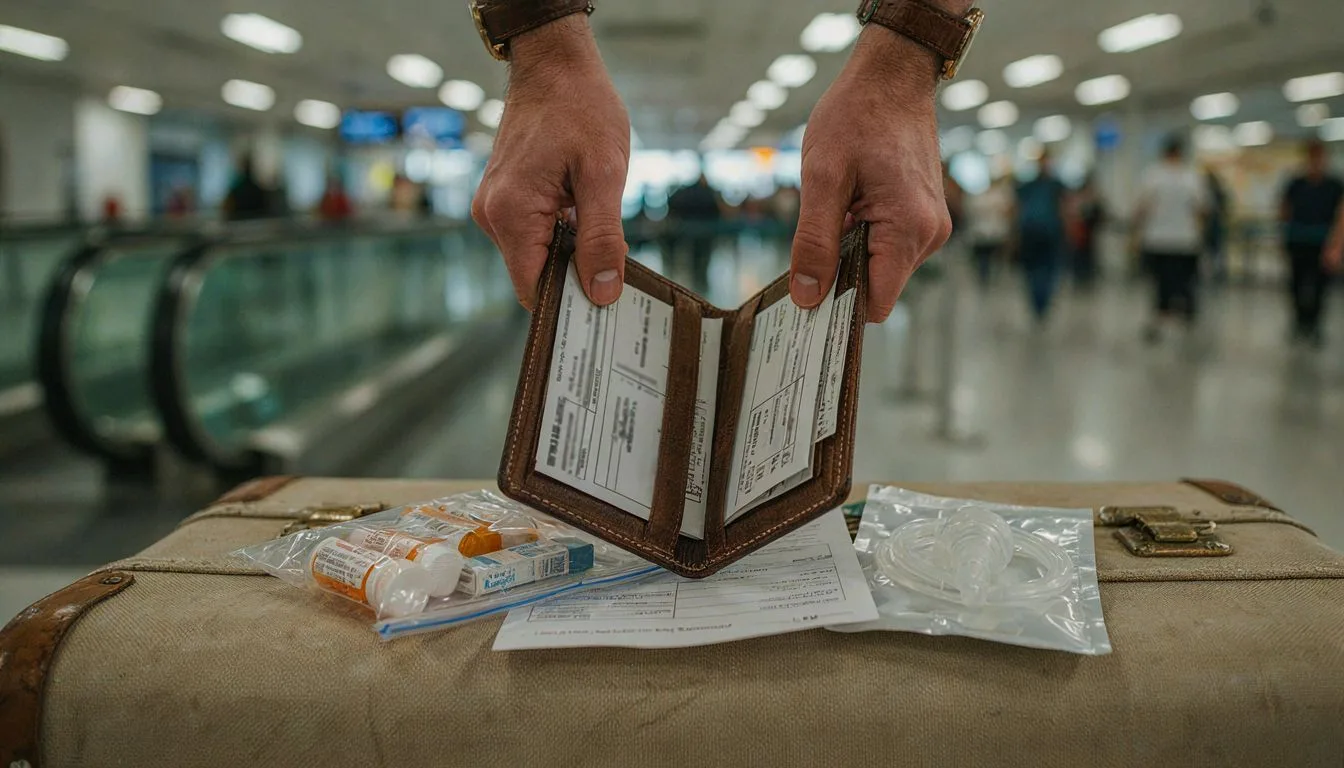
Once the wheels touch down, the focus shifts from surviving the flight to landing smoothly on Canadian soil. Keep your surgical file, surgeon’s letter, fit-to-fly clearance, and pharmacy receipts together in a single folder or travel wallet so border officers can verify your trip without delay. Declare any prescription painkillers or antibiotics honestly; carrying them in their original labeled packaging prevents confusion. If you still have drains, the discharge note explaining them in English is genuinely useful, since Canadian nurses may not be familiar with the specific brand used in Turkey.
Before you even leave the airport, schedule your first in-person follow-up with a local family doctor or plastic surgeon. Most clinics want to see patients around the ten-day mark, especially if you’re returning at five to ten days post-op with fresh incisions. Send your Turkish clinic a short update with photos and any drain output numbers so they can flag concerns your local provider should watch for. Save every contact in one place: the Turkish surgeon’s WhatsApp, the Canadian clinic, and a nearby hospital that handles post-operative wound checks.
Rest the first day, hydrate aggressively, and let someone else handle luggage. Have your prescribed anti-inflammatory and pain schedule lined up at your accommodation, a second compression garment ready for rotation, and groceries stocked so you can stay still. Keep watching for sudden swelling, fever, or asymmetric bruising, and call your surgeon immediately if anything feels wrong.
FAQs
Is it safe to fly from Turkey to Canada shortly after a breast reduction?
Flying is generally safe about 1–2 weeks after breast reduction surgery, once your surgeon confirms the incisions are healing well and there is no active bleeding, infection, or drain in place. Cabin pressure changes are not a major concern after the initial recovery period, but long flights increase the risk of swelling and deep vein thrombosis, so wearing compression stockings, moving periodically, and staying hydrated is recommended. You should obtain explicit clearance from your surgeon before traveling and follow any medication or activity restrictions they provide.
How long do most surgeons recommend waiting before booking a flight home after the procedure?
Most surgeons recommend waiting at least 5 to 7 days before booking a flight home after the procedure, though some advise extending this period to 10 to 14 days depending on the complexity of the surgery and the patient's individual recovery progress. The exact timing is typically determined at a follow-up appointment, where the surgeon assesses healing and clears the patient for travel.
Will cabin pressure or long flight duration affect healing or final results after breast reduction surgery?
Cabin pressure changes during flight can temporarily increase swelling and discomfort in fresh surgical incisions, but they do not alter the long-term healing outcome of a breast reduction. Most surgeons recommend waiting at least one to two weeks after surgery before flying, primarily to reduce the risk of blood clots and to allow initial wound healing. The duration of the flight itself has little effect on final results as long as you stay hydrated, move your legs periodically, and follow your surgeon's postoperative instructions.