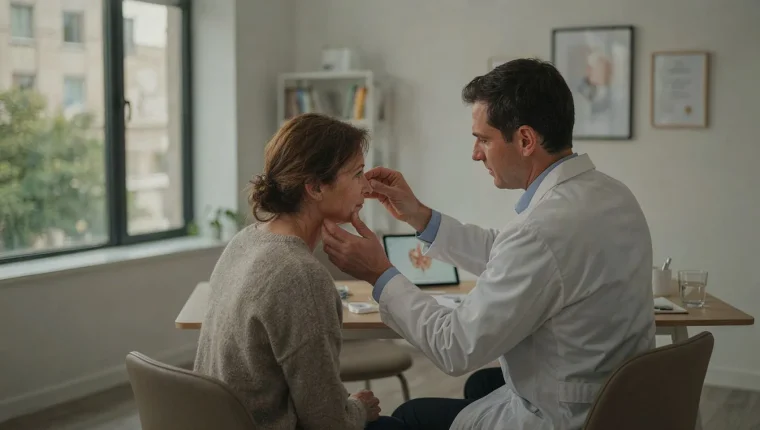
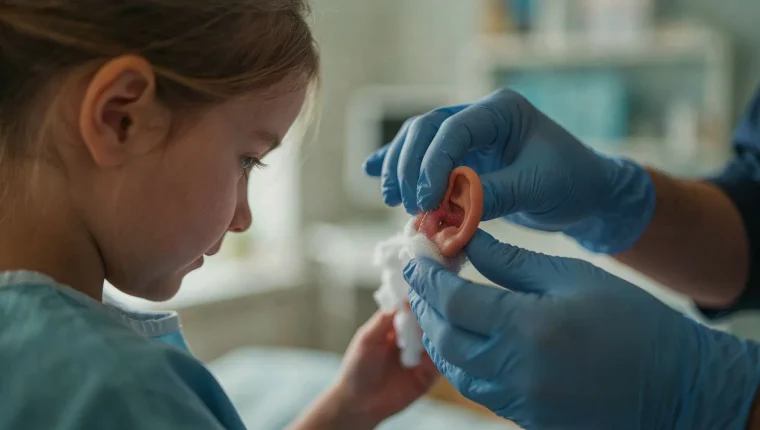
Most people start looking at otoplasty before and after photos for the same reason: they want to know what is actually possible for their own ears. Online images show genuine surgical outcomes, but they can mislead if you read them literally. Each photo shows a patient with a different ear shape, skin thickness, healing response, and facial structure — variables that no gallery can account for. A dramatic result on one person says little about what your surgery would achieve.
That gap between what photos seem to promise and what individual surgery delivers is where unrealistic expectations begin. The good news is that otoplasty consistently produces visible, satisfying changes in ear position and projection when the goal is well defined. The skill lies in interpreting those results honestly — knowing what you are looking at, why results vary, and which changes are realistic for you.
What Is Otoplasty and Who Is a Good Candidate
Otoplasty is a surgical procedure that reshapes the cartilage of the ear to correct protruding, oversized, or asymmetrical ears. Importantly, it changes only the ear’s appearance—hearing is not affected, because the structures responsible for sound processing are untouched. The surgeon typically repositions the ear closer to the head, reduces excess cartilage, or recreates a natural fold, depending on what the ear needs.
Candidacy depends on a few practical factors. Ears reach most of their adult size by around age five to seven, so children can safely have the procedure, and many surgeons recommend doing it early to spare them teasing. Adults are equally good candidates at any age, provided they are in reasonable general health, do not smoke, and have no untreated ear infections.
Motivation matters just as much as physical health. The most satisfied patients want to correct something that has genuinely bothered them—often for years—rather than chasing a photo they saw online. People with realistic goals about improved balance and symmetry tend to be far happier than those expecting perfection.
A consultation does not replace this self-assessment; it confirms it. Your surgeon will examine ear structure, skin thickness, and cartilage flexibility, then tell you honestly what surgery can and cannot change for your specific ears.
Viewing Otoplasty Before and After Photos: What to Look For
Before and after galleries are the most persuasive part of any surgeon’s website, which is exactly why they deserve a careful eye. A well-curated gallery tells you a lot about a surgeon’s typical work, but a poorly chosen set of images can make average results look better than they are. The skill is knowing which details separate an honest example from a marketing shot.
When you review a gallery, these are the checks worth making every single time:
- Consistent angles and lighting — the before and after photos should be taken from the same distance, angle, and light setup. Dramatic lighting changes can hide or exaggerate the ear’s contour and make any result look more impressive than it is.
- Matching framing and hairstyle — hair covering one photo but pulled back in the other is a red flag. The full ear and surrounding skin should be visible in both images.
- Multiple patients, not one star case — a gallery built around a single best result tells you little. Surgeons confident in their typical work show a range of patients with different starting ears.
- Realistic healing stages — photos taken days after surgery will show swelling and bruising; images taken six months or later show settled, final results. Ask which you are looking at.
- Natural skin texture and scars — overly smoothed or retouched images suggest the surgeon is selling an image rather than showing real outcomes.
Beyond the technical quality of the images, look for patients whose ears resemble your own. Someone with mild prominence will not predict the outcome for significant asymmetry or a malshaped concha. If a gallery gives limited views — profile only, or no close-ups — ask the surgeon for additional examples during your consultation. Most experienced surgeons happily provide more photos, including cases similar to yours, and that willingness itself is a good sign about how they communicate.
The Typical Recovery Timeline After Ear Surgery
Recovery after otoplasty unfolds in stages, and knowing what happens when makes the waiting far less stressful. The most important thing to understand is that the final look you saw in photos was not created on the operating table — it develops gradually over weeks and months.
In the first few days, your ears will be wrapped in a protective bandage or dressing. You can expect soreness, tightness, and noticeable swelling during this period, and most people take about a week off work or school. Pain is usually mild to moderate and managed easily with prescribed medication.
After the initial dressing comes off, you will likely wear a soft headband — often for several weeks, especially at night. This protects the ears from being folded or pulled while you sleep and helps the cartilage settle into its new position. It is a small inconvenience that makes a real difference in the outcome.
Around the three to four week mark, most swelling has faded and the ears begin to look natural in everyday settings. Many patients return to exercise and normal routines here, though contact sports should wait longer.
Deeper swelling, however, can take three to six months to fully resolve. Fine details — the curves, shadows, and contours that make ears look completely natural — continue refining during this quiet phase. If your ears look slightly different from one another early on, remember that healing is rarely symmetrical in its timing, and patience is part of the process.
How Much Symmetry Improvement Can You Realistically Expect
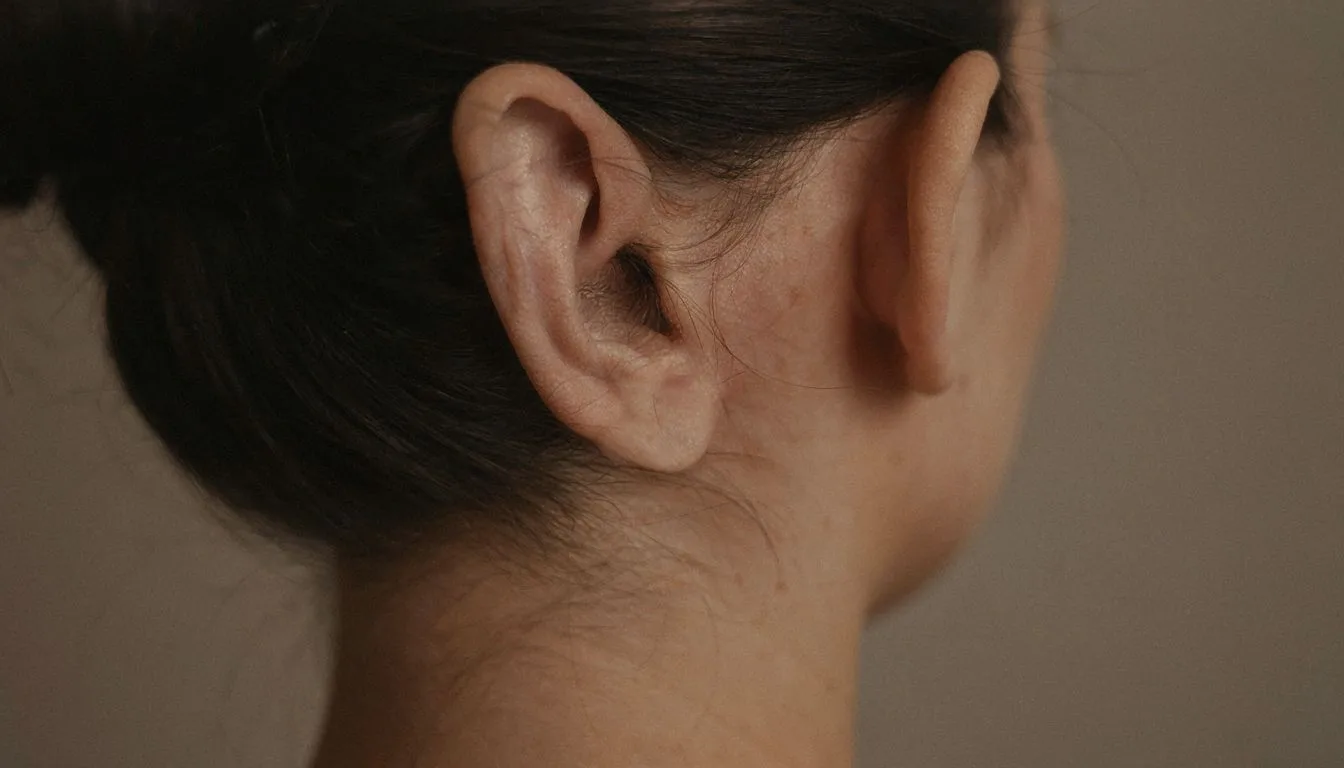
For most patients, the main goal of otoplasty is bringing the ears into balance, and surgery can achieve a dramatic improvement in this area. When one ear sticks out noticeably more than the other, correcting that difference often produces the most satisfying symmetry improvement of all, because the change is visible the moment the bandages come off.
It’s important to understand what “symmetrical” means. Even the most skilled surgeon cannot make two ears perfectly mirror-identical, and that’s not a flaw in the result. Natural ears are never exact copies of each other — not before surgery, and not after. Tiny variations in height, curve, or fold are what make ears look real rather than surgically manufactured.
In practice, this means you should measure your success against your own before photos, not against an idealized template. If the imbalance that bothered you is no longer what people notice when they look at your face, the surgery has done its job.
Surgeons typically aim for a difference of a few millimeters or less between the two ears, which is well within the range that appears completely natural to the eye. Anything more precise than that simply isn’t how human bodies work — or how they’re perceived.
Common Changes in Ear Position, Size, and Shape
Otoplasty produces three distinct kinds of change, and they behave very differently from one another. Understanding where the surgery is dramatic and where it is subtle helps you read your own results with a realistic eye.
Position is where you will see the biggest transformation. Reducing how far the ears project from the side of the head is the core of most ear pinning procedures, and the change is often visible immediately once dressings come off. Ears that once stuck out noticeably sit closer to the head, usually by several millimeters to about a centimeter of projection reduction.
Size, by contrast, changes far less. Otoplasty is primarily a reshaping operation, not a shrinking one. Unless ears are genuinely oversized, surgery rarely makes them smaller in any meaningful way, so expect the same overall dimensions you started with.
Shape is where the artistry happens. Surgeons correct the absent or folded cartilage contours that make ears look prominent or unusual, recreating the natural antihelical fold and refining the bowl of the ear. These contour corrections are subtle up close but have a large effect on how natural the overall result appears from the front and in photographs.
Factors That Influence Your Individual Results
So why won’t your result look exactly like someone else’s photo? The biggest reason is cartilage characteristics. Cartilage thickness and flexibility vary from person to person, and firmer, thicker cartilage holds a new shape differently than softer tissue. Two ears that look nearly identical before surgery can respond quite differently once reshaped.
Age and skin quality matter too. Younger patients generally have more pliable cartilage that molds easily, while adult skin may be thicker and less elastic, subtly affecting how the ear settles into its new position.
The surgical technique your surgeon chooses also plays a role. Reshaping with stitches, scoring the cartilage, or combining methods each produce slightly different contours, and experienced surgeons tailor the approach to your anatomy rather than following one formula.
Finally, your body’s own healing behavior — particularly your tendency to form scar tissue — shapes the final outcome. This is why the photos you reviewed earlier should serve as a general reference, not a personal promise. Your before and after comparison will always be uniquely yours.
When to Contact Your Surgeon During Healing
Most of what you feel after otoplasty is normal healing, and knowing the difference between expected discomfort and a genuine warning sign saves you unnecessary worry. Mild soreness, throbbing, temporary numbness around the incision, and swelling that gradually improves over the first weeks all fall within the expected course covered earlier in the recovery timeline. What you need is a clear sense of the specific symptoms that justify a call — signs that something is not following the usual path.
Contact your surgeon promptly if you notice any of the following:
- Spreading redness or warmth around the incision, especially when combined with increasing pain rather than improving comfort, can indicate infection.
- Discharge from the wound — any fluid that is cloudy, yellow, or has an odor should be reported, as clear minimal ooze in the first day is different from persistent drainage.
- Fever above 38°C alongside ear discomfort suggests your body is fighting something that needs evaluation.
- Sudden one-sided swelling or new asymmetry that appears days after surgery, rather than gradual settling, may signal bleeding or fluid collection under the skin.
- Uncontrolled bleeding that soaks through the dressing is never something to wait on.
Keep in mind that your surgical team has seen every one of these situations before and would much rather answer a call that turns out to be nothing than hear about a problem days later. If you are uncertain whether a symptom counts, that uncertainty itself is reason enough to reach out — early questions protect both your comfort and your final result.
FAQs
How long does it take to see final results in otoplasty before and after photos?
Most swelling settles within the first few weeks, so the "before and after" difference you see in photos is usually close to the final look by around six weeks. However, subtle swelling and contour refinements can continue for three to six months, and the final result is typically fully apparent at the six-month mark. This is why reputable surgeons often schedule before and after photography several months after the procedure rather than immediately. Comparing photos taken at least six months post-surgery gives you the most accurate picture of your otoplasty results.
Will there be visible scars after otoplasty?
In most cases, otoplasty scars are barely noticeable because surgeons hide the incision in the natural crease behind the ear. Within the "before and after" journey, any initial redness or swelling typically fades over the following weeks and months. Once fully healed, the scar usually blends into the ear's contours and remains virtually invisible to others. Following your surgeon's aftercare instructions closely helps ensure the smoothest possible healing.
Can otoplasty be performed on children, and at what age?
Yes, otoplasty can be safely performed on children, and most surgeons recommend waiting until around age 5 to 7, when the ears have reached nearly their full size and the cartilage is stable enough to hold its new shape. Performing the procedure at this age also has a practical benefit: correcting prominent ears before a child starts school can help prevent teasing and protect their self-confidence. Early correction often makes results easier to achieve, since younger cartilage is softer and molds more readily.