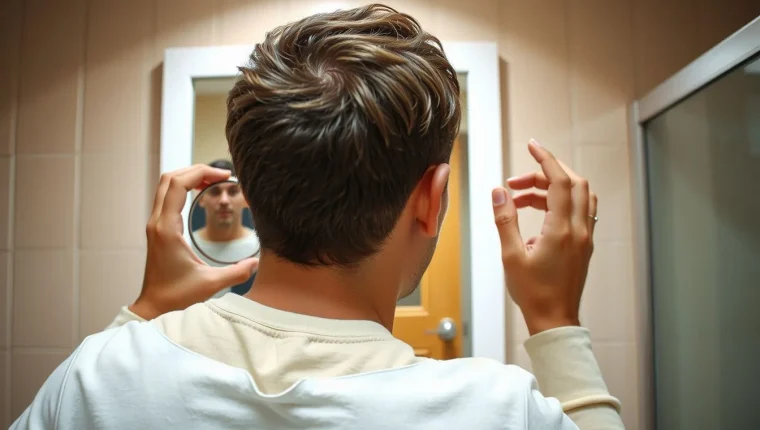
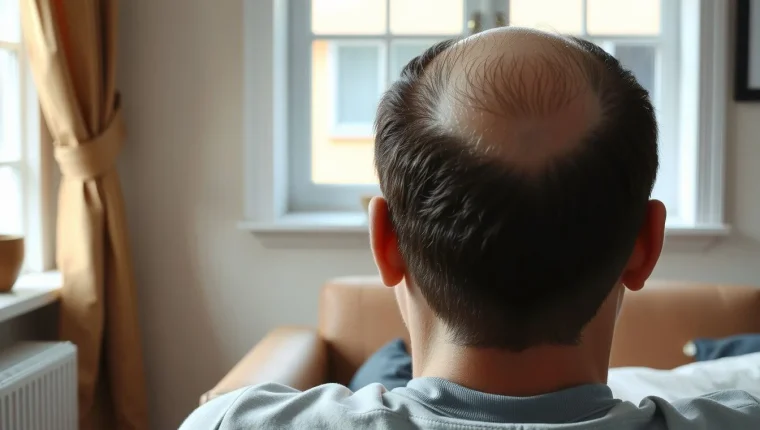
You notice in the mirror that your hairline is pulling back on one side while the other side still looks relatively intact. The asymmetry raises an obvious question: why would hair loss affect one side of the head more than the other? Hair loss patterns are not always uniform, and a hairline receding on one side is a recognized pattern rather than an oddity. The scalp is not a uniform surface; follicles in different regions can respond differently to the same internal and external factors. That means asymmetry usually has identifiable explanations, from how you sleep and style your hair to genetic and hormonal influences that do not act evenly across the scalp.
Understanding Why Hair Loss Can Be Asymmetrical
Hair does not grow as a single uniform sheet across the scalp. Each follicle runs through its own growth cycle, and follicles in different regions can sit at different phases, respond to different local blood flow, and carry different levels of sensitivity to circulating hormones. Two follicles just centimeters apart along the front of the scalp may therefore react very differently to the same internal signal or external stressor.
That regional variation is the foundation of follicular sensitivity. When one side of the hairline contains follicles that are more responsive to androgens, more prone to inflammation, or simply more vulnerable to tension and trauma, that side will thin earlier and more visibly than the other. The result is an uneven pattern that reflects local differences in how the scalp behaves, not a single uniform process acting equally everywhere.
This is why asymmetry should be read as a clue rather than a diagnosis. It points toward which factors may be at work, but it does not name them on its own.
Common Causes Behind a Receding Hairline on One Side
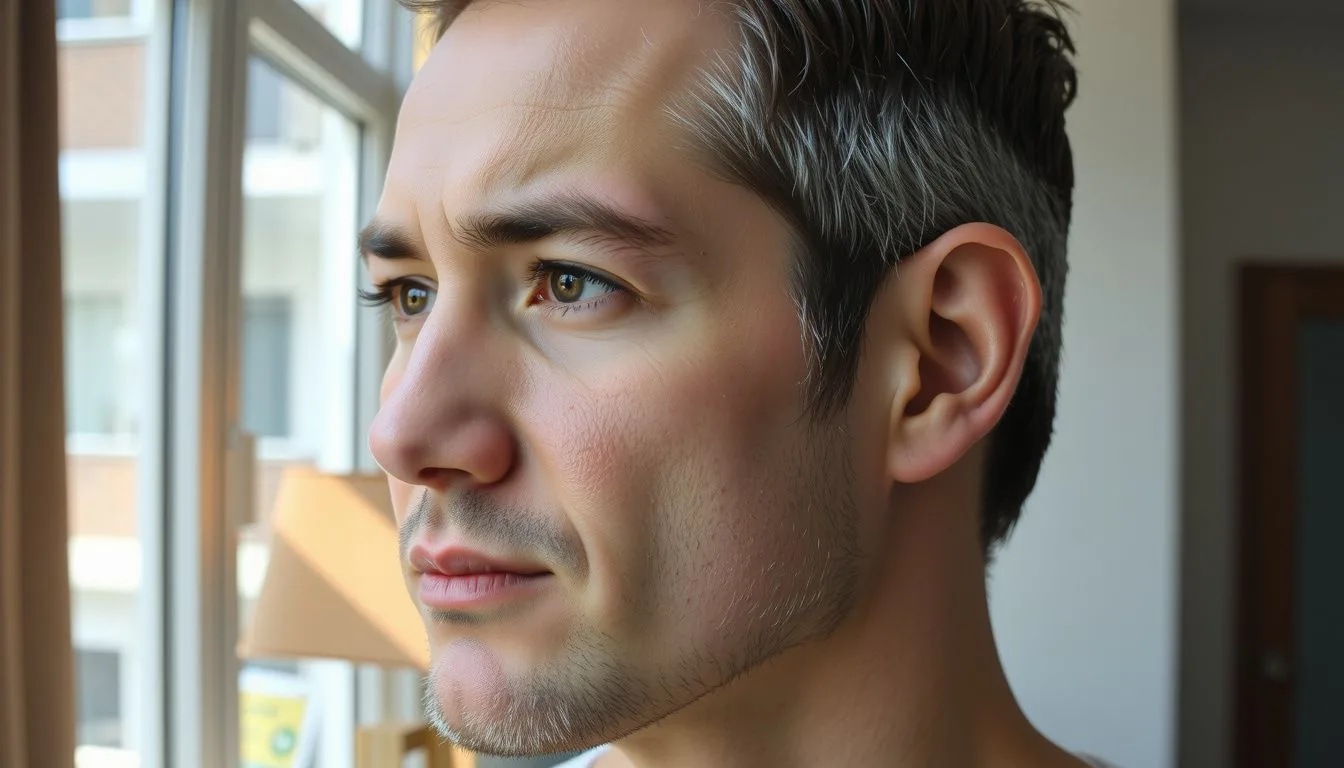
Not every one-sided hairline change comes down to biology. Some of the most straightforward explanations are mechanical or behavioral, and they tend to produce recession that favors whichever side of the head receives more repeated stress. One of the clearest examples is traction alopecia, a form of hair loss caused by prolonged pulling on the follicles. If you part your hair the same way every day, wear tight styles, or habitually sweep and tuck one side behind the ear, that side carries a greater load. Over months, the constant tension can thin the hairline unevenly, often with frayed or broken hairs along the edge rather than a smooth receding line.
Habitual behaviors reinforce the same pattern. Sleeping consistently on one side, resting a headset or helmet against a single temple, or repeated rubbing from glasses frames can all irritate one region more than the other. Scalp trauma plays a similar role: a burn, cut, or scarring event on one side may damage follicles permanently, so hair simply stops growing where the injury occurred. Conditions that preferentially affect a localized area, such as fungal scalp infections or patches of alopecia areata, can also mimic a one-sided recession by targeting a single zone.
A useful self-check is to compare your daily routines against the side that is thinning. If the two line up, a mechanical or localized cause is plausible and worth raising with a professional, who can distinguish it from the hormonal and genetic drivers covered next.
How Hormones, Genetics, and Lifestyle Contribute to Uneven Thinning
Pattern hair loss is driven primarily by genetics and hormones, but these forces do not act on the scalp like a uniform coat of paint. They act on follicles, and follicles differ. The inherited trait in androgenetic alopecia is not simply “hair loss” — it is androgen sensitivity, the degree to which individual follicles respond to dihydrotestosterone (DHT). That sensitivity is distributed unevenly across the scalp, which is exactly why a hairline can retreat faster on one side while the other holds its ground.
Genetic patterning adds another layer of asymmetry. The genes that shape hairline position, follicle density, and growth cycles are expressed regionally, not identically from left to right. Two sides of the same forehead can carry follicles with different receptor activity, different miniaturization timelines, and different resistance to the same hormonal environment. This is why two people with similar family histories can lose hair in noticeably different shapes.
Lifestyle factors modify this picture rather than cause it outright. Chronic stress, poor sleep, smoking, and nutritional shortfalls can shift the balance toward more shedding and slower regrowth, but they tend to amplify an existing pattern instead of creating a perfectly one-sided one from nothing. When you combine uneven androgen sensitivity, regional genetic expression, and lifestyle pressure, the result is rarely a symmetrical hairline — it is a layered, uneven one.
Conditions That Mimic One-Sided Hairline Recession
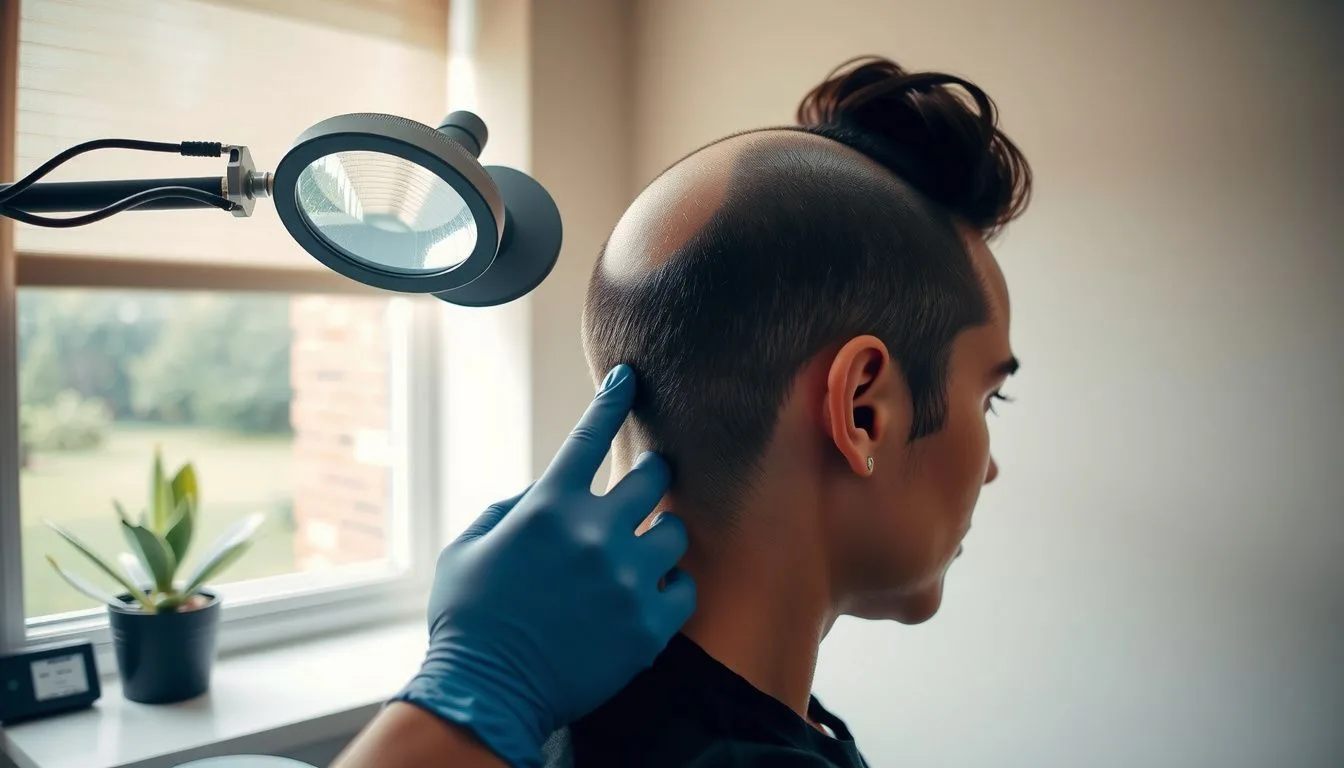
Not every uneven hairline is ordinary pattern loss. Several scalp and systemic conditions produce localized thinning that can closely resemble receding on one side, and recognizing their distinctive features matters because the appropriate response differs.
Alopecia areata is a common example. This autoimmune condition causes sudden, sharply defined patches of hair loss, sometimes at the frontal hairline, and the skin within the patch typically looks smooth rather than scarred. Unlike gradual recession, it can appear within days and may affect eyebrows or other areas.
Other conditions behave differently. Frontal fibrosing alopecia creates a band of permanent loss with subtle scalp changes, while fungal infections and thyroid-related shedding can thin hair unevenly. Ordinary recession, by contrast, develops slowly and follows a recognizable pattern.
When loss is sudden, patchy, or accompanied by itching, scaling, or tenderness, the features do not fit a common pattern. That mismatch is the clearest signal that professional assessment is worth pursuing.
When to Seek Professional Evaluation and What Treatment Options Exist
Certain changes justify more than watchful waiting. If the recession is rapid, accompanied by itching, burning, scaling, or patches of complete smoothness, or if you notice similar shedding on the eyebrows or beard, an evaluation is warranted. A timeline matters too: gradual change over years is less concerning than noticeable loss over weeks or months. Any sudden, one-sided thinning should prompt a dermatologist visit, since conditions such as alopecia areata and other inflammatory or scarring disorders can resemble ordinary pattern loss but require entirely different management.
At that appointment, a clinician typically reviews your history, examines the scalp, and may order bloodwork or a biopsy. Treatment categories generally include topical or oral medications, in-office procedures, and, in selected cases, surgical restoration. The right path depends on the underlying cause discussed earlier, so an accurate diagnosis comes first. Seeking assessment early widens the range of options available and improves the chance of preserving the hair you still have.
FAQs
Why is my hairline receding on one side but not the other?
A receding hairline on just one side usually comes down to how hair loss patterns, styling habits, or tension are distributed unevenly across your scalp. Male pattern baldness often progresses asymmetrically, so one temple can thin noticeably earlier than the other, and this difference is common rather than a sign of something unusual. Repeated tension from a consistent part, tight hairstyles, or habitual pulling on one side can also accelerate localized thinning. If the loss is sudden, patchy, or accompanied by itching or scaling, a dermatologist can rule out conditions like alopecia areata or scalp inflammation.
Can sleeping on one side cause uneven hairline recession?
Sleeping on one side does not directly cause hairline recession, since pattern hair loss is driven primarily by genetics and hormones rather than external pressure. However, consistent friction or tension from a pillow can contribute to traction-related thinning or breakage along the hairline, which may look like uneven recession over time. If you notice one-sided hairline changes, the more likely cause is androgenetic alopecia with an asymmetrical pattern, so a dermatologist can help confirm the real trigger.
Does a receding hairline on one side always mean male pattern baldness?
No, a receding hairline on one side does not always mean male pattern baldness. While androgenetic alopecia is the most common cause and often starts unevenly, one-sided recession can also result from traction alopecia, frontal fibrosing alopecia, hairstyling habits, or an underlying medical condition. A proper diagnosis by a dermatologist, often using trichoscopy, is the only reliable way to confirm the cause.