
Choosing between hair transplant Turkey vs Germany involves more than comparing advertised prices. International patients also need to consider clinic standards, surgeon qualifications, treatment planning, communication, aftercare, and the practical demands of travelling for surgery. Both countries offer reputable providers, but the quality and suitability of individual clinics can vary significantly. A destination alone cannot guarantee natural hair growth, high density, or a smooth recovery. You should assess the main decision factors realistically, from verifying a clinic and understanding the proposed procedure to evaluating total expenses and postoperative support. Your hair loss pattern, donor area, medical history, and personal expectations should ultimately guide the choice.
Hair Transplant Turkey vs Germany: Key Differences at a Glance
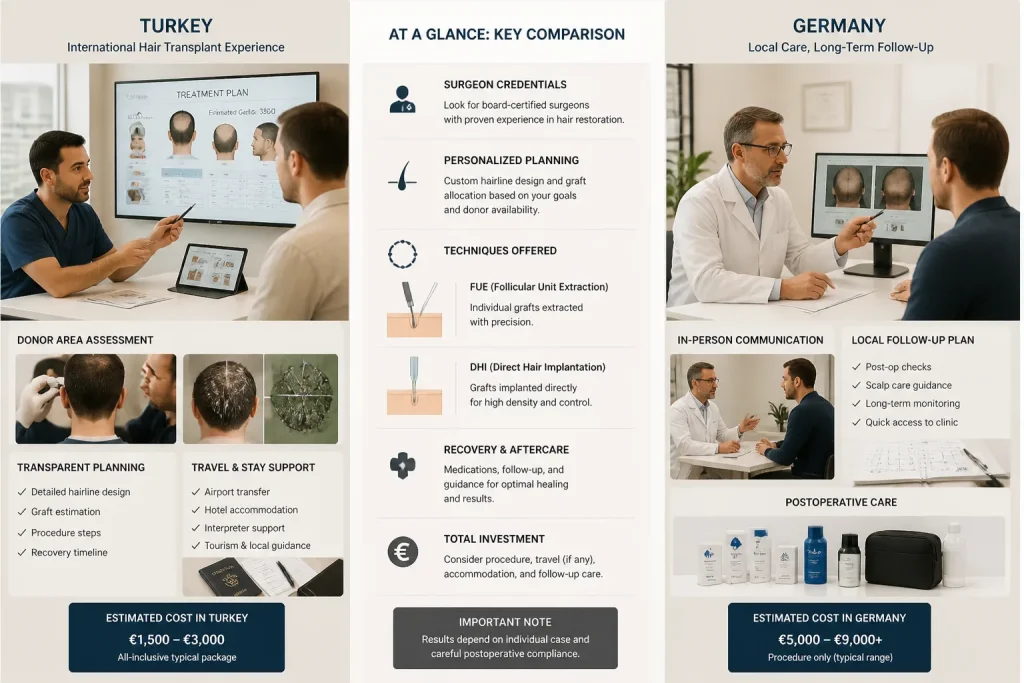
Comparing Turkey and Germany begins with the same practical questions: who will perform the procedure, how carefully will the treatment plan be designed, and what support will be available afterward? Turkey is often considered by international patients because clinics may offer coordinated packages and lower advertised costs. Germany may appeal to patients who prefer treatment closer to home, easier in-person communication, and simpler access to local medical care. These are broad tendencies, not guarantees of quality or value.
The clinic itself matters more than the country label. Patients should check whether a qualified surgeon personally evaluates the donor and recipient areas, explains realistic graft requirements, and remains involved during the procedure. The proposed technique, such as FUE or DHI, should be selected according to the patient’s hair loss pattern rather than marketing language. Travel time, accommodation, time away from work, and the ability to attend reviews can also influence the decision.
For international patients, continuity of care deserves particular attention. Before booking, confirm who handles medical questions after surgery, how remote assessments are arranged, and what happens if healing concerns arise after returning home. Comparing these details alongside clinical credentials, treatment planning, total expenses, and recovery logistics gives a more reliable picture than comparing headline prices alone.
How Clinic Standards and Surgeon Expertise Compare
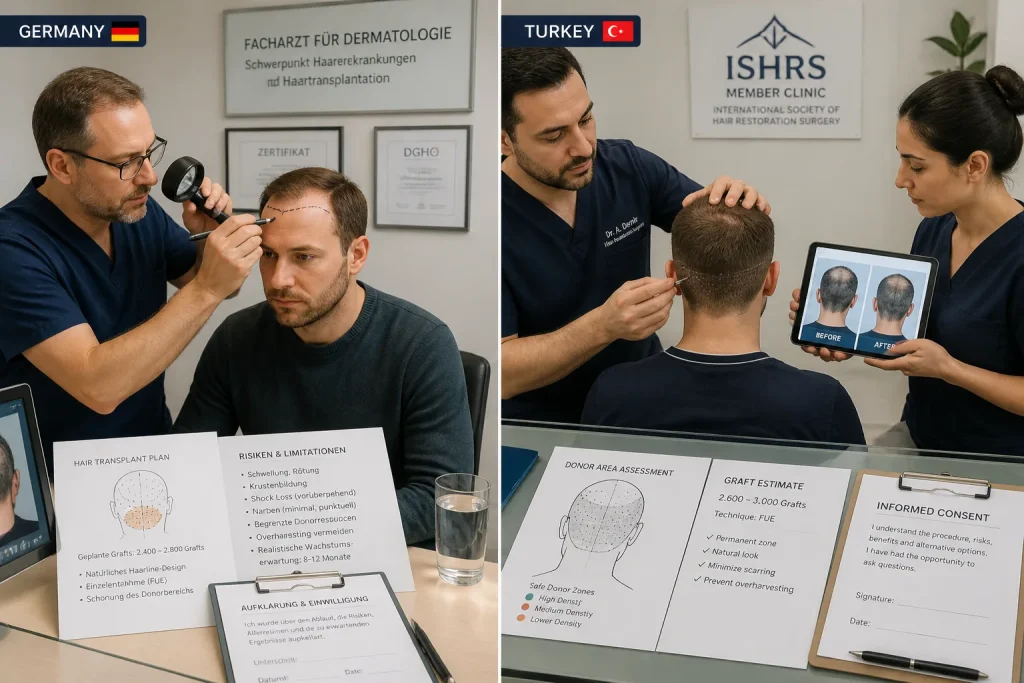
Clinic quality should be assessed through verifiable evidence rather than country reputation or an attractive package price. In both Turkey and Germany, begin by confirming the surgeon’s medical credentials, relevant hair restoration experience, and familiarity with the proposed procedure. Ask who will design the hairline, extract the grafts, create recipient sites, and place the follicles. The surgeon’s actual involvement can vary considerably between providers.
Check whether the clinic operates in a properly licensed medical facility and whether the consultation includes a realistic assessment of the donor area, existing hair loss, expected graft requirements, and possible limitations. A responsible treatment plan should explain risks such as poor growth, visible scarring, overharvesting, or an unnatural hairline instead of presenting guaranteed results.
Before-and-after photographs can help, but they should be evaluated carefully. Look for consistent lighting, similar angles, a clear time interval after surgery, and cases with comparable hair type, hair density, and degree of loss. Surgeon involvement is one of the most useful points to verify, particularly if a clinic uses technicians for substantial parts of the procedure.
Request written details about the planned graft count, donor and recipient areas, medical supervision, and what happens if the plan changes during treatment. Vague answers, pressure to book quickly, missing credentials, or reluctance to identify the operating team are warning signs in either country. A thorough consultation should leave you able to compare providers on clinical accountability, not marketing claims.
What Treatment Methods and Patient Care Can You Expect?
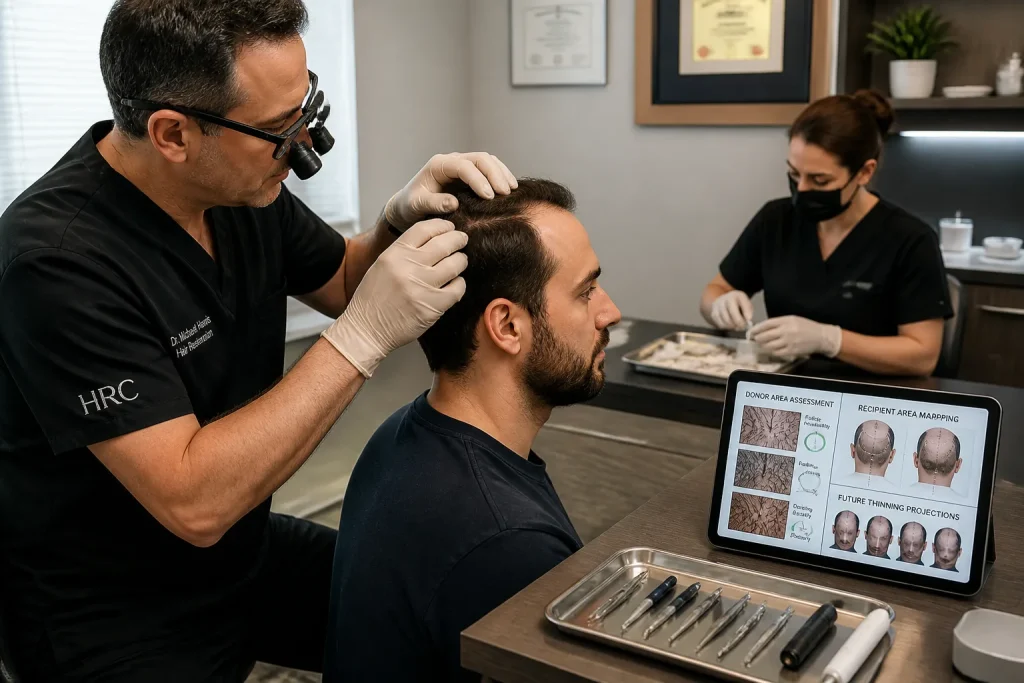
Treatment planning should begin with the condition of the donor area and the cause of hair loss, rather than with a technique label. The clinician should assess available hair follicles, scalp characteristics, hair calibre, and the recipient area before deciding how many grafts are appropriate. A realistic design also considers existing hair density and the possibility of future thinning, so that the donor supply is not used too aggressively.
FUE removes individual grafts from the donor area, while DHI generally refers to implantation with a specialised pen after extraction. Neither approach automatically produces better growth, higher density, or a faster recovery. Outcomes depend on patient suitability, recipient-area design, graft handling, implantation depth, and the skill of the treatment team. Ask who performs each stage and how grafts are protected outside the scalp.
During the consultation, a responsible provider should explain the diagnosis, proposed hairline, expected graft number, anaesthesia, procedure-day communication, and realistic limitations. You should also receive clear guidance about temporary shedding, washing, sleeping position, medication, and signs that require medical advice. Confirm whether the plan can be adjusted if the scalp or donor area appears different on the day.
Before choosing treatment, ask how future hair loss will be managed and whether medical therapy may be relevant. Written aftercare instructions, an accessible contact person, and clear expectations about early hair growth are practical indicators of well-organised patient care.
How Much Does Hair Restoration Cost in Turkey and Germany?
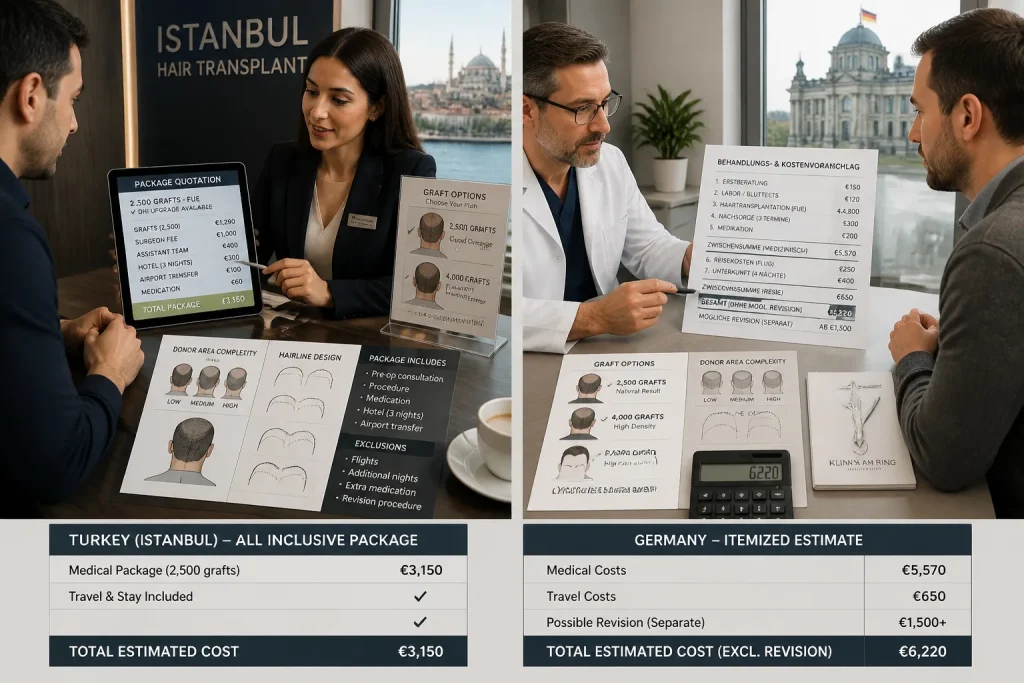
Price comparisons are meaningful only when both clinics are quoting the same scope of treatment. A procedure fee may cover the planned grafts and the operating team, while consultation, blood tests, medication, accommodation, transfers, flights, and time away from work are billed separately. In Germany, some providers may price consultations or follow-up appointments independently; in Turkey, package offers may include selected travel services but still exclude flights, extra nights, or treatment for unexpected needs.
The number of grafts, technique such as FUE or DHI, surgeon expertise, clinic model, and the complexity of the donor and recipient areas can all change the fee. Ask for an itemized quotation that states who designs the hairline, who performs each stage, what aftercare is provided, and whether a medically indicated revision would involve additional charges. Total treatment cost should include the realistic expenses surrounding the procedure, rather than the advertised surgical price alone.
Before comparing offers, request current written quotes based on your individual assessment. Include transport, accommodation, medication, meals, insurance, and lost income in the calculation, and allow room for possible changes to the treatment plan. A lower headline price may not represent better value if communication, clinical input, or required care is limited.
Which Destination Offers Better Follow-Up and Recovery Support?
Follow-up is often easier to arrange in Germany because patients can return to the clinic for in-person reviews and contact the operating team without international travel. A Turkish clinic may also provide structured remote support, but patients should confirm who answers questions after departure and whether the surgeon remains involved.
Travel timing matters during recovery. Patients should follow written guidance on washing, sleeping position, physical activity, and protecting the donor and recipient areas before booking a return flight. Swelling, delayed questions, or signs of infection may require assessment by a local doctor after returning home. Ask the clinic who coordinates this care and whether additional consultations or revision planning are handled remotely or in person.
Before choosing a provider, request a clear postoperative monitoring plan covering follow-up appointments, emergency contacts, communication channels, and responsibility for long-term review. This documentation makes the practical difference between treatment abroad and treatment closer to home easier to assess.
FAQs
Is hair transplantation in Turkey safe for international patients?
Hair transplantation in Turkey can be safe for international patients when performed by a qualified, licensed surgeon in an accredited clinic with appropriate medical standards. Before booking, verify the doctor’s credentials, surgical experience, facility accreditation, consultation process, and aftercare arrangements, and ask who will perform each stage of the FUE or DHI procedure. A thorough medical assessment is essential to determine whether the donor area, hair loss pattern, and overall health are suitable for treatment.
Why is a hair transplant usually more expensive in Germany?
Hair transplants in Germany usually cost more because clinics face higher surgeon fees, staff wages, facility expenses, insurance costs, and regulatory requirements. Prices may also include detailed consultations, advanced FUE or DHI techniques, medical supervision, and structured aftercare. The total fee depends on the number of grafts, the clinic’s location, and the complexity of restoring the donor and recipient areas.
How should I compare clinics before booking a procedure abroad?
Compare each clinic’s medical credentials, surgeon experience, accreditation, transparent pricing, treatment plan, and independent patient reviews. Confirm who performs the procedure, what is included in the package, how complications are handled, and whether follow-up care is available after you return home. Ask for realistic before-and-after results from comparable cases and verify that the clinic provides clear information about risks, recovery, and expected outcomes.