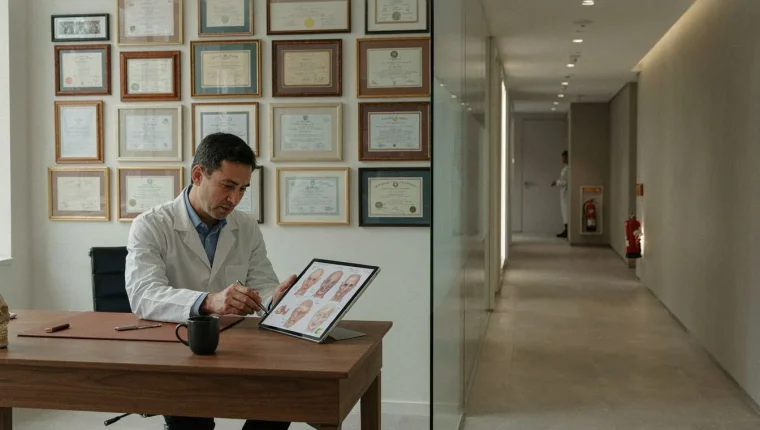
Facelift prices in Canada often range from $15,000 to $30,000 CAD at a single clinic. That’s why more and more Canadians are looking at Turkey, where the same procedure typically costs a fraction of that, performed by surgeons who handle thousands of cases a year. But lower prices alone shouldn’t decide your surgery. This guide looks at whether a facelift in Turkey for Canadians is worth it: what you can expect to pay, how to separate qualified surgeons from risky clinics, what recovery looks like far from home, and the red flags to know before booking a flight. You’ll have a clear, practical answer — not a sales pitch.
Why Canadians Are Choosing Turkey for Facelift Surgery

Canadians exploring cosmetic surgery abroad often arrive at the same starting point: the combination of high domestic prices, long surgical wait times, and a growing international reputation for Turkish aesthetic clinics. Over the past decade, Istanbul has quietly become one of the world’s busiest hubs for facial rejuvenation, and Canadian patients make up an increasingly visible share of that traffic.
The driving force is largely economic, but it isn’t only about savings. Turkish clinics have built their model around international patients, which means streamlined processes that many Canadians find refreshing compared to the slower pace of the public system back home. Consultations are typically arranged within days rather than months, and the entire journey — from initial video assessment to post-operative follow-up — is designed around a compressed, well-organized timeline.
There’s also the matter of surgical volume. High-volume hair transplant and facial aesthetic clinics in Istanbul perform procedures on international patients daily, which gives their surgical teams extensive hands-on experience with facelift techniques such as SMAS lifting, deep-plane approaches, and combined neck contouring. Many surgeons there hold international fellowships, publish in peer-reviewed journals, and are members of bodies like ISAPS, making credentials verifiable before you ever book a flight.
Another practical reason is geography. Direct flights from Toronto, Montreal, and Vancouver to Istanbul take roughly 10 to 12 hours — long, but manageable, and far shorter than routes to South Korea or Thailand, the other major destinations Canadians consider for facial work. Time zone differences are also less disruptive, which matters when you’re coordinating video follow-ups with your surgeon during the recovery weeks.
Finally, Canadian patients often point to the all-inclusive nature of Turkish medical travel. Airport transfers, accommodation, interpreter services, and aftercare are bundled into a single arrangement, removing much of the logistical friction that makes surgery abroad feel risky. It’s this blend of accessibility, experience, and convenience — not price alone — that explains why so many Canadians now shortlist Turkey when planning a facelift.
Cost Comparison: Facelift Prices in Turkey vs. Canada
When Canadians start researching facelift options abroad, the price gap is usually the first thing that stops them mid-scroll. In Canada, a full facelift performed by a board-certified plastic surgeon typically costs between $15,000 and $25,000 CAD once you factor in the surgeon’s fee, anesthesia, facility charges, and post-operative care. In Turkey, the same procedure generally ranges from $3,500 to $7,500 USD, which is why the concept of all-inclusive medical packages has become central to how Turkish clinics market themselves to international patients.
The difference isn’t because Turkish surgeons are less qualified — it comes down to economics. Lower operating costs, favorable exchange rates, high patient volumes, and government support for medical tourism all allow clinics to charge significantly less while still working in fully accredited hospitals. To see where your money actually goes, it helps to break the costs down side by side:
- Surgeon and hospital fees: In Canada, these are billed separately and can exceed $12,000 CAD combined; in Turkey, they are usually bundled into a single quoted price of roughly $4,000–$6,000 USD.
- Anesthesia and operating room costs: Canadian facilities charge by the hour, often adding thousands; Turkish clinics typically absorb these costs into the package price.
- Accommodation and transfers: Turkish packages commonly include 4–5 star hotel stays, VIP airport pickup, and interpreter services — expenses you’d cover out of pocket in Canada.
- Aftercare and follow-up: Most Turkish clinics include medications, post-op garments, and remote follow-up consultations, while Canadian clinics bill these as part of the surgical fee or separate visits.
When you add everything up, many Canadians report total savings of 50–70 percent even after flights, which typically run $800–$1,500 CAD round trip depending on the season. For a traveler coming from Toronto or Vancouver, the entire Turkish trip — surgery, hotel, transfers, and aftercare — can still cost less than the surgeon’s fee alone back home.
The quoted price is only part of the equation. Canadians should confirm exactly what each clinic includes, whether revision surgery is covered, and what happens if complications arise after returning home — points we’ll dig into when we look at package contents and safety standards in the sections ahead.
Is It Safe to Get a Facelift in Turkey as a Canadian?
Safety is the first question every Canadian asks, and it deserves a direct answer: yes, facelift surgery in Turkey can be very safe — but only when you choose the right provider. Turkey performs one of the highest volumes of cosmetic surgery in the world, and its top hospitals in Istanbul are internationally accredited, with many holding JCI (Joint Commission International) accreditation, the same standard applied to leading hospitals in North America.
What surprises many Canadians is the level of transparency available before they ever book a flight. Reputable Turkish clinics routinely share before-and-after galleries, verified patient testimonials from other international patients, and detailed surgeon credentials, including board certifications and international society memberships. Platforms that connect patients directly with surgeons make it possible to review qualifications without relying on a salesperson’s pitch.
Safety in Turkey depends heavily on avoiding the low end of the market. The same country that houses world-class plastic surgeons also has unlicensed operators advertising bargain procedures on social media. Warning signs worth watching for include clinics that guarantee results, refuse a pre-operative medical consultation, cannot name their surgeon in advance, or pressure you to pay deposits immediately. A legitimate practice always requests recent bloodwork, reviews your medical history, and assesses whether you are a suitable candidate before confirming anything.
Communication standards are another strength of the better Istanbul clinics, which typically employ English-speaking coordinators and provide written aftercare instructions alongside your discharge documents. Serious clinics also maintain relationships with Canadian patients post-surgery, checking in remotely during the healing period and coordinating follow-up questions with your family doctor if needed.
Practical safety also extends to recovery logistics. Because a facelift requires at least 10 to 14 days in-country before flying home, well-organized Turkish providers schedule your follow-up appointments before departure, ensuring swelling, stitches, and healing are assessed by your operating surgeon — not left to chance once you land in Canada. This structured discharge process is a hallmark of accredited, safety-focused clinics.
What Is Included in a Turkish Facelift Package

One of the biggest advantages of booking a facelift in Turkey is that clinics sell their services as all-inclusive medical packages — something rarely offered in Canada. Instead of receiving separate bills from the surgeon, the anesthesiologist, the hospital, and a hotel, you pay one price that covers nearly every stage of your journey. Understanding exactly what sits inside that package is essential before you compare quotes.
A typical Turkish facelift package includes the surgeon and hospital fees, along with anesthesia and operating room costs. Pre-operative testing — blood work, ECG, and a full medical evaluation — is generally bundled in as well, so you arrive knowing you have been cleared for surgery. The procedure itself is performed at a hospital or licensed surgical center, and you’ll usually stay one night for observation.
Beyond the medical side, most packages handle your logistics. Expect airport transfers in a private vehicle, a hotel stay of several nights (often four to seven, depending on the clinic), and daily transportation between your accommodation and the clinic for check-ups and dressing changes. A translator or English-speaking patient coordinator is commonly assigned to international patients, which removes a major source of stress for Canadians navigating a foreign healthcare system.
Aftercare is another core component. You’ll receive prescription medications, compression garments or surgical dressings, and scheduled follow-up examinations before you fly home. Many clinics also offer a set period of remote follow-up — typically through WhatsApp or video calls — so your healing can be monitored once you’re back in Canada. It’s worth asking whether any revision policy applies in the rare event of a complication, as terms vary between clinics.
Before paying a deposit, ask the clinic for a written, itemized breakdown. Reputable providers will confirm exactly which services are included and which are not, so there are no surprises when you land in Istanbul.
Planning Your Trip: Travel, Visa, and Recovery Timeline
For Canadians, the logistics of a facelift abroad come down to one crucial factor: the recovery timeline. Unlike a dental procedure or a quick cosmetic treatment, a facelift requires you to plan roughly 10 to 14 days in Turkey before you are cleared to fly home. Most clinics in Istanbul recommend that international patients stay at least 12 days post-surgery, since swelling and bruising peak in the first week and your surgeon needs to confirm that initial healing is progressing well before approving your flight.
On the practical side, travel is refreshingly simple. Canadians can enter Turkey visa-free for stays of up to 90 days, which means no advance paperwork is needed for a typical surgical trip. Direct flights from Toronto, Montreal, and Vancouver to Istanbul run regularly, and most all-inclusive medical packages cover your airport transfers and hotel accommodation, so you are not navigating an unfamiliar city on your own.
A typical trip unfolds in a fairly predictable sequence:
- Day 1–2: Arrival and pre-operative tests. You land in Istanbul, meet your surgeon for a final consultation, and complete blood work and health screenings to confirm you are fit for surgery.
- Day 3: Surgery day. The facelift is performed, usually under general anesthesia, and you spend the first night under medical supervision at the hospital.
- Day 4–7: Early recovery. Swelling and bruising are most intense during this window. Attending your first follow-up appointment and keeping your head elevated speeds up this stage considerably.
- Day 8–10: Suture removal and review. Your surgeon removes stitches, drains any accumulated fluid if needed, and assesses how well your incisions are healing.
- Day 11–14: Final clearance. After a last examination and detailed aftercare instructions, you receive medical clearance to fly home.
One detail worth building into your schedule: plan for two full weeks off work. While many patients feel presentable enough to socialize after three weeks, flying too early can increase swelling and, in rare cases, affect blood pressure around the incision sites. Scheduling a light return to work once you are home in Canada protects both your results and your investment.
How to Choose a Qualified Surgeon and Clinic in Istanbul
The single most important step in your entire journey is verifying that your surgeon is a genuine plastic and reconstructive specialist rather than a practitioner from an unrelated field. In Turkey, legitimate facial surgeons hold certification from the Turkish Society of Plastic, Reconstructive and Aesthetic Surgeons (TSPRAS), which requires years of dedicated residency training. Many clinics marketing cosmetic procedures in Istanbul are staffed by doctors who trained in dermatology, general surgery, or ENT — specialties that do not cover deep-plane facelift techniques. Always ask for the surgeon’s full name, diploma details, and board certification, then cross-check them independently.
Beyond credentials, dig into real evidence of experience. Ask how many facelifts the surgeon performs per year, request unedited before-and-after photos of patients with similar facial anatomy and age, and ask to speak with a previous international patient if possible. Reputable surgeons welcome these questions; evasive answers are a red flag.
Clinic-level checks matter just as much. A trustworthy facility will be transparent about the operating hospital or accredited surgical facility where your procedure takes place, hold international or national accreditation, and have an anesthesiologist present throughout surgery. Be cautious of clinics that promise surgery on the same day you arrive, quote prices before reviewing your photos, or rely almost entirely on influencer marketing rather than medical transparency.
Communication is another practical filter. Your surgeon — not an intermediary or sales coordinator — should review your medical history, discuss realistic outcomes, and explain the chosen technique. If the only person answering your questions is a patient representative, treat it as a warning sign before you book any flights.
FAQs
How much does a facelift in Turkey cost compared to Canada?
A facelift in Turkey typically costs between $3,000 and $6,000, while the same procedure in Canada usually ranges from $10,000 to $15,000 or more. This means patients can save roughly 50% to 70% by choosing Turkey, even after adding flights and accommodation. The lower price reflects Turkey's lower operating costs and favorable exchange rates rather than lower quality, as many clinics are internationally accredited and surgeons are highly experienced.
How long should Canadians plan to stay in Turkey for surgery and recovery?
Canadians should plan to stay in Turkey for about 7 to 14 days, depending on the type of surgery. Most cosmetic procedures require a few days of initial recovery at the clinic before follow-up appointments, and surgeons typically want to monitor healing for at least a week before clearing patients to fly. More invasive operations, such as facelifts or mommy makeovers, may require the longer end of that range, while less extensive procedures like dental work can be completed in 3 to 7 days. Your surgeon will confirm the exact timeline based on your procedure and healing progress.
Are Turkish clinics accredited and safe for international patients?
Many Turkish clinics, especially those in Istanbul, Ankara, and Izmir, hold accreditation from internationally recognized bodies such as JCI (Joint Commission International) and TEMOS, which enforce strict standards for patient safety, hygiene, and medical quality. These clinics commonly employ surgeons certified by the Turkish Medical Association, and many physicians hold international fellowships and memberships in organizations like ISAPS. Turkey is one of the world's leading destinations for medical tourism, treating hundreds of thousands of international patients annually, and the Ministry of Health actively regulates health tourism through licensed facilitators and certified facilities. To ensure safety, patients should verify a clinic's accreditation, confirm the surgeon's credentials, and review documented before-and-after results before booking.