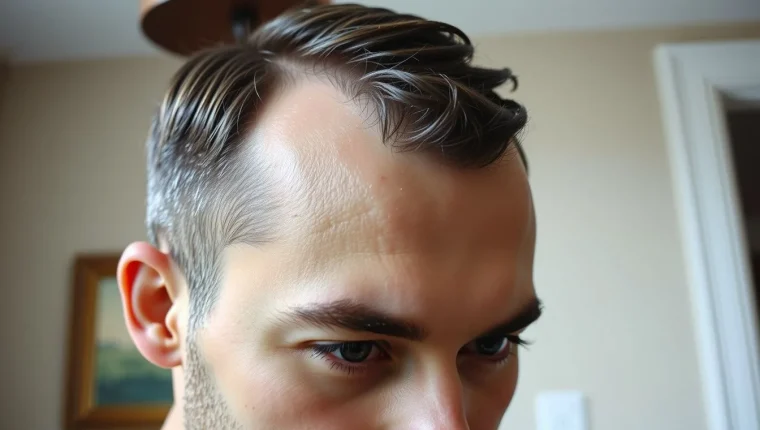
You step out of the shower, look at the drain, and count more strands than you remember. Or you catch your reflection and notice your hairline sits a little further back than it did last year. Early hair loss in males usually begins quietly and gradually, so it is easy to dismiss at first. It is also far more common than most young men assume and follows recognizable patterns. Genetics, hormones, stress, and daily habits all play a part and can be assessed. First, understand what you are seeing, then what typically drives it, and finally which treatments and prevention steps can realistically slow or reverse the process.
Recognizing the First Signs of Early Hair Loss in Males
Early loss usually announces itself in predictable places. The temples are often first, where the hairline begins to creep backward on both sides, forming the beginnings of an M shape. The crown follows for many men, starting as a small thinning spot that slowly widens. Over months rather than days, these areas lose density while the sides and back stay thick, which is why the contrast becomes noticeable before the loss itself feels severe.
Not every change is a warning sign. Most men experience some hairline maturation in their twenties, where the front edge shifts slightly higher and settles into an adult shape. True recession looks different: the corners move back faster than the center, the border becomes uneven, and fine, shorter hairs appear along the edge. Density changes are easier to track than shape, so compare photos taken in the same lighting and angle every few months rather than judging from memory.
A pattern worth having assessed by a professional is steady progression over six months or more, visible thinning at the crown, or shedding that leaves hair on pillows and in drains. If you can see scalp through your hair in bright light, that is a reasonable point to seek an evaluation.
Common Causes Behind Premature Thinning in Young Men

Most young men who notice thinning want a single explanation, but the honest answer is that several forces usually overlap. The most common driver is androgenetic alopecia, a inherited sensitivity that makes certain hair follicles shrink over time under the influence of normal male hormones. This is the same pattern that produces a receding hairline and thinning crown, and it can begin earlier than many men expect.
Beyond genetics, several other contributors appear frequently. Chronic stress can push follicles into a resting phase and trigger shedding months later. Nutritional gaps, especially low iron, vitamin D, or protein intake, weaken the hair cycle. Thyroid imbalances and scalp conditions such as seborrheic dermatitis also cause diffuse loss. Less common causes include autoimmune conditions, certain medications, and rapid weight loss.
The key point is that these factors rarely act alone. A man with a genetic predisposition may see faster thinning when stress or poor nutrition adds pressure. Some causes, like genetics and age, cannot be changed. Others, including stress, diet, and treatable medical conditions, are modifiable. Sorting which apply to you is the first step toward a realistic plan.
How Hormones, Genetics, and Lifestyle Affect Hair Follicles

At the center of pattern hair loss lies a sensitive interaction between hormones and inherited traits. Testosterone itself is not the primary culprit; an enzyme called 5-alpha reductase converts it into dihydrotestosterone (DHT), a more potent androgen. In men who carry a genetic predisposition, DHT binds to receptors in susceptible follicles and gradually shortens each growth cycle while shrinking the follicle itself. This process, known as follicular miniaturization, turns thick terminal hairs into fine, short strands before they eventually stop emerging. Genetics determine which follicles are vulnerable and how aggressively they respond, which is why thinning follows a predictable pattern rather than appearing randomly.
Lifestyle and overall health can influence how quickly this genetic script unfolds. Chronic stress, poor sleep, smoking, and crash dieting place additional strain on the body, and nutritional shortfalls in iron, zinc, or vitamin D may worsen shedding. These factors rarely cause androgenetic alopecia on their own, but they can accelerate the pace or extent of visible loss in already susceptible follicles.
Understanding this mechanism clarifies why effective treatments target specific steps, such as blocking DHT production or stimulating follicle activity, rather than simply addressing surface symptoms.
Medical Treatments and Medications for Early Stage Hair Loss
When early-stage thinning is confirmed, the medical options fall into a few broad categories, each with a different goal. Topical minoxidil is applied directly to the scalp to prolong the growth phase and improve blood flow to the follicle. Oral finasteride works on the hormonal driver of androgenetic alopecia by blocking the conversion of testosterone into DHT, slowing further miniaturization. Some clinicians also consider oral minoxidil, low-level laser therapy, or ketoconazole shampoo as supporting measures. These approaches aim to stabilize loss and, in some cases, encourage partial regrowth.
What matters most is understanding what each treatment can and cannot do. None of them restore a full head of hair, and results depend on starting early and continuing consistently. Side effects, suitability, and realistic expectations vary from person to person and require professional assessment rather than guesswork.
Bring specific questions to your clinician: Which option fits my pattern and stage? How long before I see results? What side effects should I watch for, and how do we monitor progress? Self-prescribing or copying someone else’s routine can waste time and money. A dermatologist or hair specialist can confirm the diagnosis and build a plan suited to your situation.
Preventive Habits and Long-Term Solutions to Maintain Hair
What you do between appointments matters as much as what happens in them. Daily habits shape the environment your follicles live in, and that environment determines how well any treatment holds its ground. Smoking constricts the small blood vessels feeding the scalp, while crash dieting and low protein intake starve hair of the building blocks it needs. Gentle handling—avoiding tight styles and harsh chemical treatments—limits unnecessary traction and irritation. Sleep and stress management are not soft advice; elevated stress hormones can push more follicles into a resting phase, which shows up months later as extra shedding.
The most durable approach is consistency over intensity. A routine you can repeat for years beats an aggressive regimen you abandon in weeks. If you use a proven topical or oral treatment, the benefit depends on continued use—stopping usually returns you to your genetic baseline within months. Pair that commitment with regular scalp checks and periodic photos under the same lighting, so you judge progress by evidence rather than by daily mirror anxiety.
Expectations should match biology. Maintenance, not regrowth, is the realistic goal for most men, and holding what you have is a genuine win. Reassess with a clinician if shedding accelerates, side effects appear, or your routine stops feeling sustainable—adjusting early protects both your hair and your peace of mind.
FAQs
What are the earliest warning signs of early hair loss in males?
The earliest warning signs of early hair loss in males often include a receding hairline, particularly at the temples, and a gradual thinning of hair on the crown of the head. Many men also notice increased shedding during washing or brushing, or a widening part that reveals more scalp than before. These changes typically develop slowly, so comparing current photos with older ones can help confirm whether a pattern is emerging.
How can males tell the difference between a receding hairline and a maturing hairline?
A maturing hairline typically shifts back gradually and symmetrically at the temples, creating a subtle M shape that stabilizes over time without noticeable thinning behind the front line. A receding hairline, often an early sign of male pattern baldness, continues to progress, with the temples deepening and the hairline moving further back while density decreases across the top of the scalp. Monitoring changes over six to twelve months, ideally with photos, helps distinguish normal maturation from early hair loss. If the recession accelerates or is accompanied by diffuse thinning, consulting a dermatologist can confirm the cause and guide treatment options.
Which treatments work best for stopping early hair loss in males?
For early hair loss in males, topical minoxidil and oral finasteride remain the most effective and well-studied treatments, with finasteride generally producing stronger results in the crown and mid-scalp. Low-level laser therapy and ketoconazole shampoo can support these options, while dutasteride offers an alternative for men who do not respond well to finasteride. Because early intervention preserves the most hair, a dermatologist can confirm the diagnosis and tailor a combination treatment to the stage and pattern of loss.