You notice it in a photo or a mirror at an angle: the corners of your hairline look thinner than they did a year ago. Hair receding at temples is one of the earliest visible changes in male pattern hair loss and rarely reverses on its own. That is why timing matters. The sooner you recognize it, the more options you have to slow it, preserve density, and decide whether to start treatment now or monitor it.
What Early Temple Thinning Actually Looks Like
Early temple thinning rarely announces itself. What usually changes first is not the hairline itself but the density just behind it. The corners lose volume before they lose length, so individual hairs still reach the same point while the area behind them grows sparser. In flat, overhead lighting this can look almost normal; in harsh side light or a bathroom mirror, the scalp becomes visible through hair that used to read as solid.
You can check this yourself in three ways. First, compare the density at the temple corners to the hair a few centimeters inward — the difference is often easier to feel than to see. Second, pull hair back tightly and look for a widening gap or a softer, less defined edge. Third, review photos from two or three years ago under similar lighting; gradual change is nearly invisible in daily life but obvious across years.
Recognizing this stage matters because the earlier the change is confirmed, the more options remain available. Later, when the corners are visibly bare, the conversation shifts from preservation to restoration.
Why Hair Recedes at the Temples First
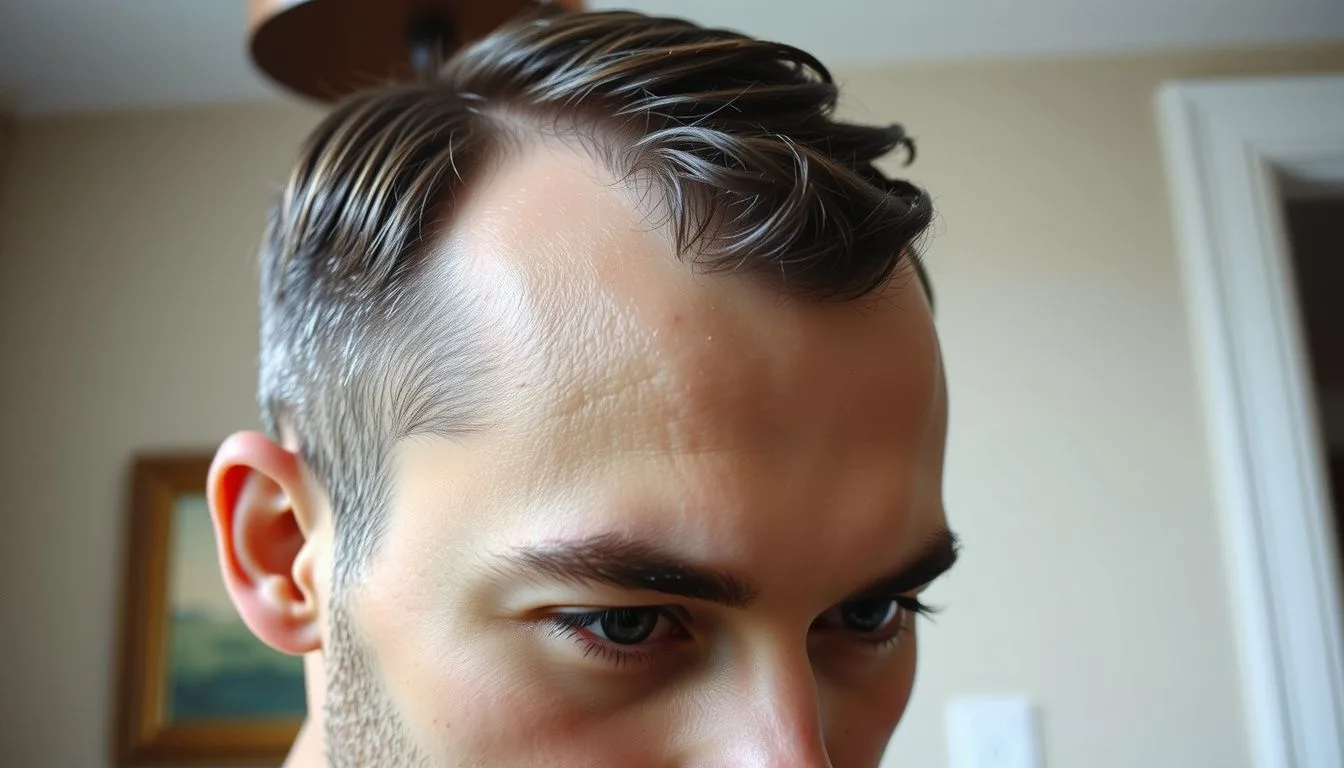
Not every hair on your scalp responds to the same signals in the same way. Some follicles are genetically programmed to be far more sensitive to dihydrotestosterone (DHT), the hormone linked to pattern hair loss. This sensitivity is not spread evenly across the head, and the temples happen to sit in one of the most vulnerable zones.
Temple follicles carry a higher concentration of androgen receptors and tend to sit in a region where DHT sensitivity is strongest. As DHT binds to these receptors, it gradually shortens each hair’s growth phase and shrinks the follicle over time. The result is finer, shorter hairs that eventually stop producing visible strands.
This uneven vulnerability explains the shape loss takes. Because the temple corners are hit first and hardest, the hairline recedes backward and upward before the crown or mid-scalp shows any change. The same biology that makes this area thin early is also what gives pattern loss its recognizable outline.
Distinguishing Normal Maturation From Male Pattern Baldness
Some temple recession is a normal part of growing up. Many men develop a slightly higher, more angular hairline in their twenties and thirties, and it often stops there. This pattern, sometimes called a mature hairline, tends to move slowly, stay roughly symmetrical, and leave the rest of the scalp dense. It is a change in shape, not an ongoing process of loss.
Progressive pattern loss behaves differently. The key distinction is not a single measurement but a combination of pattern, pace, and accompanying signs. Watch for recession that keeps advancing over months, asymmetry where one temple moves faster than the other, and thinning that spreads beyond the temples into the mid-scalp or crown. A widening part, a thinner crown, or visible miniaturized hairs along the front edge all point toward active pattern baldness rather than simple maturation.
When the picture is unclear, a professional assessment adds what self-observation cannot: magnification of hair diameter, density mapping, and a family history review. A dermatologist or hair specialist can confirm whether miniaturization is present and whether the change is stable or still progressing.
Everyday Habits and Health Issues That Accelerate Temple Loss
Genetics sets the trajectory of temple recession, but it does not set the speed. Several everyday habits and health conditions can push the process along faster than it would otherwise go, while others get blamed unfairly. The most direct physical contributor is how you handle your hair: tight hairstyles, frequent harsh brushing, and chemical treatments create traction and breakage that thin the hairline independently of any underlying pattern.
Nutritional and health factors matter next. Iron deficiency, low vitamin D, thyroid dysfunction, and crash dieting can all shift more follicles into a shedding phase, which is especially visible at the temples where density is already lowest. Chronic stress works through a similar mechanism, raising cortisol and disrupting the hair growth cycle. Smoking is another credible accelerator, as it impairs circulation and increases oxidative stress in the follicle.
The key distinction is that these factors accelerate a process rather than cause it on their own. Someone without a genetic predisposition will rarely lose temple hair from stress or diet alone. This is also where lifestyle adjustment reaches its limit: fixing a deficiency or quitting smoking can slow visible loss and improve hair quality, but it cannot reverse the underlying sensitivity that drives pattern recession. Those changes are worth making for your overall health and for the hair you still have, yet they are not a substitute for treatments that target the process itself.
Treatment Options Ranked by Stage and Effectiveness

The right treatment depends less on which product sounds strongest and more on how much hair you still have to work with. Early on, when the temples are thinning but the follicles are still alive, the goal is preservation. Minoxidil and prescription oral medications like finasteride are most effective at this stage, because they slow further loss and can thicken existing miniaturized hairs. The earlier you start, the more ground you keep.
As recession advances and the hairline moves back, these same treatments still help, but their limits become clearer. They can hold the line and maintain density, yet they rarely regrow a smooth, bare temple. That is when procedural options enter the conversation. Hair transplantation can rebuild a receded hairline by moving DHT-resistant follicles from the back of the scalp, and it tends to produce the most visible results at moderate to advanced stages. It is also the most invasive and costly choice, and it works best when paired with medication to protect the remaining native hair.
In short, earlier intervention generally widens your options and improves what each approach can achieve. Because the cause and pace of your loss matter as much as the stage, a dermatologist or hair specialist should confirm what you are dealing with before you commit to any treatment.
FAQs
Is hair receding at temples a normal part of aging or an early sign of male pattern baldness?
Receding at the temples is often a normal part of aging, but it can also be an early sign of male pattern baldness when the hairline forms a distinct M-shape or the recession progresses quickly. The key difference lies in the pattern and pace: a mild, gradual shift is common with age, while steady thinning at the temples and crown typically points to androgenetic alopecia. If you notice sudden or uneven loss, a doctor or dermatologist can confirm the cause and discuss treatment options.
Can lifestyle changes or medications actually stop temple recession once it starts?
Lifestyle changes and medications can slow or partially stabilize temple recession, but they rarely regrow hair that has already been lost. Treatments like minoxidil and finasteride are most effective at preserving existing hair and preventing further thinning when started early. Reducing stress, improving diet, and avoiding tight hairstyles may support overall scalp health but cannot reverse established follicle miniaturization on their own.
How long does it usually take before hair receding at temples becomes noticeable to others?
Temple recession typically becomes noticeable to others after several months to a few years, depending on your natural hairline shape, hair texture, and how quickly the underlying cause progresses. Early changes often go unnoticed because the hairline matures gradually, and the shift from a straight to a slightly M-shaped hairline can look natural for a long time. Once the corners recede by roughly half an inch or more, friends and family are more likely to comment on it.


