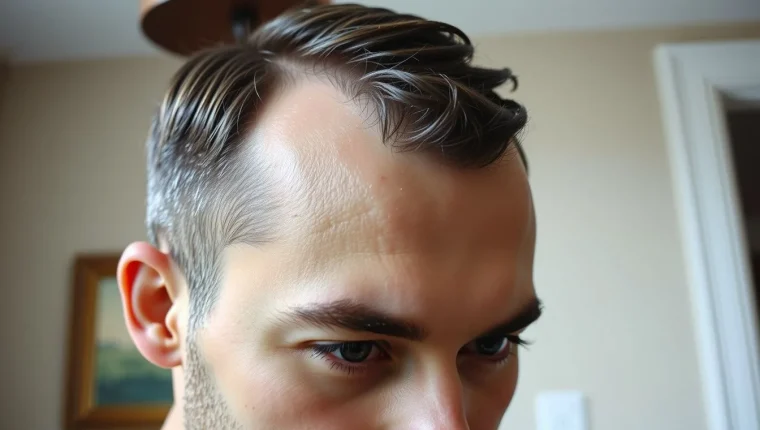
A receding hairline or thinning crown usually develops gradually. It shows up in photos, in the mirror under certain lighting, in the way you start adjusting how you style your hair. Once the change becomes hard to ignore, people often ask what is causing it and whether hair transplant for male pattern baldness is a realistic option or an expensive gamble. The answer depends on your specific pattern of loss, your donor hair, and how stable your hair loss has become. This guide covers the cause, suitable candidates, technique differences, the procedure, and how well results hold up over time. The aim is a clear picture, not a pitch.
What Male Pattern Baldness Is and Why It Happens
Male pattern baldness is not simply a matter of hair falling out faster than it regrows. It is a genetically driven condition in which hair follicles on the scalp gradually become sensitive to dihydrotestosterone, or DHT, a hormone converted from testosterone. In susceptible follicles, DHT causes the growth phase of the hair cycle to shorten while the resting phase lengthens, so each new hair emerges thinner, shorter, and weaker until the follicle eventually stops producing visible hair at all.
This sensitivity is inherited, which is why the condition tends to run in families and can begin as early as the late teens or twenties. What makes the pattern recognizable is where those susceptible follicles sit. Hair along the temples and crown is typically most vulnerable, while follicles at the back and sides of the scalp usually remain resistant. That geographic difference explains the classic Norwood progression: a receding hairline and thinning crown that advance over years rather than weeks.
Because the process is progressive rather than static, the amount of hair a man still has today is not the amount he will have in five years. This steady, predictable trajectory is precisely why timing matters so much when surgery enters the conversation.
How to Know If You Are a Candidate for a Hair Transplant
Before anything else, a surgeon will assess your donor hair supply — the density and quality of follicles at the back and sides of the scalp, which are genetically resistant to the hormone driving pattern baldness. If that reserve is thin or unstable, a transplant can’t reliably rebuild a fuller hairline, no matter how skilled the surgeon.
Just as important is the stability of your loss. Men still shedding rapidly often make poor candidates for immediate surgery, because transplanted grafts stay put while surrounding natural hair continues to thin, leaving an unnatural result. Age and the pace of ongoing loss therefore matter as much as raw donor numbers.
This is why no online checklist can replace a proper evaluation. A surgeon maps your scalp, measures density, and projects how your loss may progress over the coming years — something self-diagnosis simply cannot do.
In some cases, waiting is the smarter path. If your hair loss is still active or your donor area is limited, stabilizing the situation first may protect both your results and your budget. For those not yet ready, non-surgical options can bridge the gap until surgery makes sense.
FUE vs. FUT: Choosing the Right Technique for Your Hair Loss

Both FUE and FUT can produce natural-looking results, but they differ in how grafts are obtained and what that means for your scalp afterward. In follicular unit excision (FUE), individual grafts are removed one by one with a small punch tool, leaving tiny circular marks scattered across the donor zone. FUT removes a single strip of scalp from the back of the head, which is then closed with stitches and dissected into grafts under a microscope. That one difference drives nearly every trade-off you will weigh.
Strip removal typically allows a larger number of grafts in a single session and often costs less per graft, but it leaves a linear scar that may be visible with short hair. FUE avoids the linear scar and permits very short haircuts, though it usually takes longer and can limit session size. Neither approach is universally better; the right choice depends on your Norwood pattern, how much donor hair you have, and how you wear your hair day to day.
| Factor | FUE | FUT |
|---|---|---|
| Extraction method | Individual grafts removed with a punch tool | A single strip of scalp removed and dissected |
| Scarring | Tiny scattered dot scars | One linear scar across the donor area |
| Session size | Generally smaller per session | Often larger per session |
| Recovery time | Faster surface healing, shorter downtime | Longer healing at the strip site |
If you keep your hair short or buzz it, FUE’s faint dot scars may suit you better. If you need maximum grafts in one sitting and plan to keep some length, FUT may serve you well. Discuss both with your surgeon against your own pattern and goals rather than assuming one technique wins outright.
What to Expect During Surgery and Recovery

On the day of surgery, you will be awake the entire time. The surgeon begins by numbing the donor and recipient areas with local anesthesia, which is usually described as a series of brief stinging sensations before the scalp goes numb. From that point on, you should feel pressure and movement but not pain. If discomfort appears at any moment, tell the team; more anesthetic can be added.
What follows is a long but largely uneventful session. In FUE, the surgeon or a trained team extracts grafts one by one, then creates tiny recipient sites and places each graft at the angle and direction of your natural hair growth. Depending on the session size you discussed earlier, expect to be in the clinic for most of a day. Breaks are normal, and many patients read, listen to something, or simply doze.
The recovery timeline is where expectations most often go wrong. For the first few days, the scalp is tender, swollen, and dotted with small scabs. Most men return to desk work within two to four days, while strenuous exercise and heavy sweating are usually avoided for about a week or two. The scabs flake away over roughly one to two weeks.
Then comes the part that unsettles people: shock loss. Within two to eight weeks, many of the transplanted hairs shed. This is expected, not failure. The follicles remain in place and enter a resting phase. New growth typically begins around three to four months, with visible density building between six and twelve months. Judging the outcome before that window is premature.
Long-Term Results, Risks, and Alternatives to Consider
Transplanted follicles are typically taken from areas of the scalp that are genetically resistant to dihydrotestosterone, which is why most men keep the hair they receive for decades. That durability, however, applies only to the grafts themselves. Your remaining native hair can continue to thin along its original Norwood pattern, so the long-term look of your result depends partly on how much surrounding hair you still have. Without maintenance, the contrast between stable grafts and receding native hair can gradually become visible.
Realistic risks include infection, poor graft survival, an unnatural hairline, and donor-area scarring, though serious complications are uncommon in experienced hands. Some men also experience persistent numbness or ongoing shock loss of nearby native hair. Maintenance medication such as finasteride or minoxidil often plays a decisive role in protecting the overall result, and your surgeon may recommend it before or after surgery.
Surgery is not the only route. Medication, low-level laser therapy, platelet-rich plasma, scalp micropigmentation, and high-quality hair systems each offer different trade-offs in cost, effort, and reversibility. Weighing long-term maintenance against these alternatives helps you judge a transplant as one option among several rather than the automatic answer.
FAQs
Is a hair transplant for male pattern baldness a permanent solution?
A hair transplant for male pattern baldness is considered a permanent solution because the transplanted follicles are typically taken from the back or sides of the scalp, where hair is genetically resistant to DHT. These grafts continue to grow for life in their new location, so the transplanted hair itself does not fall out over time. However, the procedure does not stop the progression of male pattern baldness, meaning your natural, non-transplanted hair may continue to thin. Many patients therefore need additional sessions or medical treatments to maintain full coverage.
How much does a hair transplant for male pattern baldness typically cost?
A hair transplant for male pattern baldness typically costs between $4,000 and $15,000 in the United States, depending on the number of grafts required and the clinic's reputation. Most surgeons charge per graft, with prices generally ranging from $4 to $8 per graft, and cases involving extensive baldness often require 2,000 to 4,000 grafts. Additional factors such as the technique used, whether FUT or FUE, and geographic location can significantly affect the final price. Many clinics also offer financing options to make the procedure more accessible.
Am I a good candidate for a hair transplant if my hair loss is still progressing?
If your male pattern baldness is still actively progressing, you are generally not an ideal candidate for a hair transplant until the loss stabilizes. Transplanting hair into areas that will continue to thin can lead to an unnatural result, since the surrounding native hair may recede further over time. Most surgeons therefore recommend stabilizing the loss first with medications such as finasteride or minoxidil before considering surgery. Once your pattern has remained stable for roughly a year, a transplant is more likely to produce a durable, natural-looking outcome.