A hairline that sits further back than it did a few years ago is one of the most common changes adults notice in the mirror. It rarely happens overnight. Instead, the front edge thins gradually, the corners soften, and the forehead appears taller, often before any obvious bald patch forms. This pattern deserves attention because hairline hair loss behaves differently from ordinary daily shedding. It usually points to a specific process acting on the front of the scalp, and it tends to progress if nothing is done. Knowing what drives it matters as much as knowing which treatments can slow it down or restore density. Understanding the cause helps determine whether a given option is worth pursuing.
What Hairline Hair Loss Actually Means

A hairline is not a fixed line. In most men it settles slightly higher after adolescence, and in many women the front edge changes subtly with age. A mature hairline is stable: the corners may sit a little further back than they did at sixteen, but the position holds for years. Hairline hair loss is different in character and direction. It is an active, progressive retreat — the front boundary keeps moving, often unevenly, and the density behind it thins as well.
That distinction matters because not every change at the front is loss. Temporary shedding after illness, stress, or a crash diet can thin the frontal area without altering where the hairline actually sits, and it usually recovers. Genuine hairline loss follows a pattern: recession at the temples or along the frontal edge, a widening part, or a band of thinning that gradually deepens. Unlike diffuse thinning, which spreads across the whole scalp, this change concentrates at the front.
Because the frontal region responds differently to hormones and responds poorly to many general treatments, it is best understood as its own case rather than a symptom of overall hair thinning.
The Most Common Causes Behind a Receding Hairline
When a hairline starts to move back, the instinct is to look for a single explanation, and the most common one is androgenetic alopecia, a pattern of inherited sensitivity that accounts for the large majority of frontal recession. It usually begins gradually in the temples or along the front, and it tends to run in families, which is why two people of the same age can experience very different hairlines.
Other factors matter, but they rarely act alone. Significant physical or emotional stress, rapid weight loss, or illness can push more hairs than usual into a shedding phase, though this type of loss is often diffuse rather than confined to the front. Tight hairstyles, frequent pulling, and harsh chemical treatments can damage follicles over time and thin the hairline edge. Thyroid problems, nutritional deficiencies, and certain medications may also contribute.
The key point is that these causes overlap. A person may have a genetic predisposition, then notice faster thinning during a stressful period. Rather than searching for one culprit, it helps to consider how several factors may be working together.
How Hormones, Genetics, and Age Drive Thinning at the Front
Frontal thinning follows a specific biological script. It begins with testosterone, which the body converts into a stronger androgen called dihydrotestosterone, or DHT. In some people, hair follicles along the front of the scalp carry an inherited sensitivity to this hormone. When DHT binds to those follicles, it gradually shortens each growth cycle and shrinks the follicle itself, producing finer, shorter hairs until growth stops altogether.
This is why follicle sensitivity matters more than hormone levels. Two men can carry identical amounts of DHT, yet only one loses his hairline, because the difference lies in how their receptors respond. That inherited trait also explains why the pattern is predictable: the front and temples are usually the first areas affected, while hair at the back and sides tends to resist DHT for far longer.
Age then governs the pace. The process often begins quietly in the twenties or thirties and accelerates over decades, so changes that seem sudden usually reflect years of slow miniaturization. Because sensitivity is inherited and the rate varies, no two hairlines recede on the same timeline, even within one family.
Early Signs and Stages You Should Not Ignore
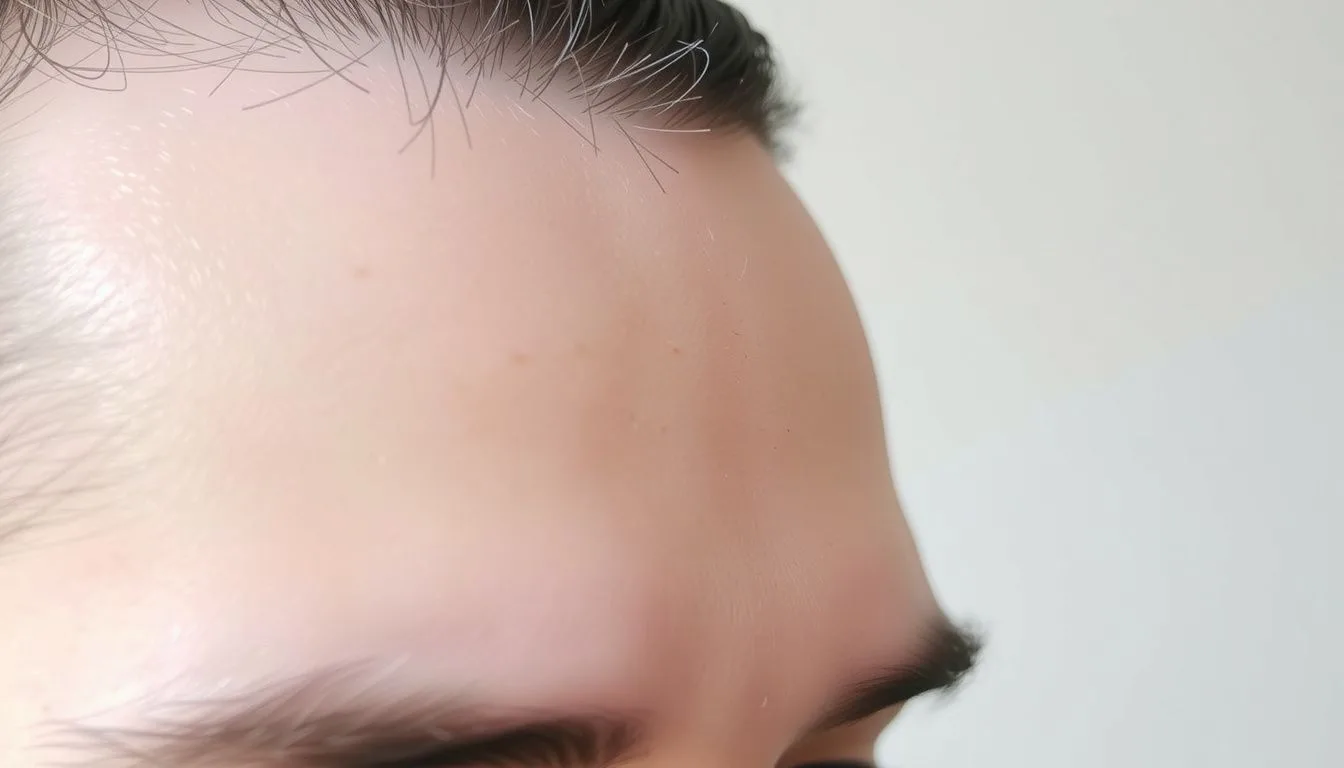
Frontal changes rarely announce themselves. The first clues are usually subtle: a few extra hairs on the pillow, a temple that photographs differently than it used to, or a forehead that seems taller when you pull your hair back. Many people notice that the corners of the hairline soften before the center moves, which is why comparing old photos is often more revealing than a mirror check. A widening part, finer texture at the front, and miniaturized hairs that stop growing past a short length are all practical cues worth tracking over months rather than days.
Clinicians describe progression using staging systems, most commonly the Norwood scale for men and the Ludwig or Sinclair scales for women. These frameworks place early temple recession and mild frontal thinning at the lower stages, with deeper recession and crown involvement appearing later. Not everyone follows the same timeline, and progression can pause for years. Still, early detection matters because hair follicles that have only miniaturized are more responsive than areas that have already gone smooth. Recognizing where you sit on that spectrum gives you a clearer basis for judging what any future option can realistically achieve.
Treatment Options That Can Slow or Reverse the Process
Treatment options fall into a few practical groups based on what they actually do. Some buy time by slowing the conversion of testosterone into DHT, the hormone that miniaturizes sensitive frontal follicles. Others extend the growth phase or improve scalp conditions so existing hairs can thicken and stay longer. A third group, including surgical restoration, replaces what has already been lost rather than protecting what remains.
What each route can achieve at the hairline depends heavily on how much follicle activity is still present. Follicular miniaturization is the key variable: hairs that have only thinned can sometimes respond and regain density, while follicles that have fully scarred over will not return regardless of the approach. This is why timing matters more than almost any other factor. Options started when the hairline is still fuzzy and diffuse tend to produce more visible results than the same options started years later.
Realistic expectations matter as much as the choice itself. Most treatments stabilize and slow progression rather than fully rebuilding a receded line, and results vary widely between individuals. When evaluating any claim, look for evidence that it addresses the underlying mechanism, not just surface appearance, and be cautious of promises of complete reversal.
FAQs
Is hairline hair loss caused by genetics, stress, or something else?
Hairline hair loss most commonly stems from genetics, specifically androgenetic alopecia, which causes gradual thinning and recession at the temples and front of the scalp. Chronic stress can also contribute by triggering telogen effluvium or exacerbating existing genetic hair loss, though it rarely causes permanent hairline recession on its own. Other factors such as tight hairstyles, traction, thyroid disorders, nutritional deficiencies, and certain medications can play a role as well. Identifying the underlying cause with a doctor or dermatologist is the most reliable way to choose an effective treatment.
Can hairline hair loss be reversed once the follicles have started to shrink?
Yes, hairline hair loss can often be partially reversed when follicles have only begun to shrink, since miniaturized follicles are still alive and capable of producing thicker hair again. Treatments like minoxidil and finasteride can slow or stop further miniaturization and may restore some density along the hairline. However, once a follicle has fully scarred over and stopped producing visible hair, regrowth is generally not possible without a hair transplant.
Which treatments actually work for hairline hair loss?
For a receding hairline, the treatments with the strongest evidence are FDA-approved medications like minoxidil and finasteride, which can slow loss and regrow hair in many people, particularly when started early. Procedures such as hair transplant surgery can restore density along the hairline, while low-level laser therapy and platelet-rich plasma may offer modest benefits as add-ons. Because causes range from genetics to traction and hormonal changes, a dermatologist can confirm the reason for your hairline loss and match you with the option most likely to work.