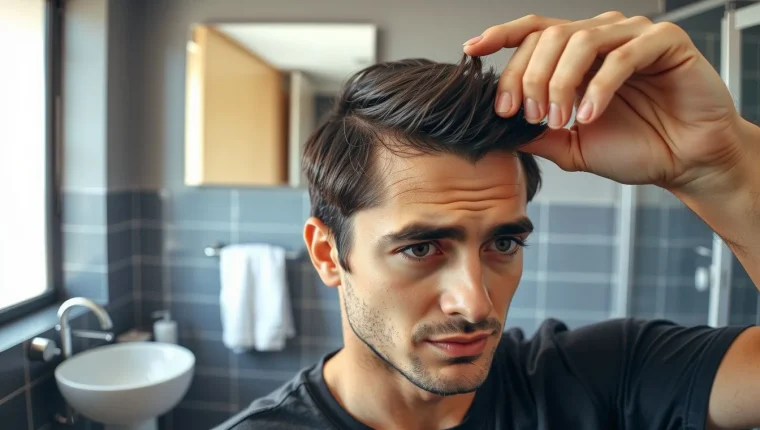
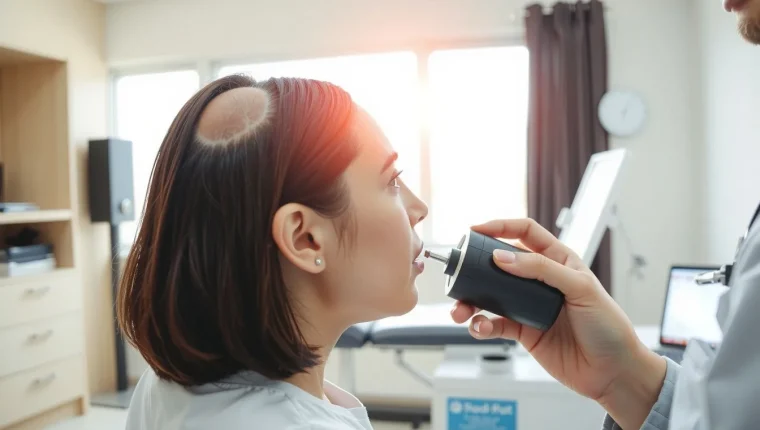
You notice more hair in the drain, a thinner patch at the crown, or a hairline that no longer sits where it used to. This is not random shedding. In most men, male baldness is driven by genetics and hormones and follows a pattern: gradual, progressive miniaturization of hair follicles rather than sudden loss. Because the process is predictable, it can be understood and slowed to a meaningful degree. The sections ahead explain the hormonal cause behind androgenetic hair loss, how DHT gradually weakens follicles, the early signs and stages to watch for, and the medical and daily strategies that can realistically reduce the pace of thinning.
The Hormonal Roots of Male Pattern Hair Loss
Male pattern hair loss begins with hormones—but not in the way most men assume. The key player is dihydrotestosterone (DHT), a potent androgen produced when the enzyme 5-alpha reductase converts testosterone in the scalp. DHT itself is not abnormal; it is a natural byproduct of male hormone metabolism. What differs is how sensitive a man’s hair follicles are to it, and that sensitivity is largely inherited.
This explains why the loss follows a recognizable shape. Follicles along the temples, crown, and mid-scalp carry more androgen receptors and respond to DHT by gradually weakening, while hair at the sides and back often remains resistant. Genetics determine both the pattern and the pace, which is why two men with similar hormone levels can experience very different rates of thinning.
It is worth separating this hormonal pathway from other causes of shedding. Stress, illness, nutritional gaps, and certain medications can trigger diffuse hair loss across the whole scalp, and that shedding is typically temporary. Androgenetic alopecia, by contrast, is progressive and patterned—an important distinction when deciding what kind of help to seek.
How DHT Shrinks Hair Follicles Over Time

DHT does not destroy hair follicles outright. Instead, it gradually changes them through a process called miniaturization. In androgen-sensitive follicles—mainly along the temples and crown—DHT binds to receptors inside the hair bulb and signals the follicle to produce thinner, shorter, and less pigmented hairs with each successive growth cycle.
Over time, the growth phase known as anagen shortens, while the resting phase lengthens. The follicle itself shrinks, its blood supply diminishes, and the hair shaft it produces becomes too fine to be seen easily. Eventually, the follicle may stop producing visible hair altogether, though it often remains alive beneath the skin.
This explains why male baldness rarely happens overnight. Each cycle leaves the hair slightly weaker than before, so the change is slow and easy to overlook until thinning becomes obvious. Because the follicle is miniaturized rather than permanently lost, early intervention—before the process advances too far—offers the best chance of preserving what remains.
Early Signs and Stages of Male Baldness
Early changes rarely announce themselves as a diagnosis. Most men first notice an altered hairline—a slight deepening at the temples that gradually forms the classic M-shape. Others see thinning at the crown, where a growing patch of scalp becomes visible under direct light. Increased shedding on the pillow or in the shower can also be an early clue, though daily shedding varies naturally and is not reliable on its own.
These changes map onto the Norwood scale, the most widely used framework for describing progression. It runs from minimal temple recession (Stage I–II) through deeper frontal and crown loss (Stage III–IV) to the most advanced patterns (Stage V–VII). Some men also experience diffuse thinning across the top rather than a distinct pattern.
It is important to treat these stages as descriptive, not diagnostic. They help you recognize where you might be, but only a clinician can confirm the cause. Catching early signs matters because it widens the window for strategies that may slow further thinning.
Medications That Slow Androgenetic Hair Loss

Two prescription pathways dominate the medical approach to androgenetic hair loss, and each targets a different part of the problem. The first works on the hormone itself: finasteride blocks the enzyme that converts testosterone into dihydrotestosterone (DHT), the androgen responsible for shrinking susceptible follicles. By lowering DHT at the follicle level, it slows the miniaturization process rather than reversing it. The second pathway ignores hormones and instead extends the growth phase of the hair cycle, keeping follicles in the active growing stage longer so that thinning progresses more slowly.
Both options are taken as ongoing daily treatment. They do not cure the underlying condition, and any benefit fades once use stops, which is why consistency matters more than anything else. They tend to work best for men who still have active follicles and visible thinning rather than smooth, fully bald areas—the earlier the start, the more there is to preserve.
Realistic expectations matter. These medications slow loss and can partially regrow hair in some men, but they rarely restore a full head of hair. Results vary, and they often take several months to become noticeable. Because side effects and individual suitability differ, a clinician should guide the choice and monitor progress.
Daily Habits and Treatments That Support Slower Thinning
Daily habits cannot reverse androgenetic hair loss, and it is important to be clear about that from the start. What they can do is support the scalp environment and reduce additional stress on follicles that are already vulnerable to dihydrotestosterone (DHT). Think of these steps as complementary, not as substitutes for proven medical treatment.
Gentle hair care matters more than many men realize. Avoid tight hairstyles, aggressive brushing, and repeated chemical treatments that pull or irritate the scalp. Washing with a mild shampoo and patting hair dry instead of rubbing it can reduce unnecessary shedding. If you use styling products, choose ones that do not leave heavy residue that clogs the scalp.
General health factors also influence how much hair you keep. Poor sleep, chronic stress, smoking, and a diet low in protein, iron, or vitamin D can worsen shedding. Addressing these does not stop androgenetic loss, but it may slow the rate at which thinning becomes noticeable. Regular exercise and balanced nutrition support circulation and overall follicle health.
Consistency is what separates helpful routines from wasted effort. Results, if any, appear over months, not weeks. Be cautious of products marketed as complete cures for male baldness—most lack evidence, and some contain irritants that do more harm than good. The most reliable approach combines medical treatment with sensible daily care.
FAQs
What are the main causes of male baldness?
Male baldness is primarily driven by genetics and the hormone dihydrotestosterone (DHT), which gradually shrinks hair follicles in susceptible men. Age, family history, and certain medical conditions or medications can also contribute to hair loss. While genetics cannot be changed, understanding these causes helps guide effective ways to slow the process down.
How can androgenic hair loss be slowed down naturally?
Natural measures can slow androgenic hair loss by reducing scalp inflammation and supporting follicle health, for example through a balanced diet rich in protein, iron, zinc, and vitamin D, along with stress management and gentle scalp care. Avoiding smoking and excessive alcohol also helps, since both can impair circulation and hormone balance. However, these lifestyle steps generally only slow the process rather than stop or reverse it, so combining them with proven treatments such as minoxidil or finasteride offers the most reliable results.
Which treatments are most effective for male baldness?
Minoxidil and finasteride are the two treatments most consistently supported by evidence for male pattern baldness. Minoxidil is a topical solution that improves blood flow to the follicles, while finasteride is an oral medication that blocks the conversion of testosterone into DHT, the hormone primarily responsible for follicle miniaturization. For men seeking procedural options, low-level laser therapy and hair transplantation can also help slow or mask hair loss. Because results and side effects vary, a doctor should guide the choice of treatment.