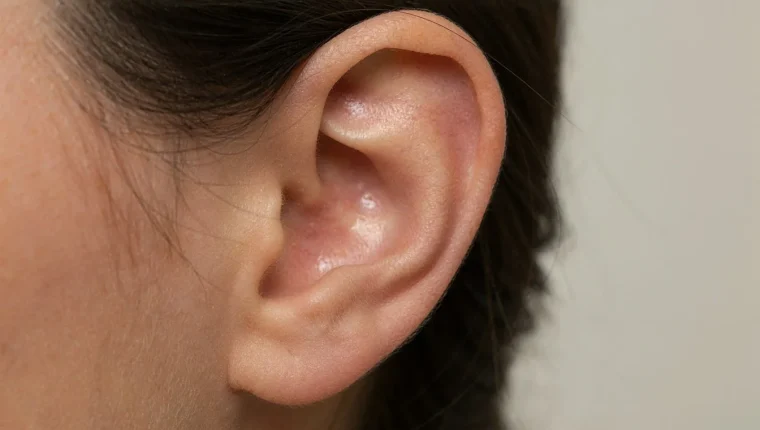
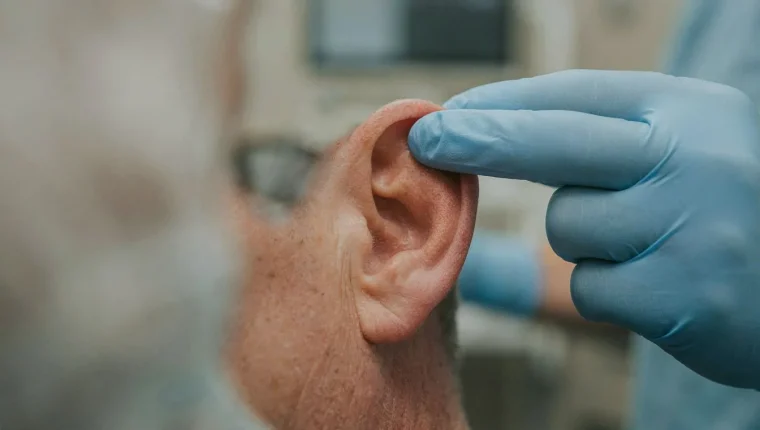
Most people never notice their ears are slightly different from each other — until they do. Maybe it’s a photo taken from the side, or a comment that stuck with you, but once prominent or uneven ears catch your attention, they tend to stay there. Ear symmetry plays a bigger role in facial balance than many realize; one ear that protrudes more, sits lower, or has a different fold can affect your confidence in everyday moments. Otoplasty is surgery to reshape, reposition, or resize the ears so they look natural and match each other. For many patients, better ear symmetry is the main goal and often the most rewarding outcome of surgery. Here’s what to understand before considering it.
Why Ear Symmetry Matters for Facial Balance
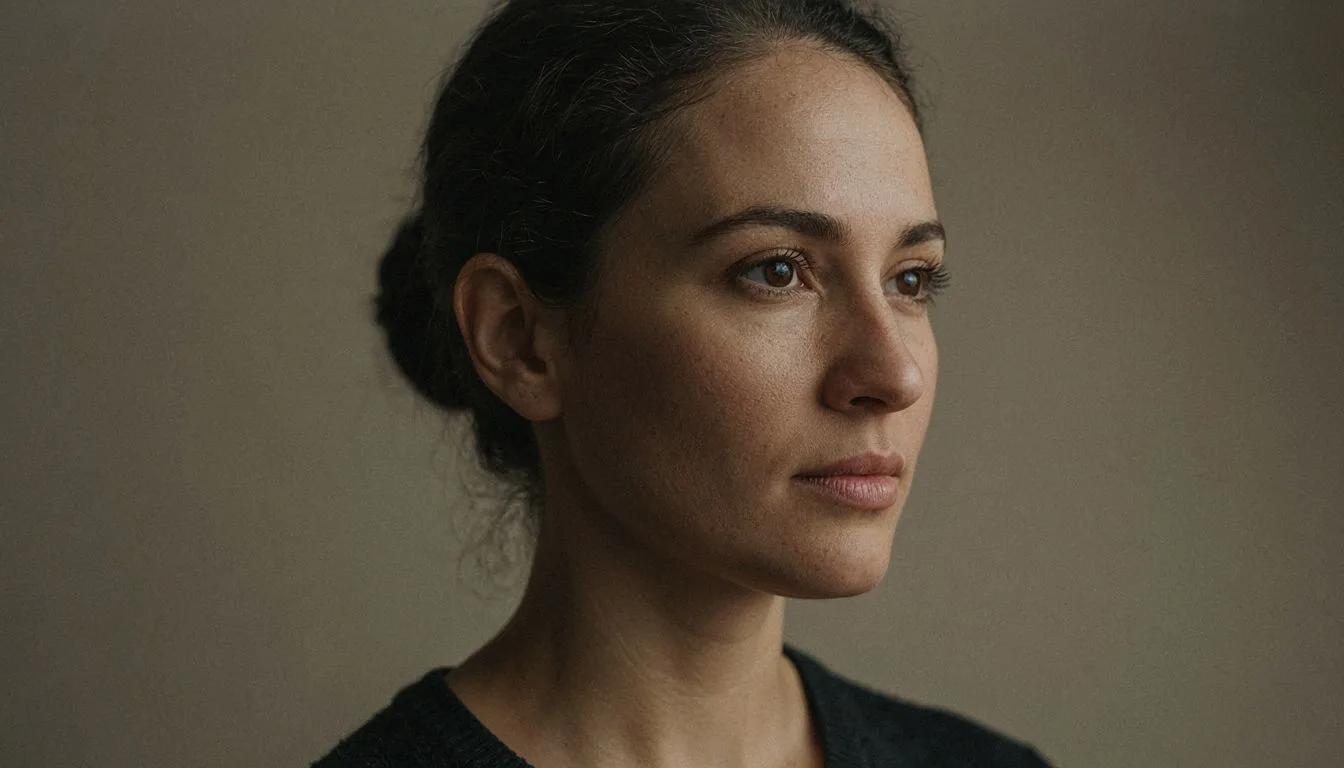
The ears occupy a unique position on the face. Set slightly behind the midline, they frame everything in front of them, which means even a small difference between the two sides can subtly shift how the entire face reads. When one ear protrudes more than the other, sits higher, or folds differently, the eye registers the imbalance even if the viewer can’t name what’s off. This is why facial balance is so closely tied to the ears, and why correcting them often changes perception of the whole face rather than just one feature.
There’s a practical side to this as well. Ears that stick out noticeably tend to draw attention away from the eyes and smile — the features most people want others to focus on. Restoring symmetry tends to quiet that distraction, allowing the face to be perceived as a unified whole. Many patients describe the change not as “having new ears,” but as finally seeing themselves the way others do.
It’s also worth knowing that perfect mirror-image symmetry doesn’t exist in nature. Nearly everyone has one ear slightly larger, lower, or more angled than the other. In most cases these differences go unnoticed. The concern arises when asymmetry is pronounced enough to affect how hairstyles sit, how photos look, or how confident someone feels in profile. From a surgical standpoint, the goal of otoplasty is rarely identical matching — it’s creating ears whose differences fall within a range the eye accepts as natural. Understanding that distinction helps set realistic expectations before any correction is considered.
What Causes Uneven or Asymmetric Ears
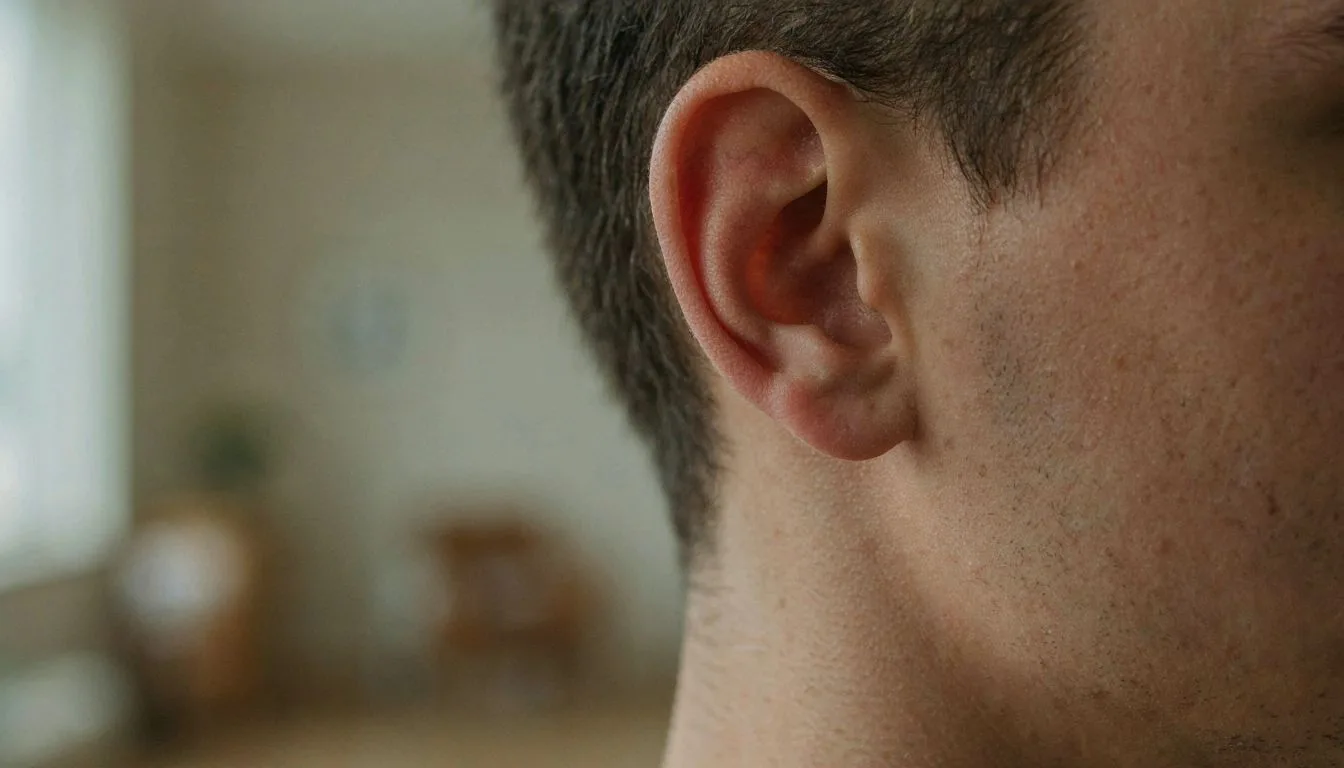
Perfectly matched ears are actually the exception, not the rule. Most people live their whole lives without ever measuring the difference between their two ears, yet when the gap becomes noticeable—especially in photos or from certain angles—it can start to affect how confident someone feels. The reasons behind noticeable asymmetry are surprisingly varied, and understanding them helps clarify what surgery can and cannot correct.
One of the most common roots of uneven ears is congenital malformation, meaning the cartilage simply developed differently before birth. Conditions like prominent ears, constricted (lop) ears, or an underdeveloped antihelical fold fall into this category and often appear in both ears, but rarely to the same degree.
Beyond genetics, several other factors can create or magnify asymmetry:
- Trauma or injury — A childhood accident, sports impact, or even persistent pressure from headphones or sleeping position can reshape cartilage on one side. Conditions like cauliflower ear are a classic example.
- Prior surgery — An earlier ear correction that healed differently than planned, or removed varying amounts of tissue, can leave one ear sitting higher or projecting more than the other.
- Growth patterns — Ear cartilage reaches most of its adult size early in childhood, but uneven growth during those years can gradually widen the gap between the two sides.
- Age-related changes — Cartilage and skin lose elasticity over time, and gravity affects each ear differently depending on its original shape and support structure.
It’s worth knowing that a small degree of difference—typically under 2 millimeters in projection—is considered within normal limits and is generally not noticeable to others. Even in successful surgical correction, surgeons aim for close symmetry rather than identical twins, because forcing perfect equality can make ears look unnatural. Understanding the underlying cause, whether developmental or acquired, is what guides the right surgical approach and realistic expectations for the result.
When Is Otoplasty the Right Choice for Ear Asymmetry
Deciding whether surgery is worth pursuing comes down to a few practical questions. Otoplasty is generally a good fit when the difference between your ears is noticeable enough to bother you, when it affects how hats, glasses, or hairstyles sit, or when photos make you instinctively turn one side away. In these situations, an experienced surgeon can usually achieve meaningful improvement with a technique tailored to the specific cause of the imbalance.
The key concept here is the surgical candidacy assessment. Not every asymmetry benefits from correction, and timing matters. For children, surgeons typically recommend waiting until ear growth is largely complete, around age five to seven, since operating too early can be undermined by continued development. For adults, candidacy depends more on ear health than age. Skin quality, cartilage flexibility, and a history of prior ear surgery all influence what a procedure can realistically achieve.
Good candidates tend to share a few characteristics: they are in overall good health, they do not smoke or are willing to stop during healing, and they hold realistic expectations. It is also important to distinguish between asymmetry that surgery can correct well, such as one ear protruding more than the other or a misshapen fold of cartilage, and differences that are primarily positional or related to hearing structures, which may require a different specialist altogether.
A consultation with actual measurements and photographs is far more useful than a mirror assessment at home. Surgeons often show simulated or before-and-after images of similar cases, helping you understand what degree of improvement is achievable. If the expected gain in symmetry is small relative to the surgical effort, a candid surgeon will tell you so rather than proceed.
How Ear Symmetry Otoplasty Is Performed
Every correction begins with a detailed measurement session. Before any incision is made, the surgeon photographs both ears from multiple angles, compares their projection from the side of the head, and maps out the differences in size, angle, and fold formation. This planning stage is what separates a symmetry-focused procedure from a standard cosmetic ear correction, because each ear may actually need a different set of adjustments to end up matching.
The technique used depends entirely on what is causing the imbalance. If one ear protrudes more than the other, the surgeon may use cartilage-sparing suturing techniques, which reshape the ear with internal stitches rather than removing tissue. If the antihelical fold is missing or underdeveloped on one side, that fold is recreated with permanent sutures placed through small incisions behind the ear. In cases where one ear is genuinely larger or has excess cartilage, a small reduction may be performed alongside the reshaping.
Most of the work happens through an incision hidden in the crease behind the ear, so scarring is rarely visible. Depending on the complexity, the procedure takes one to two hours and is usually done under local anesthesia with sedation for adults, or general anesthesia for children.
Surgeons frequently check both ears against each other throughout the operation, sitting the patient upright when possible to evaluate how the correction looks under natural conditions. This continuous comparison is the heart of symmetry work — the goal is not two “perfect” ears, but two ears that read as a balanced pair from every angle.
What to Expect During Recovery After Ear Surgery
Recovery after ear surgery is usually far easier than people anticipate, largely because otoplasty does not involve deep tissue or bone. Most patients go home the same day with a soft dressing wrapped around both ears, and the first week is really about protecting the surgical site rather than enduring significant pain. Discomfort in the early days is typically described as soreness, tightness, or a mild throbbing sensation, which responds well to prescribed or over-the-counter pain relief.
The single most important factor during the first phase of healing is protecting the correction while the cartilage settles into its new position. Your surgeon will fit a compression headband after the initial dressing comes off, and you will be expected to wear it consistently — usually day and night for the first week or two, then mainly at night for several weeks more. This band keeps the ears from folding or being pulled forward during sleep and helps control swelling as the tissues heal.
Beyond the headband, a few practical guidelines shape the first month:
- Sleep on your back: Avoiding pressure on the ears is essential, so side and stomach sleeping are off-limits until your surgeon clears you, typically two to four weeks after the procedure.
- Keep incisions clean and dry: Gentle care behind the ears prevents irritation and infection while the small incision lines close and fade.
- Pause physical activity: Light walking is fine within days, but sports, swimming, and anything with contact or impact generally wait four to six weeks.
- Avoid bending and heavy lifting early on: Straining raises blood pressure to the head and can increase swelling in the first few days.
Most adults return to desk work or school within five to seven days, once the bulky dressing is replaced by the headband and the ears no longer look obviously “in recovery.” Swelling and mild bruising peak in the first week and resolve steadily from there. You may notice temporary numbness or altered sensation around the ear, which nearly always returns gradually over the following weeks as the nerves recover. Children, who make up a large share of otoplasty patients, tend to heal even faster but need extra supervision so they do not pull at their ears during sleep. Attending every scheduled follow-up allows your surgeon to track how each ear is settling and confirm that symmetry is developing as planned.
How Long Results Last and Whether Asymmetry Can Return
Otoplasty results are considered permanent for the vast majority of patients, and this is one of the surgery’s most reassuring qualities. Once the cartilage has been reshaped and secured with sutures, it heals in its new position and retains that contour for life. The reshaped framework does not gradually revert the way some soft-tissue procedures can, because the structural change is built into the cartilage itself.
The outcome’s durability depends largely on how well the correction was performed and how the tissue heals. When cartilage-sparing suturing techniques are used properly and the ear is given adequate time to settle, the risk of the ear drifting back toward its original shape is low. Studies and long-term clinical experience consistently show that the need for revision is uncommon, and most people who are happy with their result at the one-year mark keep that result decades later.
There are, however, a few situations where asymmetry can reappear or become noticeable again:
A suture releasing or loosening early in the healing period, occasionally after direct trauma to the ear, can allow part of the correction to unfold. This is why protecting the ears during recovery matters so much.
Natural aging changes ear appearance gradually. Cartilage becomes slightly softer and skin loses elasticity, so the ears of a 70-year-old look different from the same ears at 30 — but a corrected ear ages proportionally, and the improvement itself typically remains visible.
Significant injury, such as trauma from sports or an accident, can deform cartilage in anyone, corrected or not.
It is also worth understanding the difference between a true recurrence and a small residual difference. Very minor asymmetry that appears during healing — one ear sitting a millimeter or two differently — is often just the ears settling at slightly different speeds and evens out over several months. A genuine structural relapse, where the ear visibly folds forward again, is what revision surgery addresses, and it can usually be corrected with a straightforward procedure once tissues have fully healed.
If you ever notice one ear changing position months or years after surgery, an early consultation allows the issue to be evaluated while correction is simplest.
How to Choose a Qualified Surgeon for Cosmetic Ear Correction
The outcome of any ear correction depends far less on the surgical technique itself than on the hands applying it. Two surgeons can use the same cartilage-sparing approach and still achieve very different results, which is why selecting the right specialist deserves as much attention as the decision to have surgery.
Start with board certification. A qualified facial plastic surgeon or plastic surgeon certified by a recognized board has completed formal training and maintains ongoing education in the field. Beyond credentials, look for specific experience with ear procedures — a surgeon who performs otoplasty regularly will have encountered a wide range of ear shapes and asymmetry patterns, including revisions of prior surgery.
Before-and-after photographs are one of your most practical tools. Ask to see cases that resemble your own anatomy, ideally from angles similar to those you notice in the mirror. Natural, even results with realistic contours are a better signal than dramatic transformations. Be cautious if a clinic only shows flattering angles or avoids showing close-up views of the ears.
The consultation itself reveals a great deal. A trustworthy surgeon will examine both ears carefully, measure asymmetry, and explain what correction can realistically achieve — including the possibility that perfect mirror-image symmetry is not a natural or healthy goal. They should also discuss anesthesia options, healing expectations, and potential complications without being prompted. If you feel pressured to book quickly or upsold on additional procedures, treat that as a warning sign.
It is worth asking directly how the surgeon plans to address symmetry, since even a small difference of a few millimeters in projection between the two ears is what determines whether the result looks balanced in everyday life.
Finally, verify hospital or surgical facility privileges and read patient reviews with a critical eye — consistent mentions of clear communication and attentive follow-up care matter more than a single perfect rating. Choosing carefully takes time, but your ears are permanently visible; the extra research is an investment you will see every day.
FAQs
How noticeable is ear asymmetry before considering otoplasty?
Most people notice their own ear asymmetry far more than anyone else does, and in many cases the difference is subtle enough that others never pick up on it. When the imbalance is more pronounced—such as one ear protruding noticeably more or differing significantly in size or shape—it tends to become a genuine source of self-consciousness. During a consultation, a surgeon will assess your ears from multiple angles and compare the degree of asymmetry against what falls within the normal range, which is actually quite wide. This evaluation helps determine whether otoplasty would meaningfully improve symmetry or whether the variation is simply a natural feature of your anatomy.
Can Ear Symmetry otoplasty correct one ear more than the other?
Yes, Ear Symmetry otoplasty is specifically designed to correct asymmetry, and the surgeon can adjust one ear more than the other to bring both into balance. Rather than making the ears identical to each other, the goal is to harmonize their size, projection, and position so no single ear draws attention. In practice, most people naturally have slight differences between their ears, and a skilled surgeon works with these individual features rather than forcing perfect symmetry. During your consultation, the surgeon will assess each ear separately and tailor the surgical plan accordingly.
How long do otoplasty results stay symmetrical over time?
When performed by an experienced surgeon, otoplasty results typically remain symmetrical for life, since the reshaped cartilage heals and holds its new position permanently. Minor asymmetries can appear over many years due to natural aging, cartilage softening, or trauma, but significant relapse is uncommon when the ears have healed properly. Following your surgeon's aftercare instructions—especially wearing protective headbands during early recovery—helps preserve that symmetry long term.