Breast augmentation is one of the world’s most common cosmetic surgeries, and it is safe with predictable outcomes for most healthy patients. Still, “safe” does not mean “risk-free.” Like any surgery, it carries real risks: capsular contracture, implant rupture, infection, changes in nipple sensation, and the need for future revision surgery. There are also rarer but well-documented conditions, such as BIA-ALCL, a type of lymphoma associated with certain textured implants. Understanding these breast augmentation safety risks before your operation helps you choose an experienced, board-certified surgeon, select the right implant type, and follow a recovery plan that protects your results. Knowing the facts puts you in control of your decision.
What Breast Augmentation Actually Involves
Before any discussion of safety can be meaningful, it helps to understand exactly what happens during the procedure itself. Breast augmentation is not a single technique but a set of surgical decisions made together with your surgeon: the type of implant, the incision location, and the placement plane all shape your individual risk profile.
The procedure itself typically takes one to two hours under general anesthesia. The surgeon makes an incision — usually under the breast crease, around the areola, or in the armpit — and creates a pocket for the implant. That pocket can sit directly behind the breast tissue (subglandular) or beneath the chest muscle (submuscular placement), a choice that affects everything from healing time to how easily future mammograms can be read.
Implant type matters just as much. Modern options include silicone gel and saline-filled implants, each with distinct rupture behaviors and monitoring requirements. Silicone implants generally feel more natural but may experience “silent rupture,” meaning leakage can occur without obvious symptoms and requires periodic imaging to detect. Saline implants deflate visibly when they break, which some patients see as an early-warning advantage.
Surface texture is another decision with real safety implications. Textured implants have been linked to BIA-ALCL, a rare lymphoma of the immune system, while smooth implants carry different trade-offs related to capsular contracture rates.
Understanding these variables is the foundation for evaluating the risks covered in the sections ahead — because your safety profile depends less on the procedure’s name and more on the specific choices made in the operating room.
Common Surgical Risks You Should Know About
Every surgery carries a baseline level of risk, and breast augmentation is no exception. These are the general risks that come with any invasive procedure, regardless of the surgeon’s skill or the quality of the facility. Knowing them in advance helps you recognize normal healing versus something that needs immediate medical attention. The most immediate concern in the first days after surgery is postoperative bleeding, which occurs when blood collects around the implant and may require surgical drainage if it becomes significant.
Beyond bleeding, a handful of complications account for most early revisions:
- Infection — Signs include increasing redness, warmth, fever, or drainage from the incision. Infections around implants often require antibiotics and, in severe cases, temporary implant removal.
- Poor wound healing — Smoking, diabetes, and certain medications slow recovery and can cause incisions to open, sometimes leaving wider scars.
- Changes in nipple or breast sensation — Numbness or heightened sensitivity is common early on; most cases resolve within months, but some changes can persist.
- Blood clots — Deep vein thrombosis is rare in cosmetic surgery but is a reason surgeons emphasize early, gentle movement after your procedure.
- Asymmetry — Minor differences between breasts are normal, but noticeable unevenness in size, position, or shape may need correction.
The likelihood of any of these occurring depends heavily on your individual health profile. Non-smokers with stable weight and no chronic conditions generally heal faster and face fewer complications. This is why a thorough pre-operative evaluation matters just as much as the surgery itself — your surgeon uses that information to tailor the technique, implant placement, and aftercare plan to your specific risk level.
Breast Augmentation Safety Risks: What the Research Shows
Modern data on breast augmentation comes largely from long-term studies tracking tens of thousands of patients, and the overall picture is reassuring: serious complications remain relatively uncommon, and most women report high satisfaction rates a decade after surgery. Large registry studies from the FDA and European databases have given researchers a much clearer view of what actually goes wrong, how often, and when.
One of the most important findings from this research concerns capsular contracture, the hardening of scar tissue around an implant. Data shows it is the single most common reason for revision surgery, occurring in roughly 10 to 20 percent of patients over ten years, with higher rates linked to silicone implants placed above the muscle and to infections during the initial healing period.
Research has also clarified the risk of anaplastic large cell lymphoma (BIA-ALCL), which was once widely feared. Current evidence indicates it is extremely rare — affecting an estimated 1 in several thousand to 1 in 30,000 patients — and is strongly associated with textured implant surfaces rather than smooth ones. Detected early, it is highly treatable.
Long-term safety data on silicone implants has been equally informative. After years of concern, multiple large studies found no credible link between silicone implants and connective tissue disease, autoimmune disorders, or breast cancer. Rupture rates, meanwhile, are gradual rather than sudden: most studies show approximately 10 percent of implants require removal within 10 years, often without noticeable symptoms, which is why researchers recommend routine imaging for silent rupture.
The pattern in the research is consistent — the risks are real but predictable, and they concentrate in specific areas rather than being spread randomly across all patients. Understanding which risks belong to the surgery itself, and which are tied to the implant over time, makes it much easier to weigh your personal situation. One area that deserves its own careful look is anesthesia, which shapes your overall risk profile in ways many patients overlook.
How Anesthesia Affects Your Overall Risk Profile
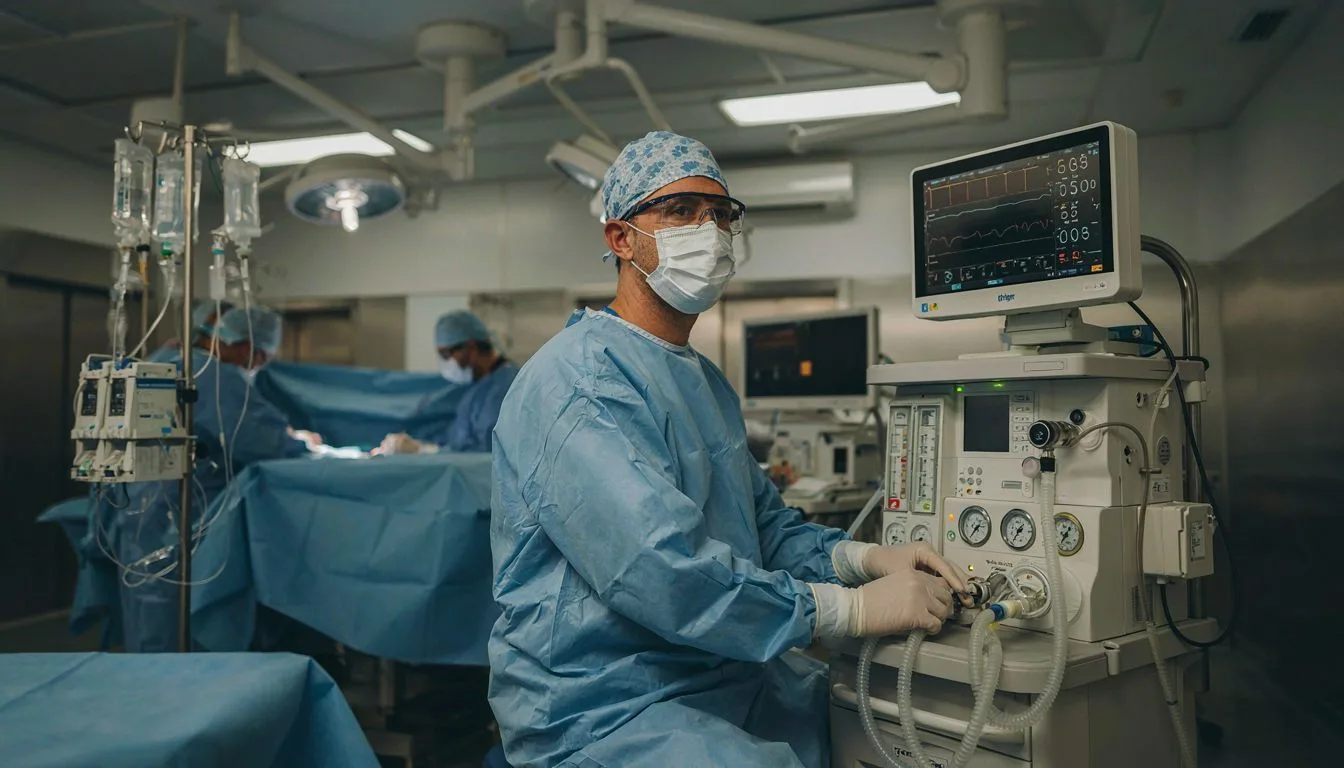
Anesthesia is often treated as a background detail of surgery, but it deserves its own spot in any honest conversation about breast augmentation safety risks. The good news: when administered by a board-certified anesthesiologist or certified nurse anesthetist in an accredited facility, general anesthesia is remarkably safe for healthy patients. Studies place the risk of a serious anesthesia-related complication at well under 1 in 100,000 for elective cosmetic procedures.
Your individual anesthesia risk profile is shaped by factors worth discussing openly with your surgical team before the day of surgery. These include your age, BMI, smoking status, history of sleep apnea, and any personal or family history of adverse reactions to anesthesia. Conditions like uncontrolled high blood pressure or asthma can raise the odds of complications such as airway irritation, nausea, or, in rare cases, cardiovascular events during surgery.
The type of anesthesia matters, too. Most breast augmentations use general anesthesia, though some surgeons offer local anesthesia with sedation for suitable candidates. Each option carries a slightly different side effect pattern—general anesthesia is more commonly associated with postoperative nausea, sore throat, and grogginess, while sedation-based approaches may limit how the procedure is performed.
Malignant hyperthermia, an extremely rare but serious reaction to certain anesthetic agents, is something every operating team is trained to recognize and treat, and modern monitoring equipment has made anesthesia dramatically safer over the past few decades.
The practical takeaway: disclose your full medical history honestly, follow pre-operative fasting instructions carefully, and confirm that anesthesia will be overseen by a qualified professional rather than the surgeon alone. Doing so keeps this part of your risk profile firmly in your favor.
Short-Term Side Effects During Recovery

The first few weeks after surgery are when your body does most of its visible healing, and it is completely normal for this period to come with symptoms that look alarming but are actually expected. Understanding which side effects belong to a typical recovery timeline helps you avoid unnecessary panic while still staying alert to anything genuinely unusual.
Most of these effects peak within the first 72 hours and fade steadily from there. What you should realistically expect includes:
- Swelling and bruising — The breasts and surrounding chest area can look noticeably larger and darker than expected for the first one to two weeks. Sleeping with your upper body slightly elevated and wearing your surgical bra as directed speeds this along considerably.
- Incision-site discomfort — A pulling, tight, or burning sensation along the incision lines is common, especially when you move your arms. Prescription or over-the-counter pain medication usually keeps this well controlled after the first few days.
- Temporary numbness — Areas of the nipple, areola, or breast skin may feel dulled or completely numb due to stretched nerves. Sensation typically returns gradually over weeks to months, though small patches can take longer.
- Fatigue — Your body is channeling significant energy into healing, so feeling unusually tired for the first one to two weeks is your physiology talking, not a complication. Short, frequent walks are better than long rest sessions for circulation and mood.
- Limited arm movement — Raising your arms above shoulder height often feels restricted early on, particularly with submuscular placement, where the muscle needs time to adapt to the implant beneath it.
Timing matters more than intensity when judging whether something is normal. Swelling that improves day by day is expected; swelling that suddenly worsens on one side after several days of improvement, or pain that escalates rather than fades, deserves a call to your surgeon. A persistent fever above 38°C (100.4°F), drainage that turns cloudy or foul-smelling, or one breast growing visibly larger than the other are signs that something like an infection or postoperative bleeding may be developing — both of which need prompt evaluation rather than a wait-and-see approach.
One practical tip that surgeons consistently emphasize: keep a simple daily log during the first two weeks. A short note each morning about pain levels, swelling, and how the incisions look gives you an objective record, making trends easy to spot and giving your surgical team precise information if you do need to reach them.
Complications That Can Appear Years Later
Most people assume that once the first few months pass without incident, the story is over. In reality, breast implants are long-term devices, and some of the most significant complications only surface after years—or even decades—of living with them. This is why surgeons consistently describe augmentation as a decision that requires lifelong awareness rather than a one-time event.
One of the best-documented late complications is capsular contracture, which can develop months or many years after surgery. The scar tissue that naturally forms around an implant gradually tightens in some patients, causing the breast to feel firm, look distorted, or become painful. It remains one of the most common reasons for revision surgery, and its onset is notoriously unpredictable—it can appear five years after an otherwise uneventful recovery just as easily as within the first year.
Another condition that has reshaped how surgeons counsel patients is BIA-ALCL, a rare cancer of the immune system linked primarily to textured implants. It typically presents years after surgery, often as sudden swelling or fluid buildup around the implant. When caught early, treatment is usually highly effective, which is exactly why knowing this delayed pattern matters. In 2019, this understanding led to the recall of a textured implant model worldwide, and patients with textured devices are now often advised to have regular follow-ups rather than assume silence means safety.
Late-onset changes are not limited to dramatic diagnoses. Over time, implants can shift position, causing asymmetry that wasn’t present in early recovery. Thin patients may notice visible rippling as surrounding tissue naturally changes with age or weight fluctuation. Calcification of the scar capsule, known as calcification, can also mimic concerning findings on mammograms, sometimes complicating routine breast cancer screening.
Because of these delayed timelines, professional guidelines now recommend routine monitoring—typically periodic imaging checks even when no symptoms exist. The practical takeaway is simple: treating your follow-up appointments as seriously as the surgery itself is what truly protects your long-term outcome.
Implant Rupture and Leakage: Warning Signs to Watch
Implant rupture rarely announces itself with dramatic symptoms. In fact, one of the most important things to understand is that a broken implant can go completely unnoticed — this is what surgeons call a silent rupture, and it’s the reason imaging follow-up matters even when everything feels normal.
With silicone implants, the gel often stays inside the shell or the surrounding scar tissue when a rupture occurs, so there may be no visible change at all. Saline implants behave differently: when they leak, the breast visibly deflates over days as the body absorbs the saltwater, making the problem impossible to miss. Either way, a ruptured implant is not a medical emergency in most cases, but it does need professional evaluation and typically surgical repair or replacement.
What should you watch for over the years? Changes in breast size or shape, a sudden asymmetry, or a “deflated” appearance are the clearest signals. Some people notice firmness, tenderness, swelling, or a pulling sensation. Others describe small, palpable lumps or ripples along the edge of the breast. Less commonly, silicone migration can cause discomfort in the chest, armpit, or even arm, and occasionally a burning or tingling feeling develops without any obvious trigger.
Modern imaging plays a key role. The FDA currently recommends MRI screening five to six years after silicone implant placement and every two to three years thereafter, precisely because symptoms can’t always be trusted. Ultrasound is a more affordable and accessible alternative that many surgeons use for routine checks. If you chose saline implants, formal screening is generally unnecessary — a leak makes itself known.
It’s also worth knowing that ruptures become statistically more likely as implants age. Most manufacturers report that the majority of devices remain intact at 10 years, but longevity varies by implant type, placement, and individual factors like trauma or capsular contracture — which you’ve already seen is a complication in its own right. If you ever notice a change, don’t wait for pain: a quick imaging check gives you a clear answer and keeps a small problem from becoming a bigger one.
FAQs
How long do breast augmentation safety risks typically last after surgery?
Most breast augmentation safety risks concentrate in the first few weeks after surgery, when swelling, bruising, and infection risk are highest. Acute complications like bleeding or wound issues typically emerge within the first one to two weeks. Long-term risks such as capsular contracture or implant rupture can develop months or even years later, so ongoing monitoring with regular check-ups matters. Most patients feel substantially recovered within six to eight weeks.
Can breast implants cause illness years later, and what does the research say?
Yes, breast implants can cause illness years later, and research increasingly supports this connection. The strongest evidence involves breast implant illness (BII), a collection of symptoms such as fatigue, joint pain, and brain fog, which studies show affects a significant subset of patients, and a 2021 study found those who removed their implants reported substantial symptom improvement. There is also a well-established, though rare, link to a cancer of the immune system called breast implant-associated anaplastic large cell lymphoma (BIA-ALCL), which typically develops years after implantation. Research also shows that implants commonly cause complications over time, including capsular contracture and rupture, which is why the FDA recommends long-term monitoring rather than treating implants as lifetime devices.
When should I contact my surgeon about possible complications after breast augmentation?
Contact your surgeon right away if you notice a fever above 101°F, spreading redness, warmth, or discharge from your incisions, as these can signal an infection. Also call promptly for sudden swelling on one side, severe pain that doesn't improve with medication, a breast that looks visibly asymmetric or hardened, or any signs of blood clots such as leg swelling, chest pain, or shortness of breath. Don't hesitate to reach out for anything that worries you, even minor concerns — a good surgical team would much rather hear from you early than have you wait it out at home.