Flying to Canada after dental implants in Turkey requires more planning than booking the earliest available flight. Travel readiness depends on the number and type of implants, any bone grafting or sinus lifting, your pain and swelling, and your dentist’s assessment of the surgical sites. A long international journey can be tiring, so your return date should allow enough time to manage early recovery and respond to unexpected symptoms before departure. Arrange clear postoperative instructions, prescribed medication, and a way to contact the clinic while you are in Canada. During the journey, protect the implant sites, stay hydrated, and follow your dentist’s eating and oral-care guidance. If bleeding continues, swelling worsens, fever develops, or pain is uncontrolled, seek dental advice before flying instead of relying on a standard timeline.
When Is It Safe to Fly After Dental Implants in Turkey?
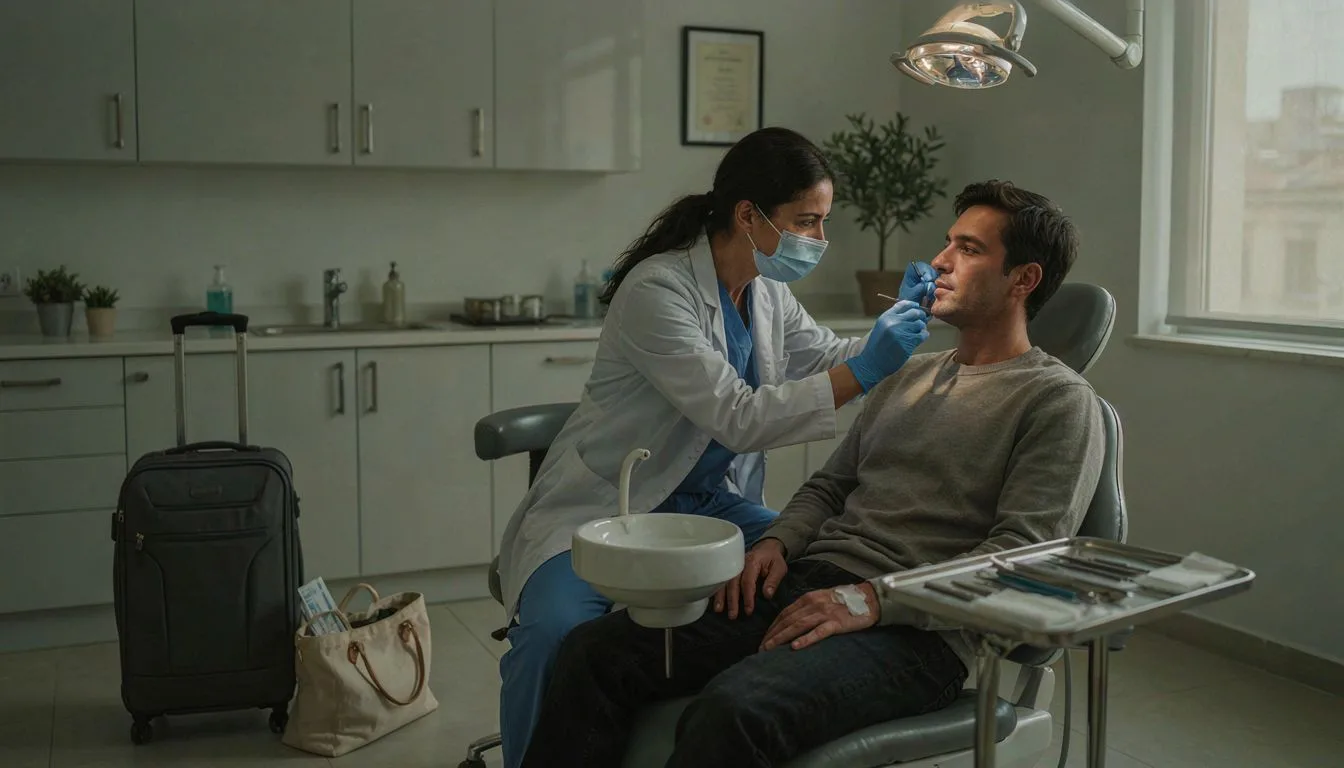
The safest time to fly after dental implants in Turkey depends on the extent of surgery and how your early healing is progressing. After routine implant placement, some patients may be fit to travel once bleeding is controlled and symptoms are stable, but the exact timing should come from the treating dentist rather than a fixed rule.
Recovery may require more caution when treatment includes bone grafting, a sinus lift, several implants, or multiple surgical sites. These procedures can cause more swelling and may make pressure changes during air travel less comfortable, particularly when the upper jaw or sinuses are involved. Your dentist should assess the surgical sites, confirm that the clot is stable, and check that pain and swelling are responding as expected.
A scheduled postoperative review before departure is an important safety check. At this appointment, ask for dentist clearance to fly, written aftercare instructions, prescribed medication guidance, and details of who to contact if a problem develops during the journey. Do not rely solely on how well you feel immediately after surgery, since swelling can increase during the first few days.
Delay travel and seek prompt clinical advice if bleeding does not settle with firm gauze pressure, pain suddenly becomes stronger, swelling is rapidly worsening, or you develop fever, pus, breathing difficulty, or difficulty swallowing. When symptoms are stable and the dentist confirms that the surgical sites are progressing normally, flying to Canada can usually be planned around the individual recovery pattern rather than an arbitrary travel date.
How Soon Can You Return to Canada After Surgery?
Plan your return to Canada around the clinic’s follow-up schedule, not around the earliest available flight. Your surgeon may want to review the implant sites, check your healing, and confirm that postoperative symptoms are settling before you leave Turkey. A short stay that includes this review is often more practical than departing immediately and trying to arrange urgent advice from abroad.
Allow extra time for a long international journey, airport transfers, possible delays, and the effects of changing time zones. Keep prescribed medicines in your hand luggage, in their original packaging, and make sure you have enough supplies for the journey and the first days after arrival. Ask the clinic how to obtain replacements if your travel plans change.
Before booking, confirm the clinic’s availability for a final assessment and check your travel insurance and airline conditions. Insurance policies may exclude complications related to elective treatment, so verify coverage carefully. It is also sensible to identify a dentist or oral surgeon near your home in Canada who can provide follow-up if needed.
Build a contingency plan rather than scheduling your flight with no flexibility. If swelling, pain, or bleeding is worsening, contact the treating clinic before travelling and be prepared to postpone departure. The safest itinerary is one that includes recovery time and schedule flexibility, allowing your clinical condition—not just your ticket— to determine when returning to Canada is appropriate.
Managing Pain, Swelling, and Bleeding During the Journey
Managing symptoms during the flight starts with keeping your postoperative plan easy to follow. Carry all prescribed medicines in your hand luggage, in their original packaging, and take them exactly as directed by your dental surgeon. Do not wait until pain becomes severe before using an approved medication, and avoid adding aspirin or other drugs unless your clinician has confirmed they are suitable. Planning ahead can make it easier to respond calmly to discomfort, swelling, or minor bleeding while protecting the surgical area throughout the journey.
- Choose gentle nourishment: Pack soft foods such as yogurt, mashed vegetables, or a smoothie without seeds, and drink water regularly. Avoid very hot, hard, spicy, or crumbly foods that may irritate the surgical area.
- Use cold therapy carefully: A covered cold pack can help with facial swelling during short periods, but place it on the outside of the cheek and never directly against the skin. Follow your clinic’s recommended intervals.
- Maintain gentle hygiene: Brush the untouched teeth carefully and follow any instructions about rinsing. Do not scrub the implant site, spit forcefully, or disturb sutures.
- Handle minor oozing calmly: If light bleeding occurs, place clean gauze over the area and apply gentle, steady pressure as instructed by your dentist. Avoid repeatedly checking the wound, which can prevent clot formation.
These simple measures can help keep symptoms manageable without disrupting healing. Mild discomfort, bruising, and gradually settling swelling can occur during recovery, so continue following your dental surgeon’s instructions and allow yourself time to rest during the journey. However, persistent bleeding, rapidly increasing swelling, fever, or pain that remains uncontrolled despite prescribed treatment requires prompt medical advice rather than self-management during the journey.
Air Travel Precautions for Protecting Healing Implants
Protecting healing implants during a long flight depends largely on reducing avoidable pressure, irritation, and disruption to your postoperative routine. Airports can encourage rushed meals, missed medication, and poor hygiene, so prepare a small travel kit before leaving your clinic. Keep your treatment records, prescribed medication, and essential oral-care supplies in your hand luggage rather than checked baggage. Planning these details in advance can help you maintain a comfortable routine and respond promptly if the treated area becomes sensitive during travel.
- Choose soft foods that require minimal chewing, and avoid hard, sticky, spicy, or very hot items that may irritate the treated area.
- Drink water regularly and limit alcohol, which can worsen dehydration and interfere with recovery. Avoid smoking or vaping throughout the journey.
- Reduce pressure on the surgical site by chewing on the opposite side, avoiding unnecessary touching, and following your dentist’s instructions about rinsing and brushing.
- Move gently during the flight by standing or walking briefly when appropriate, while allowing time to rest and keeping your head comfortably elevated.
- Keep conversations moderate if talking causes jaw fatigue, and avoid carrying heavy luggage that strains your body immediately after surgery.
Cabin pressure is not usually a direct threat to a stable dental implant, but discomfort may feel stronger when you are dehydrated, tired, or tense. Follow the specific postoperative instructions provided by your implant dentist, since grafting or additional procedures may require extra precautions. If you notice worsening pain, persistent bleeding, unusual swelling, or another concerning change during or after the flight, contact your dental provider for guidance. Careful preparation, gentle movement, adequate hydration, and attention to your dentist’s instructions can support a smoother journey while the implant continues to heal.
When to Contact Your Dentist After Arriving in Canada

After arriving in Canada, contact your Turkish dental clinic if healing does not follow the expected course or if you have questions about the implant procedure. Share the clinic’s operative notes, implant brand and model, imaging, prescriptions, and discharge instructions with a Canadian dentist so they can assess you accurately.
Prompt local dental assessment is important for worsening pain, persistent bleeding, increasing swelling, fever, pus, foul taste, difficulty swallowing, or a loose implant component. These symptoms may require examination and treatment in Canada, while the Turkish surgeon should remain involved in decisions about implant-specific complications. Routine healing questions can usually be addressed through planned follow-up with the original clinic, provided symptoms are stable and improving.
FAQs
How soon can I fly from Turkey to Canada after dental implants?
Most people can fly 24–48 hours after dental implant surgery if the procedure was uncomplicated and they feel well. Extensive bone grafting, sinus lifting, significant swelling, bleeding, or sedation may require a longer delay, so follow your implant dentist’s specific advice before traveling from Turkey to Canada.
What precautions should I take when flying after dental implants from Turkey to Canada?
Wait until your dentist confirms that flying is safe, especially after bone grafting or sinus-lift procedures. Keep prescribed medicines and essential dental documents in your carry-on, stay hydrated, avoid alcohol and smoking, and follow your dentist’s instructions for eating and oral hygiene. Seek urgent dental care if you develop worsening pain, persistent bleeding, fever, facial swelling, or breathing difficulty during or after the flight.
Can air travel affect swelling, bleeding, or implant healing after dental surgery?
Air travel can temporarily worsen swelling and discomfort after dental surgery because cabin pressure, dry air, and prolonged sitting may increase fluid retention. Flying usually does not cause bleeding or disrupt implant healing, but avoid travel until active bleeding is controlled and your dentist confirms it is safe, especially after extensive surgery or sinus-related procedures. Follow your dentist’s instructions and seek care for persistent bleeding, severe pain, fever, or rapidly increasing swelling.