Large, heavy breasts can pull on the neck, dig grooves into the shoulders, and make you avoid simple workouts or a good night’s sleep. When daily discomfort finally leads someone to consider surgery, the hardest decision is often choosing a breast reduction surgeon in Turkey without meeting them in person first.
It is a decision that mixes real excitement with real risk. Lower costs, modern clinics, and surgeons who perform these operations week after week are genuine advantages. So are the stories of patients who felt dismissed or rushed through consults that lasted ten minutes. Knowing how to tell the difference between a careful, qualified surgeon and a polished sales funnel is what this guide is built to help you do.
Qualifications That Define a Skilled Breast Reduction Surgeon
A truly capable surgeon carries more than a medical degree. The foundation rests on years of focused training in plastic and reconstructive surgery, followed by hands-on experience with reduction mammaplasty specifically. Volume matters here — a doctor who performs the procedure routinely develops an intuitive understanding of how different breast shapes, tissue densities, and skin qualities respond to reshaping.
Look for someone who approaches the operation with both technical precision and an aesthetic eye. Reduction is not simply about removing tissue; it is about sculpting a natural contour that suits the patient’s frame. That requires a surgeon comfortable with multiple incision patterns and skilled at tailoring the method to the individual anatomy rather than applying a one-size-fits-all technique.
Photographic documentation of previous cases offers one of the clearest windows into a surgeon’s real-world skill. Consistent, well-lit before-and-after images — taken from multiple angles and at standardized intervals — reveal symmetry, scar placement, and nipple position with far more honesty than a verbal description ever could.
Equally important is how the surgeon communicates. A qualified specialist listens carefully, sets realistic expectations, explains the trade-offs between techniques, and is transparent about potential complications. This combination of surgical depth and patient-centered communication is what separates a competent operator from an exceptional one.
Board Certification and International Credentials to Look For
Credentials do more than decorate a clinic wall — they quietly prove that the person holding the scalpel has met a recognized standard. Once you start comparing profiles of a breast reduction surgeon Turkey patients often research, you’ll see a wide spectrum of titles, fellowships, and society memberships. Learning which of those signals genuinely reflects training quality helps you filter the marketing noise from the meaningful qualifications.
- Turkish Medical Association (TTB) registration: Confirms a legal license to practice medicine in Turkey and that no disciplinary restrictions are active against the surgeon.
- Turkish Society of Plastic, Reconstructive and Aesthetic Surgeons (TPRECD) membership: Indicates completion of an accredited plastic surgery residency and adherence to a national specialty body.
- European Board of Plastic, Reconstructive and Aesthetic Surgery (EBOPRAS) certification: An independent exam-based credential that benchmarks the surgeon’s knowledge against European peers.
- ISAPS or ASPS international society membership: Shows the surgeon engages with broader aesthetic surgery communities and typically meets continuing-education requirements.
- Hospital privileges at a JCI-accredited facility: Even a well-credentialed doctor needs operating rights at a properly audited hospital — this is where complications are actually managed.
When these pieces line up, they tell a coherent story rather than a single flashy logo. Ask the clinic directly which of these apply to your specific surgeon, and request the year each credential was granted. A reputable practice answers without hesitation, and that transparency itself is one of the most reliable credentials of all.
Why Turkey Became a Leading Destination for Reduction Mammaplasty

In the last fifteen years, Turkey has quietly built one of the world’s busiest corridors for reduction mammaplasty, and the reasons reach well beyond price tags. The country’s Ministry of Health has actively promoted medical tourism, streamlined licensing for private surgical centers, and required those facilities to meet standards that line up with European norms. That regulatory push coincided with a wave of surgeons who trained in Istanbul, Ankara, and Izmir before completing fellowships in Western Europe or the United States, then returned home to establish high-volume practices.
High patient volume itself becomes an advantage: surgeons refine their technique on hundreds of cases a year, which sharpens judgment on scar placement, nipple viability, and symmetry. Combined with internationally accredited hospitals, English-speaking patient coordinators, and recovery accommodations designed for out-of-town guests, the infrastructure removes most of the friction that once made seeking surgery abroad feel risky. The result is a destination where clinical rigor and patient logistics genuinely reinforce each other.
Comparing Techniques Used by Turkish Reduction Specialists
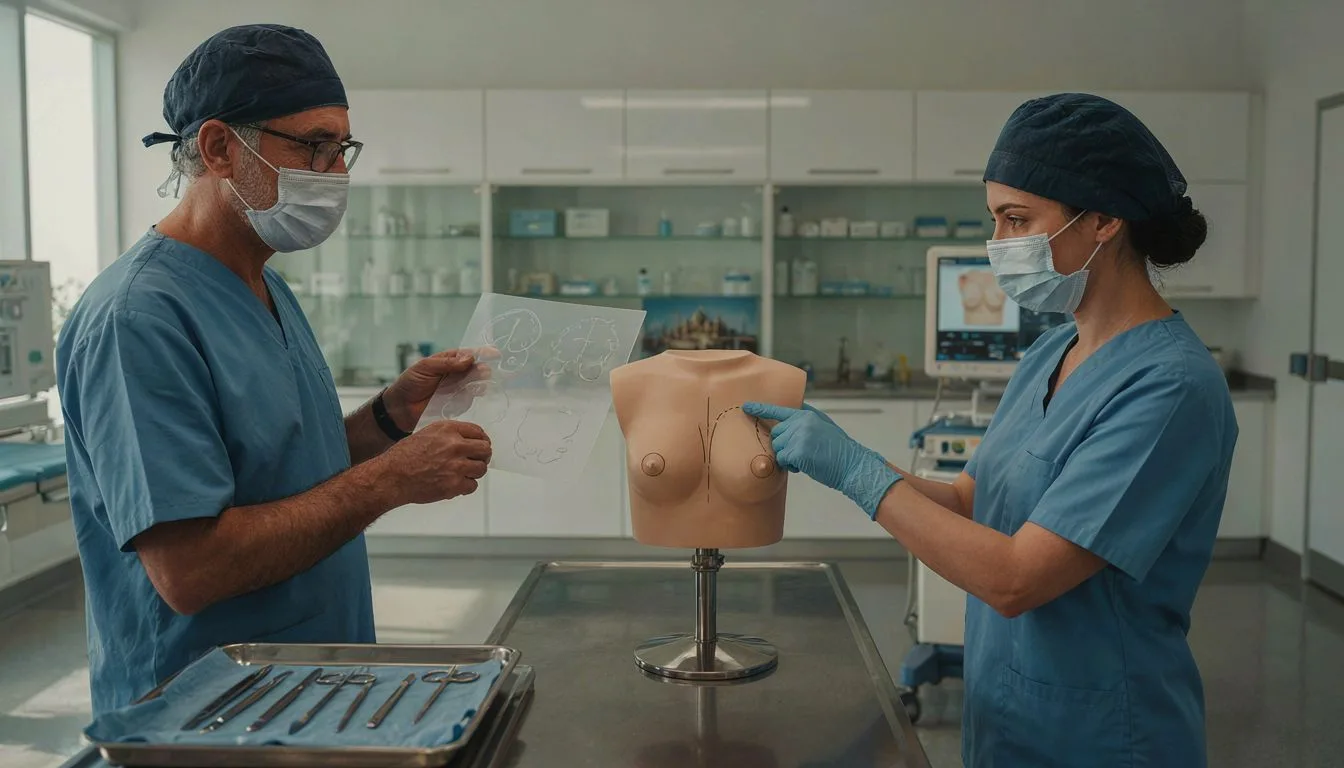
Once credentials and facility standards are clear, the next layer to compare is the actual surgical approach. Most Turkish reduction specialists favor one of three established incision patterns: an anchor (Wise pattern) incision for significant reductions, a vertical (lollipop) technique for moderate reshaping, and a short-scar variation for smaller volume removals. Each option trades scar length against the degree of lift and tissue removal a surgeon can achieve, so a thoughtful consultation will usually include a discussion about which pattern fits your breast size, skin elasticity, and personal scarring tolerance.
What separates experienced practitioners is often less the incision choice and more how they handle the internal reshaping. Some clinics lean on superomedial pedicle methods that preserve strong nerve pathways and natural projection, while others prefer a central mound or inferior pedicle approach depending on the patient’s anatomy. Liposuction-assisted reduction is also offered by a growing number of surgeons for patients whose breast tissue is largely fatty, allowing shorter scars and quicker recovery. Asking which pedicle and which closure technique your surgeon plans, and why that choice suits your body, is one of the fastest ways to gauge whether their reasoning matches your goals rather than a one-size-fits-all routine.
Evaluating Before-and-After Galleries and Patient Testimonials
Photographic documentation is the single most revealing record you will encounter while choosing a breast reduction surgeon in Turkey, but only when you know exactly what to look for beyond a flattering post-operative pose. Real clinical galleries capture the same standardized lighting, framing, and distance for every patient, taken at consistent intervals such as six weeks, three months, and one year. When those variables shift between images, you are looking at marketing photography rather than surgical evidence.
Cross-referencing what you see in photos with what patients actually describe in writing tightens your judgment considerably. Apply these checks whenever you review a portfolio or testimonial set:
- Consistent angles, framing, and lighting across each patient’s before and after set, indicating controlled clinical photography rather than curated marketing shots.
- Visible scar placement, shape, and maturation stages in photos taken at three, six, and twelve months, since early healing images can flatter results.
- Testimonials that reference specific surgical details such as pedicle choice, tissue removal weight, and complication recovery rather than only praise.
- Verifiable third-party reviews on independent platforms, with patterns of repeated concerns or repeated praise carrying more weight than a single glowing paragraph.
- Clear disclosure of how many patients declined to share images, which signals an honest consent process rather than selective presentation.
Once the photography and the written accounts agree, your shortlist becomes far more reliable. Galleries that hold up under this scrutiny are typically backed by surgeons who document their work in the same disciplined way they perform it, and that consistency is one of the clearest signals of quality available before a consultation.
Understanding Consultation, Pricing, and Travel Logistics in Turkey
Once a shortlist of clinics feels right, the next layer of decision-making becomes very practical: how the consultation actually works, what the final price covers, and how travel fits around the procedure itself. Most reputable practices schedule an initial video call, during which the surgeon reviews photographs, discusses goals, and confirms whether a particular pedicle or scar pattern fits the patient’s anatomy. After that, a detailed quotation is usually sent in writing, and the day-of-surgery plan is finalized once pre-operative labs and mammography (when indicated) are reviewed remotely.
Transparent pricing helps separate serious clinics from those that attract patients with teaser numbers. A realistic all-inclusive figure typically covers the surgeon’s fee, anesthesiologist, hospital stay, prescribed medications, compression garments, and follow-up visits. Patients should ask whether revisions, additional garments, or extended hotel nights are included, since these line items often shift the total more than expected. Currency fluctuations and card fees can also matter when transferring funds, so confirming the payment schedule in advance avoids last-minute confusion.
Travel logistics deserve just as much attention as the medical side. Buffering at least two nights around the operation, keeping copies of operative notes for the return flight, and planning a light follow-up before flying home all reduce stress. With these pieces aligned, choosing a breast reduction surgeon Turkey patients trust becomes less about guesswork and more about a clear, supported process from landing to recovery.
FAQs
How do I verify the credentials of a breast reduction surgeon Turkey offers?
You can confirm a breast reduction surgeon’s qualifications in Turkey by checking their registration with the Turkish Medical Association (TTB) and looking for board certification in plastic, reconstructive and aesthetic surgery. Review their training background, hospital affiliations, and before-and-after photos of previous patients, and read independent reviews on reputable medical tourism platforms. It’s also wise to confirm that the clinic holds international accreditation such as JCI and to ask the surgeon directly about their complication rates and revision policies during a consultation.
What should I look for in before-and-after photos when evaluating a breast reduction surgeon Turkey patients recommend?
Look for consistency in lighting, framing, and patient positioning so differences reflect surgical results rather than photography tricks. Genuine surgeon portfolios include multiple angles (front, side, three-quarter) and scars that look refined rather than airbrushed, and reputable clinics obtain written consent before sharing patient images. Finally, seek out cases with body types, breast sizes, and concerns similar to yours so you can judge how the surgeon’s technique would translate to your own outcome.
How can I confirm that a breast reduction surgeon Turkey practices at accredited facilities?
You can confirm a breast reduction surgeon in Turkey practices at accredited facilities by asking for the hospital’s official accreditation details, such as JCI (Joint Commission International) or ISO certification, and then verifying the hospital name directly on the accrediting organization’s website. Checking the Turkish Ministry of Health’s official records or contacting the facility directly to confirm the surgeon’s practicing privileges provides reliable verification.