Every year, more Americans are booking flights to Istanbul instead of their local plastic surgeon’s office. A facelift in Istanbul can cost a fraction of what the same procedure runs in the US, often with experienced surgeons and modern facilities. But lower prices come with real questions: How do you vet a surgeon from thousands of miles away? What does the quoted price actually include? What happens to your recovery and follow-up care once you land back home?
This guide is written for US patients weighing those exact decisions. We’ll walk through the key factors: cost, surgeon selection, travel logistics, safety standards, and aftercare. Think of it as decision support, not medical advice — your final call should always be made with a qualified physician who knows your health history.
Why US Patients Choose Istanbul for Facelift Surgery
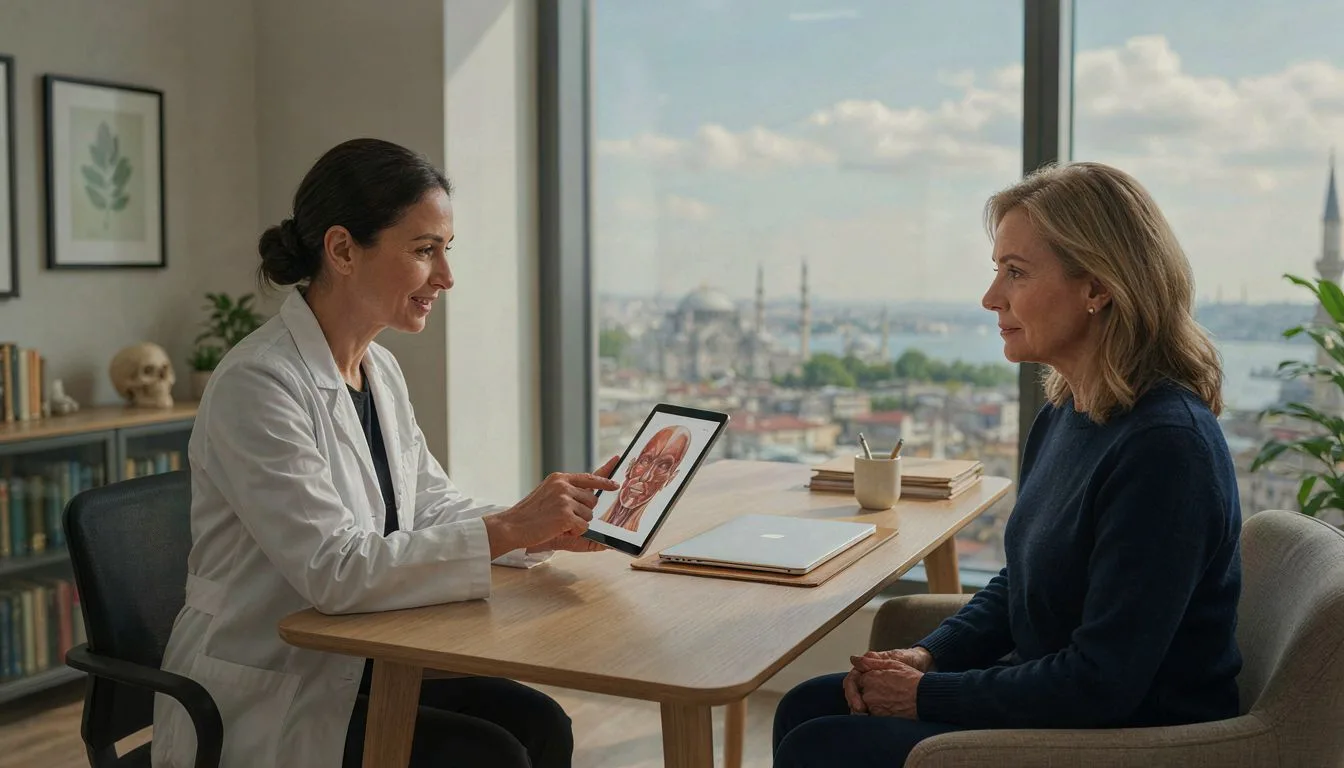
The most immediate reason is money. A facelift in the US commonly runs between $15,000 and $30,000 depending on the city and the surgeon’s profile, while comparable surgery in Istanbul typically costs a fraction of that — even after adding international flights. That gap is not explained by cheaper technique alone; it reflects lower overhead costs, favorable exchange rates, and a healthcare system built around serving international patients at scale.
The second driver is the all-inclusive package model that most Istanbul clinics operate on. Instead of quoting a surgical fee and leaving you to arrange the rest, clinics bundle the operation with hospital stay, hotel accommodation, airport transfers, medications, and follow-up visits into a single price. For an American flying 9,000 miles, knowing that every logistical detail is pre-arranged removes much of the friction that normally makes overseas surgery intimidating.
Experience is the third factor. Istanbul’s private hospitals treat a high volume of international patients each year, which means many surgeons perform facial rejuvenation procedures at a frequency few US practices can match. High volume, when paired with proper credentials, translates into refined technique and smooth workflow around international logistics — language support, extended recovery suites, and coordination with your travel schedule.
Motivations differ from patient to patient. Some prioritize savings, others the package convenience or shorter wait times. Understanding which factor matters most to you will shape the rest of the decisions covered in this guide.
Facelift Istanbul US Patients: Costs and What's Included
When comparing quotes, the first thing most Americans notice is the base price: a facelift in Istanbul typically runs between $4,000 and $8,000, while the same procedure in the US often starts around $12,000 and can easily exceed $20,000 in major coastal cities. That gap is real, but it only tells you what a clinic advertises — not what you will actually spend. The number that matters is what your itemized quote includes and, just as importantly, what it leaves out.
Most reputable Istanbul clinics work on an all-inclusive package model, and a transparent quote should clearly state that it covers:
- Surgeon and anesthesia fees — the operating surgeon’s fee and the anesthesiologist’s fee, both of which are billed separately by many US practices.
- Hospital and facility costs — use of an accredited operating facility, plus at least one night of inpatient care, which is standard after general anesthesia.
- Medications and dressings — prescribed pain management, antibiotics, and post-operative supplies provided before discharge.
- Local aftercare visits — suture removal, drain management, and follow-up examinations during your stay in Turkey.
- Transport and interpretation — many packages include airport transfers and an English-speaking patient coordinator, though confirm this in writing.
What is almost never included: your international flights, extended hotel stays beyond the standard recovery window, and treatment of complications after you return home. Revision policies deserve special attention — some clinics offer free or discounted corrections, others consider any second surgery a new, fully priced procedure. Before committing, request a written, itemized quote and ask specifically who pays if a revision becomes necessary. Clinics that hesitate to put these answers in writing are telling you something.
How to Choose a Qualified Surgeon in Turkey
Vetting a surgeon from thousands of miles away is different from meeting someone down the street, but it is entirely doable if you know what to look at first. The single most important factor is the surgeon’s qualifications and whether they genuinely match the procedure you’re requesting — not the clinic’s marketing photos or the price you were quoted. A facelift should be performed by a plastic and reconstructive surgeon with formal training in facial surgery, and Turkey has a rigorous licensing system, so verifying credentials is straightforward if you ask the right questions.
Start with these checks before you go any further in the process:
- Board certification and specialty training: Ask whether the surgeon is certified by the Turkish Board of Plastic, Reconstructive and Aesthetic Surgery (or an equivalent international board) and request the training institution and years of practice.
- Before/after portfolio: Review photos of patients with similar facial anatomy and age, and look for consistency in results rather than one dramatic example.
- Direct consultation: Insist on speaking with the surgeon who will operate — not a patient coordinator or sales agent — ideally by video call, before committing.
- Clear revision policy: A trustworthy clinic states in writing how surgical revisions are handled, including under what conditions they are covered.
- Transparent communication: Watch for how questions about anesthesia, facility, and recovery are answered; vague or evasive replies are telling.
Be equally alert to warning signs. Guaranteed outcomes, urgency pressure (“this price expires tomorrow”), and refusal to share a full, itemized breakdown of fees all suggest you’re being sold to rather than treated. And remember: credentials apply to the surgeon, while the operating facility is a separate question — some of Istanbul’s finest surgeons work in hospitals whose accreditation status varies, so you’ll want to evaluate that next.
Travel and Recovery Timeline for American Patients
Most clinics in Istanbul build their packages around a 10 to 14 day in-country stay, and there’s a medical reason behind it rather than a tourism one. Your surgeon needs enough time to see how your face responds before clearing you for an eight-hour flight home — typically around day 10, once initial swelling has peaked and begun to settle and your incisions are healing cleanly.
Here’s how the trip usually unfolds. Days 1 through 3 cover arrival, pre-operative testing, and surgery itself. Your first follow-up happens the day after your procedure, when dressings are checked and drains, if any, are removed. Stitches often come out between days 7 and 10. Expect noticeable swelling and bruising for the first two weeks, with the bulk of visible puffiness resolving by week three or four. Residual tightness and numbness can linger for months, which is normal.
On the flight back, a few precautions matter. Keep your head elevated, stay hydrated, walk the aisle periodically to support circulation, and skip alcohol. Pressurized cabins won’t undo your results, but careful planning for the long-haul flight reduces swelling and discomfort significantly.
Once home, most patients return to desk work after two weeks, though bruising can take three or more weeks to fully fade for public-facing roles. Light exercise resumes around week four; anything strenuous waits until your surgeon confirms you’re ready. Build in buffer time on both ends — rushing the schedule is the most common mistake Americans make.
Safety Standards and Accreditation at Turkish Clinics
A key distinction many overseas patients miss is the difference between Turkey’s two classes of surgical facilities. A fully licensed hospital operates under stricter Ministry of Health oversight than a smaller private clinic, including requirements for intensive care units and resident physicians on site. Both can legally perform facelifts, but the level of built-in backup in an emergency differs, so it’s worth knowing which type of facility your procedure will actually take place in.
Accreditation is another marker you can verify from home. Some of Istanbul’s leading hospitals hold JCI accreditation (Joint Commission International), the same standard used to evaluate hospitals in the US. You can confirm current accreditation status directly on the JCI website rather than trusting a clinic’s marketing materials. Turkish Ministry of Health licensing can also be checked through official channels, and any reputable facility will provide its registration details on request.
Then ask pointed questions about how the facility handles the clinical side of surgery. Who administers anesthesia—a board-certified anesthesiologist or a nurse anesthetist? What monitoring equipment is used during recovery? Is there a written protocol for emergencies, and where is the nearest intensive care unit? A well-run facility answers these specifics without hesitation.
Finally, keep in mind that standards genuinely vary from one facility to the next in Istanbul, just as they do in the US. Treat each clinic as an individual case to verify, never a bundled assumption based on the city’s reputation.
Planning Your Post-Operative Care Back in the US

The biggest question after you fly home is simple: who takes care of you now? A good clinic will solve part of this before you ever leave Turkey. Before departure, confirm that your surgeon offers structured remote follow-up — ideally scheduled video or photo check-ins at two weeks, one month, and three months, with a direct messaging channel for urgent questions rather than a generic info inbox.
Equally important is arranging care on the American side. Before traveling, let your primary care physician or a local dermatologist or plastic surgeon know about your procedure. Many are willing to handle suture removal, scar monitoring, or an examination if something looks off, especially if you arrive with a complete operative report, medication list, and clear post-op instructions translated into English.
Documentation matters more than patients expect. Carry your operative report, implant or graft details if any, anesthesia records, and prescriptions in your carry-on — not checked luggage. These make any US emergency room visit dramatically smoother.
Finally, agree on a contingency plan in writing: what happens if a revision is needed, who covers costs, and how travel for corrective surgery would work. Clinics with clear revision policies will put this in your contract before you pay.
FAQs
How much does a facelift in Istanbul cost compared to the US?
A facelift in Istanbul typically costs between $3,000 and $6,000, while the same procedure in the United States generally ranges from $9,000 to $15,000 or more. This means patients can save roughly 50% to 70% by choosing Istanbul, even after adding flights and accommodation. The lower price reflects Turkey's lower operating costs and favorable exchange rates rather than lower quality, as many Istanbul clinics are internationally accredited and surgeons perform high volumes of facial procedures.
How long should US patients stay in Turkey after a facelift?
US patients should typically stay in Turkey for 10 to 14 days after a facelift. The first week allows for initial recovery, suture removal, and post-operative check-ups with the surgeon, while the remaining days ensure swelling and bruising have subsided enough for safe travel. Most surgeons clear patients to fly home once drains are removed and healing is progressing normally, usually around day 10 to 12. Staying the full recommended period also ensures you have local medical support in case of any complications before the long-haul flight.
Are facelift results from Istanbul clinics safe and long-lasting?
Facelift results from reputable Istanbul clinics are generally safe and long-lasting, typically enduring 7 to 10 years or more, especially when performed by board-certified plastic surgeons in internationally accredited hospitals. Turkey's leading clinics perform high volumes of these procedures with modern techniques like deep plane and SMAS facelifts, contributing to consistent, natural-looking outcomes. Longevity largely depends on the surgeon's skill, the technique used, skin quality, and the patient's lifestyle choices such as sun protection and avoiding smoking. Choosing a clinic with verifiable credentials, before-and-after galleries, and strong patient reviews is key to ensuring both safety and durable results.