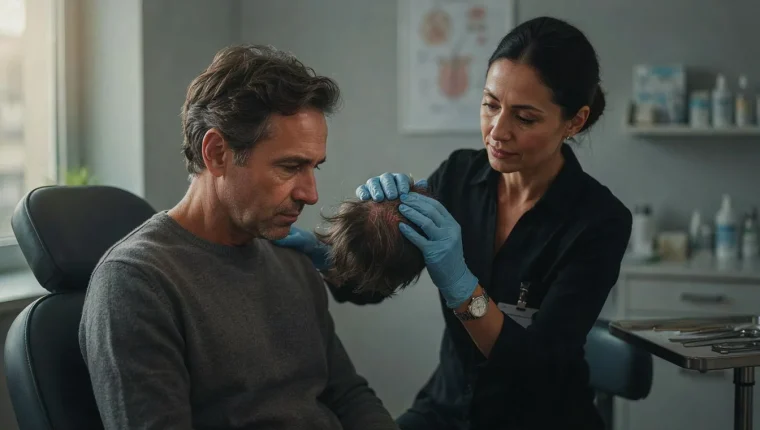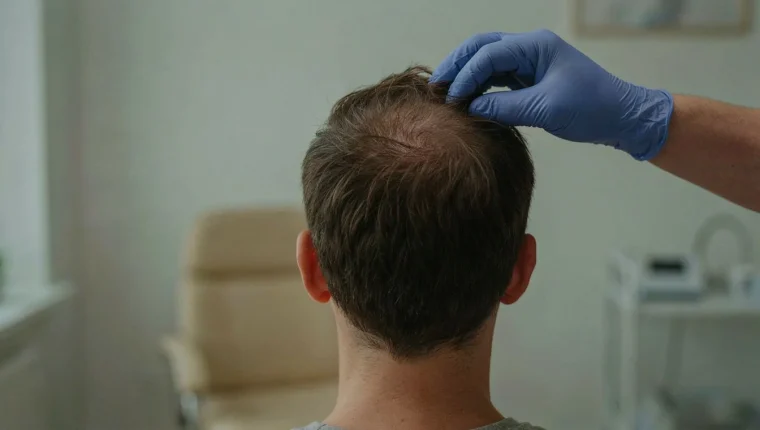
Feeling anxious about a hair transplant is common, especially if you are unsure about pain, visible changes, recovery, or possible risks. Many people also worry about whether the procedure will look natural or suit their type of hair loss. These concerns deserve clear, realistic answers rather than reassuring promises. Understanding what the treatment involves, how healing may progress, and which factors influence the result can make the decision easier to evaluate. This article explains why people fear hair restoration and what patients should realistically consider before choosing a procedure.
Understanding What a Hair Transplant Actually Involves
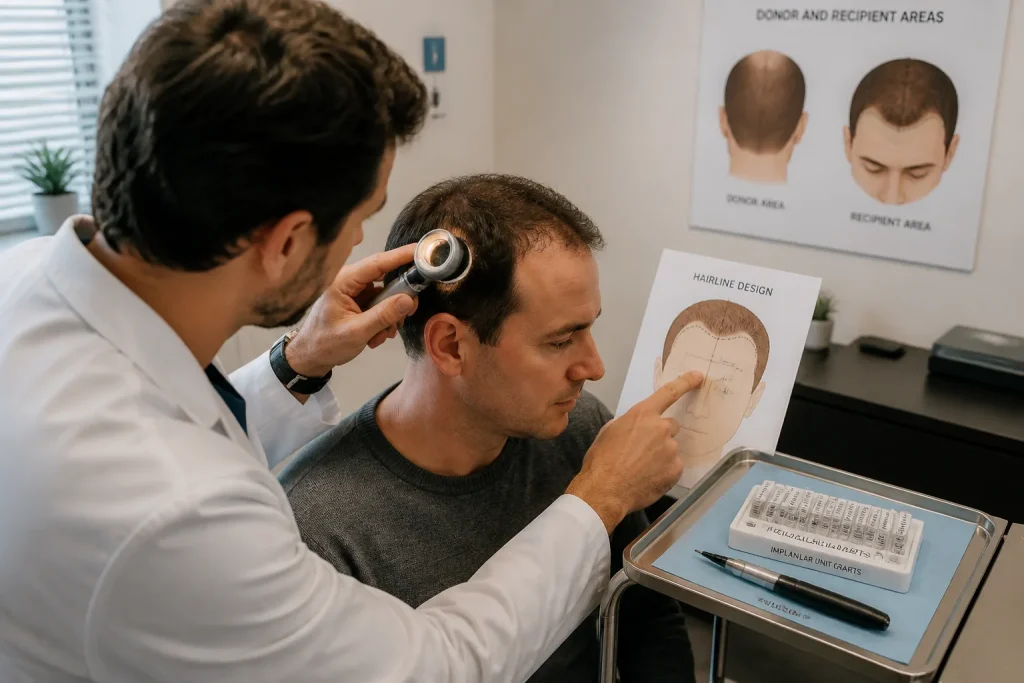
A hair transplant is a planned procedure that redistributes your own hair follicles from one part of the scalp to another. It does not add artificial hair or create new follicles. The process begins with a consultation, where the clinician assesses the cause and pattern of hair loss, examines the donor area, and discusses the hairline, density, and likely number of grafts required.
On the treatment day, the donor area is prepared and individual follicular units are removed. These grafts may be collected using follicular unit extraction (FUE), which takes follicles separately from the scalp. DHI uses a similar extraction concept, but places prepared grafts with a specialized implanter device. Neither approach is automatically best for every patient; the choice depends on the scalp, available donor hair, treatment goals, and the practitioner’s plan.
After extraction, the grafts are sorted and placed into tiny openings in the recipient area, following the natural direction and angle of existing hair. Careful placement helps create a balanced appearance rather than a uniform, artificial pattern. The donor area and recipient area therefore have different roles: one supplies healthy follicles, while the other receives them to improve coverage where thinning has occurred.
How Modern Techniques Reduce Discomfort and Visible Scarring
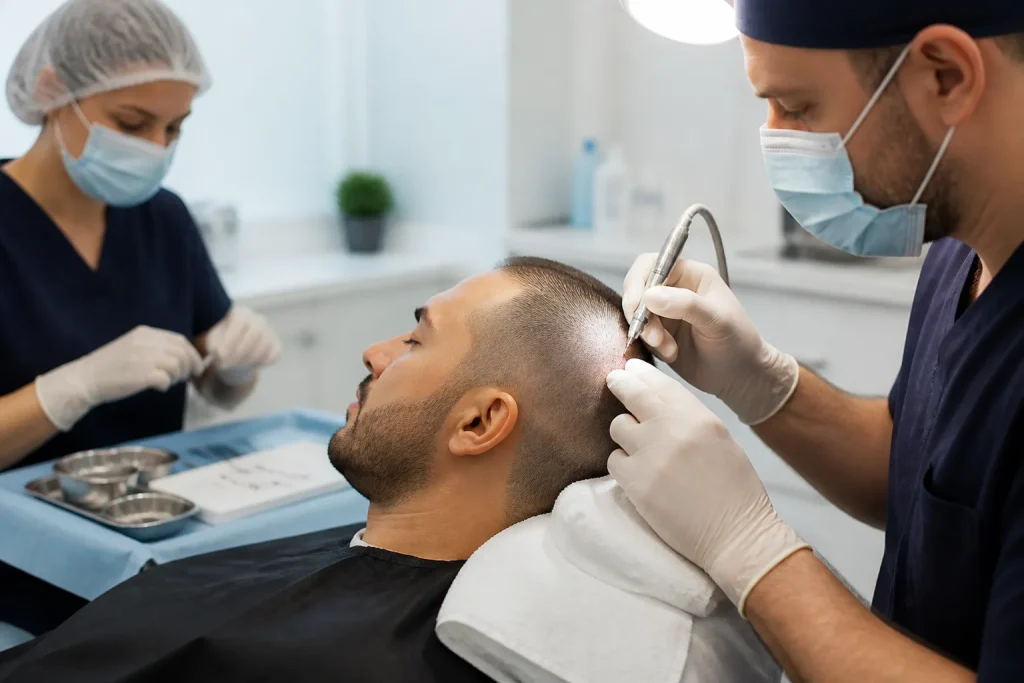
Modern hair restoration techniques are designed to make the procedure more manageable by limiting tissue disruption. Before treatment begins, the scalp is numbed with local anesthesia, so most patients remain awake without feeling sharp pain during follicle removal or implantation. Pressure, pulling, vibration, or brief stinging from the anesthetic may still be noticeable, and tenderness can occur afterward. Individual experiences vary according to sensitivity, treatment size, and the number of grafts involved.
With follicular unit extraction (FUE), individual follicles are removed through tiny openings in the donor area rather than one long incision. This generally avoids a linear scar, although small pale or darker marks may remain, particularly if extraction is excessive or healing is uneven. Implantation may be performed using tools associated with methods such as direct hair implantation (DHI), but the visible result also depends on how carefully the recipient area is prepared and how grafts are positioned.
Scar visibility is influenced by the chosen technique, punch size, graft density, skin type, healing response, and the clinician’s practical skill. No method can guarantee completely invisible marks, and unsuitable treatment planning may increase the risk of noticeable changes in the donor area. A qualified provider should explain which approach fits the patient’s hair characteristics, examine the scalp, and describe realistic discomfort and scarring risks before treatment.
Clear aftercare instructions also matter. Patients should confirm how to wash the scalp, protect the treated areas, manage prescribed medication, and recognize signs that require medical advice. Following individualized guidance can support normal healing, but it cannot eliminate every variation in recovery or scar appearance.
What Recovery and Temporary Shedding Really Look Like
Recovery is usually a gradual process, and the scalp may look different from day to day during the early healing period. Mild redness, swelling, tenderness, tightness, small scabs, or temporary changes in sensation can occur around the treated areas. These effects vary according to the number of grafts, the individual’s healing response, and the technique used.
Aftercare instructions are tailored to each patient, but commonly include gentle washing, avoiding scratching or rubbing the scalp, and protecting the area from excessive sun exposure. Strenuous exercise, swimming, hats, or other activities may need to be limited for a period specified by the clinic. Following these instructions helps protect newly placed grafts while the recipient area settles.
One of the most confusing changes is temporary shedding. The visible hair shaft from a transplanted follicle may fall out after the procedure while the follicle remains in place. This can make the hair appear thinner before new growth becomes noticeable. Shedding may also affect some existing hairs near the treatment area, a temporary reaction sometimes called shock loss.
New hair growth does not appear at full density immediately. Follicles enter different growth phases, so progress is assessed gradually as the hair becomes longer, stronger, and more evenly distributed. Early changes should therefore be judged cautiously rather than treated as the final result.
Healing varies, and symptoms that worsen, persist unexpectedly, or seem unusual should be discussed with the treating provider. Increasing pain, spreading redness, significant drainage, fever, or other concerning changes warrant prompt clinical advice rather than self-treatment. Regular follow-up allows the provider to assess recovery and clarify whether the appearance at any stage is within the expected range.
How a Qualified Specialist Keeps the Procedure Safe
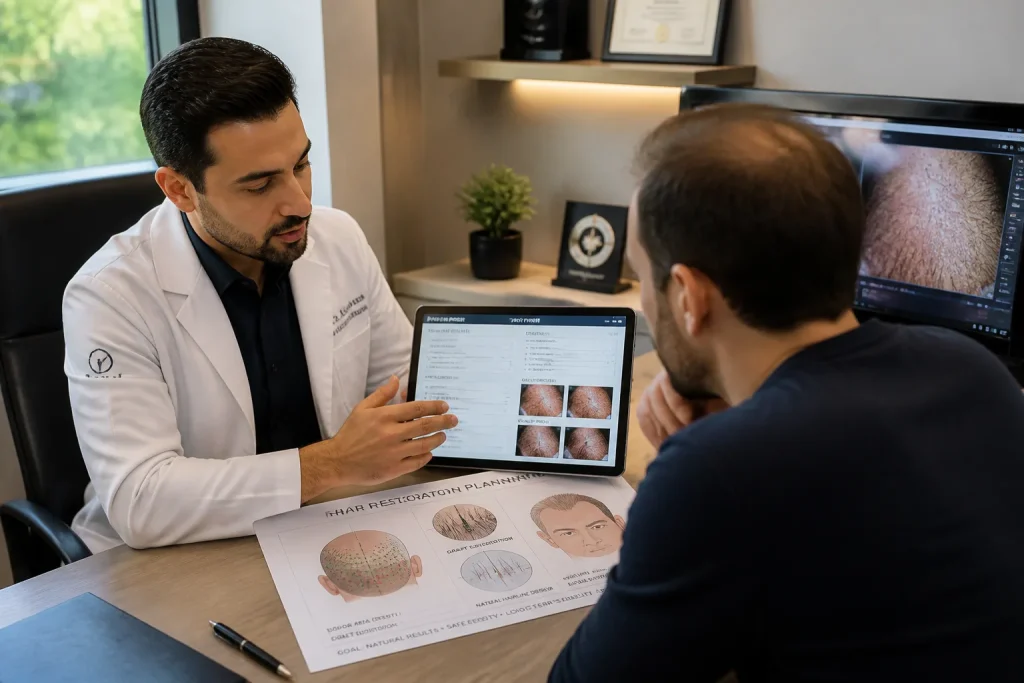
A safe hair restoration plan begins well before the procedure. A qualified specialist should review your medical history, current medications, previous treatments, and the pattern and cause of your hair loss. Confirming the diagnosis matters because thinning can result from conditions that may require medical treatment rather than immediate surgery. The specialist should also examine the donor area, estimate available follicular units, and discuss whether your goals are realistic for your existing hair density and long-term pattern.
Individualized surgical planning helps reduce avoidable risks such as overharvesting, an unnatural hairline, or poor graft placement. Ask which clinician will assess you, design the hairline, extract grafts, and perform implantation, since responsibilities can vary between clinics. You should also receive clear information about possible complications, limitations, alternatives, and what the quoted treatment includes before providing informed consent.
Safety depends on the clinical environment as well. Appropriate sterile protocols, qualified personnel, verified credentials, and documented aftercare are essential. Before choosing a provider, independently check licensing and professional history rather than relying only on advertising. Ask how you can contact the clinical team if concerns arise after treatment and whether follow-up appointments are included. These safeguards cannot eliminate every risk, but they support better decisions and earlier management if a problem develops.
When Hair Restoration May Be a Suitable Choice for You
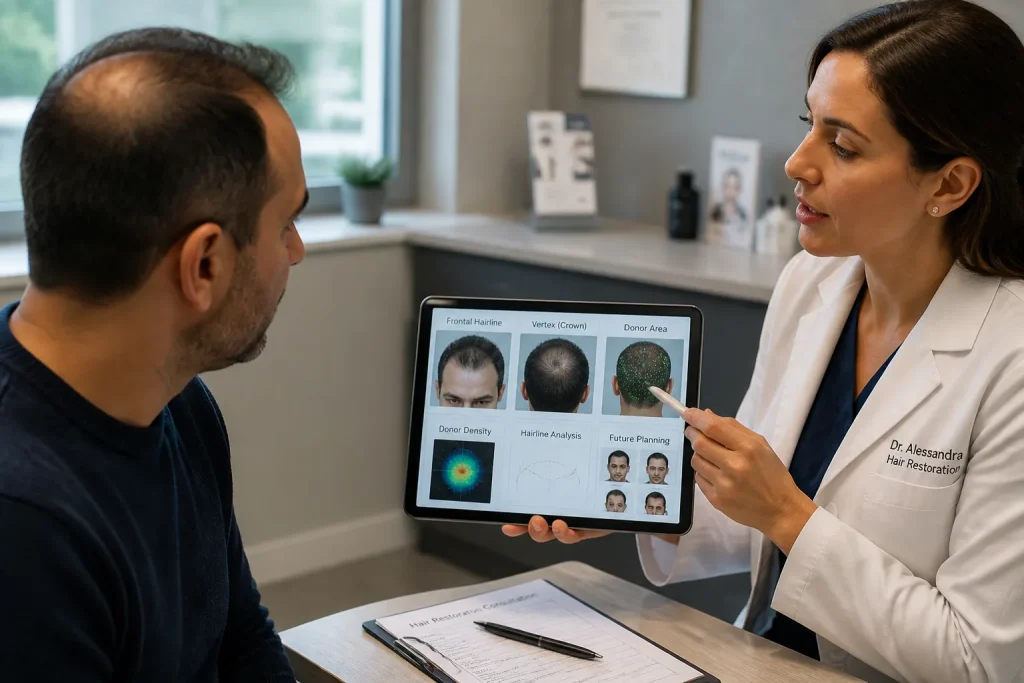
Hair restoration may be worth discussing when hair loss has a clear cause, has become reasonably stable, and affects your appearance or confidence in a way you genuinely want to address. Age-related pattern changes can continue over time, so the current hairline is only one part of the decision. A clinician should also assess the density and quality of hair in the donor area, since available follicles limit how much coverage can be created.
Your goals matter just as much. Some people want a subtle improvement in hairline shape, while others hope for greater density in thinning areas. A realistic plan should account for gradual hair growth, ongoing maintenance, and the possibility that native hair may continue to thin. Medical conditions, medications, previous procedures, and scalp health can also influence planning.
A consultation is therefore most useful as a decision-making step, not a commitment to treatment. Ask whether your diagnosis, donor supply, expectations, and long-term outlook support surgery, or whether another hair-loss treatment should be considered first. Realistic candidacy depends on this individualized review rather than on age or the amount of hair currently missing.
FAQs
Is a hair transplant painful?
Most people experience little to no pain during a hair transplant because the scalp is numbed with local anesthesia. You may feel mild pressure or brief discomfort during the procedure, followed by tenderness, tightness, swelling, or itching during recovery. Pain is usually manageable with the aftercare and medication recommended by your clinic.
How long does it take to recover after hair restoration?
Most people resume light daily activities within a few days and return to work within about a week after hair restoration, although swelling, redness, and scabbing may last longer. The donor and recipient areas typically heal over 7–14 days, while strenuous exercise may need to wait for your surgeon’s approval. New hair growth usually becomes noticeable after several months, with final results often taking 9–12 months or longer.
Can transplanted hair fall out during the healing process?
Yes, transplanted hair can shed during the healing process, usually within the first few weeks or months. This temporary “shock loss” affects the hair shaft while the transplanted follicles remain beneath the skin and begin a new growth cycle. Follow your clinic’s aftercare instructions and contact your hair transplant specialist if shedding is sudden, severe, or accompanied by pain, pus, or worsening redness.