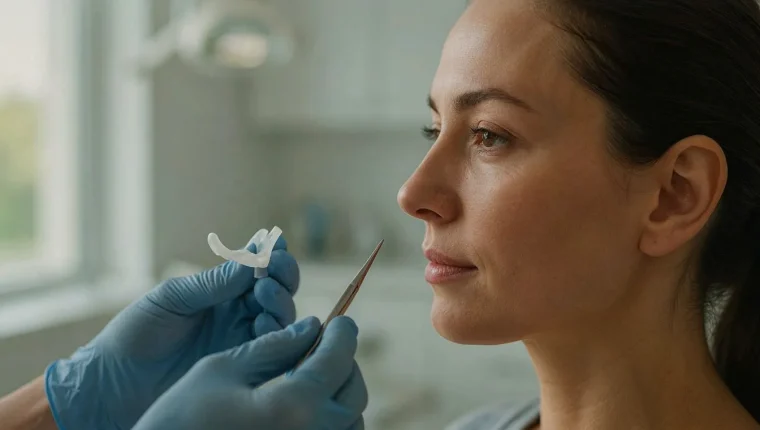
Deciding whether to travel abroad for a nose job comes down to one question: is the money you save worth everything else you take on? For Canadians, rhinoplasty in Turkey sits right at that crossroads. The price gap is real, but so are the flights, recovery time away from home, and the challenge of following up with a surgeon who is an ocean away.
This article is not here to sell you a clinic or a country. It is here to help you judge whether travelling to Turkey for rhinoplasty makes sense for your situation. We will look at what actually drives the cost difference, what those all-inclusive packages really contain, how to separate a qualified surgeon from a convincing website, and what the timeline and risks look like in practice.
By the end, you should have a clearer frame for your own decision, not just a headline price.
Why Canadians Consider Rhinoplasty in Turkey

Canadians who start researching nose surgery abroad usually arrive at the same shortlist, and Turkey sits near the top of it. The reasons are practical rather than mysterious, and understanding them helps you decide whether your own motivation actually matches the typical case.
The strongest pull is cost differential. A procedure quoted at home can be several times the price of a comparable one in Istanbul or Ankara, and the gap widens once you factor in what clinics bundle into a single figure. Instead of separate line items for the surgeon, the operating facility, anesthesia, hospital stay, medications, and follow-up visits, many Turkish providers present one all-inclusive price. For patients paying out of pocket, that bundling removes the fear of a surprise invoice arriving after the fact.
Volume matters too. Turkey receives a large and steady stream of international patients, which means many clinics have built their entire workflow around foreign cases. Coordinators speak English, airport transfers are routine, and the administrative steps that feel daunting from another continent have been repeated thousands of times. That familiarity lowers the perceived risk of traveling for surgery.
There is also the travel dimension. A trip that combines a medical procedure with a few days in a city like Istanbul gives the journey a second purpose, and companions often treat it as a short holiday. It does not change the surgery, but it changes how the experience feels.
Finally, access and wait times at home push some patients to look elsewhere. Publicly funded rhinoplasty in Canada is generally reserved for functional problems such as breathing obstruction, and even then the queue can be long. Elective cosmetic cases sit entirely outside that system, so the choice is often between paying privately at home and paying privately abroad.
Typical Savings Compared to Surgery at Home
The headline price you see on a Turkish clinic’s website tells you very little about what you’ll actually save. The number that matters is the net cost difference — what you’d pay in Turkey once flights, hotel nights, meals, and any excluded items are added, compared with the full out-of-pocket total for the same procedure at home.
In Canada, a primary rhinoplasty typically runs somewhere between $8,000 and $15,000 or more. That figure usually bundles the surgeon’s fee, hospital or surgical facility charges, and anesthesia, though the split varies widely. Quotes shift by province, by city, and by how much cartilage grafting or revision work the case demands. Some surgeons quote low and bill extras separately; others present an all-in number. Because of that spread, ranges are far more useful than any single figure you’ll find online.
Turkish packages for international patients commonly land in the $3,000 to $6,000 range, and those often fold in the operation, a short hospital stay, transfers, and sometimes accommodation. On paper the gap looks enormous. In practice, you subtract round-trip airfare from Toronto, Montreal, or Vancouver, several nights of lodging, and daily expenses, and the margin narrows.
Watch for add-ons that quietly erode savings: a revision policy that charges again, medication and lab work billed outside the quote, or extra nights if your recovery runs long. Before committing, build a side-by-side estimate — total Turkish cost including travel versus total Canadian cost including taxes — so you’re comparing final numbers rather than marketing headlines.
What the All-Inclusive Package Usually Covers

A package quote is a bundle, and bundles are designed to be hard to compare. Two clinics can advertise the same total figure while covering very different things, which is why the phrase “all-inclusive” means almost nothing on its own. What matters is the itemized list behind it: which services are genuinely standard, which are optional add-ons dressed up as included, and which are quietly absent until you ask. Reading that list carefully is the only way to compare offers on equal terms.
Across most Turkish clinics, a handful of items appear so consistently that they function as the baseline of any serious quote. Surgeon and anesthesia fees sit at the center of that baseline, since everything else is logistics around the operation itself.
- Surgeon and anesthesia fees: the operating surgeon’s charge and the anesthesiologist’s fee, which should appear as separate line items rather than one blended number.
- Hospital or clinic stay: typically one night for a standard rhinoplasty, sometimes two if grafting or revision work is involved.
- Initial consultation and imaging: the pre-op assessment, often including photos or imaging used to plan the result.
- Local transfers: airport pickup and transport between hotel, clinic, and hospital on surgery day.
What falls outside the bundle is where quotes diverge most. Revision surgery is rarely included, and neither are extra hotel nights beyond the stated recovery window, a companion’s accommodation and meals, or follow-up appointments once you are back in Canada. Some providers fold a post-op check at home into the price through a partner clinic; others leave you to arrange and pay for it yourself. Ask for the exclusions in writing before you accept any quote, and confirm whether the quoted price is fixed or can shift if the procedure turns out to be more complex than the initial assessment suggested.
Evaluating Surgeons, Clinics, and Credentials
Credentials are where marketing and reality most often drift apart. Any clinic can print “board-certified” on a website, so the useful question is which board, and whether that body actually oversees plastic or facial surgery. In Turkey, the relevant specialty is typically plastic, reconstructive, and aesthetic surgery, and a surgeon’s registration should be traceable through the national medical registry or the Turkish Society of Plastic, Reconstructive and Aesthetic Surgeons. A certificate from a cosmetic-focused association is not the same thing as specialty training in surgery, and the distinction matters.
Beyond the individual surgeon, look at the facility. A clinic accreditation or a documented affiliation with a fully equipped hospital tells you where a complication would be managed. Ask directly what happens if bleeding or an airway problem develops after hours, and who provides the on-call coverage. Clinics that operate only in office suites without a hospital relationship deserve extra scrutiny.
Photo galleries reward careful reading rather than quick scrolling. Consistency is the signal: similar lighting, matching angles, and results that look plausible rather than dramatic. Revision cases are worth seeking out, since they show how a surgeon handles difficult anatomy. If every “after” image is heavily filtered or shot from a flattering angle, treat that as a gap, not a style choice.
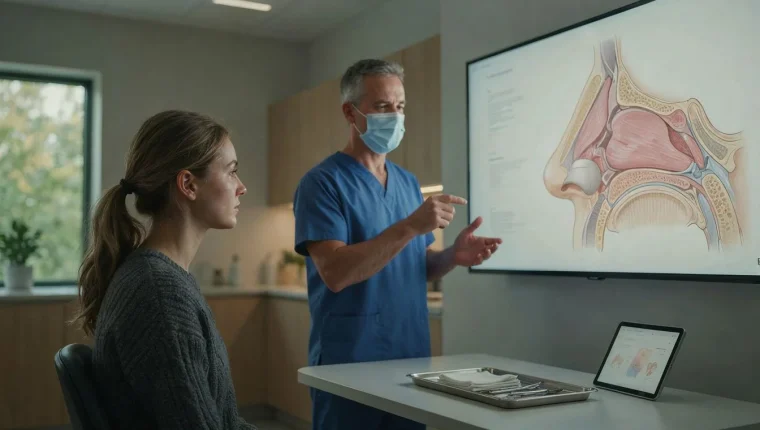
Finally, use the consultation itself as a test. A credible surgeon explains limits, asks about your breathing and medical history, and is willing to say no. Past-patient accounts in forums and review sites can confirm whether the communication you experience matches what others reported. Pushiness, vague answers about technique, or pressure to book immediately are reasons to keep looking.
Planning Travel, Recovery Time, and Follow-Up Care
Once a surgery date is set, the trip starts to look less like a vacation and more like a medical schedule with flights attached. Most clinics ask patients to arrive two to three days before the operation for a final consultation, blood work, and imaging. The procedure itself is typically outpatient or a single overnight stay. After that, the clock that matters most is the splint-removal and fitness-to-fly window, usually somewhere between seven and ten days, which is when many surgeons clear patients to travel home.
Early recovery is unglamorous. Expect swelling, bruising around the eyes, a congested nose, and instructions to sleep with your head elevated. You can walk and handle light tasks, but heavy lifting, strenuous exercise, and anything that raises blood pressure are off the table for several weeks. Most people feel presentable enough for normal life within two to three weeks, while residual swelling settles gradually over months.
Before you book a return flight, confirm how follow-up will work once you are back in Canada. Some clinics coordinate with local physicians or offer video check-ins; others expect you to arrange your own care. Ask who you contact if something worries you at week three, and get that in writing. Revision surgery, if it ever becomes necessary, is generally not considered until at least a year after the first operation, once swelling has fully resolved.
Risks, Realistic Results, and Long-Term Value
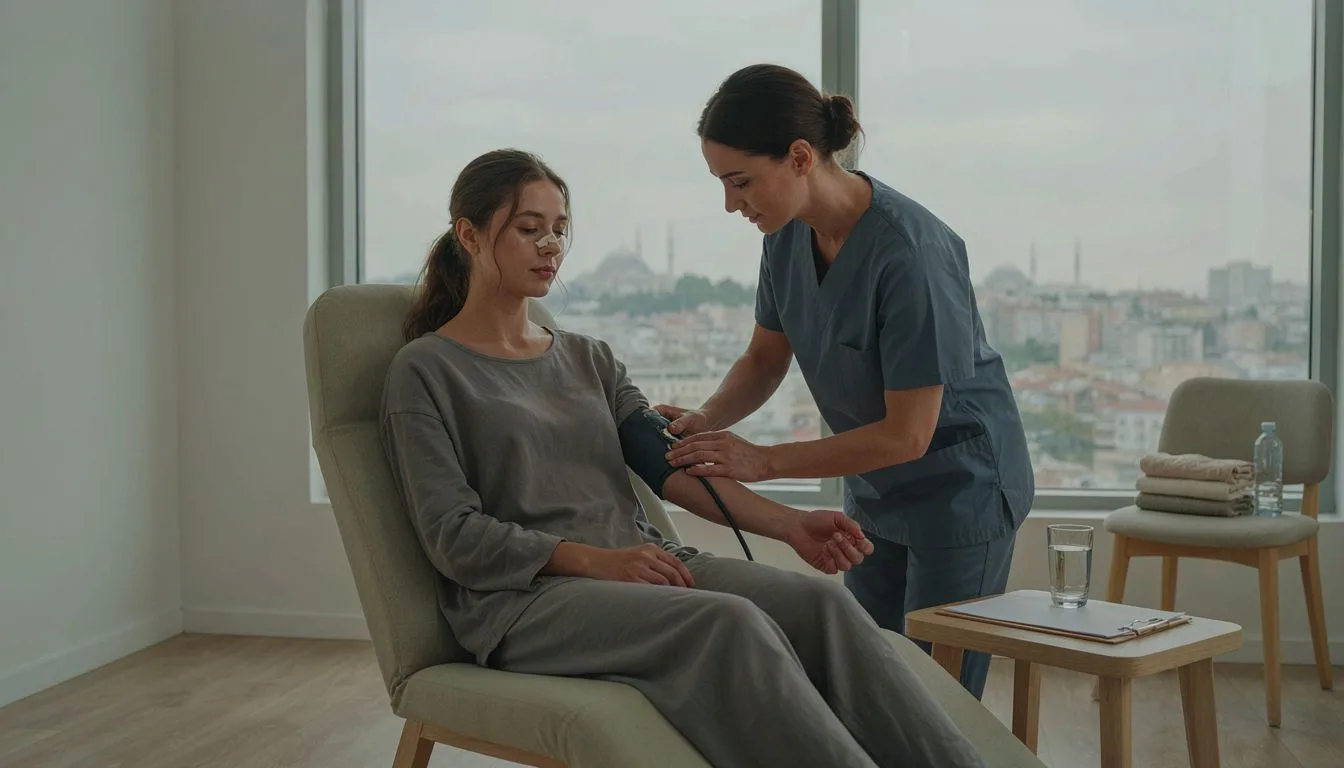
Every operation carries a baseline set of risks: bleeding, infection, an unexpected reaction to anesthesia, and the small chance of breathing problems afterward. When you add international travel to the equation, a few more enter the picture. Long flights and extended periods of immobility raise the risk of blood clots, which is why surgeons typically advise walking, stretching, and staying hydrated on the trip home. Wound healing can also be affected by the stress of travel, changes in climate, and disrupted sleep in the first days after surgery.
The question that matters most to many patients is revision. A percentage of rhinoplasty patients need a second procedure, whether for breathing issues, an unsatisfactory aesthetic result, or scar tissue that changes the shape over time. If that happens after you have flown home, you face a difficult choice: return to Turkey for the revision, pay a local surgeon who did not perform the original operation, or live with the outcome. That scenario is where the true cost of medical tourism can quietly erode the savings you started with.
Value and price are not the same thing. A lower fee is only worthwhile if the result holds up, follow-up is genuine, and you feel confident in your decision. If you have a straightforward case, a well-vetted clinic, and the flexibility to travel, the trip can deliver real long-term value. If your case is complex, your health is fragile, or you would struggle to return for a revision, staying closer to home is the more sensible path.
FAQs
How much can Canadians realistically save on rhinoplasty Turkey for Canadians compared to surgery at home?
Canadians typically save between 50 and 70 percent on rhinoplasty in Turkey compared to surgery at home, since all-in packages including surgery, hospital fees, and hotel stays often run from 2,500 to 4,500 USD while the same procedure in Canada commonly costs 6,000 to 12,000 CAD or more. The exact savings depend on the surgeon's reputation, clinic location, and whether flights and aftercare are bundled into the price. Choosing a board-certified plastic surgeon and accounting for travel, revision risk, and follow-up care helps ensure the lower price reflects genuine value rather than a compromise in safety.
Is rhinoplasty Turkey for Canadians safe when choosing a board-certified surgeon and accredited clinic?
Rhinoplasty in Turkey is generally safe for Canadian patients when they select a surgeon certified by the Turkish Board of Plastic, Reconstructive and Aesthetic Surgery (or an equivalent recognized board) and a clinic accredited by bodies such as JCI or the Turkish Ministry of Health. Board certification confirms the surgeon has completed accredited training and passed rigorous exams, while clinic accreditation verifies adherence to international safety and hygiene standards. Canadians should also verify the surgeon's specific rhinoplasty experience, review before-and-after results, and confirm the clinic's complication management protocols. Many accredited Turkish clinics report outcomes and safety records comparable to those in Canada for appropriately selected patients.
How long should Canadians plan to stay in Turkey for rhinoplasty before flying back?
Canadian patients typically stay in Turkey for about 10 to 14 days after rhinoplasty before flying home. Most surgeons schedule a follow-up around day 7 to 10 to remove splints or sutures and confirm it is safe to travel. Because long-haul flights raise the risk of swelling and clot-related complications, many clinics advise waiting at least 10 days and sometimes up to 2 weeks before the return flight to Canada.