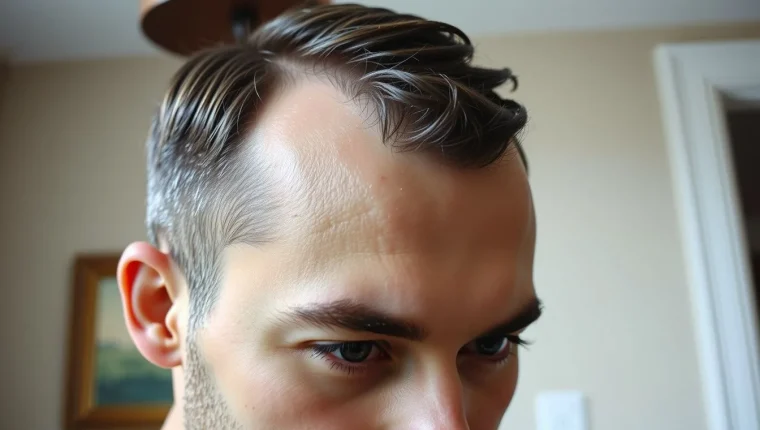
A hairline that starts to pull back at the temples is one of the earliest and most common signs of male pattern hair loss. The change often begins subtly: a corner thins, the angle softens, and over time a receding widows peak becomes more visible. For some people, this is a normal maturing hairline; for others, it signals progressive thinning that will continue without intervention. The difference matters because the cause determines whether treatment can slow, stop, or partially reverse the change. You can recognize the pattern, understand what drives temple recession, and learn which treatments offer realistic results.
What a Receding Widows Peak Actually Looks Like

A receding widows peak shows up as a gradual thinning at the temples that pushes the hairline back on both sides while the center stays forward. This creates the characteristic M or V shape. The recession moves in a diagonal direction, starting near the outer corners and angling upward and backward, which is what separates it from a hairline that simply sits higher than it used to.
It helps to know that a naturally mature hairline is not the same thing. Many adults, especially men, see their hairline shift slightly upward after their teenage years and then stay stable for decades. That change is even and shallow. A receding pattern, by contrast, keeps deepening over time, and the temple corners become noticeably thinner than the middle of the forehead.
Progression is usually slow and uneven. One side may recede faster than the other, and the early stage can look like nothing more than a few finer hairs at the edges. Tracking photos every few months gives a clearer picture than a single glance. Mild, stable temple corners are common and generally harmless, but continued recession, widening bare patches, or sudden shedding in a short period are worth discussing with a doctor or dermatologist.
Why Hairline Thinning Starts at the Temples
Not all hair follicles on the scalp behave the same way. Each one follows its own growth cycle and carries a different level of sensitivity to the signals that eventually shrink it. This variation is the key to understanding why thinning appears at the temples long before it reaches the crown or the sides.
Temple follicles sit in a region that is genetically more sensitive to dihydrotestosterone (DHT), the hormone that gradually miniaturizes susceptible hair. Each growth cycle produces a slightly thinner, shorter strand until the follicle stops producing visible hair altogether. Because these follicles are primed to react earlier, they show change first, while more resistant follicles elsewhere continue growing normally.
The anatomy of the temple area reinforces this pattern. The skin there is thinner, the follicle density is lower, and the hair sits closer to the edge of the frontal hairline, so even minor miniaturization becomes visible quickly. The crown may lose density too, but it is hidden by surrounding hair, which is why temple recession tends to be the first change people actually notice.
This matters for treatment because follicles that are still active, even if weakened, respond better than those that have fully stopped producing hair. Acting while temple hair is thinning rather than gone gives you more room to slow or partially reverse the process.
Genetic and Hormonal Drivers Behind a Receding Hairline
Hairline recession at the temples rarely happens by chance. For most adults who notice it, the underlying cause is an inherited sensitivity that makes certain hair follicles respond unusually to hormones the body produces naturally. The key player here is dihydrotestosterone (DHT), a hormone derived from testosterone. In genetically predisposed follicles, DHT binds to receptors in the hair bulb and gradually miniaturizes the follicle, shrinking it with each successive growth cycle.
What this means in practice is that the growth phase of affected hairs becomes shorter, while the resting phase stretches longer. Over time, the strands that emerge are thinner, shorter, and less pigmented until the follicle eventually stops producing visible hair altogether. This is why temple recession tends to progress slowly and unevenly rather than all at once.
It is important to understand that this sensitivity is a polygenic trait, meaning it is influenced by multiple genes rather than a single one inherited from either parent. A family history of hairline changes on either side can raise your likelihood, but the pattern and pace vary widely between individuals. That variability is why two people with similar genetics may experience very different timelines of recession.
Because the mechanism is hormonal and inherited rather than a simple deficiency or external trigger, it helps to view temple recession as a predictable biological pattern rather than a random event. This understanding also shapes what treatment can realistically achieve, which is where options targeting the hormonal pathway come into play.
Health Conditions and Lifestyle Factors That Accelerate Temple Hair Loss
Genetics and hormones set the baseline for temple recession, but they don’t operate in a vacuum. Certain health conditions and daily habits can add stress to follicles that are already vulnerable, making hairline loss appear faster or more aggressive than the inherited pattern alone would suggest.
Conditions that disrupt normal circulation, trigger systemic inflammation, or interfere with nutrient absorption may compromise the hair growth cycle. Thyroid imbalances, iron deficiency, and chronic stress responses are among the factors clinicians often explore when hair loss seems out of proportion to family history. Similarly, lifestyle patterns — poor sleep, smoking, crash dieting, and excessive tension on the hairline from tight styling — can each contribute additional strain.
What matters is that these factors typically act as accelerators, not root causes. They intensify an existing genetic and hormonal process rather than initiating it independently. If your hairline seems to be changing faster than expected, that’s a meaningful signal to discuss with a clinician. A professional evaluation can help determine whether an underlying condition or lifestyle factor is compounding the situation, and whether addressing it might slow the progression.
Treatment Options for Restoring a Receding Widows Peak

Treatment for temple recession is not a single decision but a sequence of choices based on what you want to achieve: slowing further loss, encouraging regrowth, or restoring coverage where follicles have already gone quiet. Most plans combine more than one approach because each targets a different part of the problem.
To slow progression, topical minoxidil and prescription oral medications remain the most studied options, while procedures such as microneedling or low-level laser therapy are sometimes used alongside them. These work best on areas where follicles are miniaturized but still active. Once a temple region has become smooth and shiny, regrowth from medication alone is unlikely, because the follicle itself has scarred over.
For regrowth, treatments generally need to address the hormonal driver behind pattern loss, and they work gradually over months rather than weeks. Results vary by how advanced the recession is, how consistently the treatment is used, and how your follicles respond. Stopping treatment usually means losing the gains, so maintenance becomes part of the plan.
When coverage is the goal rather than regrowth, surgical hair transplantation moves healthy follicles from the back of the scalp to the temples. It can rebuild a hairline, but it does not stop future recession, so medical therapy is often continued afterward. A dermatologist or hair restoration specialist can assess your stage, rule out other causes, and help you set realistic expectations before committing to any option.
FAQs
What are the main causes of a receding widows peak?
A receding widows peak is most commonly caused by androgenetic alopecia, a hereditary condition in which the hormone DHT gradually miniaturizes hair follicles along the temples and frontal hairline. Genetics play the dominant role, though age, hormonal shifts, and certain medical conditions or medications can accelerate the process. In some cases, chronic tension from tight hairstyles or traction alopecia may contribute to similar thinning at the temples. Identifying the underlying cause is essential, since treatment options such as minoxidil, finasteride, or hair restoration procedures depend on whether the loss is hormonal, genetic, or lifestyle-related.
Can a receding widows peak be reversed without surgery?
A receding widows peak cannot be fully reversed without surgery once the hair follicles have permanently shrunk or died, since no topical or oral treatment can regenerate lost follicles. However, non-surgical options like minoxidil, finasteride, and low-level laser therapy can slow further recession and may thicken existing hair. For noticeable regrowth in areas of true scarring or follicle loss, hair transplant surgery remains the only reliable solution.
Which treatments work best for stopping further hairline recession?
For a receding widow's peak, the most effective treatments are FDA-approved medications such as minoxidil and finasteride, which can slow or halt further hairline recession in many men. Finasteride works by blocking DHT, the hormone primarily responsible for follicular miniaturization at the temples, while minoxidil helps maintain existing hair and may promote regrowth. For more advanced recession, procedures like hair transplantation or platelet-rich plasma (PRP) therapy can restore density, though they work best alongside medication to protect remaining hair.