A “chin augmentation Turkey package” seems simple until you compare offers and find that no two clinics describe it the same way. One quote lists surgery and a night in hospital; another adds consultations, lab work, medication, and transfers. The word package covers a lot, and what it includes determines both your final bill and your actual experience.
This guide breaks down what these bundles typically include, from the surgical procedure itself to facility fees and aftercare, and explains why inclusions vary so much between providers. It focuses on what is standard, what is optional, and what is often missing. What it will not do is hand you a single “correct” price, since cost depends on factors we cover separately.
What a Chin Augmentation Package Typically Covers
When you request a quote, the headline figure rarely tells you what actually happens on the day of surgery. A genuine package groups the clinical essentials into one price, and knowing which items belong on that list is what lets you compare two offers fairly instead of guessing why one looks cheaper.
The structure below reflects what a complete offer normally contains. If any of these elements are missing, ask whether they are billed separately or simply not provided.
- Surgeon and consultation fees: the initial assessment, surgical planning, and the operating surgeon’s own charges should all sit inside the quoted price rather than appearing as extras.
- Facility and operating room costs: hospital or clinic use, nursing support, and standard sterile equipment are part of the surgical day itself.
- Anesthesia and implant or filler materials: the type of sedation and the actual implant, graft, or injectable product used are costed items, not free add-ons.
- Medications and support garments: pain relief, antibiotics, and any compression or support wear for the early healing phase.
- Follow-up visits: scheduled reviews after surgery, including suture removal and wound checks.
The most common gaps are exclusions: blood tests, imaging, revision surgery, extended hospital nights, and travel or accommodation are frequently left out. Read the inclusions line by line, and confirm in writing what happens if a complication requires a second procedure.
How Surgical and Non-Surgical Chin Augmentation Options Differ
Chin augmentation splits into two fundamentally different approaches, and the package you choose should match the result you actually want. Surgical augmentation creates a permanent change. A surgeon either places a chin implant over the bone or performs a sliding genioplasty, cutting and repositioning the jawbone itself. Both are performed in an operating room, usually under general or deep sedation, and both alter your facial structure for the long term. Once healed, the new contour stays.
Non-surgical augmentation works with injectable fillers instead. A hyaluronic acid filler adds volume to the chin, sharpening the profile and balancing the lower face. Results appear immediately, but they are temporary, typically lasting six to eighteen months before your body absorbs the material. Maintenance sessions become part of the plan if you want to keep the look.
The practical differences go beyond duration. Surgery is invasive, requires incisions, and carries standard operative risks. Fillers involve no cutting, no stitches, and no general anesthesia, so you can return to most daily activities the same day. Surgical packages bundle the operating room, anesthesia, and implant or grafting materials. Filler packages instead cover the product itself, the injecting physician’s time, and often a follow-up touch-up.
The decisive question is whether you want a one-time structural change or a flexible, reversible adjustment. That answer determines not just which procedure fits, but which package contents you should expect to see itemized in a quote.
Which Preoperative Assessments Are Included Before Surgery
Before any surgical chin augmentation proceeds, your package should include a set of preoperative assessments designed to confirm that you are a suitable candidate and that the planned result matches your facial anatomy. These evaluations are not administrative formalities; they actively shape the surgical plan and, in some cases, determine whether surgery should be postponed.
The process usually begins with a detailed medical history review. Your surgeon will ask about chronic conditions, medications, allergies, previous surgeries, and any bleeding disorders. Bloodwork typically follows, covering a complete blood count, coagulation profile, and sometimes liver or kidney function. If the surgeon suspects a structural issue, such as a previous fracture or an asymmetry affecting the jawline, imaging may be requested to map the bone before any implant is considered.
Facial analysis is equally important. Your surgeon measures chin projection, jawline proportions, and the relationship between the chin, lips, and nose. This assessment determines the implant size, shape, and placement angle that will look natural rather than exaggerated.
Standard preoperative photographs document your starting point, and you will sign a consent form confirming that you understand the procedure, its limitations, and its risks. This is also when your surgeon sets realistic expectations about what surgery can and cannot change.
Finally, screening may reveal reasons to delay or reconsider surgery. Uncontrolled high blood pressure, active infection, or certain medications can push the date back until conditions improve. Treating these findings as part of the package, rather than obstacles, is what keeps the surgical plan safe and predictable.
The Role of Anesthesia and Implant Selection in Your Package
Anesthesia and implant decisions are rarely left to the morning of surgery. A well-structured package states which anesthesia approach is planned, because that choice shapes both the surgical setting and your recovery timeline. For chin augmentation, three options appear in Turkish packages: local anesthesia with light sedation, intravenous sedation, and general anesthesia. Local with sedation suits smaller implants or filler-based contouring and keeps you awake but relaxed. General anesthesia is standard when the implant is larger, when the procedure is combined with rhinoplasty or liposuction, or when the airway needs full control. The package should name the anesthesia type explicitly rather than saying “anesthesia included.”
Implant selection is the second half of this decision. Most surgeons use silicone chin implants, available in a range of sizes, projections, and shapes, though some packages offer Medpor (porous polyethylene) or autologous options such as fat grafting. Sizing is not chosen from a catalog alone; it is finalized during consultation using facial measurements, photographs, and sometimes 3D imaging. The surgeon typically confirms the final implant size in the operating room once the pocket is created, because soft tissue response can shift the ideal fit.
Cost differences tied to selection are real. General anesthesia, extended operating room time, and premium implant materials usually raise the package price, while local sedation with a standard implant sits lower. Risk profiles differ too: general anesthesia carries systemic considerations, while implant material affects long-term stability and the chance of revision. Ask who makes the final call, when it is locked in, and whether a change in plan alters the quoted price.
What Postoperative Care and Follow-Up Visits Involve
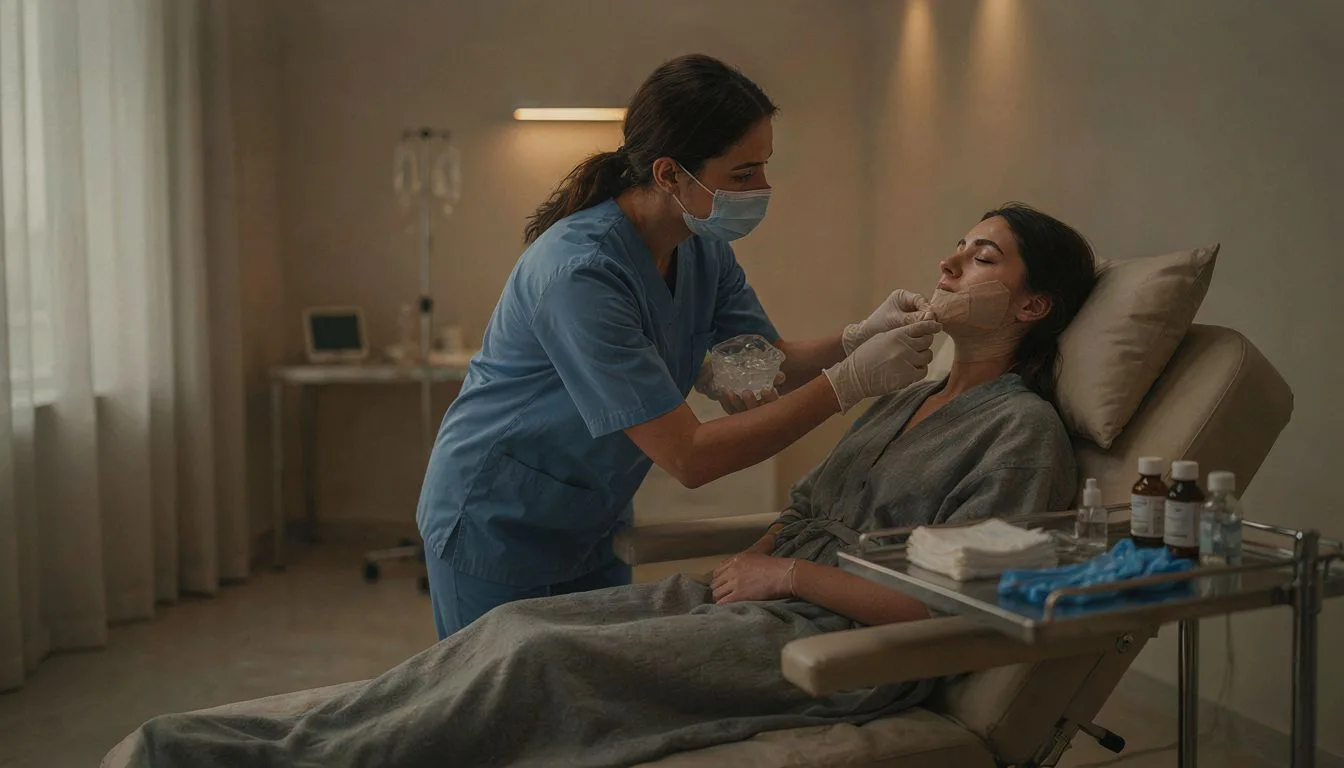
After chin augmentation, the package’s value shifts from planning to protection. Most surgeons build in a structured aftercare pathway that starts the moment you wake up and continues for weeks. Early care focuses on controlling swelling and preventing infection: you will typically receive written guidance on cleaning the incision line, sleeping with your head elevated, and applying cold compresses during the first 48 hours. Antibiotics, pain relievers, and sometimes anti-nausea medication are usually prescribed or dispensed before you leave the clinic, so you are not scrambling for a pharmacy in an unfamiliar city.
Follow-up appointments are the backbone of this phase. A first check commonly happens within 24 to 72 hours, when the surgeon inspects the wound, assesses swelling, and confirms that the implant or filler is sitting correctly. Suture removal generally occurs around day five to seven for external incisions, though dissolvable stitches may be used instead. A second visit at roughly two to three weeks reviews healing progress and addresses any asymmetry concerns before they become fixed.
Between visits, you need a clear channel for questions. Reputable packages provide a direct phone or messaging contact for the clinic, plus instructions on which symptoms—fever, spreading redness, sudden severe pain—warrant immediate attention rather than waiting for the next scheduled appointment. This access is what separates a well-organized package from a bare procedure, and it matters most in the first two weeks when uncertainty runs highest.
How Long Recovery Takes and What Results to Expect

Recovery after chin augmentation follows a fairly predictable arc, even though the exact timeline varies from person to person. In the first 48 to 72 hours, swelling and bruising around the chin and jaw are at their peak, and most surgeons ask you to sleep with your head elevated and stick to soft foods. By the end of the first week, the worst of the bruising has usually faded enough for many patients to return to desk-based work, especially if a compression garment or tape can be worn discreetly. Strenuous exercise, sauna use, and heavy lifting typically wait two to three weeks, since raised blood pressure can intensify swelling and slow healing.
The more visible turning point comes around the two- to four-week mark, when residual swelling drops enough that the new chin contour starts to read as yours rather than as a surgical result. From there, refinement continues gradually: most of the final shape is visible by three months, and subtle settling can continue for six to twelve months, particularly with silicone implants, where the capsule around the implant softens over time.
Several factors can stretch or shorten this window. Non-surgical augmentation with fillers involves minimal downtime, often just a day or two of mild tenderness, while surgical placement of an implant or sliding genioplasty carries the fuller timeline described above. Smoking, uncontrolled blood pressure, and a history of poor wound healing tend to prolong swelling and delay suture removal.
Contact the clinic promptly if you notice spreading redness, a fever, increasing pain on one side, or any discharge from the incision, as these can signal infection or implant-related problems that need early attention rather than watchful waiting.
Understanding Total Costs and What Influences Pricing in Turkey
Quotes for chin augmentation in Turkey vary widely, and the differences rarely come down to one number. Technique matters first: a surgical implant procedure with general anesthesia and an overnight stay costs more than a filler session done in under an hour. Material choice follows closely — custom-carved silicone or PEEK implants cost more than off-the-shelf options, while hyaluronic acid filler is priced per syringe and repeated over time. Facility tier, surgeon experience, and whether the clinic is a fully accredited hospital or a private office all shift the total.
What a quote includes is where comparisons get tricky. A complete figure should cover consultation, imaging, anesthesia, the implant or filler itself, medications, and follow-up visits. Anything left out — lab work, compression garments, revision coverage, or interpreter services — becomes an add-on later.
Before comparing totals, ask each provider for a written itemized breakdown, confirm whether revision surgery is included, and check what happens if you need extra follow-up beyond the standard window. The cheapest quote is often the least complete, so align the inclusions first, then compare the bottom line. A clear itemized quote is the only fair basis for judging value.
FAQs
What does a chin augmentation Turkey package typically include beyond the surgeons fee?
A chin augmentation package in Turkey typically bundles the surgeon's fee with hospital or clinic charges, anesthesia, and standard implant materials. It usually also covers pre-operative consultations, blood tests, and follow-up visits during your stay. Many packages add airport transfers, hotel accommodation, and a translator or patient coordinator for international patients. Post-operative medications, compression garments, and a set number of check-ups are commonly included, though extended aftercare once you return home is often not.
Are hospital stay, anesthesia, and post-operative follow-up covered in a standard chin augmentation Turkey package?
Most standard chin augmentation packages in Turkey include the hospital stay, anesthesia fees, and post-operative follow-up visits, since clinics typically bundle these into a single all-inclusive price. The exact scope can vary by provider, so you should confirm whether the package covers only the surgeon's fee or also medications, overnight accommodation, and the number of follow-up appointments. Reputable clinics usually specify these inclusions in writing before you book.
How can I compare chin augmentation Turkey package prices without hidden costs or excluded services?
Ask each clinic for a written, itemized quote that separates the surgeon's fee, hospital and anesthesia charges, implant or graft material, medications, lab tests, and follow-up visits. Confirm whether prices include airport transfers, hotel accommodation, an interpreter, compression garments, and revision surgery, and request the total cost in writing before paying any deposit. Compare quotes on the same inclusions and ask directly which services are excluded, since a low headline price often omits anesthesia, materials, or aftercare.


