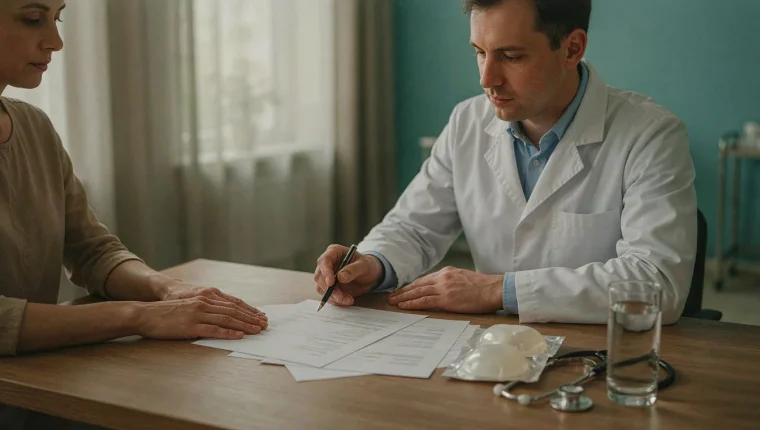
Thousands of Canadians travel abroad for cosmetic surgery every year, and breast augmentation in Turkey is one of the most searched options. The price gap is hard to ignore: Canadian clinics often charge two to three times as much as Turkish hospitals for the same procedure. But lower cost alone shouldn’t decide your surgery.
This guide covers the real numbers: costs, surgeon qualifications, hospital standards, and what the full journey from Canada involves. We’ll also cover the risks that honest clinics will tell you about and the red flags that should make you walk away.
By the end, you’ll have a clear picture of whether breast augmentation in Turkey for Canadians is a smart financial decision, a compromise, or something worth reconsidering. Let’s get into the facts.
Why Canadians Are Choosing Turkey for Breast Augmentation
Turkey has quietly become one of the most sought-after destinations for cosmetic surgery among North American patients, and breast augmentation sits near the top of that list. The reasons go well beyond a single headline number. Canadians are discovering that Turkish clinics offer an unusual combination of internationally trained surgeons, modern private hospitals, and all-inclusive packages that bundle surgery, accommodation, transfers, and aftercare into one predictable price.
One major driver is accessibility. Wait times for elective cosmetic procedures in Canada can stretch for months, and most patients pay out of pocket anyway since provincial health plans don’t cover aesthetic surgery. When the wait doesn’t reduce the cost, many Canadians start looking abroad — and Turkey consistently appears in their research.
The country has also invested heavily in its medical tourism infrastructure. Istanbul alone hosts hundreds of accredited private hospitals, many holding JCI (Joint Commission International) accreditation, the same standard used to evaluate hospitals in the United States and Europe. Surgeons frequently complete fellowship training in the US or UK, and patient coordinators typically communicate in fluent English, which removes a practical barrier many Canadians worry about.
There’s also a lifestyle factor at play. Clinics in Turkey have streamlined the entire experience: consultation, surgery, and initial recovery often fit within a single week, and many packages include hotel stays and airport transfers so patients can focus on healing rather than logistics. Add competitive pricing — often 50 to 70 percent lower than private clinic rates in Toronto or Vancouver — and the appeal becomes clear. The sections that follow break down exactly what those savings look like and what to verify before booking.
Cost Comparison: Breast Surgery in Turkey vs. Canada
When Canadians start researching breast augmentation in Turkey, the price difference is often the first thing that stops them mid-scroll. At home, a straightforward augmentation typically costs between $9,000 and $14,000 CAD once surgeon, anaesthesia, and facility fees are tallied. In Turkey, the same procedure frequently lands between $3,500 and $6,000 CAD — roughly half to a third of the price — even after you factor in flights and a hotel stay.
That gap exists for structural reasons, not because the quality of care is inherently lower. Lower operating costs, favourable exchange rates, and a high patient volume allow Turkish clinics to run efficiently at price points Canadian private clinics simply cannot match, since they face much steeper overhead.
To compare quotes fairly, you need to know what a Turkish package usually bundles together:
- All-inclusive pricing — most Turkish quotes cover the surgeon, anaesthesia, implants, hospital stay, medications, and compression garments in one figure, so there are fewer surprise add-ons than with à-la-carte billing.
- Pre-operative testing — blood work, ultrasounds, and surgical clearance are typically included on arrival rather than billed separately.
- Accommodation and transfers — many packages add several nights in a hotel plus private airport and clinic transportation.
- Post-operative care items — follow-up visits during your stay, prescribed medications, and sometimes a support bra come standard.
- Interpreter services — English-speaking coordinators are generally part of the package, removing a cost you’d never think to budget for.
Remember, though, that the sticker price is only the starting point. Flights, potential revision costs, and time off work all shape the true total — a breakdown we’ll walk through in detail in the next section.
Understanding the Full Price Breakdown Beyond Surgery Fees
When you see an advertised price of $3,500 for breast augmentation in Turkey, it’s natural to wonder what’s actually included. The honest answer: with reputable providers, quite a lot. Most established Istanbul clinics structure their offers as all-inclusive packages, meaning the headline figure typically covers more than the surgeon’s fee alone.
A typical package bundles the surgeon’s fee, anaesthesia, hospital or clinic charges, and the implants themselves. Beyond the operating room, expect pre-operative testing such as blood work, an ECG, and a breast ultrasound or mammogram. Ground logistics are usually included too — airport transfers, accommodation for several nights, and a nurse-companion service during your first days of recovery. Many clinics also provide compression garments, prescribed medications, and post-operative follow-up appointments before you fly home.
Not every line item appears in every package, so request an itemised quote before paying a deposit. A few costs almost always remain your own responsibility: your return flights to Istanbul, any tourist spending, travel insurance (standard policies usually exclude elective surgery abroad, so look into dedicated medical travel cover), and potential revision surgery later, which no package includes.
It’s also worth budgeting for time away from work — most surgeons recommend staying in Turkey for 7 to 10 days post-surgery, followed by roughly two weeks of light recovery at home in Canada. When you add up what an all-inclusive price genuinely covers, the gap between Turkish and Canadian quotes becomes much easier to interpret — and to trust.
Choosing a Qualified Surgeon and Accredited Clinic Abroad
The surgeon you choose matters more than the country you choose. That is the single most important principle for anyone considering breast augmentation in Turkey for Canadians seeking both quality and value. A skilled, board-certified plastic surgeon in Istanbul will deliver better results than a mediocre surgeon anywhere in the world, so vetting credentials should be your first step, not an afterthought.
Start by confirming that your surgeon is certified by the Turkish Society of Plastic, Reconstructive and Aesthetic Surgery and holds a genuine specialization in plastic surgery rather than a general medical licence. Reputable clinics make this information easy to find and will happily share before-and-after photos of real patients with bodies and goals similar to yours.
The facility itself deserves equal scrutiny. Look for hospitals and clinics carrying JCI accreditation or equivalent international certification, which signals that sterilization protocols, surgical equipment, and emergency procedures meet globally recognized standards. Many top-tier Turkish hospitals hold these credentials, particularly in Istanbul and Antalya.
Beyond paperwork, evaluate communication. A trustworthy clinic will offer a thorough virtual consultation before you commit, answer questions about implant brands (Motiva, Mentor, and Natrelle are widely used), explain revision policies in writing, and never pressure you toward same-week booking. Be wary of agencies that prioritize sales volume over medical care.
Finally, ask directly who will perform your surgery and who will manage your follow-up. Some high-volume clinics delegate care to rotating staff, so confirming that the surgeon you consulted is the surgeon operating on you protects both your safety and your outcome.
What to Expect During Your Medical Trip: Timeline and Travel Planning
Most breast augmentation trips to Turkey follow a fairly predictable rhythm, and knowing that rhythm in advance removes much of the anxiety around booking flights and requesting time off work. The typical 7-day medical trip has become the industry standard for good reason: it allows enough time for pre-operative testing, the surgery itself, your first post-operative check, and a safe window before flying home.
Here is how those seven days usually unfold:
- Day 1 – Arrival and transfer: Your clinic’s coordinator meets you at the airport and takes you to your hotel. Use this day to rest, hydrate, and confirm your consultation time for the next morning.
- Day 2 – Consultation and testing: You meet your surgeon in person, review your implant options, and complete blood work, an ECG, and a mammogram or ultrasound if required. If everything checks out, surgery is confirmed for the following day.
- Day 3 – Surgery day: The procedure typically takes one to two hours under general anesthesia. Most patients stay overnight in the hospital for monitoring before being discharged the next morning.
- Days 4–5 – First recovery checks: Your surgical bra is fitted, drains are removed if used, and the surgeon reviews your incision care instructions. Light walking is encouraged to support circulation.
- Days 6–7 – Final check and departure: A last examination confirms you are fit to fly, and your surgeon provides documentation of your implants, procedure details, and aftercare plan to take back to Canada.
Booking travel around this structure requires some flexibility. Schedule your flight home with at least a 48-hour buffer after your final check-up, since surgeons sometimes recommend an extra day of observation if swelling or healing is slower than expected. Choose an aisle seat for the return flight so you can stretch comfortably, and plan to walk every hour or so during the flight to reduce the risk of blood clots, which is elevated after any surgery.
It is also worth arranging a family member or friend to meet you at the Canadian airport. You will not be able to lift luggage, and having someone handle the drive home makes those first 24 hours back significantly easier while you adjust to managing recovery on your own soil.
Safety Standards, Risks, and How to Protect Yourself as a Medical Tourist
Even in a fully accredited hospital, every surgery carries risk, and breast augmentation is no exception. The most common complications—capsular contracture, implant rupture, infection, and asymmetry—occur at similar rates worldwide regardless of where the procedure is performed. What varies significantly is how well those risks are screened for, communicated, and managed. This is where your own diligence as a patient becomes the most important safety layer of all.
Turkey’s top hospitals operate under international standards, and many hold JCI accreditation, which requires documented protocols for sterilization, anesthesia safety, and emergency response. These facilities often match or exceed what you’d find in a Canadian private clinic. The concern lies not with leading hospitals but with the bottom tier of the market: budget clinics that cut corners on pre-operative testing, reuse equipment, or employ surgeons whose credentials are difficult to verify.
Beyond choosing the right facility, there are specific steps you can take to protect yourself. Verify your surgeon’s registration with the Turkish Medical Association and ask for their exact specialization—plastic and reconstructive surgery, not general medicine. Request the implant manufacturer’s documentation and confirm your implants are registered in the manufacturer’s warranty database, which matters enormously if you ever need replacement surgery back in Canada. Get every detail of your procedure in writing: implant type, size, incision location, and placement plane.
Be equally honest about your own health. Disclose your full medical history, current medications, smoking status, and any previous surgeries. Withholding information to speed up approval puts you at genuine risk under general anesthesia.
Timing also matters. Flying long-distance shortly after surgery slightly increases the risk of blood clots, which is why a seven-day stay before departure is standard practice. During your flight home, wear compression stockings, stay hydrated, and walk the cabin every hour or two. Finally, arrange a follow-up appointment with a Canadian physician before you leave Turkey, and keep digital copies of your operative report, discharge summary, and implant details so any doctor at home can treat you with full knowledge of your surgical history.
Recovery, Aftercare, and Follow-Up Care Once You Return to Canada
Your recovery doesn’t end when your flight lands in Toronto or Vancouver. In fact, the most important healing phase of breast augmentation happens over the following six to eight weeks, and how you manage it at home plays a bigger role in your final result than anything your Turkish surgical team does after you leave.
Most reputable clinics will send you home with detailed written instructions, prescribed medications, and often a direct messaging channel—usually WhatsApp—to your patient coordinator. Before you fly, ask exactly what follow-up care they provide remotely: how many virtual check-ins are included, whether they want photos of your incisions at set intervals, and who to contact if something worries you. Clinics that answer vaguely here are telling you something important.
The typical home recovery timeline looks like this. The first week is the most uncomfortable: swelling, tightness, and fatigue are normal, and you’ll sleep on your back with your upper body elevated. Most patients return to desk work within seven to ten days. Light walking starts almost immediately to reduce clot risk, but no lifting anything heavier than a few kilograms for at least four to six weeks. Bras without underwire, gentle scar care once incisions close, and patience with numbness around the nipples—which usually resolves over months—are all part of the process.
Here’s the practical gap to plan for: your Turkish surgeon can’t examine you in person once you’re home. Smart patients close this gap before travelling. Book a follow-up appointment with a Canadian family doctor or find a local nurse practitioner willing to check your incisions if redness, unusual swelling, fever, or discharge appears. If you notice these signs, seek in-person medical care promptly—don’t wait for a reply from Istanbul. Keep your operative report and implant details handy, since any Canadian provider will want them.
One final note worth remembering: if you chose a JCI-accredited hospital and a board-certified surgeon, complications are rare, but having a domestic safety net transforms a good outcome into a well-managed one. Arrange that support before you board your return flight.
FAQs
How much does breast augmentation in Turkey cost compared to Canada?
Breast augmentation in Turkey typically costs between $3,000 and $5,000, while the same procedure in Canada generally ranges from $8,000 to $12,000 CAD. This means patients can save roughly 50-70% by choosing Turkey, even after factoring in flights and accommodation. Many Turkish clinics include hotel stays, transfers, and aftercare in package pricing, which further improves the value compared to Canadian clinics that usually bill surgery, anesthesia, and facility fees separately.
Is it safe to travel home to Canada shortly after surgery in Turkey?
Traveling home to Canada shortly after surgery is generally safe for most routine procedures, but you should get your surgeon's clearance before booking flights. Many clinics recommend waiting 7 to 10 days after cosmetic or minor surgeries, and longer for major abdominal or chest procedures, because long flights increase the risk of blood clots (DVT). Your medical team will assess your specific recovery, provide fit-to-fly advice, and can supply documentation if your airline requires it.
What happens if I need follow-up care once I return to Canada?
If you need follow-up care once you return to Canada, bring copies of your medical records, discharge summary, test results, and prescriptions from your treatment abroad and share them with your family doctor or a relevant specialist. Your provincial health plan covers medically necessary follow-up care in Canada just as it would for any other condition, though you may face typical wait times for specialists or non-urgent procedures. If complications arise related to your treatment abroad, additional costs for medications, physiotherapy, or specialist visits not covered by your provincial plan may apply, so it's wise to check whether your travel or medical tourism insurance covers post-return complications.