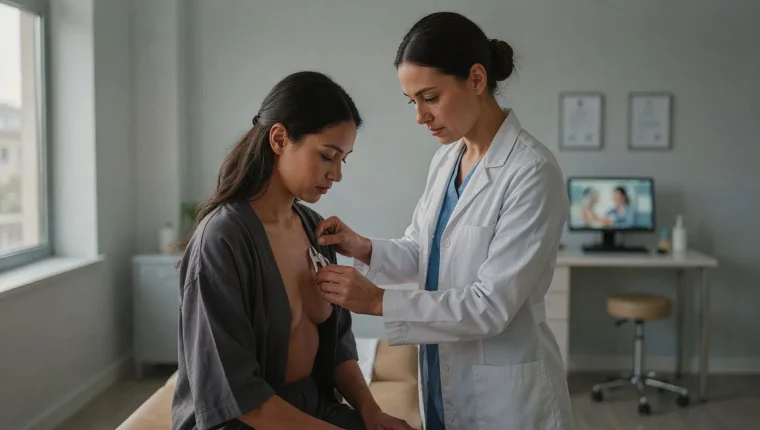
Most people return to a desk job within a week after breast augmentation, but full recovery takes closer to six weeks—a difference to consider when planning time off work and help around the house. The first 48 hours bring the most discomfort, swelling peaks around day three, and by week two most daily activities feel normal again, even if your surgeon still wants you to avoid lifting anything heavy. Understanding this breast augmentation recovery timeline helps you set realistic expectations instead of guessing. Every body heals at its own pace, and factors like implant placement, surgical technique, and your overall health all play a role in how smoothly things go. This week-by-week breakdown explains what happens after surgery and what to expect at each stage.
The First 48 Hours After Surgery
The moment you wake up from anesthesia, your recovery has already begun — and how you spend the first two days will shape your entire healing experience. Expect to feel groggy, tight across the chest, and more tired than usual. This is normal. Your surgical team will typically discharge you the same day with a support bra or elastic band, prescribed pain medication, and clear instructions to follow.
One of the most important things to understand during this window is the role of post-operative drainage and swelling management. Fluid naturally accumulates around the implants, and keeping your upper body elevated at roughly 30–45 degrees — even while sleeping — helps reduce pressure and supports proper implant positioning. Sleep on your back, never on your side or stomach, and consider propping yourself with extra pillows.
Have someone stay with you for at least the first 24 hours. You won’t be able to lift your arms above shoulder height, and simple tasks like opening jars or lifting a kettle can feel surprisingly difficult. Keep everything you need — water, medications, snacks, phone chargers — within easy reach at waist level.
Move gently, but do move. Short, slow walks around your home every few hours encourage circulation and lower the risk of blood clots. Avoid reaching, bending, or straining. Ice packs wrapped in cloth can be applied near (not directly on) the incision areas for comfort.
Drink plenty of water, eat light, fiber-rich meals to counter constipation from pain medication, and skip alcohol entirely. If your surgeon placed drains, note their output as instructed. By the end of day two, most people find the worst of the initial soreness has already started to fade — a reassuring sign that your body is doing exactly what it should.
Week One: Managing Pain, Swelling, and Drainage
Once the first 48 hours are behind you, the second through seventh days are often when discomfort peaks and then begins to ease. Most surgeons prescribe pain medication for this window, and staying ahead of the discomfort — taking medication on schedule rather than waiting for pain to build — makes these days noticeably more manageable. Swelling also reaches its height around day three or four, which is why your breasts may look larger and feel firmer than you expected at this stage.
Many patients go home with surgical drains, especially after a more extensive procedure. Managing these drainage tubes properly helps prevent fluid buildup and supports smoother healing. Here’s what your daily routine will likely involve:
- Empty and record drain output. Most surgeons ask you to measure the fluid two or three times a day and keep a log, since declining output is one sign the drains can come out soon.
- Wear your surgical bra around the clock. This compression garment reduces swelling, supports the implants as they settle, and protects your incisions — take it off only to shower if your surgeon approves.
- Sleep on your back with your upper body elevated. Extra pillows or a wedge keep pressure off your chest and help fluid drain naturally instead of pooling.
- Walk short distances several times a day. Gentle movement around the house promotes circulation and lowers the risk of blood clots, without straining your chest muscles.
- Take prescribed antibiotics exactly as directed. Finishing the full course, even when you feel fine, is one of the simplest ways to protect against infection during this vulnerable stage.
Expect your follow-up appointment around the end of the first week, when your surgeon will likely remove the drains, check your incisions, and adjust your pain plan. If one side is noticeably more swollen or painful than the other, or if a drain suddenly stops producing output, call your surgical team rather than waiting for the scheduled visit — early questions are always welcome at this stage of recovery.
When Can You Return to Work and Daily Activities?
Returning to work is one of the most common questions patients ask, and the answer depends largely on the physical demands of your job. For most people with desk jobs or light administrative work, the general guideline is 7 to 10 days off — enough time for the worst of the swelling to settle and for you to stop needing regular pain medication. If your work involves lifting, reaching overhead, or physical labor, expect to wait closer to 3 to 4 weeks, sometimes longer depending on how your healing progresses.
The key concept here is that “returning to work” doesn’t mean returning to full activity. During your first week back, plan to ease in: take frequent short breaks, avoid carrying anything heavier than a few pounds, and don’t lift bags, files, or children above shoulder height. Driving is usually safe once you’re off narcotic pain medication and can react quickly without hesitation — typically around day 7 to 10 for most patients.
Everyday activities follow a similar gradual pattern. Light household tasks like cooking or answering emails are fine within days, but vacuuming, laundry baskets, and grocery runs involving heavy bags should wait until your surgeon clears you. Your body will often tell you what it’s ready for; a noticeable increase in swelling, throbbing, or fatigue after an activity is a clear signal to slow down and rest.
If your job allows it, many patients find that returning part-time or working from home for a few days makes the transition smoother. Always confirm your specific timeline with your surgeon at your one-week follow-up, since individual healing rates vary more than any general guideline can predict.
Exercise Restrictions: What to Avoid and When to Resume
Exercise is where many patients push too hard, too soon—and it’s the one area where impatience can genuinely undo your surgeon’s work. The concern centers on raising your heart rate and blood pressure during the initial healing phase, which can increase swelling, worsen bleeding risk, and put strain on the incisions while they’re still sealing themselves.
In the first two weeks, your activity should stay close to what we covered earlier: those short daily walks to keep circulation moving, and little else. Anything beyond that—jogging, cycling, heavy lifting, even carrying laundry baskets or a toddler—needs to wait. As a general rule, most surgeons clear patients for light lower-body exercise around weeks two to three, but anything involving your chest, arms, or shoulders stays off the table for four to six weeks.
That upper-body restriction matters more than it might seem. Movements like push-ups, overhead pressing, yoga poses that bear weight on your arms, or even vigorous swimming can cause the implant pocket to shift or fluid to accumulate around the implant. If implants were placed under the muscle, the pectoral muscles need real time to heal around them, which is why that six-week mark exists.
When you do get the green light, ramp up gradually rather than jumping back to your pre-surgery intensity. Start at roughly half your usual effort and build over a couple of weeks, letting discomfort—not a calendar—guide your pace. A sharp pulling sensation, new swelling, or one-sided pain during activity is your signal to stop and check in with your surgical team.
Caring for Your Incisions and Scars During Healing

While your surgeon’s technique plays a role in how well incisions heal, the daily care you provide at home during the first few weeks has an enormous influence on both healing speed and the final appearance of your scars. The skin around your incisions is fragile and vulnerable to infection, tension, and irritation, so treating it gently and consistently is one of the most valuable things you can do for your long-term results.
Your surgical team will give you specific wound-care instructions, but a few principles apply to nearly every patient:
- Keep incisions clean and dry — Wash gently with mild soap and water once your surgeon approves showering, then pat the area dry with a soft towel. Avoid scrubbing or applying lotions, oils, or creams until your incisions are fully closed and cleared for it.
- Leave steri-strips or tape alone — Let adhesive strips fall off on their own, usually within one to two weeks. Peeling them off early can pull the healing skin apart and widen the scar.
- Avoid direct sun exposure — Ultraviolet light can permanently darken a healing scar, making it more visible. Keep incisions covered with clothing or a broad-spectrum sunscreen (SPF 30 or higher) once they are fully healed.
- Watch for changes, not just problems — Mild redness and firmness along the incision line are normal. However, increasing redness that spreads, warmth, oozing, or a foul smell should be reported to your surgeon promptly rather than waited out.
- Minimize tension on your scars — Reaching overhead too soon or lifting heavy objects stretches the incision lines, which can result in wider scars. Follow the activity restrictions discussed earlier to protect your healing skin.
Once your incisions have fully closed, typically a few weeks after surgery, many surgeons recommend scar management products such as silicone sheets or silicone gel, which are among the most evidence-supported methods for improving scar texture and color. Massage may also be introduced at this stage — your surgeon will show you the proper technique and confirm when it is safe to begin.
Be patient with the process. Scars go through a naturally red and raised phase for several months before they gradually fade and soften, and it can take up to a year to see their final appearance. Consistent, gentle care during this window makes a measurable difference in how discreet your scars ultimately become.
Follow-Up Appointments and Warning Signs to Watch For
Your surgeon will typically schedule several check-ins after breast augmentation — often within the first week, again around the one-month mark, and periodically through the first year. These visits aren’t routine paperwork; they’re where your healing is actually assessed. Your surgeon will check incision healing, implant position, swelling patterns, and how your tissue is responding. Attending every appointment matters, even when you feel great, because some issues develop quietly and are easiest to correct early.
Between visits, your job is to monitor yourself. Knowing the difference between normal healing and a genuine red flag is one of the most useful skills you’ll develop during this phase. Normal recovery includes swelling that improves week by week, mild soreness that fades, incisions that look pink or slightly raised, and temporary changes in nipple sensation.
Contact your surgeon promptly if you notice any of the following:
Signs of infection, such as spreading redness, warmth, foul-smelling drainage, fever above 101°F (38°C), or increasing pain rather than decreasing pain.
Sudden swelling on one side, especially if accompanied by heaviness or discomfort — this can indicate bleeding around the implant (hematoma).
One breast sitting noticeably higher, firmer, or shifting position over time, which may suggest implant malposition or early capsular contracture.
A rash, blistering, or persistent fluid leaking from an incision.
Shortness of breath or chest pain, which warrants immediate emergency care, not a scheduled call.
Skin redness, hardening, or unusual warmth over an implant months after surgery can also signal late complications worth evaluating.
Keep in mind that no concern is too small to mention. Surgeons would much rather reassure a worried patient than discover a problem that was reported late. Take photos if you notice something changing, since visual documentation helps your surgical team compare progress between appointments.
Finally, bring your questions to every visit and keep a simple recovery journal. Tracking drain output, medications, and changes you observe gives your surgeon precise information and gives you a clear record of how far you’ve come — and a reliable reference point for the final stretch of healing ahead.
When Will You See Your Final Results? A Realistic Breast Augmentation Recovery Timeline

Many patients expect to walk out of surgery with their final look, but what you see in the mirror during the first weeks is only a preview. Swelling, tight skin, and implants sitting high on the chest all distort the picture. The key concept to understand here is implant settling — the gradual process where implants drop into their intended position and surrounding tissue relaxes around them.
During the first month, your implants typically sit higher and firmer than they will eventually. This is completely normal. As swelling subsides and the pectoral muscles loosen their grip, the implants gradually descend, and the lower pole of the breast fills out. Most patients notice meaningful change between weeks four and eight.
The three-to-six month window is where the magic becomes visible. By this stage, the majority of swelling has resolved, and your breasts have softened considerably. For implants placed under the muscle, settling can take closer to six months, sometimes even longer if you’re very athletic or have well-developed chest muscles.
Scars, too, evolve on their own schedule. They’ll pass through a pink or red, slightly raised phase before fading over the following year. Consistent scar care and sun protection — habits you’ve already built — pay off most visibly during this period.
Breast size can also shift slightly once final healing occurs. Weight changes of more than ten to fifteen pounds, future pregnancies, and hormonal fluctuations may alter your results over the years, so think of your outcome as a long-term investment rather than a fixed snapshot.
By the one-year mark, you’ll have a complete picture: settled implants, softened scars, and a realistic sense of how your results look in everyday life. Taking photos every month during this journey helps you appreciate changes you might otherwise miss — and gives you a valuable record to discuss with your surgeon at your final follow-up.
FAQs
When can I return to work after breast augmentation surgery?
Most people with desk jobs can return to work within 5 to 7 days, once the initial soreness has eased and you're no longer taking strong pain medication. If your job involves heavy lifting, reaching overhead, or physical labor, plan for 2 to 3 weeks before resuming those activities, since straining the chest muscles too early can affect healing and implant position. Many patients actually feel ready to do light computer work just a few days after surgery, so the timing depends largely on what your role demands. Your surgeon will confirm at your follow-up appointment when it's safe for you to return, so follow their guidance based on your individual recovery.
How long should I wear a surgical bra during my recovery?
Most surgeons recommend wearing your surgical bra continuously for the first 2 to 4 weeks after breast surgery, removing it only briefly for showering. After that initial period, many patients continue wearing it (or a supportive sports bra) for 6 to 8 weeks, especially during sleep and physical activity. Your surgeon will give you a specific timeline based on your procedure and healing progress, so follow their guidance if it differs. Consistent support during this window helps reduce swelling and supports optimal scar healing.
When is it safe to start exercising again after the procedure?
Most people can resume light walking within a day or two, as gentle movement actually supports circulation and healing. Wait about two to four weeks before returning to moderate activities like jogging, cycling, or strength training, depending on how quickly your body recovers. High-impact exercises and heavy lifting should wait until your surgeon clears you, typically at your follow-up appointment around the four-to-six-week mark. The best signal to trust is your own body: if an activity causes pain, swelling, or discomfort, scale back and give yourself more time.