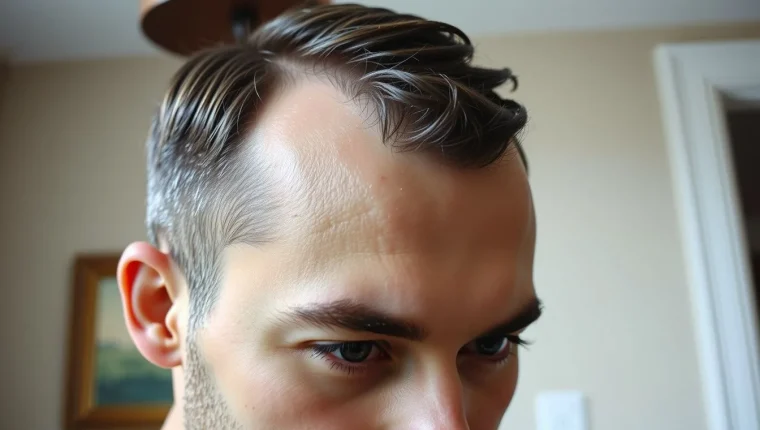
Noticing more hair in the drain or a thinner crown often raises the same question: is this just age, or is it inherited? For many adults, hereditary hair loss results from genes and hormones that gradually shrink hair follicles. Because the pattern is genetic, it tends to be progressive rather than temporary, which makes early recognition important. The concern is whether anything can realistically slow it or protect what remains. Genetics explains why it happens, while treatment options determine how much you can preserve. Understanding both gives you a clearer, more grounded starting point than guessing.
How Genetics Shape Hereditary Hair Loss
At the center of hereditary hair loss is a hormone called dihydrotestosterone, or DHT. It is a byproduct of testosterone that circulates in everyone’s bloodstream, but it only affects hair follicles that are genetically programmed to respond to it. That programmed sensitivity is the inherited factor. In other words, the hormone is universal, but the follicle’s reaction to it is not.
When DHT binds to receptors in a susceptible follicle, it gradually shortens the growth phase of the hair cycle. Each new hair emerges thinner, shorter, and less pigmented than the one before it. Over successive cycles, the follicle itself shrinks in a process known as miniaturization. Eventually, the follicle may stop producing visible hair altogether, though it usually remains alive beneath the scalp.
This process unfolds slowly and follows a recognizable pattern, typically affecting the temples, crown, or part line rather than the entire scalp evenly. That predictability distinguishes it from temporary shedding caused by stress, illness, or nutritional gaps, which tends to be diffuse and reversible.
Why Some People Inherit Thinning Hair and Others Don't

The idea that thinning hair comes only from your mother’s side is one of the most persistent beliefs about inheritance, and it is also one of the most misleading. While the X chromosome does carry one gene linked to hair loss, it is far from the whole story. Researchers have identified multiple genes that influence how sensitive hair follicles are to hormones, and these genes can be inherited from either parent. This is why two brothers can share the same parents yet experience very different patterns of thinning, and why a man whose father kept a full head of hair may still lose his own.
What you inherit is not a guaranteed outcome but a predisposition. A family history of thinning raises the likelihood that you will follow a similar path, but it does not decide the result on its own. Age, overall health, and other individual factors all shape how that inherited tendency plays out over time. Because family patterns are unpredictable, watching your own hair early is more useful than trying to decode a relative’s hairline.
Early Signs and Patterns of Genetic Hair Loss
Genetic hair loss rarely announces itself with a dramatic shed. More often, it begins with changes so gradual that they are easy to attribute to lighting, styling, or a stressful month. A part that seems slightly wider than it used to be, a few extra hairs on the pillow, or a hairline that no longer sits the way it once did are among the earliest cues people tend to dismiss. Because miniaturization shortens each growth cycle little by little, the visible difference at this stage is subtle rather than sudden.
The distribution of thinning is often the most telling clue. In men, recession commonly starts at the temples and along the crown, gradually leaving the sides and back relatively fuller. In women, thinning more often appears as a diffuse widening along the part or a general reduction in density on top, while the frontal hairline tends to stay intact. These patterns are typical, not diagnostic rules, and many people show a mix of both.
Self-observation has real limits, since normal variation and temporary shedding can look similar to an inherited pattern. A professional assessment adds clarity by examining the scalp directly, tracking density over time, and ruling out other causes. Once a pattern is recognized, the next step is understanding which options can realistically slow it.
Treatments That Can Slow Hereditary Hair Loss
No treatment restores hair that hereditary hair loss has already taken away, so the realistic goal is slowing and stabilizing further thinning rather than reversing it. That expectation shapes every option that follows, because each approach works differently and none of them produces overnight change.
Clinically recognized treatments fall into a few broad groups based on how they act. Topical solutions are applied directly to the scalp and are often the first step for many people. Oral medications work from within and may be recommended when topical options alone are not enough. Procedural approaches, including in-office treatments, act through different mechanisms and are frequently used alongside the other two rather than on their own.
What these approaches share is that they tend to work best in combination. A topical product may support the scalp environment while an oral medication addresses internal factors, and a procedure can complement both. Because they act on different parts of the same problem, using them together often produces more consistent results than relying on any single method.
Timing and consistency matter as much as the choice of treatment. Starting earlier, when follicles are still active, generally offers more room to preserve what remains. Once a routine is established, staying with it steadily matters more than switching frequently, since results build gradually and depend on continued use.
Everyday Habits and Medical Options That Support Hair Retention

Daily choices rarely reverse genetic thinning on their own, but they shape the environment in which follicles live. Gentle handling matters: aggressive brushing, tight hairstyles, and frequent heat or chemical treatments can add traction and breakage on top of an already vulnerable scalp. A balanced diet with adequate protein, iron, and vitamin D supports normal hair cycling, though supplements only help when a genuine deficiency exists. Managing stress and sleep is harder to measure, yet chronic strain and poor recovery are commonly linked to increased shedding. Smoking and untreated scalp inflammation are also worth addressing, since both can worsen follicle health.
Because hereditary thinning unfolds over years, these habits work best as support rather than replacement for clinical care. This is where ongoing medical follow-up becomes valuable: a clinician can track density changes, adjust treatment when progress stalls, and confirm that new shedding is not caused by thyroid issues, medication, or nutritional gaps. Retention is not a single decision but a routine—daily care, periodic assessment, and realistic expectations sustained over time.
FAQs
Is hereditary hair loss inherited from your mothers or fathers side?
Hereditary hair loss, often called androgenetic alopecia, can be inherited from either side of your family, not just your mother's or father's. The genes involved are numerous and can be passed down from both parents, so a family history on either side may raise your risk. Because inheritance is polygenic and complex, having relatives with hair loss on one or both sides does not guarantee you will experience it, and the pattern and severity can vary widely.
At what age does hereditary hair loss usually start showing?
Hereditary hair loss most commonly begins between the late teens and the mid-thirties, though the exact timing varies from person to person based on genetics. In men, early signs like a receding hairline or thinning crown often appear in the twenties, while women typically notice diffuse thinning later, often during their thirties or forties. Because the inherited pattern and hormone sensitivity differ for everyone, some people may see changes earlier or later than these typical ranges.
Which treatments actually slow down hereditary hair loss?
For hereditary hair loss, only a few treatments have solid evidence for slowing or partially reversing the process. Minoxidil (topical or oral) and finasteride or dutasteride (oral, for men and some postmenopausal women) are the main proven options, with low-level laser therapy and ketoconazole shampoo offering modest additional benefit. These approaches work best when started early and must be used continuously, since stopping them typically allows the underlying genetic pattern to resume.