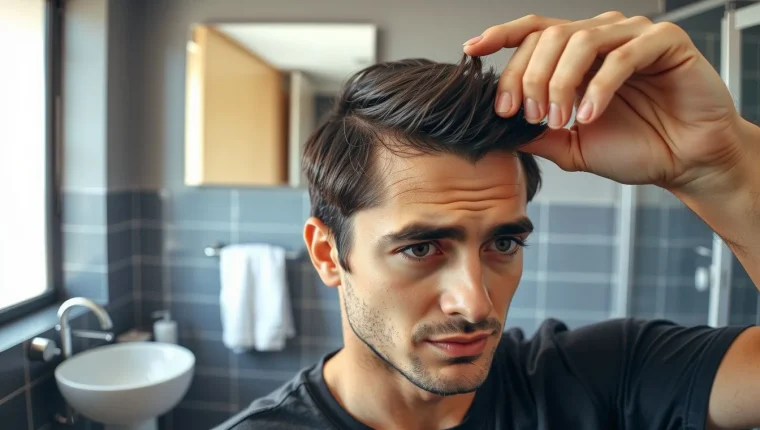
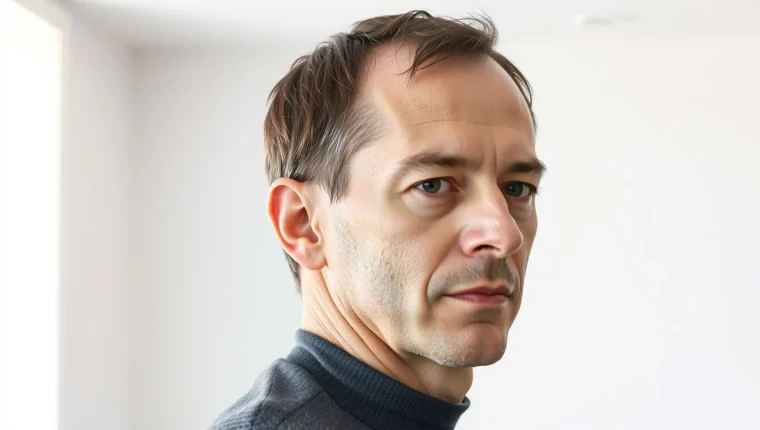
You notice it in photographs first, or in the mirror under certain light: the hairline sits a little further back, the crown looks thinner, more scalp shows through than it did a year ago. You may wonder whether this is ordinary shedding that will settle on its own or the start of androgenetic alopecia, a progressive pattern that rarely reverses without treatment. You may wonder whether it is permanent or treatable, and whether it requires a hair loss specialist rather than patience or a drugstore shampoo. This matters most to adults with gradual thinning or a receding hairline, who need to recognize the pattern and understand when and how to get expert help.
Understanding Androgenic Hair Loss and Its Progression
Androgenetic alopecia is not random shedding. It follows a predictable biological script written by two forces working together: inherited sensitivity and circulating hormones. In genetically predisposed follicles, testosterone is converted into dihydrotestosterone (DHT), a more potent androgen that binds to receptors in susceptible hair follicles. Over time, this binding gradually miniaturizes the follicle itself, shortening the growth phase and producing thinner, shorter strands until the follicle eventually stops producing visible hair altogether. This is why the change feels less like losing hair and more like watching it slowly shrink.
Because certain follicles are more receptor-sensitive than others, the pattern is rarely uniform. Thinning typically begins at the temples and crown while hair along the sides and back remains relatively resistant. That recognizable shape is one of the clearest fingerprints of this condition. The process itself is gradual and highly variable: some people notice meaningful change within a few years, while others experience a much slower decline spanning decades. Genetics, age, and hormonal factors all influence the pace. Placing your own situation on that timeline is useful, but the specific signs that separate this pattern from ordinary shedding deserve closer attention.
Recognizing the Signs That Warrant Professional Evaluation
Every scalp sheds. Most people lose between 50 and 100 hairs a day, and that number rises with washing, seasonal shifts, and stress. The problem is that this normal shedding looks almost identical to the early stages of a progressive condition, which is why so many people wait months before acting. The line between variation and something worth investigating usually shows up in pattern: ordinary shedding is diffuse and temporary, while androgenetic loss follows a recognizable shape and does not recover on its own.
Several observable cues suggest the change is structural rather than cyclical. The part widens gradually, and the widening does not reverse. Density at the crown or temples thins while the sides and back remain comparatively full. The hairline recedes in a defined shape rather than evenly. Individual hairs may look finer and shorter than they once did. Family photographs from a few years ago often reveal the shift more clearly than a mirror does, because gradual change is easy to normalize.
Not every case fits that pattern, though. Thyroid disorders, iron deficiency, medication side effects, and telogen effluvium can all mimic a progressive pattern while having entirely different causes and different responses to treatment. That overlap is the strongest argument against self-diagnosis. Recognizing that your own hair has crossed from normal variation into something that deserves a closer look is useful, but identifying why requires evaluation.
What a Hair Loss Specialist Evaluates During Your Consultation

The visit begins with your history, not your scalp. A clinician will ask when you first noticed the change, how quickly it progressed, whether shedding is diffuse or concentrated, and what medications, illnesses, or stressors have overlapped with it. Family history matters too, since patterned thinning often runs in families. These questions separate a stable hairline from an active process and flag anything that needs a different explanation.
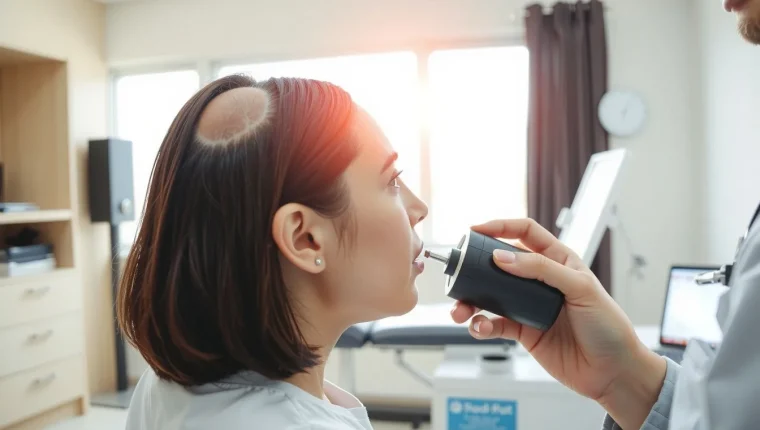
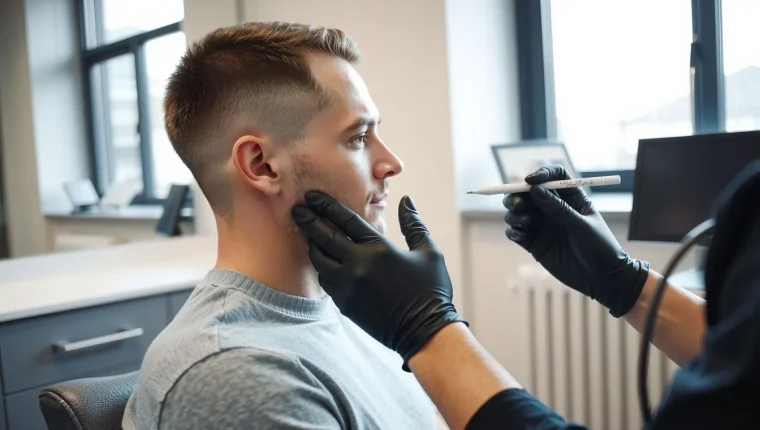
Next comes direct examination. The specialist looks at density and miniaturization across the scalp, checks the frontal hairline, crown, and part width, and may use dermoscopy to view follicles up close. Pull and wash tests can estimate shedding activity. Bloodwork or a scalp biopsy is ordered only when the history or exam suggests another cause, such as thyroid dysfunction, iron deficiency, or an inflammatory condition.
The findings are then assembled into a diagnosis and a plan. You leave knowing what is driving the loss, how advanced it is, and what can realistically be done about it. The consultation produces decisions, not just information.
Treatment Options a Specialist May Recommend for Androgenic Alopecia

Treatment for androgenetic alopecia falls into a few broad categories, and understanding what each one is trying to accomplish makes the choices far less confusing. Some options aim to slow or stabilize further loss, others work to encourage regrowth, and a third group restores coverage where follicles are no longer productive. Many people use more than one approach at the same time, because these goals are not mutually exclusive.
The most common medical route involves topical or oral therapies that interrupt the hormonal process driving follicular miniaturization. These tend to work best on hair that is thinning but still present, and they usually require ongoing use to hold their effect. Regrowth-oriented treatments, including certain procedures and light-based devices, try to reactivate follicles that have not yet fully shut down. Restoration options such as surgery or hair systems address areas where regrowth is no longer realistic.
Suitability depends heavily on your individual pattern and how far the process has advanced. A treatment that works well for diffuse thinning may offer little for a receding hairline, and vice versa. Expectations matter too: most medical options preserve or modestly improve what you have rather than producing a full head of new hair, and consistency is often the difference between a result and a disappointment. A specialist can match the approach to your specific situation rather than offering generic advice.
Timing Your Appointment: Why Early Intervention Matters
Every treatment discussed so far shares one practical limitation: it tends to work best on hair that is still there. Medications and in-office procedures can slow further follicular miniaturization and support regrowth, but they cannot reliably revive follicles that have already stopped producing visible hair. Because androgenetic alopecia progresses over years rather than weeks, the gap between noticing thinning and seeking help is not neutral time — it is the period during which the treatable base of hair quietly shrinks.
That reality is why no fixed threshold exists for booking a visit. You do not need a bald patch or a specific density score to justify an evaluation; a changing part line, a receding temple, or a widening crown is reason enough. If you are unsure, the sensible approach is to document the change with photos every few months and book an appointment once the trend is clearly moving in one direction. Acting while options remain open is the entire point of early intervention.
FAQs
At what point does androgenetic hair loss warrant a visit to a hair loss specialist?
You should see a hair loss specialist once you notice persistent thinning, a receding hairline, or widening part that does not stabilize within a few months, since early androgenetic hair loss responds best to treatment. A specialist is also warranted if you have a family history of advanced baldness, if over-the-counter remedies have failed, or if you want an accurate diagnosis to rule out other causes like thyroid disorders or alopecia areata. Seeking evaluation early gives you more options, including medical therapy, PRP, or transplantation, and helps preserve the hair you still have.
How can a hair loss specialist distinguish androgenetic alopecia from other types of shedding?
A hair loss specialist distinguishes androgenetic alopecia from other types of shedding by examining the pattern and distribution of hair loss, since androgenetic alopecia typically follows a predictable route such as a receding hairline or thinning crown in men and diffuse thinning along the part in women. The specialist also looks for miniaturized hairs of varying lengths and diameters, which signal the progressive shrinking of follicles characteristic of androgenetic alopecia rather than the uniform shedding seen in telogen effluvium. Additional tools such as trichoscopy, a pull test, and blood work help rule out other causes like nutritional deficiencies, thyroid disorders, or alopecia areata. Because accurate diagnosis determines the right treatment, a specialist combines these clinical signs with the patient's history to confirm whether the condition is truly androgenetic.
What treatments can a hair loss specialist offer that a general doctor cannot?
A hair loss specialist can prescribe advanced treatments such as oral finasteride, topical minoxidil compounded with other agents, and low-level laser therapy, while also performing diagnostic procedures like trichoscopy and scalp biopsies. They may offer platelet-rich plasma injections, corticosteroid injections for inflammatory scalp conditions, and hormonal or nutritional evaluations tailored to androgenic alopecia. A general doctor typically provides initial assessment and basic prescriptions but often lacks the specialized tools and training to deliver these targeted interventions. For complex or persistent hair loss, a specialist's focused expertise usually leads to more precise and effective treatment plans.