A receding hairline rarely announces itself. It shows up in a photograph, in the mirror under harsh bathroom light, or in the moment you push your hair back and the corners no longer sit where they used to. For many men, that first shift raises a quiet but real question: is this normal, and is it worth doing something about now? A receding hairline at an early stage is not a cosmetic complaint or a reason to panic. It is a decision point. What you notice in the first months often affects how much control you have over the next few years.
Recognizing the Early Signs of a Receding Hairline
The earliest changes usually appear at the temples, where the hairline gradually forms a subtle “M” shape. Hair at the front may feel finer or less dense than before, and individual strands can seem thinner when you run your fingers through them. You might also notice more hair on your pillow or in the shower drain, though this alone is not conclusive.
A key distinction is the difference between a receding hairline and a maturing hairline. Most men experience some natural hairline change in their twenties; the line shifts slightly upward but stabilizes. True recession continues over time, with the temples deepening and the frontal line moving back unevenly. Photographs taken months apart often reveal this progression more clearly than daily mirror checks.
Self-assessment has real limits. Lighting, angle, and hair length all distort what you see, and early thinning is easy to dismiss or overinterpret. Because hairline recession develops slowly, comparing your current hairline to older photos is more reliable than judging it in isolation. Even then, observation alone cannot confirm what is happening beneath the surface, which is why understanding the underlying process matters before deciding on any action.
Understanding the Causes Behind Hairline Thinning in Men

The visible change at the hairline almost always traces back to a hormone called dihydrotestosterone, or DHT. In men who carry a genetic sensitivity to it, DHT gradually shrinks hair follicles along the front and temples, producing thinner, shorter strands before any real baldness appears. This inherited sensitivity is the single most common driver, which is why pattern hair loss tends to run in families and often follows a predictable path.
Genetics and hormones, however, are not the whole picture. Nutritional shortfalls, particularly low iron or vitamin D, thyroid imbalances, chronic stress, and certain medications can all accelerate thinning or make an existing tendency more noticeable. Illness, rapid weight loss, and poor sleep have been linked to the same effect.
Because these factors frequently overlap, a single explanation rarely accounts for what you see in the mirror. Inherited sensitivity may set the stage while lifestyle or a health condition speeds up the process, which is why identifying the specific contributors matters before choosing any treatment.
Why Early Intervention Matters for Men's Hair

A hair follicle does not simply stop producing hair overnight. Over time, it tends to shrink, and the growth cycle shortens. This matters because early intervention targets a follicle that is still active but weakening, whereas later action often addresses a follicle that has already become dormant or scarred. The two situations are not equivalent, and they do not respond the same way.
At an early stage, the practical goal is preservation. Treatment is generally more effective at slowing further recession and holding onto the hair still present than at regrowing what has already disappeared. Once a hairline has receded significantly, the options shift toward restoration, which is a longer, more involved, and often less predictable process.
This is the honest trade-off. Acting early does not guarantee a full reversal, and waiting does not mean all is lost. But the earlier the starting point, the more there is to protect.
Treatment Options for a Receding Hairline
At the early stage, the range of options is wider than many men expect, and the choice usually comes down to how much commitment and uncertainty each route involves. Treatments fall into three broad groups: topical or oral products you use at home, prescription medications supervised by a clinician, and in-office procedures. None of them restores a hairline overnight, and each carries its own evidence base, cost, and limits. Understanding where each option sits within that framework makes it easier to judge which route matches your expectations and how much maintenance you are prepared to accept.
- Over-the-counter topicals: Minoxidil is the most established non-prescription option; it can slow shedding and support regrowth, but results require consistent daily use and often fade if you stop.
- Prescription oral medication: Finasteride targets the hormonal driver of pattern hair loss and tends to be more effective at preserving existing hair than regrowing lost hair; it requires a prescription and a conversation about side effects.
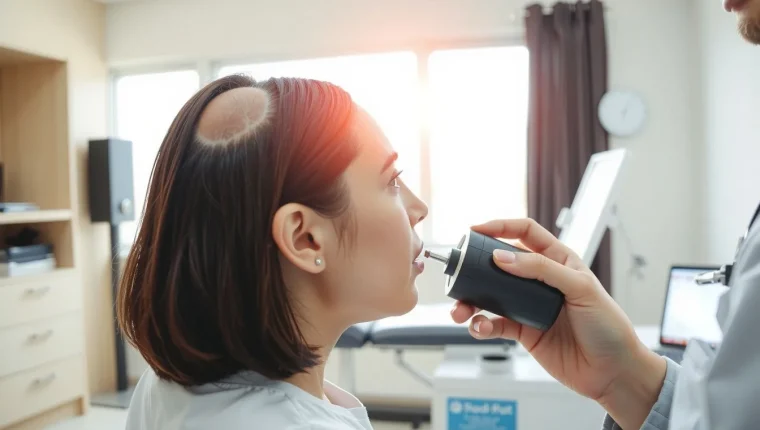
- In-office procedures: Platelet-rich plasma injections and low-level laser therapy are offered in clinics, with modest and variable evidence; they are usually positioned as add-ons rather than standalone fixes.
- Hair transplant surgery: This moves existing follicles to the hairline and can produce durable results, but it works best when the surrounding hair is stable and is rarely the first step at an early stage.
The realistic takeaway is that early-stage treatment is more about slowing and preserving than reversing. A clinician can help you match an option to your pattern, budget, and tolerance for ongoing use, which is where self-treatment usually reaches its limits. Because every one of these routes depends on continued commitment, the most useful first step is an honest assessment of your own expectations before you settle on a plan.
Daily Habits That Support Long-Term Hairline Health
Habits that support the hairline are mostly about not working against it. Gentle washing with a mild shampoo, avoiding harsh brushing while the hair is wet, and skipping tight hairstyles that pull at the front of the scalp all reduce unnecessary strain on follicles that are already sensitive. Keeping the scalp clean and free of irritation matters more than any single product.
Broader routines carry weight over years rather than weeks. Consistent sleep, managed stress, and a diet with enough protein, iron, and vitamin D give hair the conditions it needs to grow normally. Smoking and heavy alcohol use are associated with poorer hair outcomes, so limiting them is a reasonable step.
What these habits cannot do is reverse pattern hair loss. They support scalp and hair condition, but they do not replace the treatments discussed earlier. Used alongside them, they help maintain a healthier environment; used instead of them, they are unlikely to change the underlying course.
FAQs
What are the earliest signs of a receding hairline in men, and how can I tell if its more than just a mature hairline?
The earliest signs of a receding hairline in men typically appear as a gradual thinning or slight deepening at the temples, often noticed as a subtle "M" shape when you pull your hair back. A mature hairline simply shifts back to a stable position, usually by the late twenties or early thirties, and then stops. In contrast, a receding hairline keeps progressing over time, with the temples moving further back and the hair at the front becoming noticeably thinner or finer. Tracking changes with photos every few months can help you tell whether the shift is stable or actively advancing.
Can lifestyle changes or over-the-counter treatments actually slow down mens hair receding hairline if I start early?
Lifestyle changes alone cannot reverse a receding hairline, but habits like reducing stress, quitting smoking, and eating a balanced diet may help slow the rate of hair loss when combined with early treatment. Over-the-counter options such as minoxidil are clinically proven to slow recession and sometimes regrow hair, especially when started in the early stages. For the best results, pair these approaches with a diagnosis from a doctor, since prescription treatments like finasteride often work more effectively on a receding hairline.
When should I see a doctor or dermatologist about a receding hairline, and what professional options work best in the early stages?
See a doctor or dermatologist as soon as you notice a persistent change in your hairline, since early evaluation improves the chances of preserving existing hair. A dermatologist can confirm whether the cause is androgenetic alopecia or another condition and recommend options such as minoxidil, finasteride, or low-level laser therapy, which tend to work best before follicles are permanently lost.