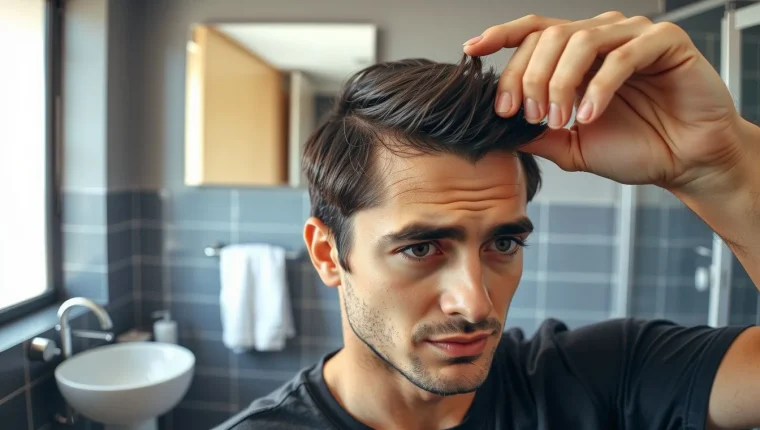
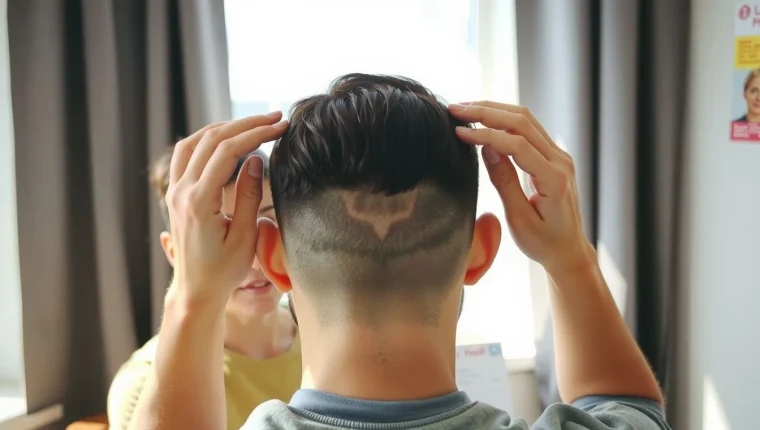
More hair in the drain or a receding hairline is unsettling and often leads to months of guessing. Thinning hair is common in adult men and androgenic women, and it is a medical concern, not a cosmetic dead end. The outcome depends on matching hair loss treatment to the actual cause and current stage of shedding. Two people with the same visible pattern can need different approaches because a reversible trigger and progressive androgenetic loss do not respond the same way. Understanding what drives the loss and how far it has advanced makes any treatment decision realistic rather than hopeful.
Understanding Hair Loss: Causes and Types in Men and Androgenic Women
Hair does not grow continuously; it cycles through active growth, a brief transition, and a resting phase before shedding. Most people lose 50 to 100 strands a day as part of this rhythm. Trouble begins when the cycle is disrupted. Two patterns dominate: androgenetic alopecia, where follicles gradually miniaturize under hormonal influence, and telogen effluvium, a temporary shedding surge triggered by stress, illness, or shock.
Other causes follow different logic. Alopecia areata is an autoimmune attack that produces smooth round patches. Traction alopecia stems from tight styling that pulls follicles repeatedly. Nutritional deficiencies, thyroid disorders, and certain medications can also thin hair diffuse.
The same drivers present differently by sex. Men typically recede at the temples and thin at the crown. Androgenic women often see widening of the part and diffuse thinning across the top, while the frontal hairline is preserved. Recognizing which pattern fits your situation is the first step toward understanding what is happening.
Pattern alone rarely confirms a diagnosis. Timing, rate of loss, and accompanying symptoms matter just as much, which is why persistent or unexplained thinning deserves professional evaluation rather than guesswork.
Recognizing the Signs: When Thinning Hair Becomes a Medical Concern
Shedding is normal. Most people lose roughly 50 to 100 hairs a day as part of the natural growth cycle, and that number can rise with seasonal changes, stress, or a recent illness. The key distinction is not whether hair falls out, but whether it grows back at the same rate. When shedding is balanced by regrowth, density stays stable. When it is not, thinning becomes visible over months, not days.
Persistent, patterned loss is the clearest signal that self-care is no longer enough. In men, that often means a receding hairline or thinning at the crown. In androgenic women, it typically shows as a widening part or diffuse thinning across the top of the scalp while the frontal hairline stays intact. These patterns point toward androgenetic alopecia rather than simple shedding.
Some signs call for prompt medical assessment rather than watchful waiting. Patchy, circular bald spots, scaling or redness on the scalp, itching, pain, or sudden, rapid hair loss over weeks warrant an evaluation. The same applies to loss accompanied by fatigue, weight changes, or menstrual irregularities. A clinician can distinguish routine shedding from a condition that needs targeted care.
Diagnosing the Root Cause: Tests and Evaluations Before Treatment Begins
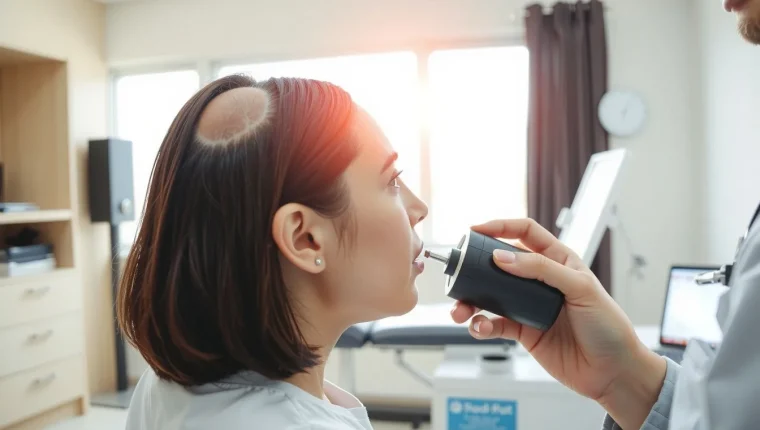
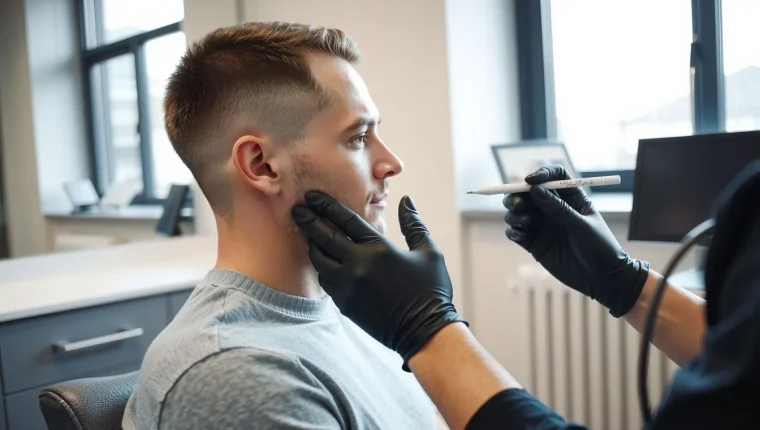
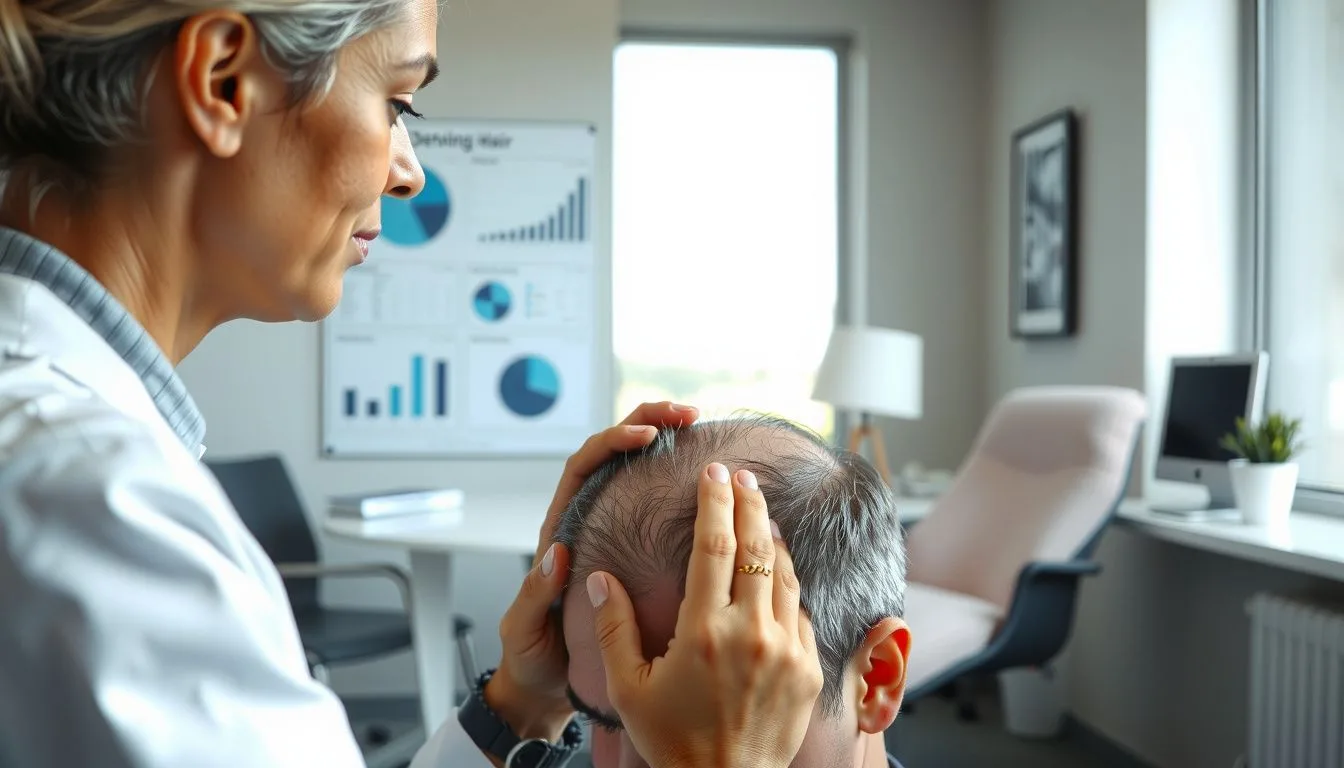
A proper evaluation starts long before any prescription is written. Clinicians begin with a detailed history: when the thinning started, how quickly it progressed, family patterns of hair loss, recent illness, major stress, crash diets, and any medications known to trigger shedding. This conversation often separates a temporary, reversible cause from a slow, genetically driven process. A close scalp examination follows, checking density, hair caliber, and the distribution of loss across the crown, temples, and part line.
Bloodwork is ordered selectively rather than routinely. Thyroid function, ferritin and iron studies, vitamin D, and, in women, hormonal markers such as androgens and prolactin can reveal a treatable contributor. When the clinical picture is unclear, trichoscopy magnifies the scalp to show miniaturized hairs, perifollicular changes, and other diagnostic clues. A scalp biopsy is reserved for cases where scarring or inflammatory disease is suspected and the diagnosis remains uncertain.
These findings do more than label the problem. They determine whether the goal is to correct a deficiency, calm an inflammatory process, or address an inherited pattern that will otherwise progress. That distinction shapes every decision that follows, which is why treatment should never begin blindly.
Hair Loss Treatment Options: From Topical Solutions to Oral Medications
Effective medical therapy for pattern hair loss is built on a small number of well-studied agents, and each works through a distinct mechanism. Topical minoxidil, applied directly to the scalp, prolongs the growth phase of the hair cycle and widens the follicle, which is why it can thicken existing hair but cannot revive a follicle that has fully scarred over. Oral finasteride and dutasteride take a different route: they block the conversion of testosterone into dihydrotestosterone (DHT), the hormone that progressively miniaturizes genetically susceptible follicles. For androgenic women, anti-androgen approaches — including spironolactone or, in selected cases, finasteride — address the hormonal driver when other causes have been ruled out.
What unites these options matters as much as how they differ. They are maintenance therapies: benefits depend on continued use, and hair typically returns toward its previous state within months of stopping. Realistic expectations therefore mean stabilization and modest regrowth over six to twelve months, not a rapid transformation.
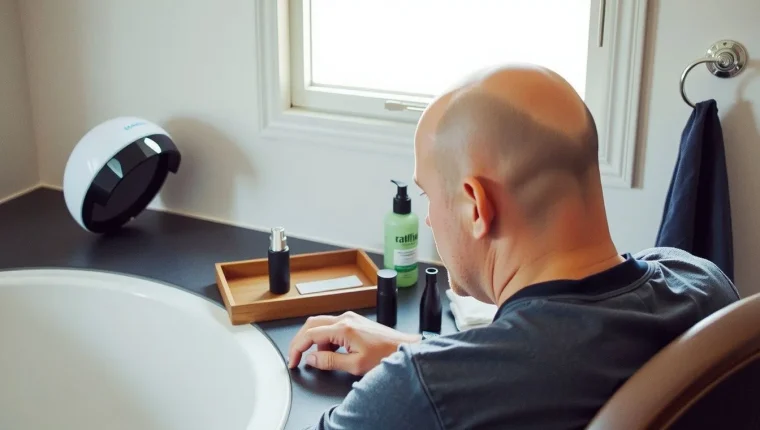
Low-level laser therapy and prescription adjuncts such as ketoconazole shampoo can support the core regimen, but they should not replace it. Suitability for any of these treatments depends on the diagnostic picture established earlier, while procedures and lifestyle measures belong to the next stage of care.
Advanced and Restorative Approaches: Procedures, Lifestyle Changes, and Long-Term Maintenance
For suitable candidates whose loss has stabilized on medical therapy, restorative options can add density that medication alone cannot restore. Follicular unit transplantation redistributes genetically resistant follicles from the back of the scalp to thinning areas, while platelet-rich plasma injections may support follicular activity through growth factors. Both work best alongside the medications that hold existing hair in place.
Lifestyle factors shape how well any regimen performs. Chronic sleep debt, poor protein intake, iron or vitamin D deficiency, and sustained stress can blunt response, and tight hairstyles or harsh chemical processing may worsen traction-related shedding. Addressing these contributors supports long-term maintenance rather than replacing clinical treatment.
Expectations matter: visible change typically takes six to twelve months, and gains fade if treatment stops. Consistent use, periodic reassessment with your clinician, and honest tracking of photos and shedding help protect results over years.
FAQs
What causes hair loss in men and androgenic women?
Male and female pattern hair loss is primarily driven by dihydrotestosterone (DHT), a hormone that binds to genetically sensitive hair follicles and gradually shrinks them in a process called miniaturization. In men this typically produces a receding hairline and thinning crown, while androgenic women usually see diffuse thinning along the part line and top of the scalp. Because genetics and hormones are the root cause, effective treatment focuses on blocking DHT or stimulating follicle growth rather than simply masking the shedding.
How effective are FDA-approved medications for hair loss treatment?
FDA-approved medications for hair loss, primarily minoxidil and finasteride, are effective for many men and postmenopausal women when used consistently. Finasteride slows hair loss and can regrow hair in about 80 to 90 percent of men who take it, while minoxidil works for both men and women by extending the growth phase of hair follicles. Results vary by individual, typically appear after three to six months of daily use, and reverse once treatment stops.
Do natural remedies work as a standalone hair loss treatment?
Natural remedies rarely work as a standalone hair loss treatment for androgenetic alopecia, since pattern hair loss is driven by genetics and hormones that botanicals cannot fully counteract. Ingredients like rosemary oil, saw palmetto, and pumpkin seed may offer mild support, but clinical evidence shows they are far less effective than proven options such as minoxidil, finasteride, or low-level laser therapy. For most men and women with androgenetic hair loss, natural remedies work best as complementary additions rather than primary treatments. Anyone relying on them alone should expect limited regrowth and may lose valuable time when earlier intervention could preserve more hair.