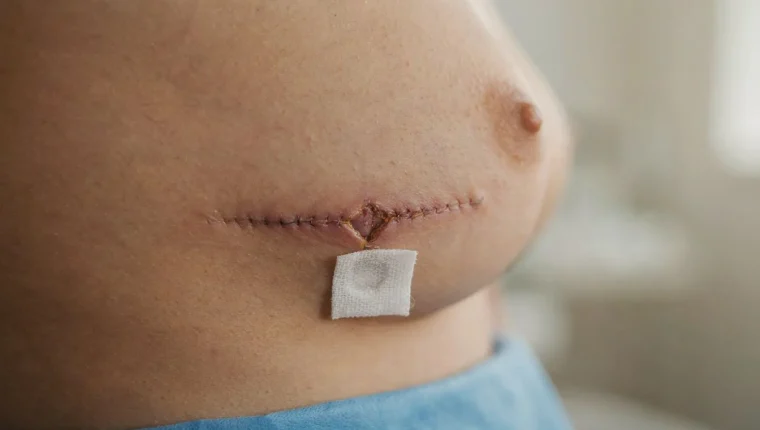
Most patients expect their breast reduction to be final, and for most, it is. Still, some women look in the mirror months or years later and realize something is wrong: a contour that never settled, asymmetry they can’t ignore, or discomfort that returned. That realization is uncomfortable, but recognizing it is the first step toward fixing it.
Breast reduction revision isn’t about chasing perfection or regretting the original choice. It’s a targeted procedure meant to correct healing issues, refine shape, or address changes that came with time, weight fluctuation, or pregnancy. The key is knowing when the concern is worth a second look and when it falls within normal recovery.
Understanding what revision can and cannot do helps you walk into a consultation focused on solutions instead of anxiety. That’s where real clarity begins, starting from the specific problem you’re trying to solve.
Signs It's Time to Consider a Revision After Breast Reduction

After a breast reduction, your body needs time to settle, and many early concerns fade as swelling subsides and scars mature. Still, certain signs can point toward the need for a breast reduction revision, and learning to recognize them early helps you act at the right moment.
Persistence is one of the clearest signals. If an issue such as uneven shape, persistent asymmetry, or nipple position concerns remains visible well beyond the expected healing window, it is more than a passing phase. Breasts that still look “off” after several months often stay that way without surgical refinement.
Another meaningful clue is how the result relates to your original goals. When day-to-day discomfort returns, clothing no longer fits the way you hoped, or you avoid activities you once enjoyed because of the outcome, the surgery has not delivered what you wanted. Patient dissatisfaction is not just a feeling; it is a practical indicator that revision deserves a serious conversation with a qualified surgeon.
Finally, structural problems like bottoming out, wide scars, or loss of upper fullness tend to worsen gradually rather than resolve on their own, making timely evaluation especially important.
Common Reasons for Unsatisfactory Results Following Breast Reduction
When the first breast reduction does not deliver the comfort or appearance a patient hoped for, the causes usually fall into a few recognizable categories. Understanding these patterns helps you pinpoint what went wrong and decide whether a secondary procedure could address it. Most issues stem from surgical planning, healing response, or changes in the breast over the years that follow.
Below are the most frequent reasons women end up exploring revision surgery after a previous reduction:
- Asymmetry between the two breasts, often visible in size, shape, or nipple position when healing settles unevenly.
- Over-resection, where too much tissue is removed and the breasts look disproportionately small or deflated compared to the patient’s body frame.
- Under-resection, when not enough weight or volume is taken out, leaving the original symptoms such as neck pain, shoulder grooving, or postural strain still present.
- Poor scarring, ranging from wide, hypertrophic, or uneven incision lines that did not heal as discreetly as expected.
- Ptosis recurrence, where the breasts sag again over time because of aging, gravity, weight fluctuation, or pregnancy after the initial surgery.
- Nipple or areola concerns, including altered sensation, uneven placement, or an areola that healed larger or misshapen than planned.
Recognizing which of these factors applies to your own outcome is the first step toward a productive conversation about correction. Each cause points toward a different surgical strategy, and identifying the root issue keeps the discussion focused on what a revision can realistically change rather than on vague disappointment.
How Long to Wait Before Evaluating a Breast Reduction Revision

Patience plays a bigger role in revision planning than many patients first expect. Swelling, bruising, and skin tightness can mask the true outcome for weeks, and the tissue continues to settle for several months. For that reason, most surgeons wait until at least six months after the original procedure before recommending any decision about further surgery.
Around the three-month mark, the breasts usually begin to take on a more stable shape, which lets you start noticing asymmetry, residual size concerns, or scar maturation with greater accuracy. By six to twelve months, the scar tissue has softened, nipple sensation has had time to return, and any persistent ptosis or contour irregularity is typically permanent rather than temporary. Waiting through this window gives your surgeon a reliable baseline for evaluation and prevents you from acting on results that are still healing.
A useful approach is to keep a simple journal during recovery, noting shape changes, comfort levels, and how clothing fits at monthly intervals. When you reach the six-month review with your surgeon, that record becomes a valuable diagnostic tool, helping distinguish normal healing from a result that genuinely calls for revision surgery.
Choosing the Right Surgeon for Your Revision Procedure
Finding the right surgeon for a revision after breast reduction is a very different decision than choosing someone for the first operation. Scar tissue, altered anatomy, and previously repositioned tissue all make the secondary procedure more technically demanding, so general cosmetic experience alone is rarely enough.
Look for a surgeon who performs revision procedures regularly and can show before-and-after photos that specifically include similar cases, not only primary reductions. Board certification in plastic surgery combined with fellowship training or a practice focused on revisional breast surgery is a strong indicator of the kind of nuanced judgment this work requires.
During your consultation, pay attention to how the surgeon talks about your previous operation. A confident revision specialist will review your prior operative report, ask detailed questions about your healing, and explain the limits of what can realistically be improved rather than promising a complete reset.
It is also reasonable to ask how often they work on patients who have had surgery done elsewhere, what techniques they favor when correcting asymmetry or over-resection, and how they handle scarring revisions. These answers reveal whether revision work is central to their practice or simply an occasional add-on.
Surgical Techniques Used in Breast Reduction Revision
Once the decision to move forward is made, the surgical approach is shaped by what the original procedure left behind. Scar tissue from prior incisions changes how the tissues behave, so a revision is rarely a repeat of the first operation; it is a tailored plan that works around existing scars, altered blood supply, and the specific concern that brought the patient back to the operating room.
The techniques a revision surgeon chooses fall into a few broad families, and most revisions combine more than one of them:
- Re-excision or contouring liposuction to refine persistent bulk, asymmetry, or residual fullness when the first reduction removed too little tissue in certain zones.
- Conversion of the original pedicle when over-resection has compromised nipple viability, often paired with a free nipple graft or a new dermal pedicle to restore safe blood flow.
- Scar revision procedures such as re-closure along relaxed skin tension lines, Z-plasty, or geometric broken-line closure to widen, hypertrophic, or tethered scars.
- Mastopexy after weight change or aging, lifting tissue that has descended since the original surgery without necessarily removing more breast volume.
- Areola and nipple refinements, including size reduction, repositioning, and correction of inversion or asymmetry that the first operation did not fully resolve.
- Fat grafting to soften step-offs, fill contour depressions, or balance volume differences between the two sides.
Because every breast has its own history, the intraoperative plan often shifts once the scar tissue is released and the underlying shape becomes visible. A surgeon who explains which technique addresses which finding helps the revision feel like a reasoned correction rather than another uncertain attempt.
Recovery and Expectations After Revision Surgery
Healing from a revision tends to follow a similar arc to the original reduction, but the timeline can feel surprisingly different from what you experienced the first time. Swelling usually settles within two to three weeks, while deeper tissue recovery and final contour changes continue for several months. Because scar tissue from the prior surgery alters how tissues respond, some patients notice temporary firmness or sensitivity that gradually softens.
Most people return to light activity within one to two weeks and resume full exercise around four to six weeks, depending on the extent of the revision. Your surgeon will guide you through compression garment use, incision care, and follow-up visits designed to catch any early concerns. Realistic expectations matter here: a secondary procedure refines rather than perfects, and small asymmetries may still be present as healing progresses.
Throughout recovery, open communication with your surgical team helps you interpret each stage accurately and avoid unnecessary worry about normal healing variations.
FAQs
How do I know if I need a breast reduction revision after breast reduction?
You may need a breast reduction revision if you experience persistent pain, asymmetry, recurring skin irritation, or dissatisfaction with the size or shape after your initial healing is complete. Signs that often point toward revision include bottoming out, nipple asymmetry, or regrowth of tissue due to hormonal changes or weight fluctuations. The best way to know for sure is to schedule a follow-up evaluation with your original surgeon so they can assess your results and healing timeline.
What are the most common reasons patients seek breast reduction revision after breast reduction?
Patients most often seek breast reduction revision because they are unhappy with the size or shape of their new breasts, whether they feel the reduction was too much or too little. Other frequent reasons include asymmetry between the breasts, changes that develop over time such as sagging or loss of fullness, scarring from the original procedure, and complications like wound breakdown or nipple issues. In many cases, a combination of these aesthetic and structural concerns prompts someone to consider a revision.
How long should I wait before considering breast reduction revision after breast reduction?
You should generally wait at least six to twelve months after your initial breast reduction before pursuing a revision, as this allows the tissues to fully heal, swelling to resolve, and your final results to settle. Waiting this period makes it easier to accurately evaluate persistent asymmetry, scarring, or contour issues rather than mistaking normal healing for a true problem. If a specific complication—such as wound healing problems or obvious asymmetry—is clearly not improving after several months, an earlier evaluation with your surgeon is reasonable.