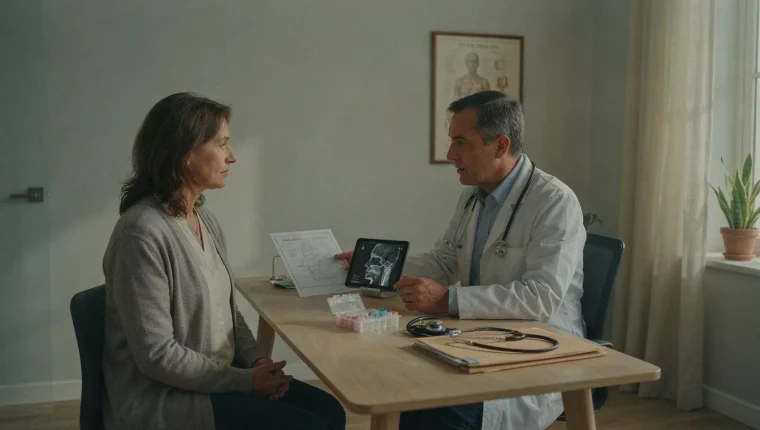
Many people enter rhinoplasty consultations believing the result is permanent, and that is broadly true. Your nose will not revert to its original shape after surgery. But “permanent” does not mean “frozen.” The nose is a living structure made of skin, cartilage, and bone, and those tissues keep responding to time, gravity, and biology long after the bandages come off.
So when someone asks how long rhinoplasty results last, the honest answer is that durability is not one fixed number. It depends on your underlying anatomy, the technique your surgeon used, how your body heals, and how you care for your nose afterward. Some patients hold a stable result for decades; others see subtle shifts within a few years. Understanding which factors apply to you matters far more than any single figure.
What Determines How Long Rhinoplasty Results Last

Durability is not a single property you either have or lack. It is the product of several variables working together, which is why two people can have what looks like the same operation and end up with very different timelines. The most useful way to think about it is to separate the factors that belong to you from those that belong to the surgery itself.
On the patient side, the biology you bring to the table sets the outer limits. Skin thickness and elasticity matter enormously: thin skin drapes tightly over the underlying framework and tends to reveal small changes, while thick, oily skin can hold swelling longer and sometimes softens the definition achieved early on. Cartilage strength and the underlying bone structure also play a role, since a nose built on a stable foundation has less room to drift.
On the surgical side, the decisions made in the operating room determine how much the result depends on that biology holding steady. How much tissue is removed, how the remaining structures are supported, and whether the framework is reinforced all influence whether the nose keeps its shape or gradually shifts. A result that relies on passive healing alone behaves differently from one built on active structural support.
Combine these and you get a realistic range rather than a guarantee. Strong cartilage, supportive technique, and cooperative skin can hold for decades. Weaker starting material or a less reinforced approach may show subtle changes sooner. The variables interact, so no single one predicts the outcome on its own.
How Surgical Technique Shapes Long-Term Stability
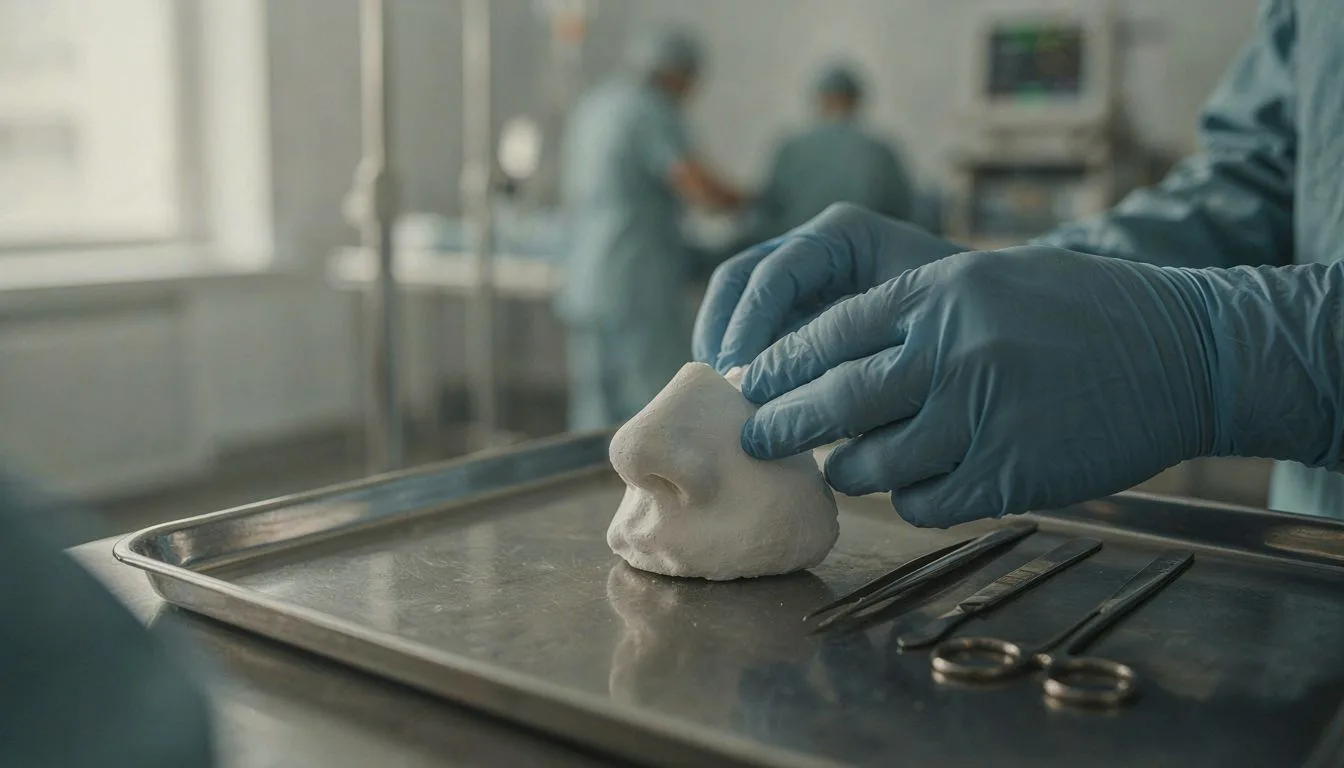
Not every rhinoplasty is built the same way, and the difference shows up years later. A conservative technique removes or reshapes only what is necessary, leaving the nose’s existing support structure as intact as possible. Because less tissue is disturbed, there is less to heal and less to shift. This approach tends to work well when the nose already has solid bones and cartilage, and the goal is refinement rather than major reconstruction.
A structural technique takes a different route. Instead of relying on the nose’s original framework, the surgeon rebuilds support using spreader grafts, struts, or sutures that hold the new shape in place. This matters most for noses with weak cartilage, a prior injury, or a revision history. The rebuilt framework carries the load that the original structure could not, which is why these noses often hold their shape longer.
The real dividing line is how each approach manages tension. A nose under constant tension from scar tissue or an unbalanced graft will slowly drift, no matter how good it looks on the operating table. A nose with balanced support distributes that force evenly across the framework, so the shape stays put. This is why technique choice shapes long-term stability rather than just the early result — the surgeon is not only creating a shape but deciding how that shape will respond to years of healing forces.
Two patients can leave the operating room with similar-looking noses and very different futures. The one whose structure was rebuilt to handle tension has a framework that resists change. The one whose result depended on soft tissue holding a shape in place may see that shape soften over time.
The Role of Cartilage Memory and Graft Selection
Cartilage has a kind of muscle memory, and it flexes in a direction you may not expect. This tendency, often called cartilage memory, describes how the tissue tries to return to its original shape after it has been cut, reshaped, or repositioned. When a surgeon alters the nasal framework, the cartilage does not simply accept its new form. It pushes back, sometimes gradually, sometimes with enough force to shift the outcome over months or years.
Graft selection is one of the main ways surgeons work with or against that tendency. Cartilage taken from the septum, the ear, or the ribs each behaves differently. Septal cartilage is often preferred because it is flat and relatively stable, but it can be scarce after previous surgery. Ear cartilage is more flexible and curved, which makes it useful for certain tip refinements but less predictable as a structural support. Rib cartilage is firm and abundant, yet it carries its own risk of warping over time.
How a graft is handled matters just as much as where it comes from. Surgeons who score, crush, or suture grafts in specific ways can reduce the chance that the tissue springs back. A graft that is merely placed without addressing its internal tension may look correct on the operating table but drift later. In contrast, a graft that is shaped and stabilized to resist memory is more likely to hold its position.
For the reader, the practical takeaway is simple: durability depends partly on whether the cartilage is working with the new structure or quietly fighting it. Understanding this helps explain why some noses remain stable for decades while others show subtle changes long after the swelling has faded.
Healing Timeline and When Final Results Emerge
Right after surgery, what you see in the mirror is mostly swelling, not your result. The nose holds fluid unevenly for weeks, and the bridge and tip often look wider and higher than they will later. This is why surgeons ask you to judge nothing in the first month. The framework underneath — the bone, cartilage, and grafts — is already set, but the soft tissue around it needs time to settle before that framework becomes visible.
Most of the dramatic change happens early. Swelling drops quickly through the first six weeks, then more gradually over the next several months. By around the three-month mark, the nose looks close to its new shape, though the tip usually stays a little fuller than its final form. That residual fullness is normal and expected, not a sign that something went wrong.
The tip is the last area to refine. Because it carries the most soft tissue and the least bony support, it can take twelve to eighteen months for the final contour to appear, and in thicker-skinned patients sometimes longer. During that window, small shifts in definition are part of healing, not evidence of a failed outcome. Skin drapes gradually over the underlying structure, and subtle asymmetries tend to soften as the tissue adapts.
By the one-year mark, the vast majority of patients see results that hold steady. Beyond that point, meaningful change is uncommon unless something external interferes. If you notice the shape shifting after healing has clearly finished, that is a different question from normal recovery — one worth raising with your surgeon rather than waiting out.
Lifestyle Factors That Can Shorten or Preserve Outcomes
Some of the strongest forces acting on your rhinoplasty results are not surgical at all. They are the daily habits, environmental exposures, and health conditions that quietly influence how your nose heals and how stable it stays years later. These factors fall into two broad groups: those that act directly on the nose itself, and those that affect your body’s capacity to heal and maintain structural integrity.
Direct mechanical forces matter most in the early months. Sleeping face-down, wearing heavy glasses without support, and repeatedly rubbing or bumping the nose can shift delicate healing tissues before they have fully set. Sun exposure is another direct stressor, particularly for skin quality and scar behavior, and it can accelerate the thinning that makes underlying irregularities more visible over time. These are largely within your control, and managing them during the first year protects the investment you have already made.
Systemic factors work more indirectly but can be equally influential. Smoking impairs circulation and oxygen delivery to healing tissue, which slows recovery and can compromise graft survival. Uncontrolled allergies and chronic nasal inflammation keep the nose in a state of irritation, potentially affecting how tissues settle. Significant weight fluctuations and hormonal shifts can alter soft tissue volume, subtly changing the way the nose appears. Certain medications, particularly those affecting blood flow or immune response, also play a role.
Of all these, the factors most within your control are sun protection, smoke avoidance, allergy management, and protecting the nose from trauma. Your surgeon can guide you on which specific risks matter most for your anatomy and technique, but the everyday choices remain largely yours to manage.
Signs Your Results May Be Changing and When to Seek Revision
Most changes after rhinoplasty are not signs of failure. They are the predictable result of swelling resolving, scar tissue softening, and the nose settling into its final position. In the first few months, the tip often looks fuller and the bridge slightly wider than it will later, and small asymmetries can appear and disappear from week to week. This is why surgeons rarely judge a result before the twelve-month mark, and why a nose that looks “off” at three months is usually still mid-transformation rather than permanently changed.
What deserves closer attention is change that happens after the nose has stabilized. If the profile was straight at one year and a bump or dip becomes visible later, or if breathing on one side gradually worsens without a cold or allergy to explain it, that pattern suggests a structural shift rather than normal healing. The same applies to a tip that slowly drops, rotates, or loses projection over months rather than days. These are the changes tied to cartilage memory, graft behavior, and the forces acting on a healing nose, not to swelling.
A practical threshold: observe gradual changes for a few weeks and photograph your nose from the same angles in consistent lighting. If the change is stable, minor, and doesn’t affect breathing, it usually doesn’t require action. Seek a consultation if the change is progressive, if it affects airflow, or if it appears suddenly after a period of stability. Revision is generally considered only after the nose has fully settled, so an early conversation is about assessment, not immediate surgery.
FAQs
How many years can you expect rhinoplasty results to last?
Rhinoplasty results are considered permanent because the underlying bone and cartilage are reshaped and the new structure holds for life. The nose continues to age along with the rest of your face, so subtle changes in skin laxity and contour can appear over decades. Most patients enjoy their results for 10 to 20 years or more without needing revision.
Do lifestyle factors like smoking or weight changes affect how long rhinoplasty results last?
Yes, lifestyle factors can influence how long rhinoplasty results last. Smoking impairs blood flow and slows healing, which can compromise cartilage stability and increase the risk of complications that shorten results. Significant weight fluctuations alter the soft tissue envelope around the nose, potentially shifting its appearance, while weight gain from pregnancy or lifestyle changes can subtly widen the nasal tip over time.
Will revision surgery be needed if rhinoplasty results last only a short time?
Revision surgery is not automatically required just because rhinoplasty results seem short-lived, since most lasting changes to bone and cartilage are permanent once healing is complete. If a result appears to fade, it is usually due to swelling, minor shifts during healing, or an underlying issue that was not fully addressed the first time. In those cases, a revision may be recommended, but it is typically considered only after the nose has fully healed, often 12 months or more after the original procedure.