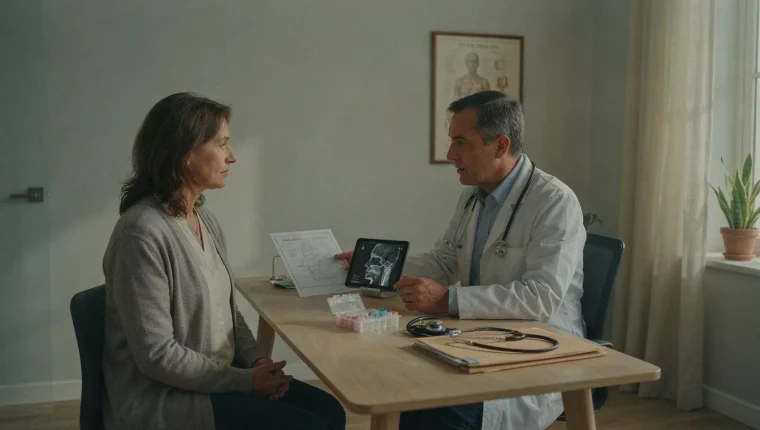
Most people expect to look in the mirror after rhinoplasty and see a straighter nose. In the first days, they experience swelling, bruising under the eyes, a stuffy blocked feeling, and a nose that looks nothing like the final result. That gap between expectation and reality is where worry usually starts. Most of what you feel and see after surgery is a predictable healing response, not a complication. Swelling peaks and then fades. Bruising shifts color and clears. Congestion eases as the lining settles. A smaller set of symptoms does not belong to normal recovery, and those should prompt you to call your surgeon instead of waiting it out. Knowing the difference helps you stay calm while your body heals and notice anything that needs attention.
What Typical Swelling and Bruising Look Like After Surgery

Swelling after rhinoplasty rarely peaks on the day of surgery. It builds over the first 24 to 48 hours, reaches its height around day two or three, and then begins a slow retreat. This is why many patients feel most alarmed on the second morning, when the mirror shows a face they barely recognize. That reaction is understandable, but it is also expected. The nose and the surrounding tissue have just been through controlled trauma, and the body responds by sending fluid and immune cells to the area.
Bruising tends to follow a predictable map. It usually appears under the eyes, sometimes spreading toward the cheeks, and it can look dramatic even when the surgery itself was straightforward. The discoloration shifts through familiar stages: dark purple or red first, then blue, green, and finally yellow before fading. Most of this resolves within seven to ten days, though faint traces can linger a little longer in fair-skinned patients or after revision procedures.
Here is the part that catches people off guard: the nose often looks worse before it looks better. Swelling can seem to move around, one side may appear higher than the other, and the tip may look bulbous or oddly shaped in the first week. None of this reflects the final result. It reflects fluid, inflammation, and the early stages of healing. As the swelling subsides over the following weeks, the contours begin to settle, and the nose starts to resemble what you were shown before surgery.
The timeline matters more than any single snapshot. Swelling that is improving, even slowly, is doing what it should. Swelling that is worsening, hardening, or accompanied by new pain is a different conversation.
When Pain and Pressure Cross the Line From Expected to Alarming
Some discomfort is part of the deal. In the first few days, most people feel a dull, bruised ache across the bridge and tip, along with a blocked, stuffy sensation that makes breathing through the nose feel impossible. Prescription painkillers, cold compresses, and simply giving it time usually keep this in a range people describe as sore but bearable. The congestion is often the bigger annoyance, since it lingers longer than the sharp pain and can make sleep awkward.
What matters is the direction things move. Expected discomfort tends to ease steadily, so each day should feel a little lighter than the last. A problem announces itself differently. Pain that climbs instead of fading, or that suddenly spikes after a calm stretch, deserves attention. So does pressure that feels deep and building, the kind that sits behind the eyes or radiates into the forehead and cheeks rather than staying around the nose. Pain that painkillers no longer touch is another signal worth taking seriously.
There is a practical line here. If you are reaching for medication more often, not less, or if you cannot get comfortable enough to rest, that is your cue to stop self-monitoring. Call your surgeon, describe what changed and when, and let them decide whether it needs to be seen. Trusting that instinct early is far better than waiting to see if tomorrow is worse.
Recognizing Warning Signs: Bleeding, Infection, and Breathing Trouble
Bleeding after rhinoplasty follows a predictable pattern in most recoveries: a small amount of blood-tinged drainage or light oozing from the incision lines and nostrils is routine during the first day or two. What matters is the trend. Oozing that steadily slows is expected, while bleeding that keeps going at the same rate, suddenly increases, or soaks through gauze faster than you can replace it is not. Bright red blood that won’t stop, a steady trickle down the back of the throat, or a nosebleed that resumes after it seemed to settle all point toward a problem you shouldn’t manage alone. If bleeding is heavy enough to make you feel dizzy, weak, or lightheaded, that’s a reason to seek emergency care rather than wait for a scheduled call-back.
Infection tends to announce itself a little later, usually several days in, and its cues are easy to dismiss as ordinary healing. Watch for increasing pain that gets worse instead of better, swelling that rebounds after it had started to improve, warmth or spreading redness around the nose, a fever, or drainage that turns thick, yellow-green, or foul-smelling. Any one of these deserves a call; several together deserve one quickly. Breathing trouble is the clearest of the three and the least negotiable. Difficulty breathing through the nose is common while swelling and internal splints are in place, but trouble breathing through your mouth, a sense that your airway is narrowing, or shortness of breath is never something to monitor at home.
These three signals share the same logic: each can look mild at the start and then escalate fast, and each is far easier to treat when caught early. Contact your surgeon’s office for anything that is clearly worsening, and use emergency services for heavy bleeding, a compromised airway, or signs of a serious reaction.
How Anesthesia and Medications Can Trigger Unexpected Reactions
Not every reaction after rhinoplasty traces back to the nose itself. Anesthesia and the medications given around surgery can produce symptoms that seem to have nothing to do with your face — nausea, dizziness, drowsiness, a headache, or an odd taste in your mouth. These are common and usually fade as the drugs clear your system, often within the first day or two. A mild rash or itching can also follow pain medication or antibiotics, and it may settle once the drug is stopped or swapped.
What matters is the pattern. A wave of nausea that eases as you sip fluids and rest is very different from vomiting that will not stop or dizziness that keeps you from standing safely. The same goes for a rash: a few itchy spots that calm down is one thing, but hives spreading across your body, swelling of the lips or tongue, or trouble breathing point to a medication reaction that needs urgent attention, not a wait-and-see approach.
Timing is your best clue. Reactions that appear soon after surgery and steadily improve are usually brief and self-limiting. Ones that persist, intensify, or arrive with fever, chest tightness, or a racing heartbeat are a reason to call your surgeon or seek care rather than ride it out.
Scarring, Numbness, and Sensation Changes That May Linger
Numbness and tingling tend to outlast every other early symptom, and that surprises people. Bruising fades in about two weeks and swelling softens over months, but the altered sensation around the nasal tip and along the incision lines can persist far longer. That is not a sign of damage. It is a sign that small sensory nerves were stretched or divided during surgery and are slowly regenerating, a process measured in months rather than days. Many patients describe the tip as feeling wooden, or notice a faint pins-and-needles quality when they touch it. Sensation usually returns gradually, often becoming fully normal somewhere between six and twelve months, though a small patch of reduced feeling can remain indefinitely.
Scars follow their own quieter timeline. The incision, whether placed along the columella or hidden inside the nostrils, is typically red and slightly raised for the first few weeks. Over the following months it flattens, pales, and softens as collagen remodels. Most external scars are close to inconspicuous by a year, and many sit in creases that make them nearly invisible. This maturation is normal and expected, not a complication.
What matters is the direction of travel. Sensation that is steadily improving, even slowly, is healing. A scar that is softening and fading is doing what it should. The changes worth questioning are those that stay fixed or worsen — numbness that never improves, a scar that thickens and spreads, or burning pain that intensifies rather than eases. Those patterns deserve a conversation with your surgeon rather than more patience.
Distinguishing Temporary Side Effects From Permanent Complications

When you are trying to decide whether what you are feeling is ordinary healing or something more serious, three simple tests do most of the work: timeline, severity, and direction of change. Timeline asks how long a symptom has been present relative to what is expected. Severity asks whether it interferes with basic function or keeps escalating. Direction of change asks the most important question of all: is it getting better, holding steady, or getting worse?
Apply those tests to what you have already read about. Swelling that is softening and fading within the expected window passes all three. Numbness that is slowly returning, even if it takes months, is moving in the right direction. Pain that eases steadily with medication and rest fits the normal pattern. But a symptom that worsens instead of improving, that intensifies rather than settles, or that appears after a period of clear improvement is the signal to call your surgeon.
Permanent complications are not defined by how dramatic they feel in the moment. They are defined by whether they persist, progress, or fail to resolve despite appropriate care. That is why the surgeon’s ongoing assessment matters more than any single day’s discomfort. Time and trajectory usually answer the question of what will pass. Your surgeon answers the rest.
FAQs
Which rhinoplasty side effects are expected during the first week of recovery?
During the first week after rhinoplasty, expect swelling, bruising around the eyes and cheeks, a stuffy or congested nose, and mild to moderate pain that responds to prescribed medication. You may also notice minor bleeding, crusting along the incision lines, and a dull headache or pressure sensation as the tissues settle. These early effects are a normal part of healing and typically peak within the first two to three days before gradually improving.
How long should swelling and bruising last after nose surgery?
Expect bruising to fade within about two weeks, while most visible swelling settles over the first four to six weeks. Residual swelling can persist for several months and often takes up to a year to resolve completely, especially in the tip of the nose. This gradual timeline is a normal part of rhinoplasty recovery rather than a side effect that signals a problem.
When do rare complications like infection or breathing problems require urgent medical attention?
After rhinoplasty, seek urgent medical attention if you develop a high fever, worsening pain or swelling, pus-like drainage from the incision, or difficulty breathing that doesn't improve. These signs can point to a serious infection or a breathing problem that needs prompt treatment. Trust your instincts: if something feels clearly wrong or is getting worse instead of better, call your surgeon right away.