Flying home to the USA while your nose heals brings relief and worry. You had your surgery abroad; the hard part is done, and now you’re back in your own space—but the swelling is still there, your sinuses feel off, and your surgeon is thousands of miles away. That is where rhinoplasty aftercare in the USA becomes practical. You need to know how to protect your result on the flight, manage congestion and swelling at home, find a local ENT or plastic surgeon for follow-up, spot complications early, refill medications, and keep your nose safe through the first year. Most people underestimate this, but it’s manageable with the right plan.
Preparing for Your Return Flight: What to Arrange Before Leaving the Clinic
Before you board a flight home, the most useful thing you can do is leave the clinic with a complete paperwork trail. Ask your surgeon for written aftercare instructions, copies of any prescriptions, and your operative notes and imaging. These documents matter because a US-based clinician who has never met you may eventually need them to understand exactly what was done, which grafts or implants were used, and what your surgeon expected during recovery. Getting them in hand before departure is far easier than chasing them across time zones later.
Airline and cabin logistics deserve the same attention. Confirm your carrier’s fitness-to-fly rules, since many require a specific clearance letter after surgery, and request an aisle seat or extra space so you can move without disturbing your nose. A small carry-on makes the flight more manageable:
- Gauze and saline spray to handle minor drainage and keep nasal passages moist in dry cabin air.
- Lip balm and throat lozenges because mouth breathing during the flight dries everything out quickly.
- Approved medications kept in their original packaging, with a copy of the prescription.
- Your clinic documents stored together so they are never buried in checked luggage.
Plan for pressure changes and limited mobility by staying hydrated, avoiding heavy lifting of overhead bags, and taking short walks when the seatbelt sign is off. If your surgeon advises against flying for a set period, respect that window rather than negotiating with the calendar. Once you land, the focus shifts to managing swelling and congestion at home, and to filling any prescriptions through a US pharmacy.
Managing Swelling and Nasal Congestion During Your First Weeks Back Home
Your first weeks back home are often when swelling feels most unpredictable. It usually peaks around 48 to 72 hours after surgery and then begins a slow, uneven retreat. One side of your nose may look puffier than the other, and that asymmetry is normal—it reflects how each side was treated, not a sign something went wrong. Morning swelling tends to be worse after lying flat all night, while late-day puffiness can follow too much talking, bending, or time spent upright without rest.
Sleep with your head elevated on two or three pillows, and keep cold compresses—only if your surgeon approved them—on a light schedule during the first few days. Avoid straining, heavy lifting, and any activity that makes you hold your breath, since that pressure travels straight to your nose. Nasal congestion is the other constant companion. Saline rinses clear dried blood and crusting gently, and a cool-mist humidifier in your bedroom keeps the air from drying out your passages overnight.
Do not blow your nose during these early weeks. If you must clear it, sniff gently or use saline to loosen debris. Airplane travel and dry cabin air can temporarily worsen both swelling and stuffiness, so expect a rough day or two after any flight. Most of this settles gradually, and comfort measures are about patience, not force.
Finding a Local ENT or Plastic Surgeon for Post-Operative Checkups in the USA
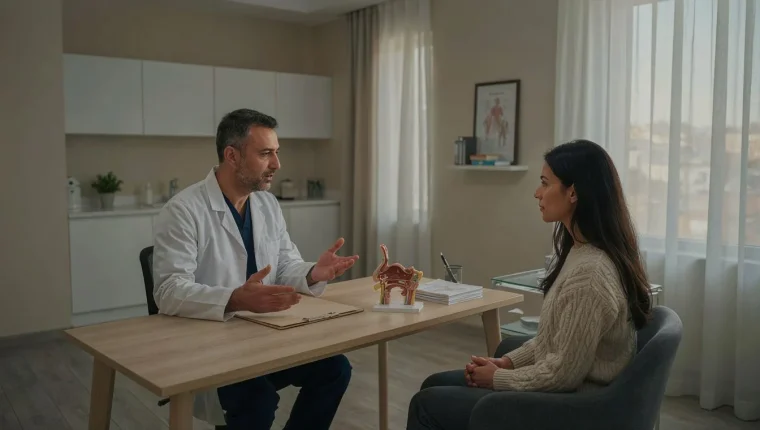
Once the initial rush of getting home eases, one practical question tends to surface: who will actually look at your nose now? You do not need to start from zero. Most surgeons who operate on international patients expect follow-up to happen elsewhere, and they are usually willing to help arrange it.
Begin by asking your original surgeon for two things: a referral to a colleague they trust in your city, and a short letter summarizing the procedure. That letter matters more than it sounds. It tells a new clinician exactly what was done, which grafts or implants were used, and what the expected healing pattern looks like. Without it, a local doctor is working blind.
When you contact a prospective provider, look for board certification in otolaryngology (ENT) or plastic surgery, and ask directly whether they have experience with rhinoplasty aftercare. A useful question is simply: “Are you comfortable seeing a post-operative international patient for routine checks?” Some practices are; some are not. Better to learn that on the phone than in the waiting room.
For the first local appointment, bring your operative notes, a current medication list, and clear photos taken at consistent angles and lighting. Photos let the new doctor compare your progress against a baseline rather than guessing.
On cost: routine follow-up visits are often treated as new-patient consultations, and insurance may not cover them since the original surgery happened abroad. Ask about self-pay rates upfront. If a local provider wants to change your medication plan, coordinate that with your original surgeon first rather than adjusting on the spot.
Recognizing Warning Signs: When to Seek Urgent Care After Rhinoplasty

Most of what you feel in the weeks after rhinoplasty is normal healing, but a small number of symptoms mean the difference between a phone call and an emergency room visit. Knowing which is which protects both your nose and your peace of mind.
Call your original clinic first for questions about your specific surgery, medication interactions, or concerns that can wait a day. Go to urgent care or the ER when symptoms are severe, sudden, or worsening. Seek emergency care for heavy bleeding that will not stop after 15 to 20 minutes of steady pressure, a fever above 101.5°F (38.6°C), severe pain unrelieved by prescribed medication, vision changes such as double or blurred vision, or difficulty breathing through your mouth. These can signal infection, hematoma, or a septal complication that needs imaging or specialist intervention.
Distinguish expected bruising and swelling from warning signs. Normal bruising peaks around days two to three and fades to yellow-green within two weeks. Infection signs include spreading redness, warmth, foul discharge, or increasing pain after day five. A hematoma feels like a firm, rapidly enlarging swelling, often with one-sided pressure.
Trust your instincts. If something feels wrong, call your surgeon or a local ENT. It is always better to ask than to wait.
Medication, Nasal Spray, and Skincare Routines That Fit American Pharmacy Options
If your surgeon abroad gave you prescriptions for pain relief, antibiotics, or a nasal ointment, you can usually fill them in the USA, but the process takes a little planning. Pharmacies here cannot simply transcribe a foreign prescription, so ask your overseas clinic for an English-language prescription with the generic drug name, dosage, and quantity, plus a brief note on your surgery date. A US pharmacist can then contact your prescriber directly if anything needs clarifying. Brand names differ between countries, so the generic name matters far more than the label you recognize.
For everyday comfort, most US pharmacies stock the same basics your clinic likely recommended: preservative-free saline nasal spray, plain petrolatum ointment, and fragrance-free gentle cleansers. Saline is inexpensive and safe for frequent use, and store-brand versions work as well as name brands. Ask your pharmacist to confirm any product is free of decongestants such as oxymetazoline unless your surgeon specifically approved them, since these can dry or irritate healing tissue.
Two categories deserve caution. First, pain relievers: aspirin and other anti-inflammatory drugs can increase bleeding risk, so stick to what your surgeon approved, typically acetaminophen. Second, skincare: retinoids, alpha-hydroxy acids, and exfoliating scrubs should stay off your face and nose for weeks. Keep your routine to cleansing, moisturizing, and sun protection.
Insurance coverage for post-surgical medications varies, and generics almost always cost less. If a prescription is expensive, ask the pharmacist about therapeutic alternatives, then confirm any switch with the local doctor managing your follow-up care.
Long-Term Healing Timeline and Protecting Your Results Through the First Year

Swelling after rhinoplasty does not disappear on a fixed schedule, and understanding the actual arc of healing is what keeps most patients from panicking at month three. In the first six weeks after surgery, most of the visible swelling resolves, but the nose continues to change quietly for much longer. By three months, roughly 70 to 80 percent of the swelling has settled, and the shape you see is closer to your result—but still not final. Between months three and six, the tip begins to refine as deeper tissue swelling fades. From six to twelve months, the nasal bones and cartilage stabilize, and the tip—which holds swelling the longest—gradually sharpens. Final results typically emerge between twelve and eighteen months, though some patients notice subtle changes for up to two years.
Protecting those results requires a few consistent habits. Sun protection matters more than most people expect: UV exposure can darken incision lines and cause uneven pigmentation, so daily broad-spectrum sunscreen on the nose and face is worth the effort through the first year. Avoid trauma to the nose—no contact sports, no rough play, and no sleeping face-down until your surgeon clears you. Most surgeons allow light cardio around week two to three, but contact sports and anything with collision risk usually wait until at least six weeks, often longer.
Minor asymmetries in the first several months are common and usually resolve on their own as swelling shifts unevenly. Resist the urge to judge your nose too early. If you are still concerned after a year, that is the appropriate time to discuss revision—not before. Patience, sun protection, and avoiding injury are the three habits that protect your investment through the first year.
FAQs
How soon after rhinoplasty can I safely fly back to the USA?
Most surgeons allow patients to fly back to the USA about 7 to 10 days after rhinoplasty, once initial swelling subsides and any packing or splints are removed. Flying earlier than 5 to 7 days raises the risk of bleeding and pressure-related complications, so many doctors prefer waiting at least a week. Always confirm the exact timing with your own surgeon, since your recovery and any additional procedures may change the recommendation.
What should I do if I notice swelling or bleeding during my rhinoplasty aftercare in the USA?
Mild swelling and light spotting are normal in the first days after rhinoplasty, but you should contact your surgeon right away if bleeding is heavy, persistent, or accompanied by a rapid increase in swelling. Severe pain, a fever, or swelling that worsens sharply on one side can indicate a hematoma or infection and needs urgent evaluation. Follow your surgeon's specific aftercare instructions, keep your head elevated, and avoid blowing your nose or taking blood-thinning medications unless cleared.
Which US-based follow-up appointments or prescriptions do I need to arrange after returning home?
Once you are back in the US, contact your primary care physician or the specialist who treated you abroad to schedule a follow-up visit and review your medical records, imaging, and discharge instructions. Ask the treating facility for a written summary and copies of test results before you leave, since US clinicians will need these to continue your care safely. For prescriptions, have your US provider rewrite or authorize any ongoing medications, as foreign prescriptions typically cannot be filled domestically. If you had surgery or a serious procedure, arrange follow-up within the timeframe your overseas doctor recommended, and seek urgent care sooner if you develop fever, worsening pain, or other concerning symptoms.