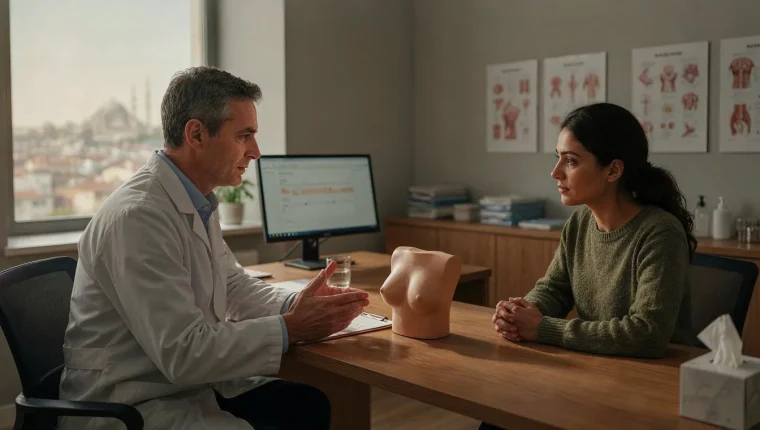
Breast reduction surgery in Turkey has become a routine option for thousands of international patients, but the market also attracts clinics that cut corners to stay competitive. Low advertised prices usually come from somewhere, often in your consultation, pre-op paperwork, or the operating room.
Some red flags are obvious, like a surgeon who rushes through a five-minute video call and quotes a final price before seeing a single photo or medical history. Some are subtle, such as a clinic that won’t name the anesthesiologist, dodges questions about implant or suture brands, or pressures you to book within 48 hours with a “this week only” discount. None of these behaviors are unique to Turkey, but they show up frequently enough there to warrant a closer look.
The goal is not to scare you away from surgery abroad. Plenty of highly qualified plastic surgeons there deliver excellent results every week. The goal is to help you tell the difference between a properly run practice and one that is treating your body like a sales lead.
Surge in Medical Tourism and the Rise of Cut-Rate Offers

Over the past decade, Turkey has positioned itself as one of the most aggressive players in the global medical tourism market, with breast reduction procedures leading the charge. The country’s strategic location, well-developed airport infrastructure, and government-backed health tourism initiatives have attracted hundreds of thousands of international patients each year, drawn by competitive pricing that often undercuts Western clinics by half or more.
That rapid growth, however, has created an environment where cut-rate offers can easily masquerade as legitimate savings. Some clinics compete primarily on the lowest advertised price, trimming expenses wherever they can: shorter consultations, high patient turnover, and heavily bundled packages that prioritize volume over individual care. The result is a marketplace where a bargain quote may actually reflect compromises in surgical time, implant or equipment quality, or even the experience of the assisting team.
When a price seems dramatically lower than comparable quotes from multiple established clinics, it usually signals that something in the chain of care has been reduced. Patients comparing options should look closely at what is actually included, who is performing the procedure, and whether the savings align with realistic standards of practice or simply reflect a race to the bottom.
Unverifiable Surgeon Credentials and Before-After Gaps
Behind every polished Instagram grid sits a question worth asking: who actually performed the surgery? In the breast reduction Turkey market, credential transparency is uneven, and many clinics lead with stock photos, model imagery, or filtered results that do not show the same patient from the same angle under the same lighting. A trustworthy surgeon will have a verifiable medical license number, an active registration with the Turkish Medical Association, and a clear surgical training history that you can cross-check independently.
When vetting potential clinics, pay close attention to these documentation cues:
- Medical license registration that matches the surgeon’s full name on the Turkish Ministry of Health portal.
- Before-and-after galleries showing consistent lighting, neutral backgrounds, and identical poses across both photos.
- Patient testimonials with full names, dates, and specific details about the procedure rather than vague five-star praise.
- Membership in international plastic surgery societies such as ISAPS or EBOPRAS as additional validation.
- Willingness to share operative notes, anesthesia records, or follow-up photographs on request.
Genuine surgeons welcome scrutiny; red flags appear when the marketing team controls all communication and the operating physician remains a curated mystery. If you cannot verify who holds the scalpel, the rest of the package, however attractive, rests on an unstable foundation.
Hidden Costs Beyond the Quoted Breast Reduction Turkey Package

A glossy “all-inclusive” quote rarely covers the full picture of breast reduction surgery in Turkey. Once you land, the add-ons begin to surface: pre-operative blood work and imaging, anesthesia fees, compression garments, prescribed medications, and extended clinic stays that were never mentioned during the initial sales call. Some patients also discover that revision visits, drains, or scar-care products are billed separately.
Travel expenses stack up quickly too. Flight changes to accommodate scheduling, extra nights in a hotel while waiting for clearance to fly, and the cost of bringing a companion often exceed the original budget. If a complication arises and a longer stay is required, those unbudgeted nights can balloon fast, turning a bargain package into a financial strain.
One of the most overlooked line items is post-operative aftercare at home. Compression bras need replacing, lymphatic drainage sessions may be recommended, and follow-up consultations with a local surgeon for wound checks or suture removal carry their own fees. Before signing anything, request a written, itemized breakdown so you know exactly what the quoted price includes, and just as importantly, what it does not.
Operating Facilities Lacking International Accreditation Standards
Once you move past the surgeon’s résumé, the next place a careful patient should look is the room where the operation actually happens. International accreditation standards, such as those issued by the Joint Commission International (JCI) or the International Society of Aesthetic Plastic Surgery, exist because operating theaters, sterilization routines, and emergency equipment vary dramatically from clinic to clinic. A facility that has never invited an outside auditor may still be excellent, but there is no independent paper trail to confirm it.
When evaluating a clinic, ask which body accredited the operating theater, how the center handles a sudden anesthesia complication, and whether the recovery bay has monitored beds staffed around the clock. Reputable centers answer these questions without hesitation and usually post their certification numbers on the website. If the answer is vague, or you are told accreditation is “in progress,” treat that hesitation as one of the louder breast reduction Turkey red flags, because a low sticker price often reflects shortcuts taken behind the swinging doors of the operating room.
Inadequate Post-Operative Care and Follow-Up Protocols
The most overlooked chapter of cosmetic surgery usually begins after the operating room lights dim. A successful breast reduction does not end when the last suture is closed; what follows — the dressings, the drain checks, the lymphatic massage, the scar monitoring — is where the real healing is either protected or put at risk. When a clinic’s post-operative protocol is vague or improvised, even a technically flawless operation can heal poorly, and the patient often has no local advocate to step in.
Reviewers on independent platforms describe a recurring pattern among budget providers that should make any prospective patient pause:
- Discharge within hours without a documented observation period for early complications such as hematoma or anesthesia reactions.
- No named aftercare coordinator, meaning patients are routed through a generic WhatsApp line that may not reach a clinician after hours.
- Compression garments and wound supplies omitted from the quoted package or billed separately once the patient is already in recovery.
- Follow-up visits reduced to a single photo check instead of in-person suture removal, drainage assessment, and scar therapy planning.
- No contingency plan for revision or emergency care if a seroma, wound dehiscence, or infection develops after the flight home.
Reputable practices treat the post-operative phase as a structured medical pathway, not an add-on. Ask to see the written timeline covering day one through month twelve, including who is responsible for each touchpoint. If the answer is “we will see,” consider it a warning sign as serious as any issue discussed in this guide.
Communication Barriers and Unclear Consent Processes
The final warning sign sits in the consultation room itself. If your surgeon, coordinator, or patient liaison cannot explain the procedure, risks, and recovery plan in fluent clinical English—or insists that a WhatsApp translator handles all informed consent discussions—that gap is a liability, not a convenience. Consent documents written only in Turkish, signed the morning of surgery, or stamped with vague wording such as “breast reduction and related procedures” leave no legal anchor if complications arise. A trustworthy clinic provides a bilingual consent form at least a week ahead of time, walks you through every clause, and documents your questions in writing.
Equally important is how the team responds when you ask harder questions. A coordinator who deflects, rushes the call, or punts you back to “the doctor will explain” is signalling that the informed-consent process is theatre rather than substance. Ethical practices record these conversations, confirm your understanding of asymmetry risks, scarring, nipple sensation changes, and revision policy, and give you cooling-off time before any signature. When the dialogue feels thin, the contract you sign will be thinner still.
FAQs
How can I tell if a clinic offering breast reduction in Turkey is hiding unqualified surgeons?
To spot a clinic hiding unqualified surgeons, verify the operating surgeon's name and check it against the Turkish Medical Association (TTB) or local health ministry registers to confirm they hold a valid plastic, reconstructive, and aesthetic surgery certification. Review the surgical consent forms carefully—if the operating doctor's name is missing or replaced with vague terms like "our surgical team," that is a red flag. Ask for the surgeon's personal before-and-after portfolio and request a one-on-one consultation with them in advance; reputable surgeons always meet their patients personally before the procedure.
What pricing details should make me suspicious when comparing breast reduction packages abroad?
Watch out for package prices that seem unusually low compared to multiple other clinics, vague or missing breakdowns of what is included, hidden fees for anesthesia, implants, compression garments, or follow-up visits, and offers that pressure you into booking immediately or promise guaranteed results. Also be cautious if the clinic cannot clearly explain the surgeon’s credentials, the facility’s accreditation, or what complication management or revision policy is in place, since reputable providers are transparent about these details.
Are before-and-after photos reliable proof of a surgeons skill, or can they be misused as marketing tools?
Before-and-after photos can offer useful visual evidence of a surgeons results, but they are not definitive proof of skill on their own. Lighting, angles, makeup, and selective case selection can easily distort perceived outcomes, and reputable practices typically present them alongside credentials, patient testimonials, and detailed case information rather than as the main selling point. Patients should view such galleries as a starting point for evaluation while prioritizing board certification, verified reviews, and in-person consultations.