You recently had a crown placed, perhaps while abroad, and now you’re back home in the USA. The paperwork and trip are over, but one question remains: what happens next? A new crown may feel different for a while, and it isn’t always obvious what’s normal or when to call a dentist. This guide focuses on dental crowns aftercare USA readers actually need day to day — how to care for the crown at home, what to watch for, and when it makes sense to see a local dentist. It won’t revisit how the crown was made or cover travel logistics. Instead, it’s a practical guide for the weeks ahead to help you protect your investment.
What to Expect in the First Weeks of Dental Crowns Aftercare in the USA
Once the numbness fades and you are back home, the first days with a new crown can feel strangely uneventful — which is usually a good sign. In the first 24 to 72 hours, most people notice a slight tightness around the tooth and mild gum tenderness where the margin meets the tissue. This is your body adjusting to the restoration, not a sign that something went wrong. The cement needs time to fully set, and your bite may feel subtly different as the crown seats itself against the underlying tooth.
By the end of the first week, that initial pressure typically softens into something closer to normal. You might still feel a faint awareness of the crown when you bite down, especially on harder foods, but it should not be sharp or lingering. Bite adjustment is the single most common reason a new crown feels “off” — if your upper and lower teeth meet unevenly, the crown may sit slightly high, and that imbalance can create soreness in the tooth or jaw. A quick reshaping visit usually resolves it.
Normal sensations during these early weeks include mild sensitivity to cold, a sense of fullness around the gum line, and occasional tenderness when flossing near the margin. What is not normal: sharp, throbbing pain, pain that wakes you at night, or a crown that feels loose or shifts when you press it. Those signals suggest the fit or the nerve needs professional review.
Healing timelines vary from person to person, and a US dentist can confirm whether your crown is seating correctly and your bite is balanced.
Daily Oral Hygiene Routines That Protect Your New Crown
Good hygiene around a crown is less about scrubbing harder and more about cleaning the edges where the restoration meets your natural tooth. That junction, called the crown margin, is the spot where plaque and bacteria tend to collect, and it is also the area most likely to develop decay or gum inflammation if it is neglected. Your daily routine should treat that line with the same attention you give the rest of your mouth.
When you brush, angle a soft-bristled brush at roughly 45 degrees toward the gumline and use short, gentle strokes along the margin and the teeth on either side. A powered brush can help, but only if you let it do the work rather than pressing down. Scrubbing forcefully does not clean better; it can wear the cement line, irritate your gums, and dull the polish on the crown over time.
Flossing matters just as much. Slide the floss down to the gum, then wrap it around the side of the crowned tooth and ease it gently under the edge before lifting it back out. If a crown sits tightly against its neighbor, interdental brushes or a water flosser can reach where string struggles. Fluoride toothpaste is a sensible default because it helps protect the tooth structure still supporting the crown, and non-abrasive formulas keep the surface from dulling.
Finally, watch your habits. Clenching, grinding, nail-biting, or opening packages with your teeth puts concentrated force on a restoration and can chip it or loosen the bond. If you notice yourself doing any of these, that is worth mentioning at your next visit.
Foods and Drinks to Avoid While Your Crown Settles
Your new crown may feel solid, but the cement or bonding holding it in place needs time to reach full strength, and the tooth underneath is still adjusting. During this settling period, the biggest risks come from excessive biting force and prolonged exposure to staining agents. Sticky foods like caramel, taffy, and gummy candies can grab the crown’s edge and pull it loose before the bond has fully matured. Hard items such as ice, nutshells, and unpopped popcorn kernels concentrate force on a single point and can chip both the crown and the natural tooth. Very hot or very cold foods may also trigger sharp twinges while the nerve settles, so let soups and drinks cool slightly before you eat.
Staining is a quieter concern. Coffee, black tea, red wine, and tobacco are the usual culprits, and a freshly placed crown—especially a porcelain one—can pick up discoloration along its margins if you indulge heavily in the first weeks. You do not need to give these up forever, but limiting them, or rinsing with water right after, helps protect the appearance of the restoration.
While you eat, favor the side of your mouth opposite the crown and cut food into smaller pieces rather than tearing with your front teeth. Most people can return to a normal diet once their dentist confirms the bite and fit are stable at a follow-up visit, so treat these adjustments as temporary rather than permanent rules.
Managing Sensitivity and Discomfort Without Damaging the Restoration

Sensitivity after a crown is common, but its source matters for how you treat it. The most frequent culprits are gum irritation around the crown margin, a bite that sits slightly too high, or temporary nerve sensitivity from the cement and the preparation work itself. If the discomfort feels like a dull ache in the gum tissue, warm saltwater rinses and gentle brushing with a soft-bristled brush usually calm things down within a few days. If it feels like a sharp sting when you bite down, the crown is likely sitting high — and that is a bite adjustment issue, not something you can fix at home. Do not try to file or reshape anything yourself.
For generalized tooth sensitivity, a desensitizing toothpaste containing potassium nitrate or stannous fluoride can help, applied either by brushing normally or dabbed directly on the sensitive spot for a minute. Give it one to two weeks of consistent use before judging whether it works. During flare-ups, skip very cold or very hot drinks, and lean on soft foods at room temperature. Chewing on the opposite side for a few days is fine, but avoid making it a permanent habit, since uneven chewing loads can stress other teeth.
What you should not do is mask a growing problem. If sensitivity sharpens instead of fading, if it wakes you at night, or if it lingers more than two to three weeks, stop reaching for home remedies and call a US dentist. Persistent or worsening pain is a signal that something structural or infectious is involved, and no toothpaste will resolve it.
When to Schedule a Follow-Up Visit With Your US Dentist
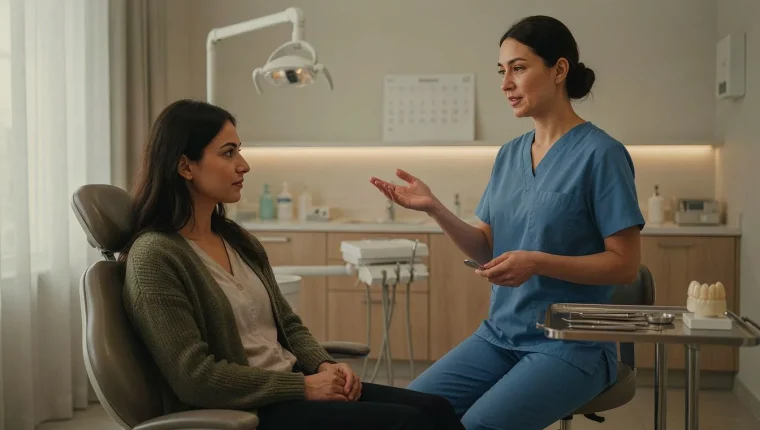
Once you are back home and settled, the smartest move is to book a checkup with a US dentist within a few weeks of your return, even if the crown feels fine. This gives the tooth and surrounding gum tissue time to calm down after travel, while still catching any early problems before they become painful or expensive. If you had the crown placed abroad, bring whatever records you have: the treatment date, the material used, any X-rays on a disc or in an email, and notes about the cement or bonding agent. Even a phone photo of the original paperwork helps.
At the appointment, ask direct questions about the crown margin and how well it seals against the tooth, whether your bite needs adjustment, and if new X-rays are needed to check the fit and the health of the underlying tooth. You should also ask how the crown looks on the gum line and whether any food traps are forming. Finding a dentist is straightforward: search for a general or cosmetic dentist near you, mention that you have a recent crown from overseas, and request a problem-focused exam rather than a routine cleaning. Expect a visual check, a bite test, and possibly a light tap or probe to assess comfort. Insurance and cost details for this visit are covered later, so for now focus on getting the appointment on the calendar and bringing your records.
Warning Signs That Your Crown Needs Professional Attention
Most crowns settle quietly, but a few problems announce themselves clearly, and those are the ones you should never try to manage on your own. A crown that feels loose, shifts when you press it, or lifts off entirely is a genuine emergency for the tooth underneath, not just the restoration. The exposed underlying tooth can decay or fracture quickly once it loses its protective cover, so a crown that comes off should be kept safe and the dentist contacted the same day.
Watch for persistent pain or swelling around the crowned tooth or the gum line. Sharp pain when biting, throbbing that wakes you at night, visible swelling, bleeding that does not stop, or a bad taste or odor are all signs that something is wrong beneath the surface. These differ from the mild sensitivity you may have already handled at home; they tend to intensify rather than fade.
Inspect the crown itself now and then. Cracks, chips, or a bite that suddenly feels off, as if your teeth no longer meet the way they did, suggest the crown has shifted or worn unevenly. Do not file, glue, or reposition anything yourself, and avoid using over-the-counter adhesives as a fix.
When any of these appear, call your US dentist promptly and describe what you see and feel. Early attention usually means a simpler repair than waiting until the tooth is damaged.
How US Dental Insurance Covers Crown Repairs and Replacements

Insurance is where crown aftercare gets complicated, because a crown that was placed abroad often sits in a gray zone between what your plan calls a repair and what it calls a replacement. Most US dental plans treat these as different procedures with different coverage levels. A repair, such as re-cementing a loose crown or smoothing an open crown margin, is usually handled as a minor restorative service and tends to be covered at a higher percentage. A full replacement is treated more like a new crown, which many plans classify as a major service with lower coverage.
Several familiar cost-control features shape what you actually pay. A deductible must typically be met before benefits apply, and an annual maximum caps what the plan pays in a benefit year. Some plans also impose a waiting period before crowns are covered at all, and many require pre-authorization or a pre-treatment estimate before the work begins. Skipping that step can reduce or void reimbursement.
The age of the original crown often matters. Many insurers will not pay to replace a crown that is only a few years old, on the reasoning that it should not have failed that soon. Documentation helps your case: the original placement date, the treating dentist’s notes, and X-rays showing the problem. If the crown was done outside the US, ask your insurer directly how foreign-placed restorations are handled, since policies vary widely.
Do not assume any specific coverage based on general rules. Call your insurer, confirm the exact procedure codes your dentist plans to submit, and get the answer in writing before treatment. That single step prevents most surprises.
FAQs
What should I expect from dental crowns aftercare in the USA if my crown feels different once I am back home?
If your crown feels different once you are back home in the USA, expect your dentist to schedule a quick adjustment visit, since minor bite or fit issues are common and usually easy to correct. Most dental practices offer short follow-up appointments for crown aftercare, and many will see you within days if you report discomfort, a high bite, or a loose feeling. You should avoid chewing hard foods on that side until the crown is checked, and call your dentist promptly if you notice sharp pain, swelling, or the crown coming off.
Can I eat and drink normally after returning to the USA with a new dental crown?
You can usually eat and drink normally once the anesthesia has worn off and you can feel your lips, tongue, and cheeks again, which typically takes a few hours. If the crown was cemented with permanent cement, you can chew on it right away, though many dentists recommend avoiding very hard or sticky foods for the first 24 hours to let the cement fully set. Expect some mild sensitivity to hot or cold foods for a few days, which is normal as the tooth and surrounding gum adjust. Contact your dentist if you feel sharp pain when biting, if the crown feels loose, or if sensitivity persists beyond a week or two.
How soon should I see a US dentist for a checkup if I notice pain or looseness during dental crowns aftercare in the USA?
If you notice pain or looseness in a dental crown, contact your dentist promptly—ideally the same day or within 24 to 48 hours—because these signs can indicate nerve irritation, infection, or a failing cement seal that may worsen without treatment. A loose crown can often be re-cemented if you act quickly, but delaying care risks decay under the crown, pulp damage, or the need for root canal therapy or replacement. Severe pain, swelling, fever, or a crown that has fallen off warrants urgent or emergency dental care rather than waiting for a routine checkup.