Nutrition after hair transplant can support your body as the scalp heals, but it cannot replace professional aftercare or guarantee faster hair growth. During early recovery, focus on adequate hydration, balanced meals, and foods that provide nutrients for normal tissue repair and hair biology. Your clinic’s instructions should always take priority, especially after FUE or DHI procedures. This guide explains practical eating habits, sensible limits, and how to choose foods without unrealistic promises about graft survival, hair density, or final results.
What to Eat During the First Days After a Hair Transplant

During the first days after a hair transplant, choose foods that are easy to tolerate and provide steady nourishment without making recovery uncomfortable. Soft meals such as oatmeal, yogurt, eggs, soup, rice, cooked vegetables, fish, or tender chicken can be practical choices. If your appetite is reduced, smaller meals eaten more frequently may be easier than large portions.
Hydration also matters. Drink water regularly unless your clinician has advised a fluid restriction. Nausea, mild dizziness, or a dry mouth can occur after the procedure or with certain medicines, so take prescribed medication exactly as directed and ask the clinic whether it should be taken with food. Avoid chewing very hard foods if facial tenderness or swelling makes eating uncomfortable.
Prioritize adequate protein intake through foods you already tolerate, because protein supplies building blocks needed for normal tissue repair. Include a source at meals, such as eggs, dairy, beans, poultry, fish, or tofu. Do not force unfamiliar supplements or follow a restrictive diet immediately after FUE or DHI. Your surgeon’s aftercare instructions take priority, particularly if you have diabetes, digestive problems, food allergies, or medication-related dietary restrictions.
Key Nutrients That Support Follicle Recovery and Hair Growth
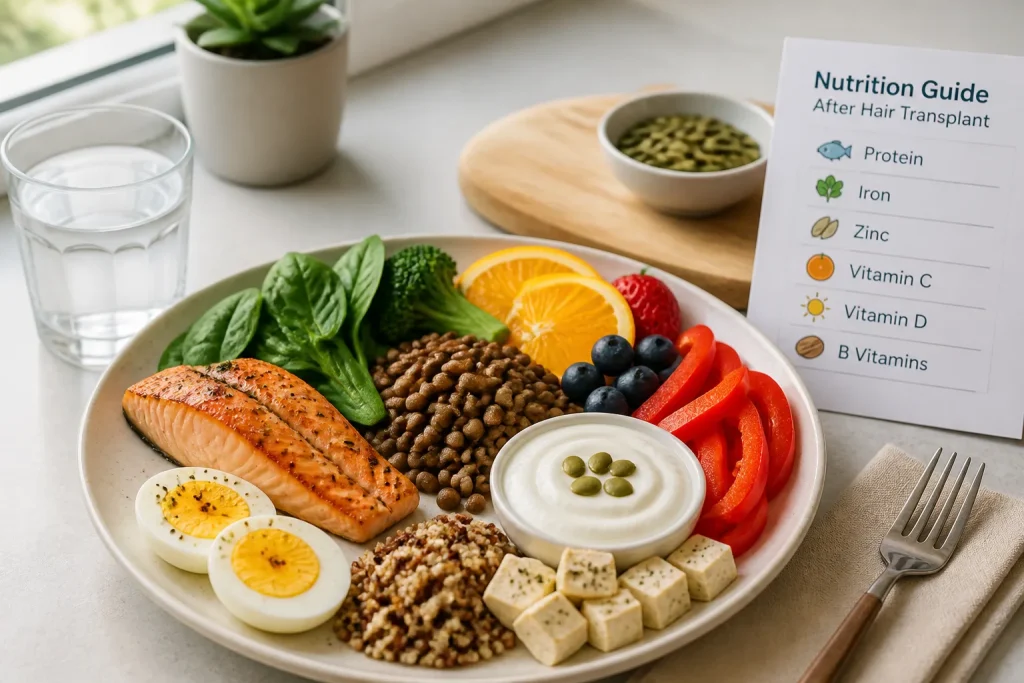
Nutrient-dense foods provide the raw materials the body needs to repair small wounds around the recipient area and maintain normal hair biology. Protein is central because it supplies amino acids used in skin and keratin formation; useful sources include eggs, fish, poultry, yogurt, beans, lentils, tofu, and lean meat.
Iron supports oxygen transport, while zinc contributes to tissue repair and normal follicle function. Meat, seafood, legumes, leafy greens, seeds, and fortified foods can contribute these minerals. Pairing plant-based iron sources with vitamin C-rich foods such as berries, citrus, peppers, or broccoli may improve absorption.
Vitamin D and B vitamins are also relevant to general hair and skin health, although taking extra amounts does not automatically accelerate graft growth. Fatty fish, eggs, dairy or fortified alternatives, whole grains, nuts, and vegetables can help provide a varied intake. Omega-3 fats from salmon, sardines, walnuts, and flaxseed may support overall inflammatory balance, but they should not be presented as a direct treatment for hair loss.
Food-first nutrition is usually the most practical starting point after hair restoration. Adequate overall energy intake matters as well; consistently eating too little can make recovery more difficult. Supplements are not automatically necessary, and high-dose products can be unhelpful or interact with medicines. Deficiencies should be confirmed before supplementation, particularly for iron, vitamin D, or zinc. These nutrients support healing and normal follicle activity, but they cannot guarantee faster growth or greater hair density.
Foods and Drinks to Limit During Recovery
During healing, some everyday choices may be worth reducing because they can affect comfort, hydration, or adherence to aftercare instructions. Caffeine is not automatically prohibited, but large amounts of coffee or energy drinks may disturb sleep or contribute to dehydration. Follow your clinic’s advice, particularly if you were given specific instructions about caffeine before or after an FUE or DHI procedure.
Alcohol is commonly restricted around surgery because it may conflict with prescribed medicines and can increase bleeding or swelling concerns. Avoid it for the period recommended by your surgeon. Also limit heavily processed foods and excess added sugar; they can displace more nutritious choices without directly determining hair density or graft survival.
Drink enough water to maintain normal hydration, unless a medical condition requires fluid restriction. Be cautious with supplements, herbal products, and foods that may affect bleeding or interact with medication. Medication and food interactions should be reviewed with your clinic, especially if you take blood thinners or have diabetes, kidney disease, or another condition requiring a tailored recovery plan.
A Practical Nutrition After Hair Transplant Meal Plan

A practical daily meal pattern can make recovery nutrition easier to follow without turning it into a rigid prescription. Begin with a protein-based breakfast, such as eggs with whole-grain toast and fruit, or Greek yogurt with oats, berries, and seeds. If your appetite is reduced after the procedure, a smaller serving can be followed by a nutritious snack later.
For lunch, combine a palm-sized portion of chicken, fish, tofu, beans, or lentils with vegetables and a whole-grain carbohydrate such as brown rice, quinoa, or whole-wheat bread. Add a source of healthy fat, such as avocado, olive oil, or nuts. This balanced structure can also work for dinner, with vegetables filling much of the plate and water served alongside the meal.
Snacks may include fruit with yogurt, hummus with sliced vegetables, cottage cheese, or a handful of unsalted nuts. Sip fluids regularly throughout the day rather than waiting until you feel thirsty. Water should be the main drink, while heavily sweetened beverages and excessive caffeine may be less suitable during recovery.
Vegetarian and vegan options can use lentils, chickpeas, beans, tofu, tempeh, and fortified plant milks. Soft foods may be more comfortable if chewing feels tiring. The most useful approach is flexible meal planning: adjust portions and ingredients for appetite, allergies, digestive tolerance, medical conditions, and your clinic’s aftercare instructions.
When Diet Changes Require Medical Advice
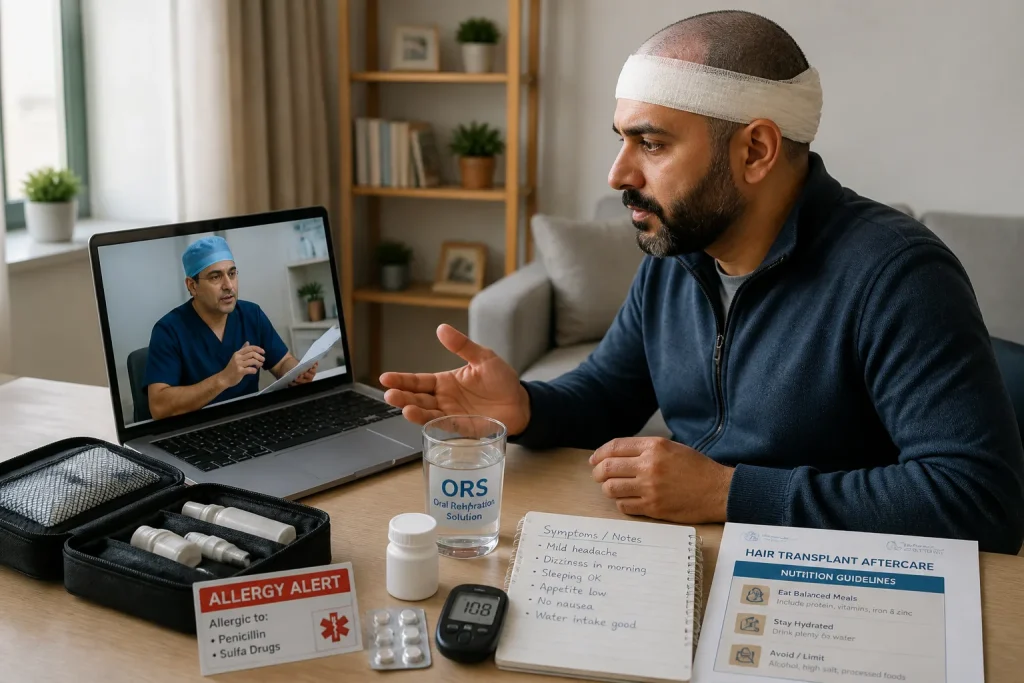
General dietary guidance may be appropriate for many people, but certain symptoms and health circumstances require direct medical advice after a hair transplant. Contact your transplant team promptly if you have persistent vomiting, signs of dehydration, unusual bleeding, or symptoms that are worsening rather than gradually improving. These problems can affect recovery and may also make it difficult to take prescribed medicines correctly.
Ask your surgeon or clinician for individualized instructions if you have diabetes, kidney or liver disease, food allergies, a highly restrictive diet, are pregnant or breastfeeding, or take anticoagulants or other regular medication. These factors can change which foods, fluids, or supplements are suitable during recovery. Follow the clinic’s aftercare instructions if they differ from general nutrition advice.
Suspected iron, vitamin B12, vitamin D, or other nutrient deficiencies should be confirmed with a medical assessment rather than treated with high-dose supplements. Excessive supplementation can cause side effects and may interact with medication. Individualized medical advice is especially important if poor appetite, ongoing fatigue, delayed wound healing, or unusual shedding persists, because these symptoms may have causes that diet alone cannot address.
FAQs
Can I drink coffee after a hair transplant?
Most clinics recommend avoiding coffee for at least 24–48 hours after a hair transplant, as caffeine may temporarily raise blood pressure and contribute to dehydration or restlessness during early recovery. Follow your surgeon’s specific aftercare instructions, especially while the grafts and recipient area are healing. Resume coffee gradually once your clinic confirms it is safe.
Are supplements necessary for hair growth after surgery?
Supplements are not always necessary for hair growth after surgery, especially if your diet provides adequate nutrients. A surgeon may recommend blood tests and targeted supplements such as iron, vitamin D, zinc, or biotin only when a deficiency is identified; unnecessary high doses can cause side effects. Follow your hair restoration specialist’s aftercare plan, since proper wound care, nutrition, and monitoring of shedding or graft growth matter more than routine supplementation.
How long should I follow a post-transplant diet?
Most people should follow a post-transplant diet strictly during the first few days or weeks, then gradually return to their normal eating pattern as recovery progresses. Prioritize protein, vitamins, minerals, fiber, and adequate fluids, while limiting alcohol, highly processed foods, and anything your surgeon advises against. Follow your transplant team’s personalized instructions, especially if you have medication interactions or medical conditions.