If you’re in the US and considering a smile makeover in Turkey, you’re probably asking whether it’s worth it. The price gap is real, but so are the logistics — flights, time off work, unfamiliar clinics, and what happens once you’re back home. This guide gives you a direct answer. We’ll look at what drives Americans to Turkey, how to compare costs honestly, what treatment packages typically include, how to vet a dentist from abroad, and what recovery and follow-up really look like. No sales pitch — just practical context so you can decide with clear eyes.
Why Americans Consider Turkey for a Smile Makeover
Turkey has become a familiar name in conversations about dental work abroad, and that familiarity matters. For many Americans, the country feels like a realistic option rather than a random destination, largely because medical tourism infrastructure has matured around it. Istanbul and Antalya now host clinics that cater specifically to international patients, with English-speaking coordinators, airport transfers, and hotel partnerships built into the patient journey. Direct flights from major US cities have shortened the mental distance too, making a trip feel manageable rather than exotic.
The practical pull is easy to understand. A smile makeover often involves multiple procedures, and bundling them into a single trip can compress what might otherwise stretch across months of appointments at home. Package convenience, shorter treatment timelines, and the prospect of significant savings all play a role. But the emotional side is just as real. Many patients are chasing a fast transformation they have postponed for years, and that hope sits alongside genuine anxiety about flying abroad for dental care. Recognizing both is important, because the reasons that make Turkey attractive are also the reasons to choose carefully.
Typical Cost of a Smile Makeover in Turkey Compared to US Prices
Cost is usually the first question Americans ask, and the honest answer is that there is no single price tag. A smile makeover is a bundle of procedures, so the total depends on how many teeth are treated, which materials are used, and how much laboratory work is required. In Turkey, quotes for a full smile makeover commonly fall in the range of a few thousand dollars, while comparable treatment in the US often runs several times higher. That gap is real, but it reflects lower operating costs, different lab pricing, and currency dynamics rather than a simple discount on the same product.
To judge a quote fairly, break it into components: consultation and imaging, preparation and temporaries, the dental laboratory work, the number of units, and any follow-up visits. In the US, prices also swing widely by city, by the dentist’s experience, and by whether you choose crowns or veneers. A single veneer in a major US city can cost more than an entire multi-unit package abroad, which is why averages can mislead.
Ask specifically what the quoted package includes and excludes: are X-rays, sedation, temporary restorations, and post-treatment adjustments covered? Exact savings depend on your treatment scope and the provider you choose, so compare itemized quotes rather than headline totals.
What Treatments Are Usually Included in a Turkish Smile Makeover Package
A Turkish smile makeover package is rarely a single procedure. Most clinics build it around a combination of treatments that work together to change the shape, color, and function of your teeth, and the mix you’re offered should reflect what your mouth actually needs.
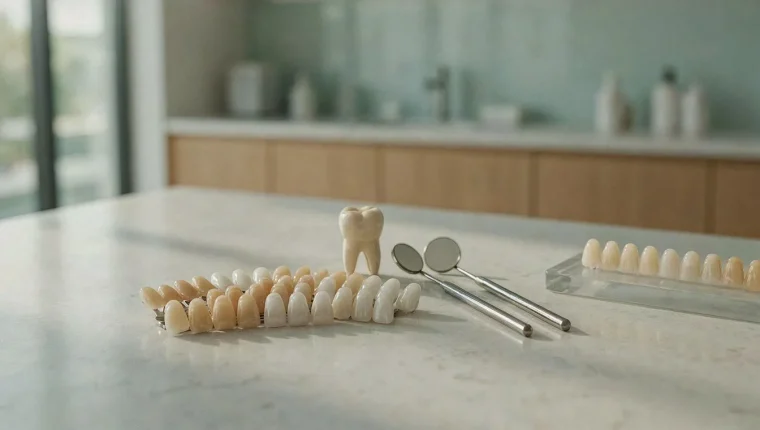
The most common inclusions are dental crowns and porcelain veneers, which reshape and recolor visible teeth, along with dental implants for missing teeth and professional whitening for patients whose natural teeth are healthy enough to keep. Temporary restorations usually come standard, since most of this work happens over several days rather than in one sitting.
Many packages also bundle non-clinical extras: hotel stays, airport transfers, translation services, and a follow-up appointment before you fly home. These add real convenience, but they don’t tell you anything about the quality of the dentistry itself.
This is where packages can quietly work against you. When a clinic prices treatment per tooth or per arch, the incentive shifts toward recommending more crowns or veneers than your case calls for. A package built around a diagnosed need looks different from one built around a sales target, and the difference usually shows up in whether the clinic explains why each tooth is being treated.
How to Evaluate Dental Clinics and Dentists in Turkey
Choosing a provider from another country comes down to one question: can you verify what you are being told? Start with credentials you can actually check. Turkish dentists must be registered with the Ministry of Health, and many specialists hold memberships in international bodies such as the American Dental Association or the European Dental Association. Ask for the dentist’s diploma number, specialty training, and any board certifications, then confirm them independently rather than relying on a website badge.
Before-and-after photos are useful, but only if they look consistent. Watch for the same lighting, angles, and framing across cases, and ask how many of the shown cases resemble your own situation. Reviews matter too, especially the negative ones. A clinic that responds calmly to a complaint and explains how it resolved the issue is more reassuring than one with a flawless rating and no engagement.
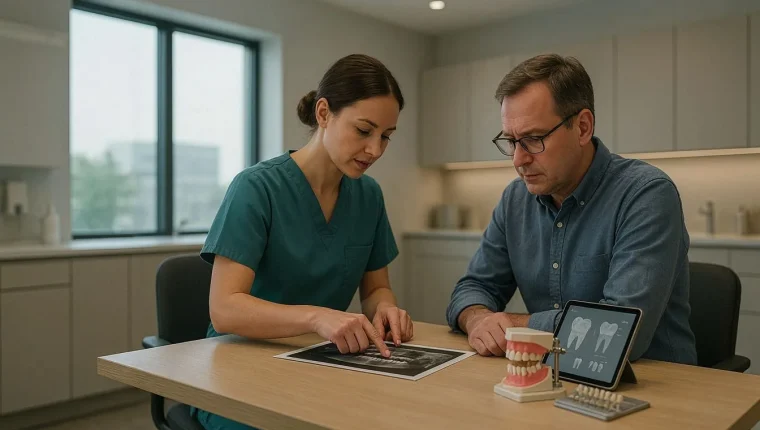
Ask directly who will perform the work on the day of treatment. Some clinics advertise a well-known dentist but assign assistants to complete the procedure. You should also test communication early: send a detailed question about your case and see whether the reply is specific or generic. Clear, patient answers before you book are the best sign you will get the same attention after you arrive.
Potential Risks, Recovery, and Aftercare for American Patients
Every dental procedure carries some risk, and a smile makeover is no exception. The most common complaints after treatment are tooth sensitivity, a temporary or lasting shift in your bite, and occasional infection around prepared teeth or implants. Aesthetic dissatisfaction is also possible — shade, shape, or proportion may not match the preview you approved. These outcomes are not unique to Turkey, but long-distance care makes them harder to resolve quickly.
Recovery depends on what was done. Crowns and veneers often settle within a few days to two weeks, while implant placement or gum work can require months of healing. Travel timing matters: flying home too soon after surgery can worsen swelling and limit your chance to address problems while still on site. Most clinics schedule a short follow-up before departure, so plan your return flight with that window in mind.
Once you are back in the US, coordinate with a local dentist early. Remote follow-up through photos and video calls has real limits — a dentist in Turkey cannot adjust a bite or repair a loose restoration from abroad. If something fails, expect to pay US rates for repair, and confirm in writing what the clinic covers before you book.
FAQs
How much can Americans realistically save on a smile makeover in Turkey compared to US prices?
Americans can typically save 50% to 70% on a smile makeover in Turkey compared to US prices, with many patients reporting total savings of $5,000 to $15,000 depending on the procedures involved. For example, a full smile makeover using porcelain veneers that might cost $15,000 to $30,000 in the US often runs $4,000 to $9,000 in Turkey, including treatment. These figures usually cover dental work alone, so patients should factor in flights, hotels, and possible follow-up visits when calculating overall savings.
Which Turkish clinics or dentists have verifiable credentials and reviews that matter for American patients?
American patients should look for Turkish dentists who hold Turkish Ministry of Health registration plus international accreditation such as JCI, ISO, or TEMOS, since these are independently auditable and signal real quality control. Clinics in Istanbul and Antalya that openly list implantology or prosthodontics specialists with verifiable board certification and before-and-after case documentation tend to be the safest choices. Reviews matter most when they appear across multiple independent platforms like Google, Trustpilot, and RealSelf rather than only on the clinic's own site. Because credentialing and review quality change over time, patients should verify current licenses directly through the Turkish Ministry of Health and cross-check recent patient accounts before committing.
What follow-up or revision options exist if an American needs adjustments after returning home?
If an American needs adjustments after returning home, they can usually arrange follow-up care with a local surgeon or specialist who can assess healing, remove sutures, or manage minor complications. Many patients also stay in contact with the original provider through email, phone, or video consultations, and some clinics offer revision procedures either remotely or during a return trip. For more involved corrections, a domestic surgeon may perform the revision after reviewing the original operative notes and imaging.