If you are in Canada and considering a smile makeover in Istanbul, you have probably noticed how scattered the information is. Some sources focus on prices, others on clinics, and few help you decide. This guide takes a different approach. It is a planning resource for Canadian patients, covering how to evaluate providers, what a consultation should include, how treatment plans are built, and what travel and follow-up realistically involve. What it does not do is rank clinics or quote prices because prices change and depend on your case. Instead, you will get a clear framework for asking better questions and making a decision.
Why Canadian Patients Choose Istanbul for a Smile Makeover
Canada has no shortage of skilled cosmetic dentists, so the decision to travel abroad is rarely about a lack of local options. For many Canadian patients, it comes down to cost structure. Dental care in Canada is largely private-pay, and cosmetic procedures like veneers, crowns, or full-arch restorations sit outside most provincial coverage. Istanbul clinics, by contrast, operate with lower overhead, different labor economics, and a high volume of international cases. That combination can translate into a meaningfully different price band for multi-tooth work — though the gap varies widely by case, materials, and clinic, and no single figure applies to everyone.
Availability matters too. Istanbul has a deep bench of dentists who focus almost entirely on aesthetic and reconstructive dentistry, often handling complex full-mouth cases as routine work rather than occasional projects. For a Canadian patient needing eight or more units of restoration, that concentration of experience can be a practical draw.
Travel accessibility is the quieter factor. Direct flights connect Toronto and Montreal to Istanbul in roughly ten hours, and the time difference — seven hours ahead of Eastern Time — is manageable for a short treatment trip. Patients can often arrive, complete staged appointments, and recover before flying home without a punishing jet-lag burden.
What this section does not claim: guaranteed outcomes, verified price figures, or that Istanbul is universally better. Those depend on the individual clinic and case, which is why the next step is learning how to evaluate them properly.
How to Evaluate Dental Clinics and Credentials Before Booking

Before you place a deposit, slow down and treat the clinic selection process like a background check. Start with verifiable credentials: a valid diploma from a recognized dental faculty, registration with the Turkish Dental Association (TDB), and specialty certificates in prosthodontics or aesthetic dentistry where relevant. Ask for the dentist’s full name and registration number, then confirm it independently rather than relying on a screenshot. Memberships in international bodies such as the American Academy of Cosmetic Dentistry or the European Society of Cosmetic Dentistry are worth checking, but only if you can verify them on the organization’s own directory.
Next, ask who actually performs the work. Many clinics advertise a senior dentist and then assign treatment to an associate or a visiting technician. Request written confirmation of the lead clinician for your case, and ask about the dental laboratory handling your veneers or crowns. A reputable clinic will name its lab partner and explain whether restorations are milled in-house or outsourced. Materials matter too: ask for the specific brand and origin of zirconia, e.max, or composite, and whether a warranty covers replacement if a restoration fails.
Watch for red flags in how a clinic communicates. Pressure to book within 24 hours, guarantees of “perfect” results, refusal to share before-and-after cases with full consent, or quotes that arrive without a written treatment plan are all warning signs. Informed consent depends on transparency, so a provider who dodges your questions about risks, revision policies, or complication rates is not one to trust with irreversible work.
Finally, compare at least three clinics on the same criteria: credential verification, named clinician, lab transparency, written plan, and refund or revision terms. Scoring them side by side prevents a polished website or a low initial quote from making the decision for you.
What a Smile Makeover Consultation Involves for International Patients
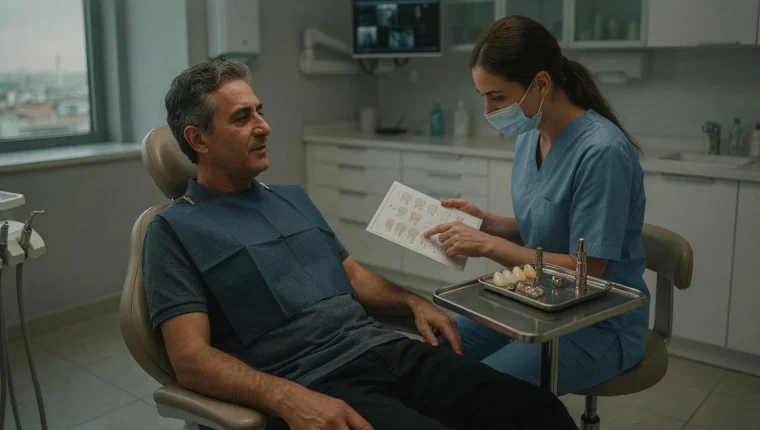
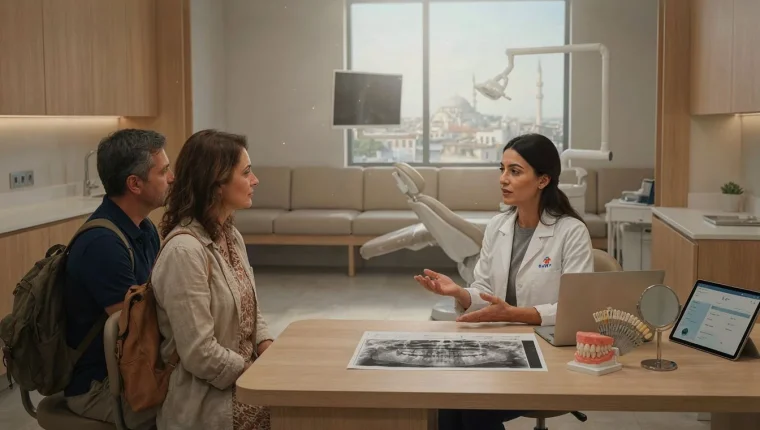
The consultation is where a smile makeover stops being an abstract idea and starts becoming a concrete plan. For patients traveling from Canada, this stage usually happens in two phases: a remote review before you book flights, and an in-person examination once you arrive in Istanbul.
Before any video call, send the clinic a full set of records. That typically includes recent dental X-rays or a panoramic radiograph, intraoral photographs taken from several angles, a list of past treatments such as crowns, implants, or orthodontics, and a clear note of any medications or health conditions. Your dental history matters more than most patients expect, because it shapes what is realistic and what carries risk. If you do not have current X-rays, many clinics will ask you to get them from your dentist in Canada first.
What can be assessed remotely has limits worth understanding. A dentist can review tooth proportions, gum display, bite relationships, and discoloration from photographs, and can sketch a rough treatment sequence. What cannot be judged reliably from images is bone density, the health of the gum tissue, or how your jaw joints function under load. Those require a physical exam, and any proposal that ignores this distinction deserves a second look.
Expect the clinic to present a treatment proposal with alternatives, not a single fixed package. Ask how the plan is sequenced, what happens if a tooth turns out to be unsalvageable, and what the revision policy is. Confirm consent documents are provided in English, ask who handles translation during appointments, and settle on one communication channel for follow-up questions.
Treatment Options and Timelines for a Full Smile Transformation
A full smile transformation is rarely a single procedure. In most cases, it combines several treatments that address different layers of the smile at once. Porcelain veneers are the most common centerpiece, reshaping the front teeth and correcting color, size, and minor alignment issues. Crowns may be needed for teeth that are heavily worn, cracked, or root-treated. Professional whitening often completes the picture, either before veneers are bonded so the shade can be matched, or afterward for patients who keep their natural enamel. Orthodontic alignment — clear aligners or fixed braces — may come first when teeth are significantly crowded or rotated, because veneers work best on a reasonably straight foundation.
How long all of this takes depends heavily on case complexity. A straightforward case — whitening plus a handful of veneers on otherwise healthy teeth — can often be completed in two short visits spaced a few days apart. More involved cases, where crowns, gum contouring, or alignment are combined, typically require a longer window and sometimes a second trip. Sequencing matters too: alignment or gum work usually happens before final restorations, since moving teeth or reshaping gums after veneers are placed can compromise the result.
This is why no honest clinic quotes a fixed timeline before examining you. The number of visits and total duration shift with your starting point — how many teeth are involved, the condition of the underlying structure, and how your gums respond to treatment. Your consultation and diagnostic planning determine the plan; recovery and follow-up scheduling shape the calendar around it.
Planning Travel, Recovery, and Follow-Up Care After Your Procedure
Once your treatment plan is set, the trip itself becomes a logistics exercise. Most smile makeovers in Istanbul unfold across two visits: an initial session for preparation and temporaries, then a second visit weeks later for final placement. Build your itinerary around those stages rather than a single block of days, and add a small buffer before your return flight in case a fitting needs adjustment.
Expect some sensitivity and swelling in the first days, so keep meals soft, avoid alcohol, and skip strenuous activity. Your clinic should give you written aftercare instructions and a direct contact for questions during your stay.
Back in Canada, arrange a continuity of care plan before you leave. Ask your Istanbul dentist to send records and X-rays to a local dentist who can monitor your restorations. If something feels wrong after you return, contact both offices promptly rather than waiting for a scheduled check-up.
FAQs
How much can a smile makeover in Istanbul typically save Canadian patients compared to treatment at home?
Canadian patients typically save between 50 and 70 percent on a smile makeover in Istanbul compared to prices in Canada, since procedures like veneers, crowns, and full-mouth restorations cost far less at accredited Turkish clinics. A treatment that might run CAD 15,000 to 30,000 at home often comes to roughly CAD 4,000 to 10,000 in Istanbul, even after factoring in flights and accommodation. Exact savings depend on the number of teeth treated, the materials chosen, and the specific clinic.
What should Canadian patients know about the timeline for consultations, procedures, and follow-up visits during a smile makeover in Istanbul?
For Canadian patients, a smile makeover in Istanbul typically begins with an online consultation and treatment plan before travel, followed by an in-person exam and procedures such as veneers, crowns, implants, or whitening completed over roughly five to ten days depending on complexity. Major restorative work like implants or full-arch cases often requires multiple visits, with the initial surgical phase done during the first trip and final restorations placed after a healing period of several months on a second trip. Follow-up care is usually provided through virtual check-ins and coordination with your Canadian dentist, so it is important to confirm the clinic's aftercare policy and warranty terms before committing.
Which dental clinics in Istanbul are most experienced in treating Canadian patients, and what credentials should you verify before booking?
Clinics in Istanbul that treat Canadian patients most often are concentrated in Nişantaşı, Levent, and the Bağdat Avenue area, and the more experienced ones hold JCI accreditation or ISO 9001 certification and maintain dedicated international patient coordinators. Before booking, verify the dentist's Turkish Ministry of Health registration, specialty board certification in the relevant field (such as prosthodontics or implantology), and membership in bodies like the Turkish Dental Association or the International Congress of Oral Implantologists. Ask directly for the number of Canadian patients treated in the past year, before-and-after case photos, and a written treatment plan with a fixed price, since these details distinguish genuinely experienced clinics from marketing-driven ones.