A smile makeover in Turkey often starts with an attractive quote, but that is rarely the final cost. Advertised prices are typically starting points, not totals, and patients often pay more than advertised. Beyond the treatment itself, costs can arise from treatment choices, extra procedures, travel and accommodation, time off work, and follow-up care after you return home. This article helps you recognise those hidden costs before you commit. It is not a clinic ranking, and it is not medical advice — just a clearer way to read the numbers.
What the Initial Quote Usually Leaves Out
A clinic’s advertised price is a starting point, not a promise. Most quotes are built around the procedure itself, which means everything surrounding it sits outside the number you first see. Understanding why that gap exists helps you read any offer more critically, rather than assuming the headline figure reflects your real outlay. The omissions are rarely accidental; they follow a predictable pattern shaped by how treatment packages are structured and marketed.
What a base quote typically covers is the core clinical work: the crowns, veneers, implants, or whitening named in the offer. What it often leaves vague is the itemised breakdown — the diagnostic steps, laboratory stages, and material grades that determine whether the final result matches the photograph on the website.
- Consultation and imaging: X-rays, 3D scans, and digital smile design are sometimes billed separately, even though they shape the entire treatment plan.
- Laboratory work and materials: The technician’s fee and the ceramic or zirconia grade used can shift the price significantly, and cheaper quotes often rely on standard materials.
- Currency and payment timing: Quotes given in euros, pounds, or dollars may be converted at an unfavourable rate, and instalment or card fees can add to the amount you actually pay.
- Per tooth versus per arch pricing: A single-unit figure looks modest until it is multiplied across a full arch, which changes the total far more than most patients expect.
These structural gaps explain why two offers describing the same treatment can differ so widely. The visible number reflects only part of the clinical journey, while the rest is deferred to stages you may not question until you are already committed.
Which Treatments Quietly Increase the Final Bill
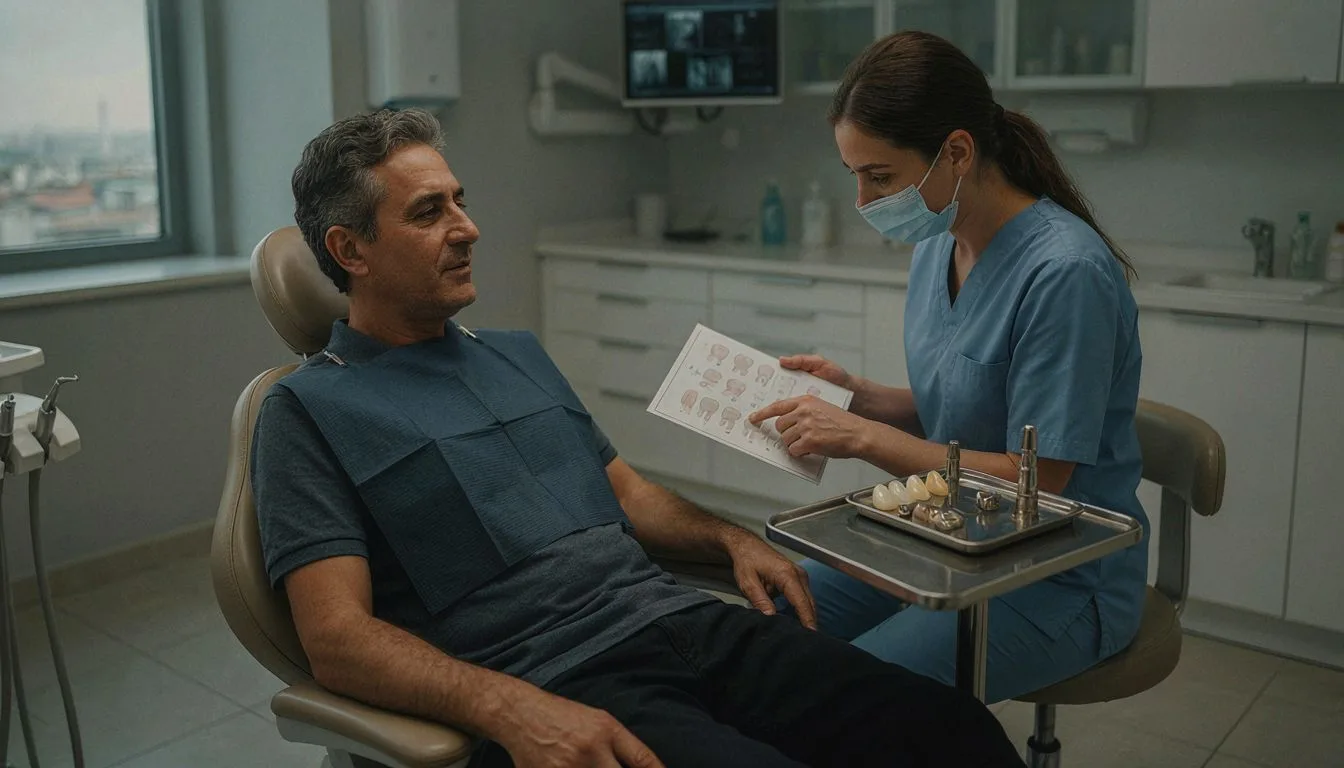
Once you sit in the chair and the dentist examines your mouth in person, the plan you agreed to by email can shift. A smile makeover is rarely a fixed package; it is a sequence of decisions, and each decision carries a price. The most common quiet increase comes from add-ons that were never part of the original quote: two extra veneers to balance a wider smile line, gum contouring to correct an uneven gum display, professional whitening before shade matching, or a single implant replacing a tooth that looked stable on a photo. Individually these sound minor. Together they can add hundreds or thousands to the total.
Material and brand tiers move the bill without changing the treatment name. A “veneer” can mean layered porcelain, pressed ceramic, or a lower-cost composite, and the same word appears on every offer. Zirconia versus metal-ceramic crowns, or a premium implant brand versus a generic system, follow the same pattern. The procedure is identical on paper; the price is not.
Volume drives cost more than most patients expect. Every additional unit, every extra visit, and every hour of chair time is billed somewhere. A full-arch case may need three or four appointments instead of one, plus temporary restorations between stages. Mid-treatment plan changes, once the mouth is examined properly, are the single most predictable reason a final invoice exceeds the quote.
Travel, Accommodation, and Recovery Time as Real Expenses

Every trip for treatment carries a second invoice that never appears on a clinic’s price list. Flights are the obvious one, but visa fees, airport transfers, and daily transport between your hotel and the clinic add up quickly across multiple appointments. Hotel nights are rarely a simple calculation either: scheduling often requires you to arrive a day before the first procedure and stay longer than planned if healing runs slower than expected.
Meals, a companion’s travel and accommodation, and extended stays all inflate the total, especially when a single trip stretches from a few days into a week or more. Then there is the cost that never shows up on a receipt at all — unpaid leave. Recovery windows determine how soon you can fly home and return to work, and for many patients that downtime is the single largest hidden expense of the entire process.
Budgeting for logistics and time off before you book gives you a far more honest figure than any advertised price, and it prepares you for the possibility that a follow-up trip may be needed later.
Revision and Complication Costs After You Return Home
When the plane lands and the swelling settles, the financial relationship with your clinic does not simply end. It changes. Most offers cover a defined period for adjustments, repairs, or replacements, and that period is often shorter than the time it takes for a problem to appear. A crown that chips after eight months or a veneer that debonds after a year may fall outside the warranty window, which means the cost lands on you rather than the provider.
Your first realistic option is usually a local dentist. Even a routine check-up or a minor correction on work performed abroad carries a standard consultation fee, and a repair or replacement can cost a meaningful share of the original treatment price. If the only practical solution is flying back, you absorb the flight, accommodation, and time off work a second time — expenses you already budgeted once.
This is where documentation gaps become expensive. A warranty is only as useful as the paperwork behind it: treatment records, material specifications, and written terms on who covers what. Without them, an insurer may decline a claim and a clinic may dispute responsibility. Ask for those documents before you leave, not after something goes wrong.
How to Compare All-Inclusive Offers and Avoid Surprise Fees
Comparing all-inclusive offers is less about the headline price and more about how each item is classified. Ask every provider to label each element as included, excluded, or priced on request. That single distinction exposes most gaps before you commit.
Request the total in writing, with the currency, the exchange basis, and a validity date. Offers that stay valid indefinitely usually mean the price can move. Then compare like-for-like treatment scope rather than totals: the same number of units, the same materials, the same number of visits.
Finally, confirm in writing what happens if your plan changes or healing runs slower than expected.
| Offer element | What to confirm |
|---|---|
| Inclusions | Listed explicitly, not implied |
| Exclusions | Named, with the likely cost of each |
| Currency terms | Currency, exchange basis, payment timing |
| Validity period | How long the quoted price holds |
| Aftercare or revision policy | Stated in writing, with conditions |
FAQs
What extra fees might a smile makeover in Turkey not include in the initial quote?
A smile makeover quote in Turkey often excludes fees for preliminary treatments such as gum contouring, root canals, or extractions, which may be needed before veneers or crowns. It may also omit the cost of temporary restorations, additional clinic visits, and post-treatment complications or revisions. Travel-related expenses like flights, accommodation, and airport transfers are rarely included, and some clinics charge separately for digital smile design, X-rays, or sedation. Patients should confirm whether the quote covers follow-up care, warranty terms, and any laboratory fees for custom-shaded or premium materials.
How can smile makeover Turkey hidden costs add up after revisions or complications?
Hidden costs in a Turkey smile makeover often surface when a patient needs revisions or treatment for complications, since many low-priced packages exclude follow-up care or charge separately for it. If a crown, veneer, or implant fails, the patient may pay again for replacement work, new imaging, medications, or additional travel and accommodation for a return trip. Complications such as infection, nerve damage, or implant rejection can also require specialist care that falls outside the original quote, pushing the total well above the advertised price. Because these costs are usually not itemized upfront, the final bill can end up far higher than the initial estimate.
Which follow-up treatments or travel expenses are most often overlooked in the total price?
Patients most often overlook follow-up visits, revision or corrective procedures, and the cost of complications, which are frequently excluded from the initial quote. Travel-related expenses such as extended hotel stays, additional flights for a companion, local transportation, and visa or insurance fees also tend to be underestimated. Medications, compression garments, lab tests, and imaging done after the procedure are commonly billed separately. Because these items can add substantially to the final amount, requesting a written, all-inclusive estimate that lists every potential post-treatment cost is the most reliable way to avoid surprises.