Choosing between Roux-en-Y gastric bypass and mini gastric bypass is among the most common dilemmas for patients when a sleeve or band isn’t the right fit. Both operations shrink the stomach and reroute digestion, deliver strong weight loss, and have decades of combined surgical experience behind them, but they are not the same operation, and the differences matter for your body and daily life afterward. Neither is universally “better”; the right choice depends on your anatomy, your health history, and how each procedure’s trade-offs align with your priorities. Compare them by looking at how they differ structurally, how they’re performed, the weight loss results they produce, their complication profiles, and what recovery actually feels like with each.
What Is the Difference Between Roux-en-Y Bypass and Mini Gastric Bypass?
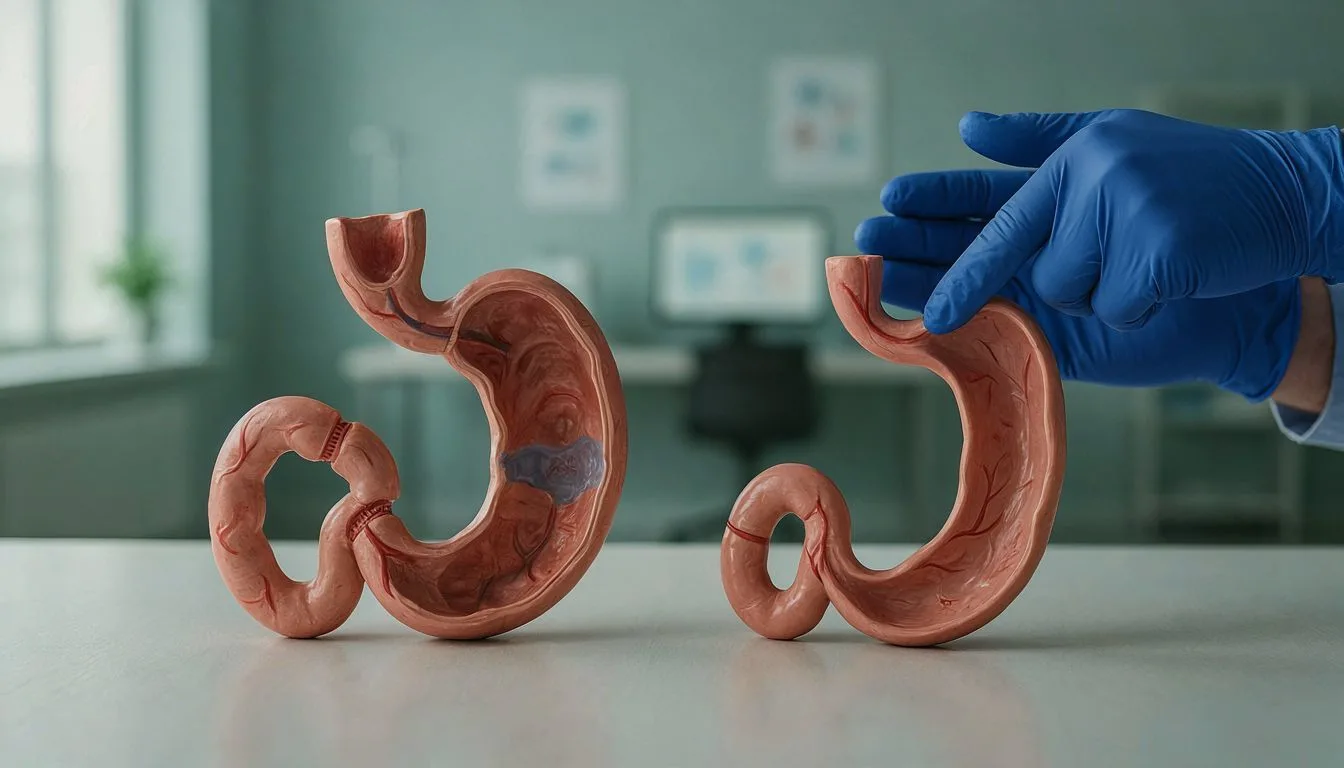
At their core, both operations shrink the stomach and reroute food past part of the small intestine — but they get there in structurally different ways. The Roux-en-Y gastric bypass creates a small stomach pouch and connects it to the intestine with two anastomoses, meaning two surgical connections: one joining the pouch to the bowel, and a second reconnecting the diverted digestive juices further downstream.
The mini gastric bypass, as its name suggests, simplifies this. It uses a longer, narrow stomach tube and requires only a single connection, which is why surgeons often describe it as a technically shorter procedure.
That single-connection design also creates a longer stretch of intestine where bile and digestive juices can mix with food — the key anatomical feature that separates the two operations. This one structural difference shapes nearly everything else worth comparing: how each surgery is performed, the weight loss you can expect, the specific risks involved, and what daily life looks like afterward.
How Each Procedure Is Performed Step by Step

Abstract anatomy is one thing; knowing what actually happens while you are under anesthesia is another. Both operations are performed laparoscopically through several small incisions and take roughly one to two hours, but the sequence of steps — and the number of connections your surgeon creates — is where they genuinely diverge.
Here is how each operation unfolds in the operating room:
- Pouch creation: In both procedures, the surgeon divides the stomach with a stapler to create a small pouch — about the size of an egg — that holds only a fraction of normal food volume.
- Roux-en-Y connection: The surgeon separates a segment of small intestine, attaches one end to the new pouch, and joins it further down the bowel, creating two anastomoses (connection points).
- Mini bypass connection: The surgeon pulls a loop of intestine up and connects it directly to the pouch with a single stapled opening — one anastomosis instead of two.
- Leak testing: In both operations, the surgeon checks every staple line for leaks before closing, typically with an air or dye test.
That single-connection design is why the mini bypass is usually fifteen to thirty minutes faster and involves fewer stapled lines. The Roux-en-Y’s second connection takes more time and adds a technical step, but it also allows the surgeon to reroute digestive juices in a more controlled way — a distinction that matters when we look at complications later.
Weight Loss Results: Which Surgery Delivers More?
When it comes to raw numbers, most head-to-head studies show that both operations deliver remarkably similar weight loss. In the first year after surgery, patients typically lose 60–75% of their excess weight with either procedure, and at the two- and five-year marks, the difference between the two groups is generally small enough that researchers consider it clinically insignificant.
A handful of studies have found a slight edge for the mini gastric bypass, particularly in patients with a higher starting BMI, where the longer, narrower gastric pouch and single-connection design may support marginally faster early loss. Other trials report the opposite or no difference at all — which tells us something important about the strength of the evidence.
The honest answer is that the operation itself matters less than what happens afterward. Factors like adherence to follow-up appointments, protein intake, physical activity, and how well eating habits adapt influence long-term excess weight loss far more than the surgical technique chosen.
So rather than asking which surgery loses more weight, the more useful question — which we’ll turn to next — is which one you can live with safely.
Comparing Complication Risks and Long-Term Safety
Safety is where the two operations genuinely part ways, and the differences matter more than most clinic brochures admit. In the early days after surgery, both carry the same classic risks: bleeding, leaks at the connections, and blood clots. Neither operation has a clear advantage here; outcomes depend far more on your surgeon’s experience than on which technique is chosen.
The long-term picture is more nuanced. Roux-en-Y is the better-studied operation, with decades of follow-up data confirming durable safety. Its two-connection design, however, adds surgical complexity, and internal hernias are a known late complication requiring lifelong awareness. The mini bypass uses a single connection, which lowers some technical risks, but it brings its own signature issue: bile reflux. Because bile flows more freely into the small pouch, some patients experience chronic irritation of the stomach and esophagus, and a minority need conversion to Roux-en-Y for relief.
Nutritionally, both operations demand the same commitment: daily vitamin and mineral supplementation, plus regular blood work. Deficiencies in iron, calcium, and B12 occur with either procedure when follow-up lapses.
Evidence points to comparable safety when both are done well — the honest answer is that the right choice depends on your reflux history, anatomy, and your surgeon’s specific results with each technique.
Recovery Times and Lifestyle Changes After Surgery
Recovery in the first days is remarkably similar for both operations. Most patients go home within one to two days, walk the same evening, and return to light work in two to three weeks. Because both are performed laparoscopically, neither leaves you with a meaningfully harder healing period than the other.
Where the paths diverge is in long-term living. Both require permanent changes: small, protein-first meals, slow eating, no drinking with food, and daily vitamin and mineral supplementation for life. Iron, calcium, vitamin B12, and vitamin D become non-negotiable parts of your routine either way.
Follow-up differs slightly. Roux-en-Y patients typically need a few more endoscopic checks over the years, since the disconnected stomach remnant still requires surveillance. Mini bypass follow-up is somewhat simpler, though your team will watch for bile reflux symptoms, especially in the first year.
Neither surgery offers an “easier” recovery — both demand genuine commitment to new eating habits and lifelong nutritional care. The right choice depends on your anatomy, reflux history, and health goals, best decided together with your surgeon after a full evaluation.
FAQs
How long does recovery take after each procedure?
Recovery after both procedures is similar in most respects: most patients spend one to two nights in the hospital and return to normal daily activities within two to three weeks. Mini Gastric Bypass often involves slightly less operative time and, in some cases, a somewhat easier early recovery because it uses a single connection rather than the multiple connections of Roux-en-Y. Full internal healing typically takes about six to eight weeks for both, after which you can gradually return to exercise and a regular diet under your surgeon's guidance.
Which surgery leads to more weight loss in the first year?
In the first year, mini gastric bypass typically leads to slightly more weight loss than Roux-en-Y, with most studies showing around 5–10% greater excess weight loss. This advantage largely comes from its longer, single-anastomosis route, which combines restriction with more malabsorption. The difference is modest and individual results vary considerably. Long-term outcomes between the two procedures tend to even out, especially when paired with consistent lifestyle habits.
Is bile reflux a bigger risk with one of the two operations?
Yes, bile reflux is a bigger concern with mini gastric bypass. Because the mini bypass creates a single long loop, bile can potentially flow back into the stomach pouch and esophagus, which is why surgeons are cautious recommending it for patients with significant reflux symptoms. Roux-en-Y bypass, with its separate limb construction, provides better protection against bile reflux and is generally the preferred option for patients with GERD or esophagitis.