You had rhinoplasty abroad and are now back in Canada with a swollen nose, instructions in another language, and no clear idea who to call if something feels wrong. Most of the real work happens between surgery and full recovery. The surgeon who operated on you is thousands of kilometers away, and the first few weeks at home — the ones that shape your final result — are now in your hands.
This is a common situation. Many Canadians travel for surgery and return with no local follow-up plan, unsure whether their swelling is normal, whether their medications can be refilled here, or when they should see someone. Rhinoplasty aftercare in Canada comes with its own practical realities: cold dry air, long flights, provincial health coverage that doesn’t touch cosmetic procedures, and a shortage of surgeons who will take on another clinic’s patient.
What follows is practical guidance on managing recovery once you’re home — not medical advice, and not a substitute for a qualified surgeon who can actually examine you.
Planning Your Return Trip and Post-Operative Clearance Before Flying
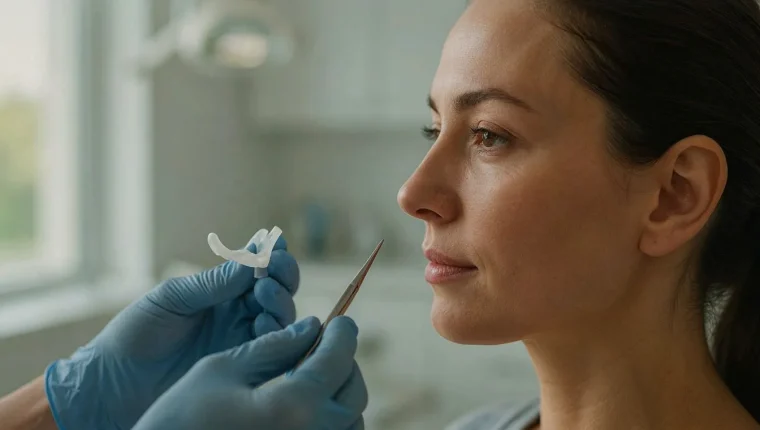
Most surgeons will not clear you to fly until a set number of days have passed, and that window depends on the procedure you had and how your healing is progressing. A closed rhinoplasty with no grafts might allow a flight within a week, while an open approach with cartilage grafting or osteotomies often pushes the minimum to ten to fourteen days. The number that matters is not a general guideline you found online — it is the specific date your own surgeon gives you after examining your nose in person.
Before you leave the clinic, ask for written fit-to-fly clearance that states your procedure, the date of surgery, and the surgeon’s confirmation that you are safe to travel. Carry this document in your hand luggage rather than a checked bag. Alongside it, request a copy of your operative report, implant or graft details, and any post-operative instructions in English. If a flight attendant, border officer, or emergency doctor questions your condition, these papers answer the question before it becomes a problem.
Once you are airborne, cabin pressure and low humidity work against a healing nose. Drink more water than you think you need, use a saline spray or nasal gel as your surgeon permits, and avoid blowing your nose for the entire journey. Keep your head elevated where possible, wear your splint if it is still in place, and set an alarm for any medication due mid-flight.
Before departure, confirm three things: that your prescriptions will last until you can see a Canadian doctor, that you have a direct contact number for your overseas clinic, and that someone at home knows your arrival time and surgical details. Sorting these out at the airport is far harder than sorting them out in the consulting room.
What to Expect During Your First Weeks Back Home
Once you are home, the recovery timeline becomes less about clinical checkpoints and more about settling into a rhythm. The first 72 hours after landing are usually the quietest: expect to sleep propped upright, keep your head elevated on two or three pillows, and avoid bending or lifting anything heavier than a kettle. Most surgeons advise sleeping with your head elevated for at least the first two weeks to limit fluid pooling in the face, which directly affects how much swelling you wake up with each morning.
Week one tends to be the peak. Bruising around the eyes and cheeks is darkest between days two and five, then fades through yellow-green tones by day ten. Swelling, however, is asymmetric and stubborn — one side often looks more puffy than the other, and this is normal, not a sign that something went wrong. Nasal congestion is at its worst in the first week as internal swelling and any residual crusting block airflow. Resist the urge to blow your nose; gentle saline sprays and humidified air are safer.
Activity limits are stricter than most people expect. No strenuous exercise, no heavy housework, and no swimming for roughly three to four weeks. Walking is encouraged because it supports circulation, but keep it short and level. Showering is fine once your surgeon confirms it, though hot water and steam can increase swelling, so lukewarm is better. Keep your face out of direct shower spray for the first week.
By weeks two and three, most people notice a real shift: bruising is largely gone, breathing feels easier, and the reflection in the mirror starts to look more like a face than a healing project. Emotional adjustment lags behind physical healing, though. It is common to feel anxious, critical, or detached from your new appearance during this window. That reaction usually softens as swelling continues to drop over the following months.
Managing Swelling, Bruising, and Nasal Congestion in a Colder Climate
Canadian winters add a layer of discomfort that most recovery guides written for warmer climates never mention. Indoor heating pulls moisture out of the air, and heated homes often sit between 20 and 30 percent humidity — well below the 40 to 60 percent range that keeps nasal linings comfortable. For a healing nose, that dryness can make crusting, scabbing, and that heavy, blocked feeling noticeably worse.
A cool-mist humidifier in the bedroom is the single most useful purchase you can make in your first weeks home. Pair it with saline nasal sprays or rinses, which loosen crusts and moisturize the passages without irritating fresh tissue. Run them as often as your surgeon advised, and avoid medicated decongestant sprays — they can cause rebound congestion and are usually off-limits early in recovery. If you need more relief, ask your follow-up clinic before adding anything new.
Cold air itself is not dangerous to a healing nose, but wind and frost can make it ache and stiffen. A loose scarf worn across the lower face, rather than a tight hat pulled down over the bridge, protects the area without pressing on it. Glasses and hoods that rest on the nose are worth avoiding for now.
Some congestion is expected and normal for weeks. What matters is the pattern: congestion that steadily improves is healing, while congestion that suddenly worsens alongside fever, thick yellow-green discharge, or one-sided facial pain deserves a call to a doctor. When in doubt, treat it as a question worth asking rather than a symptom worth waiting out.
Finding a Local Surgeon or Clinic for Follow-Up Care in Canada

Finding a Canadian clinician who will take on someone else’s post-operative patient takes more than a phone call. Many surgeons are understandably cautious about assuming care for a procedure they did not perform, so the most productive approach is to search specifically for a rhinoplasty or facial plastic surgeon who openly states they accept post-operative follow-up for patients operated on elsewhere. When you call, lead with that request rather than asking for a second opinion — it frames you as a patient seeking monitoring, not a dissatisfied one seeking revision, and it dramatically improves your chances of a yes.
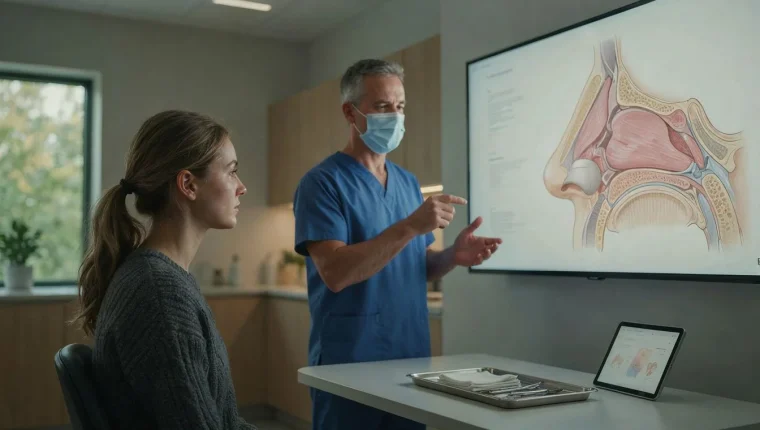
Before any appointment, assemble a complete record package from your operating surgeon: the operative notes, implant or graft details, pre- and post-operative photographs, your current medication list, and any imaging. Ask the original clinic to send these directly to the Canadian office, and bring printed copies as backup. Clinicians can assess healing, symmetry, and airway function far more accurately with this documentation than with memory alone.
Come prepared with pointed questions. What exactly does the follow-up include — examination only, or also steroid injections, taping guidance, or splint removal? How many visits does the plan involve, and at what point would the clinician recommend you return to your original surgeon? Fees for non-surgical follow-up are frequently not covered, so ask about the cost structure before you book; the specifics of coverage and reimbursement belong to a separate conversation, but knowing the out-of-pocket number now prevents surprises.
If you cannot secure a surgeon quickly, a family doctor or a telehealth consultation can serve as a useful interim layer. They can check for infection, manage prescriptions, and document your progress while you wait for a specialist opening — and that paper trail becomes valuable if you ever need to justify a future procedure.
Medication, Prescriptions, and Insurance Considerations After Rhinoplasty Abroad

Prescriptions rarely stop cleanly when you cross a border. If your surgeon abroad gave you a paper prescription or a limited supply of medications, you need a Canadian prescriber willing to continue them before you run out. Some drugs used after rhinoplasty, including certain painkillers and antibiotics, are controlled or have different brand names and strengths in Canada, so a local clinician may need to verify the original order rather than simply reissue it. Bring your discharge summary, the exact drug names, doses, and your surgeon’s contact details to that appointment.
Provincial health coverage generally does not pay for elective cosmetic surgery performed outside Canada, and it will not reimburse the surgeon’s fee. What it may cover is medically necessary follow-up for complications, depending on your province and how the care is classified. Travel insurance and private extended health plans are where reimbursement usually lives, but only if you kept the paperwork: itemized invoices, proof of payment, the operative report, and a diagnosis code. Claim documentation is the part most patients underestimate, and missing receipts are the most common reason claims stall.
Keep a single written record of every medication you take, every allergy, and any adverse reaction, and carry it to each appointment. This prevents a local provider from prescribing something that interacts with what your surgeon already started, and it makes any future follow-up smoother.
When to Seek Urgent Help and How to Protect Your Long-Term Results
Some symptoms after rhinoplasty are genuinely emergencies, and the line between “uncomfortable but normal” and “needs care now” matters more when you are far from the surgeon who operated on you. Go to an emergency department or call 911 for heavy bleeding that will not stop with gentle pressure, a fever above 38.3°C (101°F), difficulty breathing through your mouth, sudden severe pain, vision changes, or swelling that spreads rapidly to your eye or cheek. These can signal infection, a hematoma, or a vascular problem that needs immediate assessment. For anything less acute — increased redness, a persistent low-grade fever, or discharge that smells unusual — contact your original surgeon’s office first, since they know your graft or implant type and can advise on antibiotics or imaging. If you cannot reach them quickly, a local Canadian clinician can assess you and share findings.
Protecting your long-term result comes down to a few consistent habits. Sun protection is the one people underestimate most: UV exposure can darken and thicken scar tissue on the nose for up to a year, so use broad-spectrum SPF 30 or higher daily and a hat when outdoors. Avoid any trauma to the nose — no contact sports, no heavy lifting that strains the face, and be careful with glasses resting on the bridge. Keep every follow-up appointment, even if you feel fine, because subtle internal changes are easier to correct early. And stay consistent with the aftercare routines you have already built, since steady care is what preserves your outcome over the years.
FAQs
How soon after rhinoplasty should I schedule a follow-up with a doctor once Im back in Canada?
Plan your first follow-up within about one to two weeks of returning to Canada, ideally with a doctor who can review your healing and remove any non-dissolvable sutures or splints still in place. If your surgeon abroad has already cleared you for travel, bring your operative notes and post-op instructions to that appointment so the Canadian doctor can assess swelling, airway, and incision healing with full context. For anything beyond routine checks, such as breathing difficulty, increasing pain, fever, or a change in shape, seek care sooner rather than waiting for a scheduled visit.
What signs during rhinoplasty aftercare in Canada mean I should seek urgent medical care?
Seek emergency care in Canada if you develop heavy bleeding that won't stop, sudden severe pain or swelling on one side, vision changes, confusion, a high fever, or difficulty breathing. These can signal a hematoma, infection, or another serious complication that needs immediate attention. Don't wait for a scheduled follow-up—call 911 or go to the nearest emergency department, and contact your surgeon's office as soon as you can.
Can I fly domestically within Canada or resume normal daily activities while my nose is still healing?
You can generally fly domestically within Canada once your surgeon clears you, which is often around 7 to 10 days after surgery, though some doctors prefer waiting longer if there's swelling or you've had packing removed recently. Pressurized cabins and dry air can increase discomfort or minor bleeding, so staying hydrated and using saline spray helps. Light daily activities like walking, working at a desk, or gentle errands are usually fine early on, but avoid strenuous exercise, heavy lifting, and anything that risks bumping your nose until healing is further along. When in doubt, follow your own surgeon's specific timeline, since every recovery is a bit different.