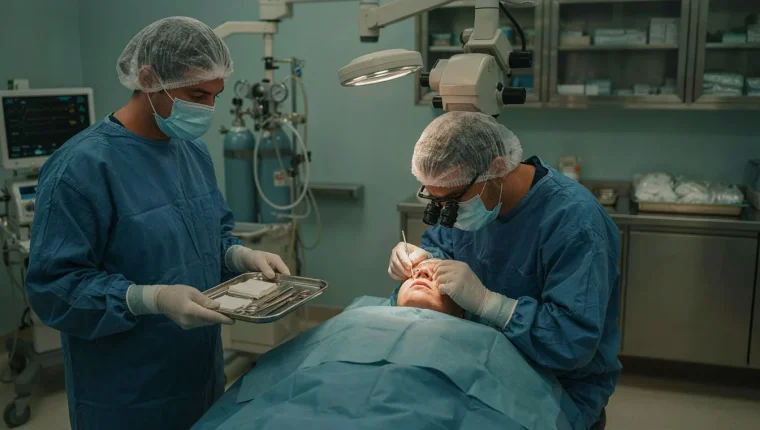
If you’re an American considering eyelid surgery, you’ve probably noticed Turkey often comes up. Board-certified surgeons, modern clinics, and prices 50–70% lower than in the U.S. make eyelid surgery Turkey for Americans a genuinely appealing option, not just a budget shortcut.
But is it actually worth it? That depends on a few things most people don’t think about until they’re already booking flights.
This guide covers the real costs, recovery when you’re far from home, how to vet a surgeon, and risks not shown in glossy before-and-after photos. By the end, you’ll have a clear answer — not a sales pitch.
Why More Americans Are Considering Eyelid Surgery in Turkey
Several forces have converged to push Turkey toward the top of the list for American patients researching cosmetic and functional eyelid procedures. The most obvious driver is economics: quotes for upper and lower blepharoplasty in the U.S. routinely land between $4,000 and $8,000 per procedure when surgeon fees, anesthesia, and facility costs are combined, while comparable Turkish clinics often advertise all-inclusive packages at 50–70% lower. For patients paying out of pocket — which most eyelid surgery patients are, since insurers usually classify it as cosmetic — that gap is not a minor discount. It is the difference between booking a procedure and postponing it indefinitely.
Cost alone rarely explains a trend, though. Turkey’s medical tourism sector has matured into a genuine industry rather than a loose network of cut-rate clinics. Istanbul in particular hosts internationally accredited hospitals and surgeons who perform high volumes of facial procedures, and high surgical volume is what builds the kind of muscle memory that produces consistent results. Many Turkish eyelid surgeons also train or practice in Europe, speak fluent English, and run consultation pipelines designed specifically for overseas patients — video assessments, English-language consent forms, and coordinated airport transfers.
Cultural and demographic factors matter too. Eyelid surgery is one of the most requested procedures among patients of Turkish, Middle Eastern, and Mediterranean descent, which means many surgeons in the country have deep experience with the thicker skin, prominent fat pads, and hooded upper lids common in those populations. American patients with similar anatomy often find that this specialization translates into more nuanced recommendations than they receive domestically.
There is also a practical pull: shorter wait times. In the U.S., scheduling a popular plastic surgeon can mean a consultation months out and a surgery date further still. Turkish clinics frequently offer consultations within days and can book procedures within weeks. For Americans dealing with vision obstruction from heavy upper lids — a functional problem, not just a cosmetic one — that speed can be genuinely meaningful. None of this makes Turkey automatically the right choice, but it explains why the question has shifted from “Is this even possible?” to “Is this actually worth it?”
How Much Eyelid Surgery in Turkey Costs for American Patients
American patients comparing quotes quickly notice that Turkish clinics rarely publish a single flat fee. Instead, the price depends on what the surgeon actually does once you are on the table. A straightforward upper lid lift for hooded, drooping skin sits at the lower end, while a combined upper and lower blepharoplasty with fat repositioning moves toward the higher end. As a working range, most reputable Istanbul and Antalya clinics quote American patients somewhere between $1,500 and $3,500 per procedure, with combined cases landing nearer the top of that band.
That figure covers more than the surgeon’s time, which is where the real savings appear. A typical all-inclusive package bundles several items that U.S. providers bill separately:
- Surgeon and anesthesia fees — both are folded into the quoted price rather than invoiced individually.
- Hospital or accredited clinic charges — facility use, operating room time, and standard medications.
- Pre-operative testing — blood work and basic cardiac clearance required before sedation.
- Follow-up visits — usually two or three checks during the first week after surgery.
- Airport transfers and hotel stay — many packages include three to seven nights near the clinic.
For context, the same combined upper and lower procedure in the United States frequently runs $6,000 to $12,000, and that total often excludes anesthesia or facility costs. The gap explains why the 50–70% figure keeps surfacing in patient forums.
Two variables can quietly change your final number. First, revision cases cost more because scar tissue makes the dissection slower and less predictable. Second, currency movement matters: quotes are usually set in euros or dollars, but a weaker lira can make local add-ons like extra hotel nights cheaper. Ask for a written itemized quote before paying a deposit, and confirm in writing which items are included versus billed on arrival.
What to Look for in a Qualified Turkish Eyelid Surgeon
Credentials are the first filter, but in Turkey they carry a specific weight that American patients need to understand. The Turkish Ministry of Health requires surgeons performing aesthetic procedures to hold a valid medical license and specialty certification, and many also carry board certification from the Turkish Society of Plastic, Reconstructive and Aesthetic Surgeons or the Turkish Ophthalmological Association for oculoplastic work. Ask for the surgeon’s specialty directly. Eyelid surgery sits at the intersection of plastic surgery and ophthalmology, so a surgeon with formal training in either field—and documented experience with blepharoplasty specifically—is a safer bet than a general aesthetic practitioner.
Volume matters as much as paperwork. A surgeon who performs hundreds of eyelid procedures each year will have a refined technique, predictable outcomes, and a clear protocol for complications. Ask how many blepharoplasties they complete annually and whether they can share before-and-after photos of patients with similar anatomy to yours. Americans of European, African, Asian, and Latino descent have different eyelid structures, and a surgeon who only operates on one demographic may not have the nuance your case requires.
Communication is the next checkpoint. Your consultation should cover surgical goals, incision placement, anesthesia type, and realistic recovery expectations—without pressure or vague promises. If the surgeon or their coordinator cannot answer detailed questions in fluent English, or if you are routed to a sales agent instead of the medical team, treat that as a warning sign. Reputable clinics provide direct access to the operating surgeon before you commit.
Finally, verify the facility itself. Eyelid surgery should take place in a fully accredited hospital or a licensed surgical center with proper anesthesia support and emergency protocols. Ask whether the surgeon holds hospital privileges and whether follow-up care is included in the quoted price—not just a single post-op visit, but a structured schedule that extends through the first few weeks. A qualified surgeon will welcome these questions. One who dodges them is telling you something important.
How to Plan Travel, Recovery, and Time Off Around Your Procedure

Timing is where most American patients either set themselves up for a smooth trip or create unnecessary stress. The practical reality is that upper and lower eyelid surgery is usually an outpatient procedure, so you won’t be admitted overnight — but you also won’t be sightseeing the day after. Most surgeons ask patients to stay in Turkey for roughly 7 to 10 days before flying home, and that window is not arbitrary. It covers your surgery day, the first 24 to 48 hours of swelling and cold compresses, a post-op check, and enough buffer for your surgeon to confirm that healing is tracking normally before you board a long-haul flight.
Work backward from that number. If you have a desk job and can work remotely, many patients feel ready to answer emails within four to five days, though screens and eye strain can be uncomfortable. If your job involves physical exertion, heavy lifting, or a public-facing appearance, plan for at least two weeks off, and closer to three if you want bruising and swelling substantially faded before returning to a workplace. The single most useful planning decision is scheduling your procedure at the front of a longer leave block rather than squeezing it into a short gap.
Logistics matter as much as the calendar. Book a hotel within walking distance of the clinic or arrange reliable transport, since you shouldn’t be navigating unfamiliar public transit with bandages and blurred vision. Pack sunglasses, a loose-fitting shirt that buttons in front (pulling a top over your head is awkward early on), and any prescriptions your surgeon recommends. If you’re traveling with a companion, they can handle check-in, luggage, and pharmacy runs during the first two days — this alone makes the trip considerably easier.
Build in a final in-person follow-up before departure, and confirm in writing how remote check-ins will work once you’re back in the U.S. Ask your surgeon which photographs or symptoms they want sent, and how quickly they respond. That handoff is what keeps your recovery on track after you leave Turkey.
Risks, Complications, and Aftercare When Flying Home to the U.S.
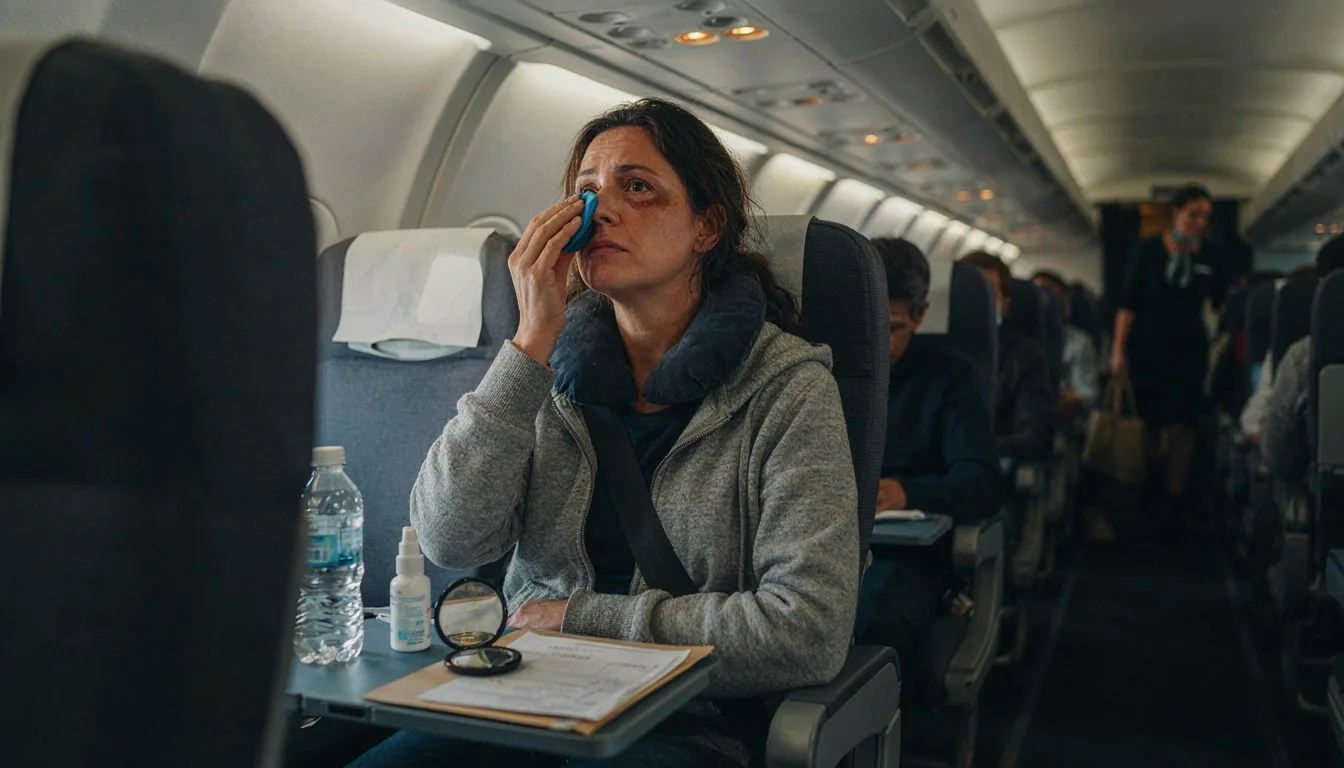
The flight home is where many American patients first feel genuinely uncertain about their decision. You wake up in a hotel near the clinic, still slightly swollen, and within a day or two you’re sitting in economy class for ten-plus hours with dry, recycled cabin air and nowhere to properly ice your eyes. Most surgeons consider you safe to fly once the risk of bleeding has dropped, typically around 7 to 10 days after surgery, but “safe to fly” and “comfortable to fly” are two different things. Cabin pressure, low humidity, and immobility all work against fresh surgical wounds, and the person checking on you is now a flight attendant rather than the surgeon who operated.
Complications after eyelid surgery are uncommon but not trivial, and the ones that matter most on a long-haul flight fall into a few predictable categories:
- Bleeding and hematoma: A small bleed behind the eyelid can accumulate into a collection that presses on the eye. This is the single most time-sensitive complication, and it usually shows up in the first 24 to 48 hours, which is why most surgeons want you near the clinic during that window.
- Infection: Signs include increasing redness, warmth, pus, or fever rather than the normal post-operative swelling. Oral antibiotics are usually enough if caught early, but you need a clinician to look at it.
- Dry eye and exposure: Eyelid surgery can temporarily change how well your lids close and how your tear film spreads. Cabin air makes this worse, and untreated dryness can lead to corneal irritation.
- Asymmetry or overcorrection: Some unevenness is normal while swelling resolves, but a visibly retracted lid or a gap that won’t close needs assessment rather than patience.
- Deep vein thrombosis: Prolonged immobility after any surgery raises clot risk. Compression socks, aisle seats, and periodic walking are simple mitigations.
Aftercare on the plane is mostly about moisture, movement, and knowing your escalation plan. Preservative-free lubricating drops every hour or two, a travel pillow that keeps your head elevated, and avoiding alcohol and sedatives are standard advice. Before you leave Turkey, ask your surgeon for a written summary in English, the name of a U.S. physician they’d recommend for follow-up, and a direct contact method for the first two weeks. If you have a complication at 35,000 feet, the realistic options are limited, so the goal is to make sure you’re not flying while one is developing.
Is Eyelid Surgery Turkey for Americans Actually Worth It Long-Term
Long-term value is where the arithmetic of eyelid surgery in Turkey for Americans becomes more honest than the headline price suggests. A blepharoplasty result is not a one-year purchase. Upper eyelid skin continues to descend with age, and a well-executed procedure typically holds its cosmetic benefit for five to ten years before natural aging reasserts itself. Judged across that window, a $2,000 to $3,500 Turkish procedure versus a $6,000 to $12,000 U.S. one can save several thousand dollars even after flights, hotels, and a companion’s travel costs are added.
That math only works if the result itself is durable. Revision surgery is the variable that quietly erases savings. A poorly positioned incision, insufficient skin removal, or an overcorrected lid that leaves the eye dry can require a corrective operation in the United States, where revision pricing is often higher than primary surgery. One revision can consume the entire margin Turkey offered.
Aftercare is the other long-term cost. American patients who fly home within 7 to 10 days leave behind the surgeon who knows their healing pattern. Most reputable Turkish clinics manage this through structured remote follow-up, but a U.S. ophthalmologist or oculoplastic surgeon willing to monitor an outside procedure is not guaranteed, and some decline. Finding one before departure is the practical safeguard.
The realistic verdict: for a healthy patient with realistic expectations, a qualified surgeon, and a genuine willingness to return for follow-up if needed, the long-term value is strong. For anyone treating price as the primary filter, the savings are fragile. The deciding factor is not the country but whether the surgical relationship can survive the distance.
FAQs
How much can Americans typically save on eyelid surgery in Turkey compared to prices in the United States?
Americans typically save between 50 and 70 percent on eyelid surgery in Turkey compared to U.S. prices. While a blepharoplasty in the United States often costs $3,000 to $6,000 per procedure, the same surgery in Turkey generally ranges from $1,000 to $2,500. These savings reflect lower operating costs, favorable exchange rates, and competitive medical tourism pricing, though patients should factor in travel and accommodation expenses.
Is eyelid surgery Turkey for Americans safe when performed by board-certified surgeons in accredited hospitals?
Yes, eyelid surgery in Turkey is generally safe for American patients when a board-certified plastic or oculoplastic surgeon operates in a JCI-accredited or Ministry of Health-licensed hospital. These facilities follow international sterilization, anesthesia, and patient-safety protocols comparable to U.S. standards. The main risks stem from choosing unverified clinics or non-specialist providers, so confirming the surgeon's certification and the hospital's accreditation before booking is essential.
What should Americans know about recovery time and flying home after eyelid surgery in Turkey?
Most surgeons advise waiting at least 7 to 10 days after eyelid surgery before flying, and many recommend 10 to 14 days to allow initial swelling and bruising to subside and to attend a post-operative check. Long-haul flights from Turkey to the US increase the risk of dry eyes and fluid retention, so use lubricating eye drops, stay hydrated, and avoid straining or heavy lifting. Airlines and surgeons generally require a fit-to-fly note, and you should confirm your specific clearance with your operating surgeon before booking return travel.