If you’re a Canadian comparing eyelid surgery in Turkey with having it done at home, you’re likely weighing two very different costs and feelings. The price gap is real, and so is the doubt that comes with it. This guide addresses that tension.
We’ll look at eyelid surgery Turkey for Canadians as a practical decision, not a pitch. That means the full cost picture, including the extras people forget to budget for. It means asking whether Turkish clinics meet the standards you’d expect from Canadian care. It means the actual timeline, from landing in Istanbul to flying home, and what recovery really looks like.
We’ll also cover what can go wrong, and how difficult a fix becomes once you’re back on Canadian soil. By the end, you should have enough to reach your own verdict, because the right answer depends on your priorities, not someone else’s.
Why Canadians Consider Eyelid Surgery in Turkey
Most Canadians who start researching eyelid surgery abroad aren’t chasing a bargain for its own sake. They’re responding to a system that makes them wait, pay more than they expected, or both. Blepharoplasty — whether it’s upper lids that droop into your field of vision or lower lids that make you look permanently tired — is often classified as cosmetic in Canada unless it’s proven to impair sight. That means no provincial coverage, and a price tag that can run several thousand dollars at a private clinic in Toronto or Vancouver.
Wait times add another layer. Even when a procedure is deemed medically necessary, referrals to a plastic surgeon can take months, and OR schedules in some provinces are backed up well beyond that. For someone dealing with a functional issue or a milestone event, that timeline feels unreasonable.
There’s also a supply question. Turkey has built a reputation for high-volume oculoplastic and aesthetic surgery, meaning many surgeons there perform eyelid procedures weekly rather than occasionally. For Canadians, that volume translates into a kind of confidence — the sense that the person operating has seen this exact anatomy hundreds of times.
Personal reasons matter too. Plenty of Canadians have family in Turkey, or they’ve been meaning to visit Istanbul or Antalya anyway. Folding a procedure into an existing trip changes the math entirely. And word-of-mouth travels fast: diaspora communities share surgeon recommendations, and online before-and-after galleries give prospective patients a level of visual evidence that’s hard to find closer to home.
Typical Costs and What Canadian Patients Actually Pay
Turkish clinics often advertise eyelid surgery at prices that look almost too good to be true, and for many Canadians, that headline number is the first thing that grabs attention. Quotes for upper and lower blepharoplasty commonly fall in the range of $1,800 to $3,500 CAD, depending on whether the procedure is functional, cosmetic, or a combination of both. Some packages bundle in hospital fees, anesthesia, and a short hotel stay, while others quote a base price that balloons once you add the essentials. The gap between the advertised figure and the final bill is where most surprises live.
What Canadians often overlook is the full cost of getting there and staying there. Return flights from Toronto, Vancouver, or Montreal to Istanbul can run anywhere from $900 to $1,800 depending on the season and how far ahead you book. Accommodation for a week to ten days near the clinic adds another $500 to $1,200, and private transfers, meals, and a companion’s expenses stack on top. If you’re traveling with a partner or family member, double the hotel and flight line items. None of this is exotic—it’s just the reality of medical travel that a quote sheet rarely spells out.
Currency conversion and payment methods deserve their own line. Canadian credit cards typically charge a 2.5% foreign transaction fee, and the exchange rate you get at the clinic’s front desk is rarely the mid-market rate you see online. Wiring money through your bank can cost $30 to $50 per transfer plus a spread, and some Turkish clinics prefer cash in euros or US dollars, which means another conversion on your end. Ask upfront whether the quoted price is in CAD, USD, or EUR, and whether taxes or service fees are included.
Finally, clarify what’s actually covered. Pre-op blood work, prescription eye drops, follow-up visits, and compression garments are sometimes included and sometimes billed separately. A realistic all-in budget for a Canadian traveling to Turkey for eyelid surgery usually lands 40% to 60% above the advertised surgical fee once flights, lodging, transfers, and incidentals are counted. That’s still often below Canadian private clinic rates, but it’s a very different number than the one that first caught your eye.
How Turkey's Clinics and Surgeons Compare to Canadian Standards
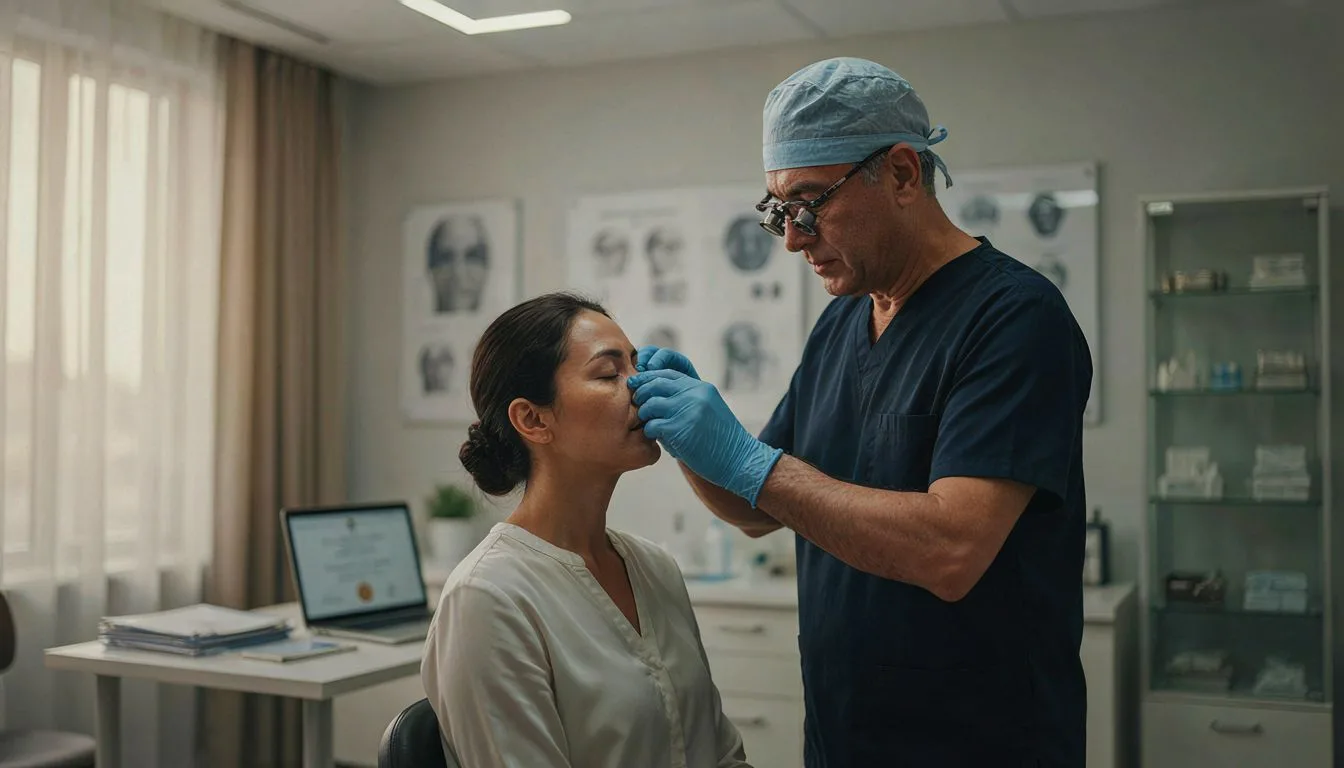
Turkey’s strongest clinics stack up differently than most Canadian patients expect. Rather than replicating the Canadian system, they operate as high-volume surgical centers where oculoplastic specialists may perform several hundred eyelid procedures a year — far more than a typical Canadian surgeon who divides time across a broader practice. That volume builds pattern recognition, but it only matters if the credentials behind it are real.
Turkey’s Ministry of Health requires physicians to hold a valid medical license and, for surgical specialties, recognized board certification. Many eyelid surgeons also belong to the Turkish Society of Plastic, Reconstructive and Aesthetic Surgeons (TSPRAS) or the Turkish Ophthalmological Association’s oculoplastic division. The key word is verifiable: you should be able to confirm a surgeon’s registration number through the Ministry’s online system and cross-check society membership directly, not through a clinic’s own website.
Clinic accreditation is where the comparison gets murkier. Canada leans on provincial college oversight and hospital privileging, while Turkey relies on Ministry inspections plus private accreditations like JCI or ISO. A JCI-accredited hospital affiliation signals real infrastructure standards, but many standalone clinics lack it. Ask which hospital the surgeon holds privileges at, and whether that facility handles emergencies.
Regulation and complaint channels differ too. Canadian patients can file grievances with a provincial college; in Turkey, complaints go through the Ministry or, in serious cases, the courts — a slower and less familiar path. Before booking, ask for the surgeon’s board certification, hospital privileges, revision policy, and who provides follow-up once you’re back in Canada. Those four answers tell you more than any brochure.
Travel, Recovery, and Aftercare Logistics for Canadians

Most reputable Turkish clinics schedule eyelid surgery for the morning of your second or third day in the country, after a pre-operative consultation and any required bloodwork. That means a realistic trip runs seven to ten days from landing to takeoff. The first day or two cover assessment and paperwork; surgery itself takes one to three hours depending on whether you’re having upper lids, lower lids, or both. You’ll typically be cleared to fly home around day seven, once initial swelling has settled and your surgeon has checked the incisions.
Air travel is the part Canadians underestimate. Cabin pressure and long-haul immobility can worsen swelling and, in rare cases, put stress on healing tissue, so most surgeons advise keeping the flight as short as practical and avoiding connections that stretch the journey past twelve hours. Compression, hydration, and walking the aisle help. If you can, book a flexible return date.
Follow-up is the real logistical gap. Your Turkish surgeon will usually offer remote check-ins by photo or video, but a Canadian physician—your family doctor, an optometrist, or a local oculoplastic specialist—should ideally see you in person within the first two weeks home. Line that up before you leave, and ask your Turkish clinic to send operative notes and aftercare instructions your Canadian provider can read.
Plan for at least ten to fourteen days away from demanding work, and longer if your job involves heavy lifting, driving, or public-facing appearances. Arrange help with children or dependents for the first week back, since bending, straining, and disrupted sleep all slow healing. Stock cold compresses, prescribed ointments, and sun protection before you land—not after.
Risks, Complications, and Revision Realities Abroad
Every surgery carries risk, but eyelid procedures abroad add a layer Canadians don’t face at home: distance. The most common complications after blepharoplasty are asymmetry, hollowing or a “skeletonized” look from over-resection of fat, dry eye, lagophthalmos (inability to fully close the eye), and visible scarring. Most are minor and self-resolving, but lagophthalmos and significant asymmetry are the ones that tend to require a second operation. Warning signs worth taking seriously include persistent pain, spreading redness, vision changes, or a wound that won’t stop oozing — any of these warrant urgent local medical attention, even before you contact your surgeon in Turkey.
Revisions are where the cross-border model gets genuinely difficult. A surgeon in Canada will rarely touch another surgeon’s work until at least six to twelve months have passed, and many Canadian oculoplastic surgeons decline to revise overseas cases altogether. If they do accept you, you’re paying Canadian revision prices — often two to three times what the original procedure cost — plus travel, time off work, and the emotional cost of starting over. Flying back to Turkey for a revision is cheaper, but it assumes you still trust the original clinic and can afford another trip.
Legal recourse is the harder truth. Turkish clinics operate under Turkish law, and pursuing a malpractice claim from Canada means hiring Turkish counsel, translating records, and navigating a legal system you don’t know — for damages that rarely justify the expense. Some clinics carry malpractice insurance; many don’t, and “complication coverage” in a package often means a free revision, not compensation.
Lowering risk starts before you book: verify surgeon credentials and board affiliations independently, ask directly how many revisions the clinic performs each year, and confirm in writing what happens if you need follow-up care after returning home. A surgeon who hesitates on any of these questions is answering them.
Is Eyelid Surgery Turkey for Canadians Ultimately Worth It?
There is no universal answer here, only a personal one — and it usually comes down to how you weigh savings against everything that savings asks you to accept. If a Turkish quote of $1,800 to $3,500 CAD sits against $4,000 to $8,000 CAD at home, the gap is real. But that gap buys you a plane ticket, a recovery period away from your own doctor, and a revision pathway that gets complicated the moment you fly home.
You tend to benefit most if you have a straightforward upper eyelid concern, no significant medical history, realistic expectations, and the budget and flexibility to stay in Turkey for the full recovery window rather than rushing home early. You should seriously consider staying in Canada if you have thyroid eye disease, dry eye, previous eyelid surgery, bleeding disorders, or any condition that makes revision surgery more likely — because a fix performed abroad is far harder to arrange than one done down the street.
Before booking anything, answer four questions honestly: Can I afford a complication or revision without financial stress? Do I have a Canadian physician willing to handle follow-up? Am I choosing this clinic for verified credentials, not just price? And am I comfortable with the timeline, not just the result? If any answer is shaky, wait. A decision made slowly is almost always the better one.
FAQs
How much can Canadians realistically save on eyelid surgery in Turkey compared to prices at home?
Canadians typically save 50 to 70 percent on eyelid surgery in Turkey, since blepharoplasty there often costs between $1,500 and $3,500 compared with roughly $4,000 to $8,000 in Canada. These figures usually cover surgeon fees but may exclude flights, accommodation, and aftercare, so the net savings are somewhat lower once travel is added.
Which Turkish clinics or surgeons are most experienced with Canadian patients seeking eyelid surgery?
Clinics in Istanbul such as Estetik International, Clinic Center, and Dr. Serkan Dinar's practice regularly treat Canadian patients for eyelid surgery, and many provide English-speaking coordinators plus virtual consultations to accommodate long-distance planning. Surgeons including Dr. Nuri Battal, Dr. Ercan Karacaoglu, and Dr. Burak Pasinlioğlu have documented experience with international patients and offer blepharoplasty packages that include airport transfers and follow-up care. Because Canadian patients often combine travel with recovery, these providers typically schedule a pre-op consultation one day before surgery and a post-op check before departure. Verify current credentials through the Turkish Society of Plastic, Reconstructive and Aesthetic Surgeons and confirm each surgeon's recent case experience directly, since individual results and availability vary.
What should Canadians know about recovery time and follow-up care after flying home from eyelid surgery in Turkey?
Most surgeons advise waiting at least 7 to 10 days after eyelid surgery before flying, and many recommend staying in Turkey for a post-operative check around day 5 to 7 before you depart. Once home in Canada, arrange a follow-up with your family doctor or an ophthalmologist within the first two weeks so they can check incisions, swelling, and healing. Full recovery from blepharoplasty typically takes several weeks, with residual swelling and bruising fading over 2 to 4 weeks and final results settling by 3 to 6 months. Contact your surgeon or a Canadian doctor promptly if you notice signs of infection, vision changes, severe pain, or asymmetric healing.