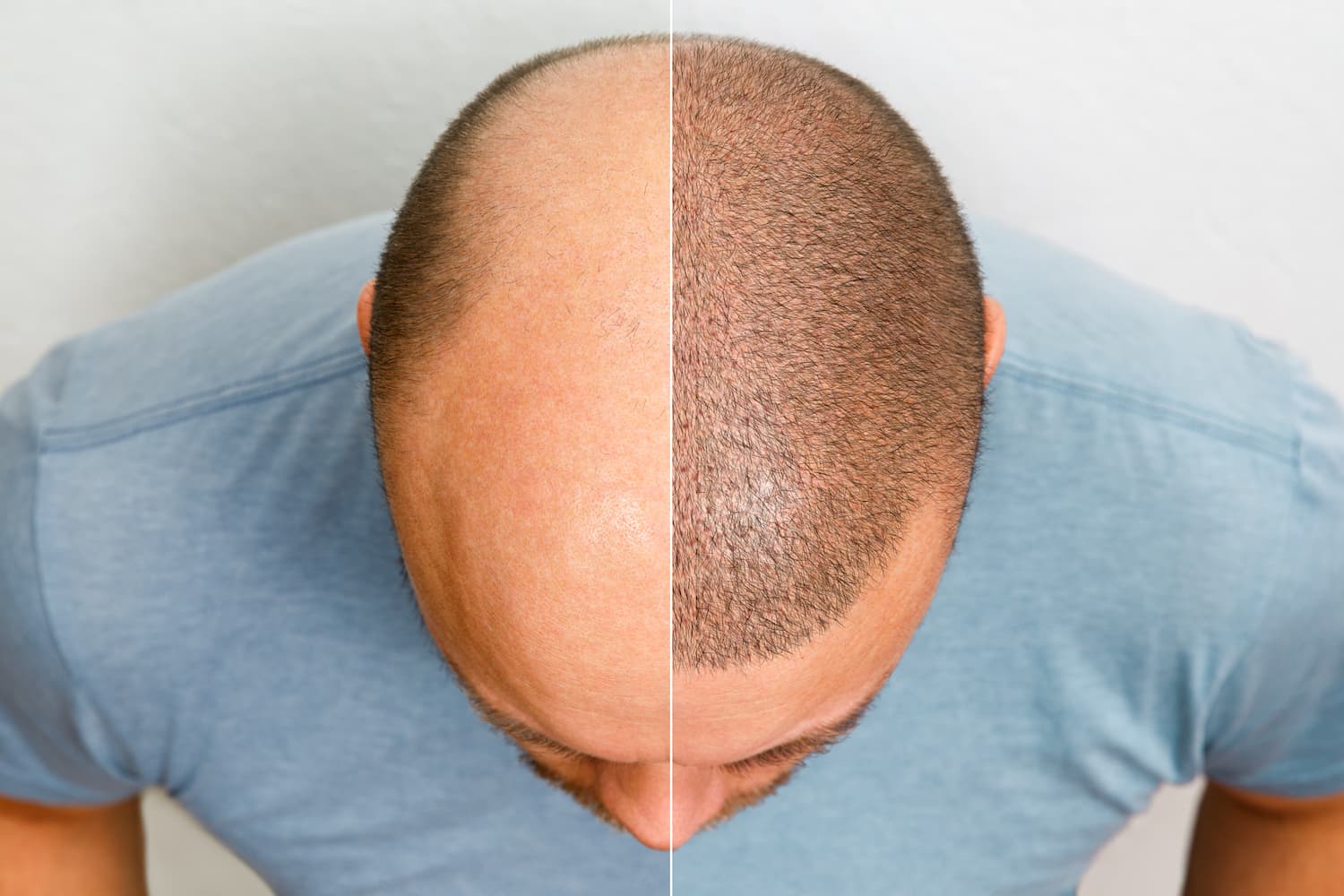
Chest-to-scalp hair transplantation may be an option when the scalp donor area cannot provide enough grafts for restoration. Using chest hair may add coverage, but it is not suitable for everyone and should not be viewed as a direct substitute for scalp hair. Chest follicles can differ in texture, growth cycle, thickness, and length, potentially affecting the final appearance and hair density. This article explains what makes someone a potential candidate, how chest grafts may be used, what recovery can involve, and why results require realistic expectations and careful medical assessment.
Is Chest to Scalp Hair Transplant Suitable for You?
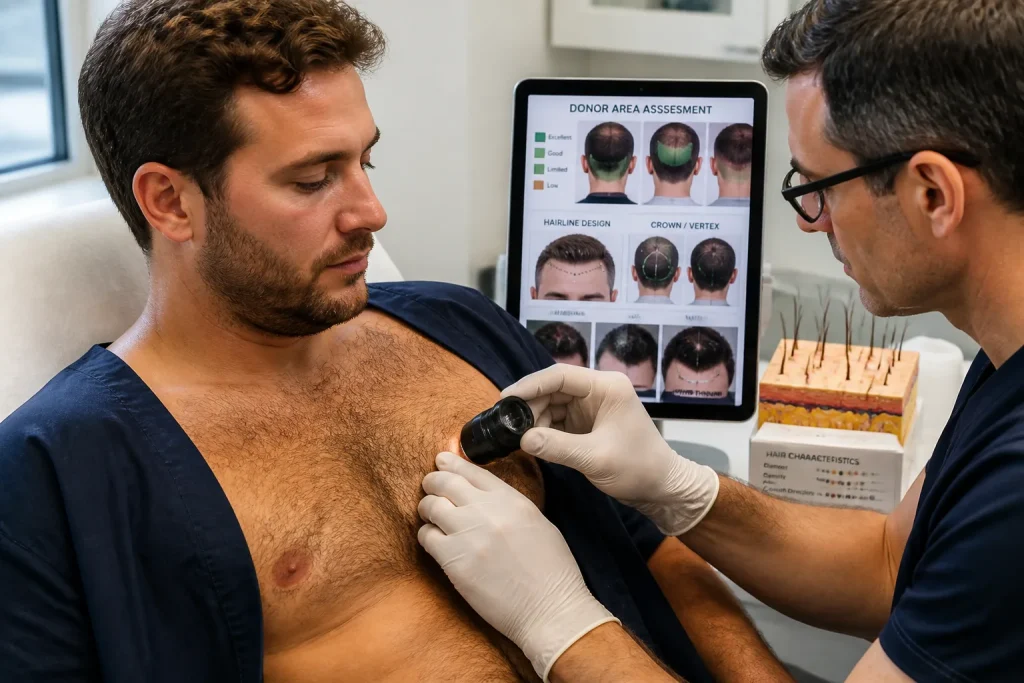
Suitability begins with the donor area, not with the size of the bald region alone. A clinician examines whether the chest provides enough healthy follicles to support the planned restoration and whether harvesting can be performed without creating noticeable changes in the chest. Availability, follicle thickness, growth direction, curl, and the overall condition of the skin all influence this assessment.
The pattern and stability of scalp hair loss also matter. Chest follicles may be considered when scalp donor reserves are limited, particularly for selected cases requiring additional coverage. However, the recipient area must be evaluated carefully to determine where grafts could contribute most effectively to the hairline, crown, or diffuse thinning. Existing scalp hair, expected future loss, and the desired level of density should be considered together rather than judged separately.
Individual candidacy assessment is essential because chest hair varies considerably between patients. A consultation typically includes a scalp and chest examination, review of medical history, discussion of previous procedures, and an evaluation of expectations. Conditions affecting healing, active scalp or skin disease, unstable hair loss, or unrealistic goals may influence the recommendation. The surgeon may also explain whether FUE or another extraction and implantation approach is appropriate for the available follicles.
Chest-to-scalp restoration is therefore not automatically suitable for everyone with advanced hair loss. The best candidates generally have a usable chest donor area, a clearly defined recipient need, and realistic expectations about coverage, texture, and the gradual nature of hair growth.
How Chest Hair Differs from Scalp Hair in Transplantation
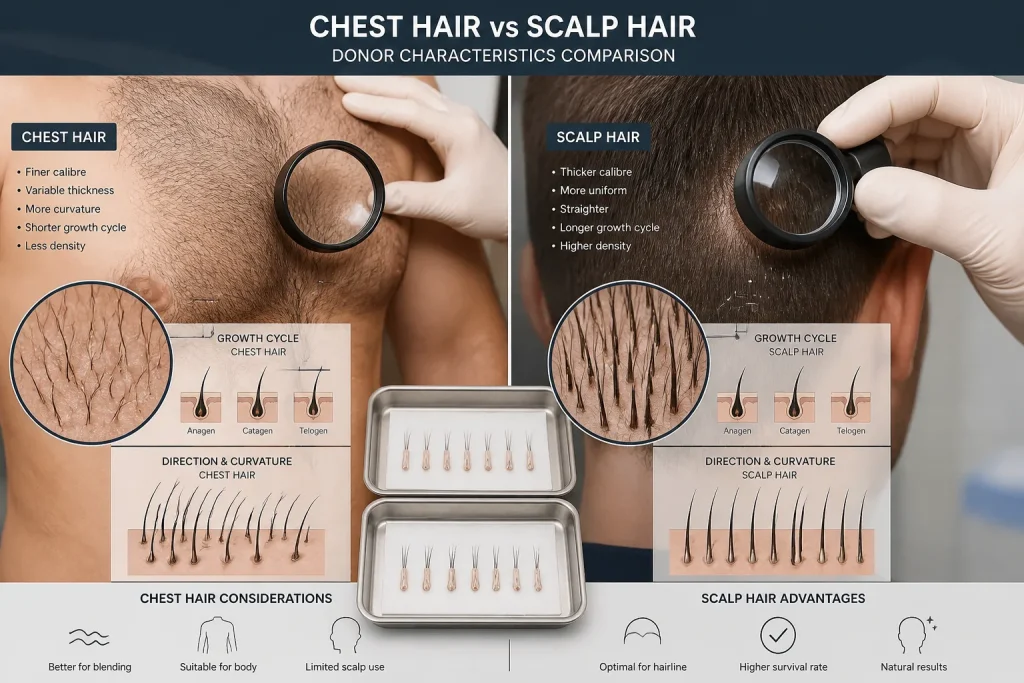
Chest hair behaves differently from scalp hair after transplantation, so donor hairs are selected and positioned with their long-term characteristics in mind. Scalp hair typically has a longer growth phase, can grow considerably longer, and often provides more predictable coverage. Chest hair may have a shorter growth cycle, a lower maximum length, and greater variation in thickness, pigmentation, and texture.
Hair calibre and texture strongly influence the final appearance. Chest follicles may produce finer, softer, or naturally wavier and curlier strands than the surrounding scalp hair. Curvature can make individual grafts harder to orient and may affect how the hair lies once it grows. For this reason, clinicians assess the follicle direction and select placement sites carefully, particularly along the hairline and other areas where irregular angles are more noticeable.
Chest hair can contribute to coverage, especially when scalp donor reserves are limited, but it may not create the same visual density as native scalp grafts. Differences in length potential and strand diameter can produce a softer or less uniform result, although careful distribution can help the transplanted hairs blend with existing growth. Expectations should therefore focus on improved coverage and a natural-looking transition rather than identical behavior across every graft.
What Happens During the Graft Extraction and Implantation Process?
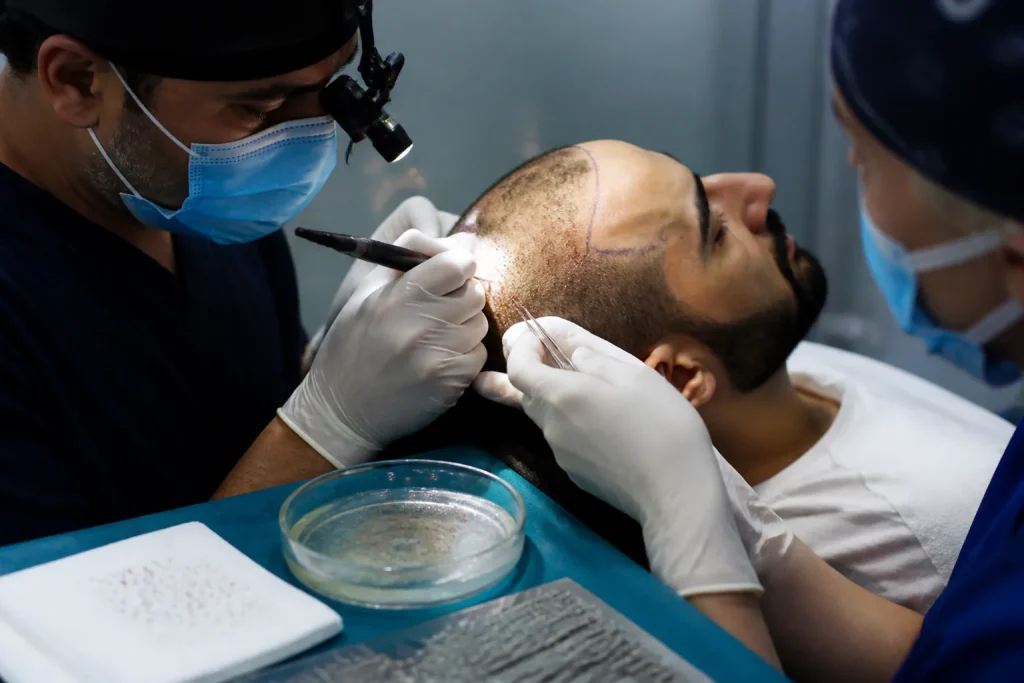
The procedure usually begins with marking the chest donor area and trimming the hair so the follicles can be accessed accurately. Local anaesthesia is then applied to keep the patient comfortable. Using a fine punch, the surgeon removes individual follicular units from the chest, taking care to limit transection and avoid excessive harvesting from one area. Because chest follicles may vary in thickness, curl, and growth direction, grafts are examined and sorted before implantation.
Graft handling is a critical part of the process. Each unit is kept hydrated and protected while the clinical team prepares the recipient area. The surgeon designs the hairline and coverage zones according to the available graft supply, existing scalp hair, and the desired visual transition. Recipient sites are then created at carefully chosen angles and directions so the transplanted hairs follow the natural pattern of surrounding hair.
FUE is commonly considered for individual follicular-unit extraction, while DHI may be used for implantation with a specialized implanter device. The appropriate approach depends on graft characteristics, the treatment area, surgeon preference, and clinic protocol; these terms do not guarantee a particular result. Spacing also matters: placing grafts too closely can compromise circulation, while excessive spacing may produce limited coverage.
Throughout implantation, the team monitors bleeding, graft condition, and the stability of the recipient sites. The number of grafts, their distribution, and the angle of placement are adjusted to support a natural appearance rather than simply maximizing immediate density.
Recovery and Hair Growth After Chest to Scalp Transplantation
Healing after a chest-to-scalp procedure usually develops in stages, and the early appearance does not predict the final result. Small crusts, mild redness, tightness, or swelling may occur on the scalp, while the chest donor area can remain tender or irritated for several days. The clinic’s aftercare instructions should be followed closely, including guidance on washing, sleeping position, exercise, sun exposure, and prescribed medications.
Some implanted hairs may shed during the first few weeks, a temporary response often called shock loss. This can make the recipient area appear unchanged or temporarily thinner before new growth becomes visible. Follicles may begin producing noticeable hairs over the following months, but growth is gradual and uneven rather than immediate. Early hairs can also look fine or fragile as they mature.
Follow-up appointments allow the medical team to check healing and address concerns about grafts, inflammation, or the donor site. Increasing pain, spreading redness, pus, fever, heavy bleeding, or sudden swelling should be reported promptly rather than managed without advice. Because recovery varies with the individual, graft characteristics, and surgical technique, visible changes should be assessed over the timeline provided by the treating clinician.
How to Assess Results, Density, and Long-Term Maintenance
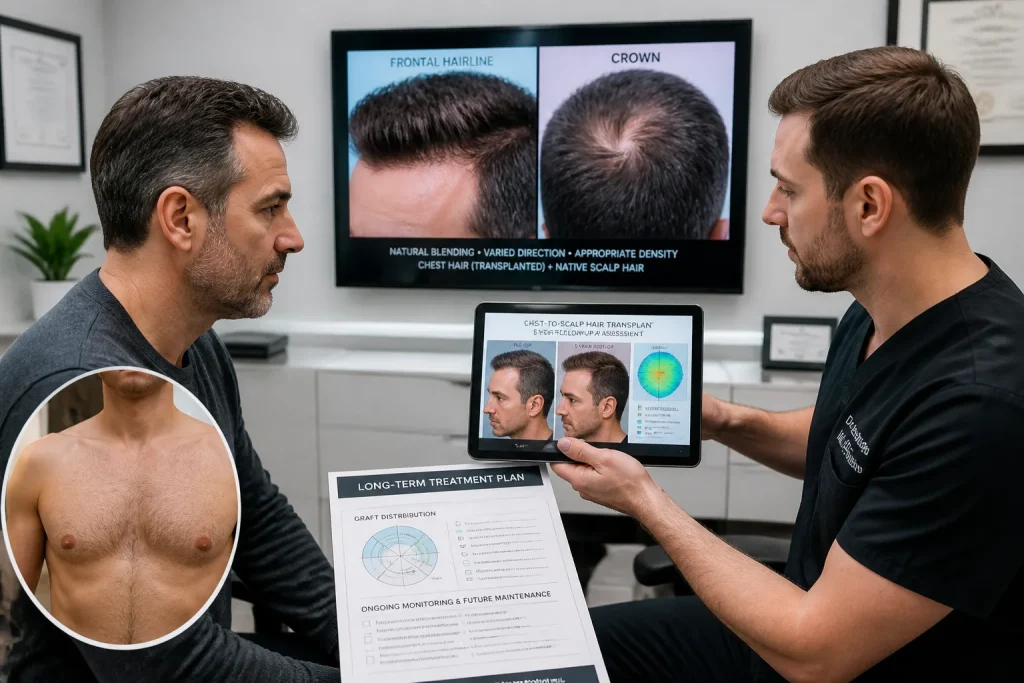
Outcome quality should be judged against the original treatment plan, not by density alone. Review whether the coverage suits the target area, whether the hairline or restoration zone appears balanced, and whether transplanted chest hair blends naturally with surrounding scalp hair. Direction, spacing, calibre, and distribution can affect realism as much as the number of grafts used.
Final assessment should wait until the transplanted hairs have had enough time to mature. Chest hair may have different growth characteristics from native scalp hair, and individual texture, curl, and colour influence how full the result appears. Donor-area limitations also matter: adding more grafts may not be practical or may produce an uneven appearance if the available supply is limited.
Long-term planning should include regular monitoring of native scalp hair, since ongoing thinning can change the balance between transplanted and original hair. Medical maintenance, such as treatment recommended by a qualified clinician, may help protect existing follicles when appropriate. Follow-up appointments allow the clinician to assess density, progression, and whether future treatment should be considered.
FAQs
Can chest hair provide enough grafts for scalp coverage?
Chest hair can provide supplementary grafts for scalp coverage, especially when the scalp donor area lacks sufficient follicles. However, chest hair usually differs in texture, growth cycle, and length, so it may blend best in areas such as the crown rather than the frontal hairline. A qualified hair restoration specialist should assess the chest donor area, graft quality, and expected density before recommending FUE or another procedure.
Does transplanted chest hair grow like natural scalp hair?
Transplanted chest hair generally grows like chest hair, not scalp hair, because its texture, growth cycle, and maximum length remain influenced by the donor follicles. It may add coverage to the scalp, but it often grows more slowly, appears curlier or coarser, and may not reach the same length or density as natural scalp hair. A hair restoration specialist can assess whether chest hair grafts are suitable for FUE or another transplant technique.
What factors affect the final results of this procedure?
Final results depend on factors such as the quality and availability of donor hair, the extent and cause of hair loss, graft placement, healing, genetics, age, and overall health. Following post-procedure aftercare, avoiding smoking, and allowing enough time for new hair growth can also influence hair density and appearance. Individual results vary, and full outcomes may take several months to become visible.