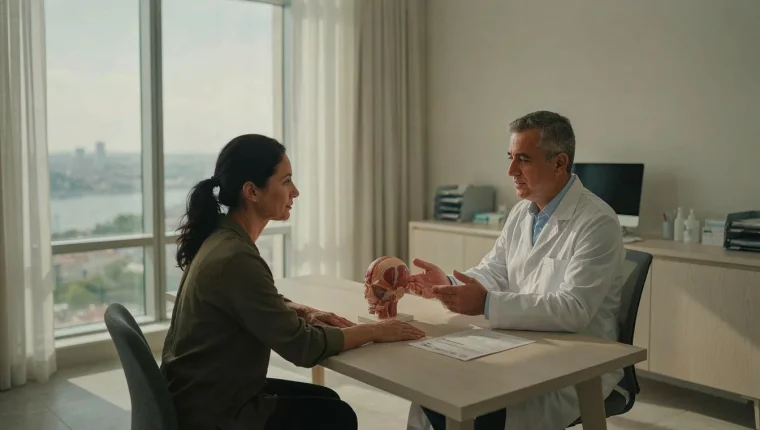
Brow lifts have become one of the most requested cosmetic procedures among Canadians looking to refresh a tired or heavy appearance around the eyes. The problem? At home, the price often ranges from $8,000 to $15,000 — a cost that pushes many to look elsewhere. Searches for brow lift Turkey for Canadians have surged in recent years. Istanbul’s clinics offer the same procedure for 50–70% less, and surgeons perform hundreds of these operations annually. But lower cost alone shouldn’t drive a medical decision. This guide covers what a brow lift involves, what Canadians typically pay in Turkey and Canada, how to vet a surgeon abroad, and the risks to weigh before booking that flight. Let’s get into the details.
Why Canadians Are Choosing Turkey for Brow Lift Surgery
Several forces are converging to make Turkey a natural fit for Canadians seeking a brow lift. The most significant is the country’s mature medical tourism infrastructure — Istanbul alone hosts hundreds of clinics that treat international patients daily, complete with English-speaking coordinators, streamlined consultation processes, and aftercare protocols designed for visitors who will return home within a week or two.
Price is the obvious draw, and there is no point pretending otherwise. Surgical costs in Turkey often run 50 to 70 percent below what Canadians would pay privately at home, and since most brow lifts fall outside provincial health coverage unless they are medically necessary, the out-of-pocket gap becomes very real. The savings typically absorb flights, a hotel stay, and a few days of exploring Istanbul, and still leave a meaningful margin.
But cost alone does not explain the trend. Canadian patients are increasingly drawn to Turkish surgeons who perform high volumes of aesthetic procedures — a brow lift specialist in Istanbul may complete several each week, building a level of routine precision that is harder to find in lower-volume practices at home. Many hold international fellowships, publish, and belong to bodies like ISAPS, giving patients a way to vet credentials before booking anything.
There is also a practical timing advantage. Canadian surgical waitlists for cosmetic procedures can stretch for months; in Turkey, consultations and surgery can be arranged within weeks, which matters for people planning around work schedules or limited vacation days.
The result is a shortlist of reasons that keeps repeating itself among Canadians who have made the journey: value, access, expertise, and speed — each reinforcing the others.
Cost Comparison: Brow Lift Prices in Turkey vs. Canada
The headline numbers are striking: a brow lift in Canada typically runs between CAD $8,000 and $15,000 at a private clinic, while comparable surgery in Turkey usually costs between USD $2,500 and $4,500 — roughly CAD $3,400 to $6,100. That gap of 50–70% is the engine behind the entire all-inclusive medical package model, where the surgical fee is bundled with hospital care and often hotel stays and transfers.
But the sticker price alone doesn’t tell the full story. Canadian patients comparing the two options need to look at what each quote actually contains, because billing practices differ significantly between the two countries.
- Surgeon’s fee: In Canada, this is usually quoted separately from the facility, so the number you first hear is rarely the number you pay.
- Anesthesia and facility charges: Turkish clinics almost always include these in one price, while Canadian surgical centres bill them as distinct line items that can add $2,000–$3,500.
- Pre-operative testing: Bloodwork, ECG, and consultations are typically covered in Turkish package pricing but billed individually in Canada.
- Post-operative follow-up: Many Turkish providers include a set number of check-ups and even medications; confirm exactly how many and whether teleconsultations are offered after you fly home.
- Travel costs: A round-trip flight from Toronto or Vancouver to Istanbul generally adds CAD $1,000–$1,800, plus accommodation for a 7–10 day stay.
Even after adding flights, hotels, and meals, most patients still land at 40–60% below the total Canadian cost. Keep in mind that Canadian quotes may be partially covered or tax-deductible in limited circumstances, though cosmetic brow lifts rarely qualify. When you request quotes, ask both sides for an itemized breakdown in writing — that single document makes the comparison honest and prevents surprises later.
What the Focus Keyword "Brow Lift Turkey for Canadians" Really Means for Your Planning
When you search for a brow lift Turkey for Canadians, the results you see are really a marketplace signal — clinics competing for your attention with packages, before-and-after galleries, and price anchors. Understanding what’s actually behind those listings is the first step in building a realistic plan.
Practically speaking, planning means three things. First, budgeting beyond the headline number: the all-inclusive medical package usually covers surgery, hospital stay, medications, and hotel, but you’ll still need flights, extra recovery days, and a contingency fund of 10–15% for the unexpected. Second, timing: most Canadians should plan a 7–10 day stay in Turkey, since initial follow-up appointments happen before you fly home. Third, communication — reputable clinics assign a patient coordinator who speaks English and handles everything from pre-operative testing to your post-operative check-in schedule.
It’s also worth decoding the marketing language. “Guaranteed results” and “painless technique” are red flags, not selling points; serious surgeons talk about realistic outcomes, healing timelines, and revision policies. A clinic confident in its work will happily discuss what happens if touch-ups are needed and who pays for them.
Use the keyword searches as a starting filter, not a decision tool. The clinics that rank well aren’t automatically the safest — accreditation, surgeon credentials, and transparent communication matter far more than a polished website. Once you’ve narrowed your shortlist to two or three options, the next question becomes whether those surgeons actually hold the qualifications Canadian patients should demand.
Qualifications to Look for in Turkish Plastic Surgeons
The single most important credential when evaluating a surgeon in Turkey is board certification. In Turkey, look for specialists certified by the Turkish Board of Plastic, Reconstructive and Aesthetic Surgery (TPRC), which requires six years of medical school followed by at least five years of dedicated surgical residency. This matters because “cosmetic surgeon” is not a protected title in many countries — only a fully trained plastic surgeon has completed the rigorous hospital-based training needed to manage complications during facial surgery.
Beyond the diploma, dig into the surgeon’s actual experience with brow lifts specifically. Ask how many forehead and brow procedures they perform per year, and request before-and-after photos of patients with similar hairlines, brow positions, and skin types to yours. A skilled surgeon will gladly share these and explain their preferred technique — whether endoscopic, temporal, or coronal — and why it suits your anatomy.
Membership in international bodies adds another layer of reassurance. Many of Turkey’s top surgeons belong to organizations like ISAPS (International Society of Aesthetic Plastic Surgery) or the European Board of Plastic Surgery, both of which require verified training and ongoing education.
Language is a practical qualification people often overlook. Confirm that the surgeon or a dedicated clinical coordinator communicates fluently in English, since clear pre-operative consultation is where realistic expectations are set. During your video consultation, a good surgeon will ask about your medical history, examine your facial muscle structure, and openly discuss limitations — not just promise dramatic results. If someone pressures you to book immediately or dismisses your questions, treat that as a red flag worth taking seriously.
How to Verify Clinic Accreditation and Patient Reviews
A clinic’s website can look impressive while telling you very little, so verifying accreditation independently is one of the smartest steps you can take before booking. Turkey’s top-tier hospitals often hold internationally recognized credentials, and a legitimate clinic will never hesitate to show proof. The gold standard to look for is JCI accreditation (Joint Commission International), which requires facilities to meet the same rigorous safety and quality benchmarks used in hospitals across Canada and the United States.
Beyond official certifications, real patient experiences reveal what brochures never will. Use these practical checks to separate genuinely reputable clinics from clever marketing:
- Cross-check credentials on official registries: Ask for the clinic’s JCI certificate number or Temel Sağlık Hizmetleri (Turkish Ministry of Health) licensing, then verify them directly through the issuing body rather than trusting screenshots on a website.
- Look for reviews on independent platforms: Google Reviews, RealSelf, and Trustpilot give you a wider picture than testimonials handpicked for the clinic’s own site, and patterns across dozens of reviews are far more telling than one glowing comment.
- Ask for direct contact with past Canadian patients: Established clinics that regularly serve international clients can often connect you with a former patient willing to share their honest experience, including the parts that went less smoothly.
- Scrutinize before-and-after photo consistency: Genuine galleries show similar lighting, angles, and timeframes across cases, while inconsistent or overly polished images may be borrowed or heavily edited.
- Check how the clinic handles complications: Reputable providers clearly explain in writing what happens if a revision is needed, whether follow-up care is included in your package, and who is responsible for costs if something goes wrong after you fly home.
It is also worth paying attention to communication quality during the inquiry stage itself. A clinic that answers your questions slowly, vaguely, or with pressure to book quickly is showing you exactly how it will behave after your money has changed hands. Take notes on every exchange, request all promises in writing, and compare at least three clinics before deciding. This small amount of detective work typically takes a few evenings and dramatically reduces your risk of an unpleasant surprise in Istanbul.
Travel, Recovery Timeline, and Aftercare Tips for International Patients
The logistics of getting a brow lift abroad are usually the part patients worry about most, yet Turkey’s medical tourism infrastructure makes it remarkably manageable when you plan it right. Most all-inclusive medical packages already cover airport transfers and accommodation, so your main job is understanding how the days actually unfold.
Plan for a stay of roughly 7 to 10 days in Turkey. A typical brow lift itself takes one to three hours, but international patients need buffer time for pre-operative testing the day before surgery and a final check-up before flying home. Most Turkish clinics will not clear you to fly before 5 to 7 days post-op, when initial swelling has begun to settle and your surgeon has confirmed the incisions are healing cleanly.
Here’s what a realistic recovery timeline looks like: expect noticeable bruising and swelling for the first 5 to 7 days, with most patients feeling presentable enough for public appearance around day 10. Sutures are typically removed within the first week. Residual numbness or tightness across the forehead can linger for several weeks, and final results continue refining over two to three months as tissues soften.
A few aftercare practices matter more than others while you’re still in Turkey. Sleep with your head elevated for the first two weeks to reduce swelling, apply cold compresses as directed in the first 48 hours, and avoid bending, heavy lifting, or strenuous activity for at least two to three weeks. Skip alcohol and smoking entirely during early healing — both genuinely impair tissue recovery and can compromise your results.
Before booking your return flight, confirm your clinic’s post-operative follow-up protocol in writing. Reputable Turkish hospitals often provide remote follow-up through video consultations with your Canadian family physician or a local specialist, and some maintain partnerships with Canadian clinics for suture checks. Ask who to contact if complications arise after you land, and make sure you receive complete operative reports and imaging to hand to any physician back home. Finally, delay any long-haul connecting flights if you can — walking the aisle every hour and staying hydrated dramatically reduces the risk of post-operative circulation issues.
Potential Risks and How to Protect Yourself as a Medical Tourist
Even with a carefully vetted surgeon and an accredited facility, any surgery performed abroad carries a category of risk that domestic patients rarely think about: the complication window that opens after you fly home. This is the honest trade-off at the heart of medical tourism. When a brow lift is done in Toronto or Vancouver, your surgeon can examine you in person at week two or week six. When it’s done in Istanbul, that follow-up happens over video calls and photographs — a gap known in the industry as the continuity-of-care problem, and one you can significantly narrow with the right planning.
The clinical risks themselves are familiar: bleeding, infection, asymmetry, hairline changes, and in rare cases nerve injury affecting forehead movement. Turkish surgeons at reputable hospitals manage these at rates comparable to Western standards, but the real vulnerability is timing. Most clinics ask patients to stay 7–10 days post-surgery, which covers the initial healing phase. Flying too early raises the stakes — cabin pressure and reduced mobility can worsen swelling and, more seriously, elevate the risk of blood clots on long-haul flights. Book your return flight for at least ten days after surgery, and follow your surgeon’s guidance on movement and hydration during travel.
Financial risk is the other side of the coin. While medical complications from qualified surgeons are typically addressed free of charge under the clinic’s guarantee, revision surgery and follow-up care in Canada may not be covered by your provincial health plan because the procedure was elective and performed abroad. Ask your Canadian family doctor before you leave whether they’re willing to manage routine post-operative monitoring, and get any agreement in writing. Travel insurance also deserves scrutiny: most standard policies exclude elective surgery, so look for a policy that explicitly covers complications arising from a planned procedure rather than the procedure itself.
Finally, protect yourself with documentation. Keep copies of your operative report, implant or technique details, surgeon contact information, and before-and-after photos. If a revision is ever needed back home, a Canadian surgeon will rely heavily on these records. Patients who treat the paperwork as seriously as the surgery itself are the ones who navigate international care with the fewest surprises.
FAQs
How much does a brow lift in Turkey cost compared to Canada?
A brow lift in Turkey typically costs between $2,000 and $4,500, while the same procedure in Canada generally ranges from $8,000 to $15,000 CAD. This means patients can often save 50% to 70% by choosing Turkey, even after factoring in flights and accommodation. The price difference is largely due to lower operating costs and favorable exchange rates, not lower standards, as many Turkish clinics are internationally accredited and surgeons perform high volumes of these procedures. Exact pricing varies depending on the technique used (endoscopic, temporal, or coronal) and the surgeon's experience.
How long should Canadians stay in Turkey after a brow lift procedure?
Canadians should typically plan to stay in Turkey for 7 to 10 days after a brow lift procedure. This allows time for the initial surgery, the first post-operative check-up, and suture removal before flying home. Surgeons generally advise waiting at least one week after surgery before air travel to reduce risks such as swelling complications and pressure changes. Your clinic will confirm the exact timeline based on your healing progress at your final follow-up appointment.
Are Turkish clinics safe and accredited for international patients?
Yes, many Turkish clinics are safe and properly accredited for international patients. Leading hospitals hold JCI (Joint Commission International) accreditation, and clinics are regulated by the Turkish Ministry of Health, which specifically licenses facilities serving health tourists. Reputable clinics also employ internationally trained doctors and maintain international patient departments with English-speaking staff. To ensure safety, verify accreditation, check surgeon credentials, and read reviews from previous international patients before booking.