Considering a brow lift in Istanbul? You’re not alone. Every year, thousands of Canadians travel to Turkey for cosmetic surgery, drawn by the combination of experienced surgeons and significantly lower costs — often 50–70% less than private clinics in Toronto or Vancouver. But lower prices raise fair questions: How do you choose a safe, reputable clinic from abroad? What should a brow lift actually cost? And what does the process look like for Canadian patients, from the first video consultation to recovery back home? This guide answers those questions. You’ll learn how the procedure works, what results to realistically expect, how to vet surgeons and clinics in Istanbul, and which practical details — flights, accommodation, aftercare — matter most. No hype, no pressure. Just the information you need to decide whether this route makes sense for you.
Why Canadian Patients Choose Istanbul for a Brow Lift
Every year, thousands of Canadians book flights to Turkey for cosmetic surgery, and the brow lift has become one of the most requested procedures among them. The reasons are practical rather than mysterious. Clinics in Istanbul offer all-inclusive packages that typically cover the surgery, hospital fees, anesthesia, medications, hotel accommodation, and even airport transfers — a level of coordination that Canadian private clinics rarely provide at any price.
The financial gap is the biggest driver. A brow lift in Canada often costs between $8,000 and $15,000 CAD, while the same procedure performed by an experienced, internationally trained surgeon in Istanbul frequently comes in at $2,500 to $4,500 CAD, including travel-related extras. For patients paying out of pocket, that difference can mean combining surgery with a comfortable recovery stay rather than stretching an already tight budget.
Wait times play a role too. In Canada, consultation queues and scheduling delays for elective cosmetic procedures can stretch for months. Istanbul’s clinics, which perform high daily volumes of facial surgery, can usually book a surgery date within a few weeks of initial contact, allowing patients to align the procedure with vacation time or work schedules.
Geography also helps. Direct flights from Toronto and Montreal to Istanbul make the journey manageable, and the time difference is mild enough that follow-up video consultations after returning home are easy to arrange. Many Canadian patients also report that Turkish surgeons communicate proactively through WhatsApp during the healing phase, which adds reassurance once they’re back in Canada. These logistical advantages, combined with cost savings, explain why Istanbul has become the default destination for budget-conscious facial rejuvenation.
Understanding Brow Lift Techniques: Which One Fits Your Forehead?
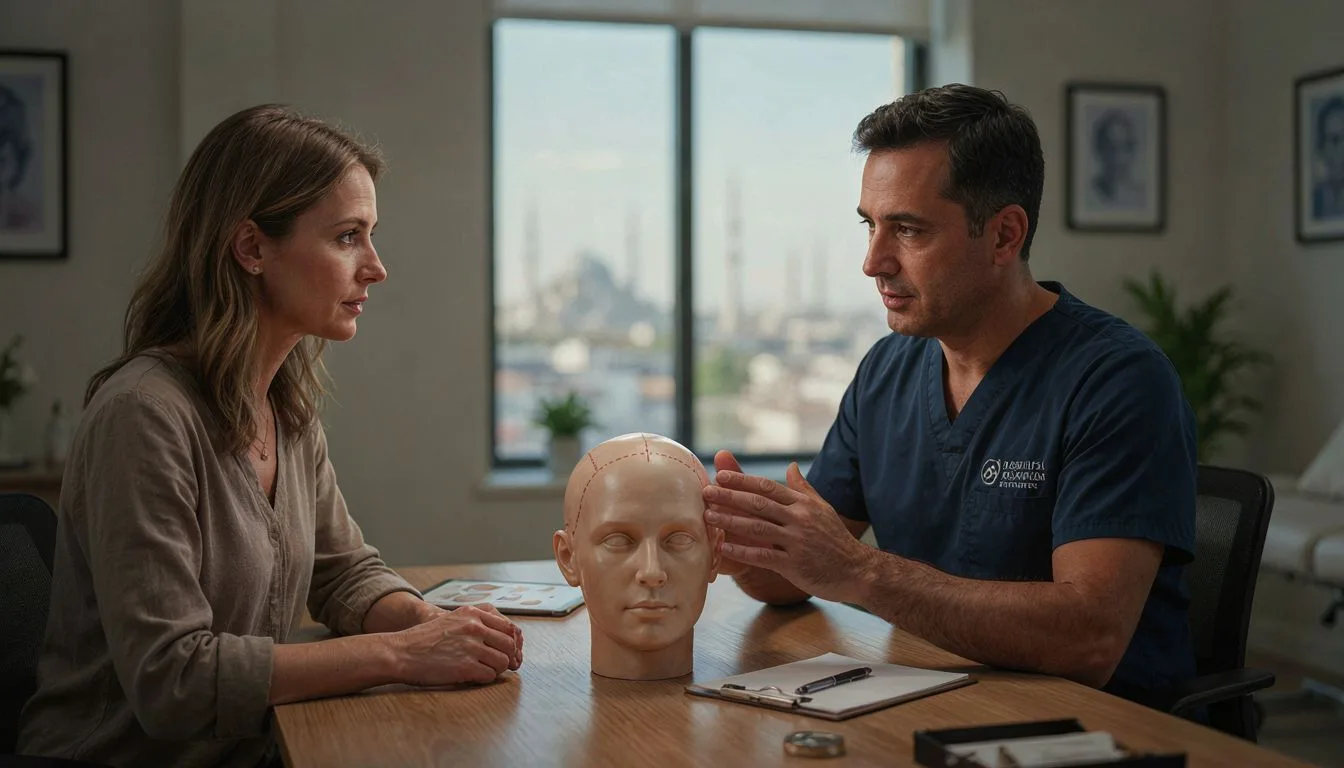
Choosing the right brow lift technique is one of the most important decisions in your surgical journey, and it begins with a thorough evaluation of your unique facial characteristics. No single brow lift method suits everyone; the right choice depends on your hairline position, degree of sagging, forehead anatomy, and how invasive you want the procedure to be. Surgeons in Istanbul typically assess these factors during consultation and recommend the technique that delivers the most natural, durable result for your specific face. Before your consultation, it helps to understand the main options available and what each one is designed to accomplish. The main surgical approaches include:
- Endoscopic brow lift — The most popular modern option, using several small incisions hidden in the hairline and a tiny camera to guide the lift. It suits mild to moderate sagging and offers a shorter recovery with minimal scarring.
- Coronal brow lift — A traditional technique with one incision across the top of the scalp, from ear to ear. It allows the most comprehensive correction and elevation but requires a longer recovery, and it is generally reserved for significant drooping or deeper skin excess.
- Temporal (lateral) brow lift — Focused on lifting the outer third of the eyebrows through incisions in the temple hair. It’s ideal when only the tail of the brow has descended, often creating a subtle, refreshed look.
- Direct brow lift — Involves removing skin directly above the eyebrow. Because the incision sits on the forehead itself, it is used selectively, often for older patients or those with deep forehead creases.
- Thread or mini lifts — Minimally invasive alternatives using suspension threads or limited incisions, offering modest improvement with almost no downtime, though results are less long-lasting.
Beyond the incision technique, your surgeon will consider whether the underlying cause is genuine brow descent or forehead muscle overactivity, since this changes the surgical plan considerably. Patients with a naturally high hairline may benefit from approaches that avoid raising the hairline further, while those with heavy, low brows often achieve better outcomes with more direct lifting methods. Discussing photos of previous cases with similar anatomy to yours is one of the most reliable ways to gauge what each technique can realistically achieve for your forehead. With this knowledge in hand, you can approach your consultation prepared to ask informed questions and collaborate with your surgeon on the approach best suited to your goals.
How Much Does a Brow Lift Cost in Turkey Compared to Canada?
Price is usually the deciding factor, and here the gap between the two countries is dramatic. In Canada, a brow lift typically costs between CAD $8,000 and $15,000 once you add surgeon fees, anesthesia, and facility charges. In Istanbul, the same procedure generally runs between USD $2,500 and $4,500 — and that figure usually bundles the surgery, hospital fees, medications, and even hotel stays and airport transfers into a single package.
This isn’t a discount-bin situation. The lower all-inclusive cost reflects Turkey’s favorable exchange rate, lower operating overheads, and high patient volume rather than compromised quality. Many Istanbul surgeons perform hundreds of facial procedures annually, often more than their Canadian counterparts, and clinics compete on outcomes as much as on price.
Comparing numbers alone can mislead you. When evaluating quotes, look carefully at what each one contains:
Canadian prices usually exclude private clinic fees, post-operative garments, and follow-up visits, which can quietly add thousands to your final bill.
Turkish packages commonly include pre-operative testing, interpreter services, medications, and a dedicated patient coordinator, but rarely cover flight tickets or potential revision surgery.
One practical point for Canadian patients: your provincial health plan won’t contribute to cosmetic surgery in either country, so the entire amount is out of pocket regardless. Budget for the full journey — flights, an extra week of accommodation, and a small contingency fund — and you’ll typically still save 50 to 70 percent compared to having the procedure at home. Get at least three detailed quotes from each country before deciding, and confirm exactly what happens (and what it costs) if a follow-up procedure is needed.
Evaluating Clinic Credentials and Surgeon Qualifications
A lower price means nothing if the hands behind the scalpel aren’t qualified, so this is the one step Canadian patients should never rush. In Turkey, cosmetic surgery is legal and regulated, but the market is crowded, and quality varies significantly between providers. The most reliable signal is whether the surgeon holds a certification from the Turkish Society of Plastic, Reconstructive and Aesthetic Surgeons (TPRECD), the country’s equivalent of the Royal College recognition Canadians know at home. This confirms the doctor completed formal plastic surgery residency rather than a short cosmetic course after training in an unrelated field.
Beyond board certification, dig into specifics. Ask how many brow lifts the surgeon performs annually, request before-and-after photos of actual forehead procedures (not just rhinoplasty or facelifts), and confirm the surgeon personally operates rather than delegating to assistants. A short video consultation makes it easy to gauge communication skills and honesty about what a brow lift can achieve for your anatomy.
Clinic credentials matter just as much. Verify the facility is a licensed hospital or accredited surgical centre with a dedicated anaesthesiology team, an intensive care backup, and international patient accreditation such as JCI where possible. Reputable clinics happily share their licence numbers, surgeon CVs, and hospital affiliation; evasive answers are your cue to walk away.
Finally, check independent reviews on platforms like RealSelf, Trustpilot, and Google, paying closest attention to detailed reviews from North American patients that describe the full experience, from consultation through aftercare, rather than star ratings alone.
The Typical Journey: From First Consultation to Recovery Timeline
Knowing what actually happens week by week removes most of the anxiety around medical travel, and this is where a well-organized clinic makes all the difference. Most Canadians who book a brow lift in Istanbul follow a surprisingly compressed schedule compared to the months-long waitlists back home: the typical journey runs on a 7-day recovery timeline in Turkey, with remote follow-up continuing after the flight home.
A typical journey looks like this:
- Days 1–2: Consultation and surgery. You land, meet your surgeon in person, finalize the technique chosen during your online assessment, and undergo pre-operative bloodwork. Surgery usually takes place the next morning, and you stay overnight in the clinic or a nearby hospital.
- Days 3–4: Rest and first check-up. Swelling and bruising peak around day three. Your surgeon removes any drains, reviews your incision care, and confirms your medication schedule before you transition to your hotel.
- Days 5–6: Suture removal and clearance to fly. Most clinics remove sutures or check the endoscopic incision points during this window and give formal approval for your return flight, ideally in a business-class or bulkhead seat to keep pressure and movement comfortable.
- Weeks 2–12: Remote follow-up. Clinics typically request photos at two weeks, six weeks, and three months. Numbness along the incision line and mild tightness when raising the eyebrows are normal during this phase and fade gradually.
Two practical points affect how this schedule feels in real life. First, patients over 50 or those with underlying conditions may be asked to stay an extra night for monitoring, so build flexibility into your return ticket rather than booking the cheapest non-changeable fare. Second, exercise restrictions last about four weeks: no heavy lifting, no swimming, and no activities that raise your blood pressure sharply, since increased blood flow to the healing area can worsen swelling.
What surprises most Canadians is not the pace itself but the coordination. Transfers, interpreter support, and follow-up appointments are usually bundled into the surgical package, meaning your main job during the week is simply to rest, keep your head elevated, and follow the aftercare sheet your surgeon provides before discharge.
Travel and Accommodation Tips for Canadians Visiting Istanbul

Once your surgeon clears you to fly on Day 5 or 6, the logistics become refreshingly simple. Most Canadian patients fly direct from Toronto or Montreal to Istanbul in roughly nine to ten hours, and Turkish Airlines offers connections from Vancouver, Calgary, and Ottawa as well. Book your surgery date first, then build flights around it—arriving one day before your consultation gives you a buffer against delays, which matters more than any frequent flyer perk.
Where you stay deserves more thought than usual. Because your clinic handles consultations, surgery, and check-ups, choose accommodation within a short drive of the facility rather than chasing the cheapest hotel across the city. Many clinics in the Şişli and Nişantaşı districts partner with nearby hotels, and if you opted for an all-inclusive package, your hotel, airport transfers, and post-operative appointments are often already arranged. Confirm exactly what’s covered before you book anything yourself—duplicated bookings are a common and avoidable expense.
A few practical points Canadians frequently overlook:
Money and connectivity are easy to sort out. Canadian credit cards work widely, but notify your bank of travel to Turkey to avoid frozen accounts. Buy a local eSIM or tourist SIM at the airport for a few dollars—reliable data makes coordinating driver pickups and clinic calls effortless.
Timing your visit around Istanbul’s seasons genuinely improves the experience. April to June and September to November offer mild weather ideal for gentle walking during recovery, while July and August heat can make swelling feel more pronounced. Winter trips are quieter and cheaper, but pack for rain and occasional snow.
Plan light activities for your free days. A slow stroll through Sultanahmet or a Bosphorus ferry ride is realistic by Day 4; skip crowded bazaars, intense heat, and anywhere smoking is heavy, since these can irritate healing incisions.
Finally, keep digital and paper copies of your operative report, prescriptions, and clinic contact details in your carry-on—not checked luggage—so Canadian customs and your family doctor have everything needed for seamless aftercare back home.
Risks, Aftercare, and How to Ensure Long-Lasting Results
No surgery is risk-free, and an honest conversation about complications is what separates a trustworthy clinic from a sales operation. With a brow lift, the most serious risks include hair loss along the incision line, asymmetric brow position, and nerve injury affecting forehead movement. These are rare when the surgeon is board-certified and the facility is properly accredited, but you should still ask directly how many procedures your surgeon performs annually and how they manage complications if one occurs. Seroma, infection, and temporary numbness are more common yet usually resolve within weeks.
Aftercare begins the moment you leave the operating room, and most of it happens after you land back in Canada. Keep your head elevated for the first two weeks, sleep on your back, and avoid bending, lifting, or intense exercise, as raised blood pressure can worsen swelling and stress the incisions. Cold compresses in the first 48 hours reduce bruising, and your surgeon may recommend avoiding blood thinners, alcohol, and smoking—smoking in particular significantly impairs healing and is the single biggest lifestyle factor patients control.
Follow the wound-care instructions exactly: gentle cleaning, prescribed ointments, and suture care as directed. Attend your Day 3–4 and Day 5–6 check-ups in Istanbul before flying, then stay engaged during the remote follow-up period through weeks 2 to 12. Send photos when asked, report unusual swelling, redness, or discharge promptly, and never skip a scheduled virtual review because you feel fine—subtle asymmetries are easier to correct early.
Longevity depends on both surgical technique and your habits. Endoscopic approaches typically hold results for 5 to 10 years or longer, while coronal lifts often last longer because they address more tissue. To protect your outcome, maintain a stable weight, protect your skin from sun exposure, and consider non-surgical maintenance such as neuromodulator treatments in the forehead and brow area, which many patients begin a few months after surgery to reduce the muscle activity that pulls the brows downward. Patients who follow their surgeon’s aftercare protocol closely consistently report smoother healing and results that age gracefully rather than fading early.
FAQs
How much does a brow lift in Istanbul cost compared to Canada?
A brow lift in Istanbul typically costs between $2,000 and $4,500, while the same procedure in Canada generally ranges from $7,000 to $12,000. This means patients can often save 50% to 70% by choosing Istanbul, even after factoring in flights and accommodation. The lower price reflects Turkey's lower operating costs and favorable exchange rates rather than reduced quality, as many Istanbul clinics are internationally accredited and surgeons perform high volumes of cosmetic procedures.
Is it safe for Canadian patients to travel to Turkey for a brow lift?
Yes, it is generally safe for Canadian patients to travel to Turkey for a brow lift, as the country has many internationally accredited hospitals and surgeons who perform high volumes of cosmetic procedures each year. Turkey is one of the world's leading destinations for medical tourism, with facilities that often hold JCI accreditation and surgeons certified by recognized medical boards. To ensure a safe experience, choose a surgeon with proven credentials, verify the clinic's accreditation, and follow all pre- and post-operative care instructions, including attending follow-up appointments before flying home. As with any surgery, there are inherent risks such as infection or scarring, but these are minimized when you select a reputable, experienced provider.
How long should I stay in Istanbul after my brow lift surgery?
Most patients should plan to stay in Istanbul for 7 to 10 days after a brow lift surgery. This allows time for your initial post-operative checkups, suture removal (typically within the first week), and monitoring for any complications before you fly. Your surgeon will confirm the exact timeline at your final follow-up, as clearance to fly depends on your individual healing progress.