A brow lift can subtly refresh your whole face—but only in the right hands. If you’re considering having this procedure in Turkey, you’ve probably noticed the prices are tempting. Here’s the honest truth: choosing a Turkey surgeon for brow lift matters far more than the number on a quote. A skilled surgeon delivers natural, balanced results; the wrong choice can leave you needing corrective surgery.
This guide focuses on exactly that: how to select and evaluate a brow lift surgeon in Turkey. We’ll walk through credentials to verify, how to read before-and-after photos critically, what a proper consultation should include, the main surgical techniques, and realistic cost and travel considerations.
What this guide doesn’t cover is detailed surgical aftercare — that deserves its own conversation. Ready to choose with confidence? Let’s begin.
Why Choose a Brow Lift Surgeon in Turkey
Turkey has become one of the most active countries in the world for cosmetic surgery, and this volume matters when you are choosing where to have a brow lift. Surgeons in major cities such as Istanbul perform high numbers of facial procedures each year, which translates into deep practical experience with the specific anatomy, techniques, and aesthetic preferences of an international patient base.
Accessibility is another practical draw. Direct flights connect Turkey to most of Europe, the Middle East, and beyond, often at low cost. Many clinics are structured around medical travelers, so airport transfers, interpreter support, and hotel arrangements are typically built into the treatment journey, making it possible to combine surgery with a single, well-organized trip.
These advantages are not automatic. A positive outcome depends on careful vetting of your brow lift surgeon — checking credentials, reviewing real results, and asking the right questions before you commit. Turkey offers excellent opportunities, but the quality you receive reflects the diligence you bring to the selection process.
Qualifications and Certifications to Look For

When you are evaluating a board-certified plastic surgeon for your brow lift, credentials are the fastest way to separate credible professionals from marketers. A surgeon’s title on Instagram means little; what matters is verifiable training, licensing, and accountability. Before you commit to any clinic, take the time to confirm the basics yourself rather than relying on what the website claims.
- Board certification in plastic and reconstructive surgery: In Turkey, this means completion of an accredited plastic surgery residency. Ask for the certificate itself and check that the specialty is plastic, reconstructive and aesthetic surgery — not a related field.
- Turkish Medical Association registration: Every licensed physician in Turkey must be registered. Request the surgeon’s registration number and verify it through the official registry, though the exact lookup process should be confirmed at the time of your review, as online systems change.
- International society memberships: Affiliations such as ISAPS or national aesthetic surgery societies indicate ongoing education and peer accountability, though they are a plus rather than a strict requirement.
- Hospital privileges: A surgeon who can operate in a fully licensed hospital has passed an additional layer of institutional vetting.
One practical tip: match the name on every document. Some clinics promote a well-known surgeon while the actual procedure is performed by a junior colleague. Insist that the certified surgeon whose credentials you verified will personally perform your operation, and get that confirmation in writing before you pay any deposit.
How to Evaluate a Surgeon's Before-and-After Portfolio

A polished before-and-after gallery can be impressive, but it is fundamentally a marketing tool — learning how to read it critically is what turns it into a useful source of evidence. The first thing to check is consistency: photos should be taken under the same lighting, from the same angles, and at comparable follow-up intervals. When one case shows a glossy, evenly lit “after” shot next to a shadowy “before,” you are not seeing a surgical result — you are seeing photography.
Next, look for cases that actually resemble you. A forehead with heavy brow drooping, deep horizontal lines, or a low hairline behaves differently than a smooth, mildly aged one. A gallery dominated by patients unlike you tells you little about what to expect from your own anatomy.
Be alert to red flags: visible retouching or skin smoothing, results that look identical across very different faces, and a complete absence of healed photos taken months later. Swelling can mask or mimic outcomes in early images, so mature results matter.
Finally, ask directly. Reputable surgeons will usually provide unedited images, additional angles, or longer-term case photos on request — hesitation to do so is worth noting.
What to Expect During Your Initial Consultation
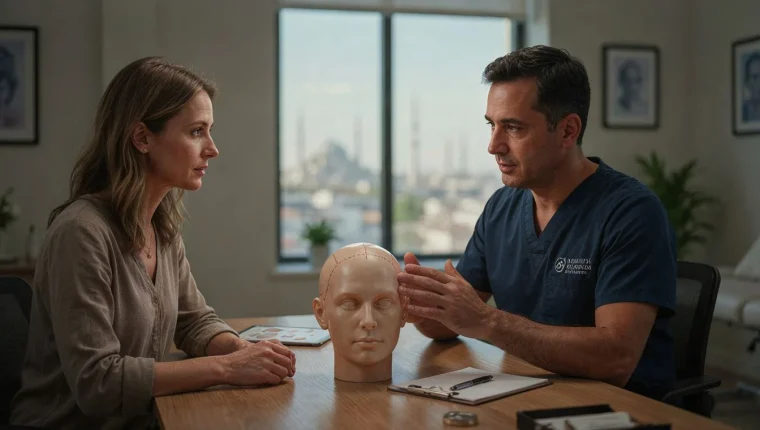
A well-run consultation is where you separate a genuine clinician from a skilled marketer. A good surgeon uses this time to assess your facial anatomy, review your medical history, and explain which approach fits your situation — not to hand you a fixed price before looking at your face. Whether the meeting happens in person or over video, the structure should feel like a medical evaluation, not a sales pitch.
Expect a typical session to move through several stages: a detailed health and medication history, a focused facial assessment of brow position and skin quality, a discussion of which technique suits you, and an honest conversation about what results are realistic. Bring your own questions to each stage, for example:
- Who performs the surgery: confirm the surgeon you consulted is the one operating, since some clinics delegate to other staff.
- Why a specific technique is recommended: a credible surgeon explains the reasoning rather than offering only the procedure their clinic promotes.
- Revision policy: ask how corrections are handled, who covers costs, and under what conditions.
- Anesthesia and facility details: where the operation takes place and who administers anesthesia matter for safety.
For international patients, remote consultations via video are now standard, and a good one still includes a live facial assessment, not just photos you uploaded weeks earlier. Treat a rushed 10-minute call that ends in a payment link as a reason to keep looking — a serious surgeon welcomes your questions and gives you time to decide.
Surgical Techniques Your Brow Lift Surgeon May Use
The technique your surgeon recommends is never arbitrary — it is matched to your hairline position, degree of skin laxity, and brow anatomy. During your consultation, ask why one approach fits your case better than another.
The most common method today is the endoscopic brow lift, which uses a tiny camera and several short incisions hidden within the hairline. It offers minimal scarring and a faster return to daily activities, though it may not suit patients with very heavy, low brows.
A temporal or temple lift targets the outer third of the brow, ideal for mild drooping at the corners of the eyes. The direct brow lift places an incision just above the brow hairs, giving precise control but leaving a visible scar, so it is usually reserved for older men or patients with deep forehead wrinkles. The coronal approach, running across the top of the scalp, provides the most dramatic correction but involves a longer incision and more swelling.
Each option trades incision visibility against the extent of correction, so understanding these differences helps you weigh your surgeon’s recommendation critically.
Cost Comparison: Brow Lift in Turkey vs. Other Countries
Cost is one of the main reasons patients from the UK, US, and Western Europe look toward Turkey, and the difference is real: equivalent brow lift procedures performed by qualified surgeons in Turkey generally come in noticeably lower than at home. What matters, though, is not the headline number but the all-inclusive quote — the figure that tells you exactly what you are paying for.
A trustworthy quote should itemize the surgeon’s fee, the hospital or clinic facility charge, anesthesia, and follow-up aftercare. Be cautious with prices that seem too good to be true; they may exclude pre-operative testing, compression garments, medication, or revision surgery if the initial result needs adjustment. Also budget for travel, accommodation, and time off work, since these sit outside any surgical package.
The table below gives indicative ranges only — actual prices vary by surgeon experience, technique, and facility.
| Region | Indicative Range (USD) | Typically Included |
|---|---|---|
| Turkey | $2,000 – $4,000 | Surgeon fee, facility, anesthesia, aftercare |
| United Kingdom | $6,000 – $10,000 | Often surgeon fee only; extras billed separately |
| United States | $7,000 – $12,000 | Surgeon, anesthesia, facility usually separate line items |
| Western Europe | $5,000 – $9,000 | Varies; aftercare may not be bundled |
Always ask for a written, itemized quote before committing, and confirm in writing what happens — and what it costs — if a revision is needed.
Planning Your Travel and Recovery After Surgery
Most surgeons recommend staying in Turkey for at least 7 to 10 days after your brow lift. This is not a formality. Flying too soon after surgery increases the risk of complications such as swelling, bleeding, and, in rare cases, blood clots during long flights. Your surgeon will also want to see you in person at least once after the procedure before you fly home, typically to remove stitches and confirm that initial healing is on track.
Early recovery follows a fairly predictable rhythm. Swelling and bruising around the forehead and eyes usually peak within the first 48 to 72 hours, then gradually settle over the following week. You will be advised to sleep with your head elevated, avoid strenuous activity and heavy lifting for two to three weeks, and protect the incision areas from sun exposure. Walking regularly from day one is encouraged, as gentle movement supports circulation and healing.
Before you book anything, confirm the clinic’s aftercare arrangements for international patients. Ask how post-operative check-ins are handled once you are home, whether video consultations are available, and what the policy is if you need to return for a corrective visit. A well-organized clinic will answer these questions without hesitation.
Practical details matter too. Book a hotel or apartment close to the clinic so follow-up visits are easy, and consider bringing a companion, especially for the first few days after surgery. Choose flexible flight tickets if your budget allows, since your surgeon may advise adjusting your departure date based on how your recovery progresses.
FAQs
How do I verify the qualifications of a brow lift surgeon in Turkey?
To verify a brow lift surgeon's qualifications in Turkey, check that they are registered with the Turkish Medical Association and hold a valid specialist license in plastic, reconstructive, or aesthetic surgery. You can ask the clinic directly for the surgeon's medical degree, board certification, and hospital affiliations, and confirm these through the Turkish Ministry of Health's registry of licensed healthcare facilities. Reviewing before-and-after photos of the surgeon's actual brow lift cases and verified patient reviews on independent platforms also helps confirm their experience. Reputable surgeons will readily provide their credentials and are typically members of organizations such as the Turkish Society of Aesthetic Plastic Surgery (TSAPS) or ISAPS.
What credentials and certifications should I look for when choosing a clinic?
Look for clinics whose physicians hold board certification in their specialty and are licensed to practice in your region, as these credentials confirm verified training and competence. Accreditation from a recognized national or international body, such as JCI for international clinics, indicates the facility meets strict safety and quality standards. You can also check whether the clinic's staff belong to professional associations relevant to the treatment you need, since these memberships often require ongoing education and adherence to ethical guidelines.
How much does a brow lift in Turkey cost compared to the UK or US?
A brow lift in Turkey typically costs between $2,000 and $4,000, compared to $6,000–$10,000 in the UK and $7,000–$12,000 in the US. This makes Turkey roughly 50–70% cheaper, even after adding flights and accommodation. The lower price reflects Turkey's reduced operational and labor costs rather than lower quality, as many surgeons there perform high volumes of cosmetic procedures in internationally accredited clinics. Prices vary depending on the technique used, the surgeon's experience, and whether the brow lift is combined with other procedures.