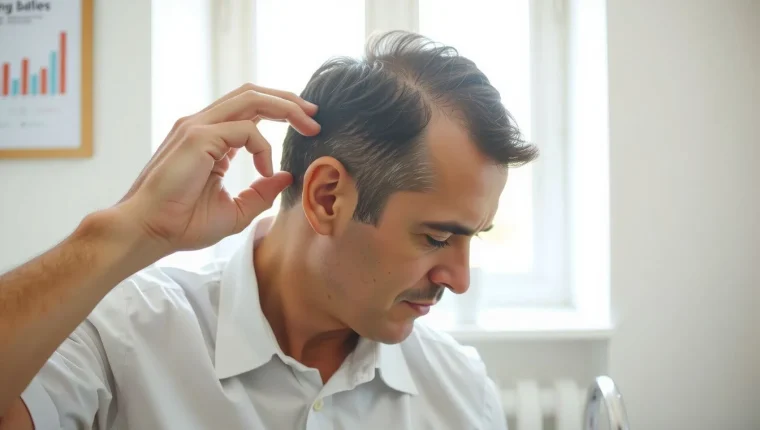
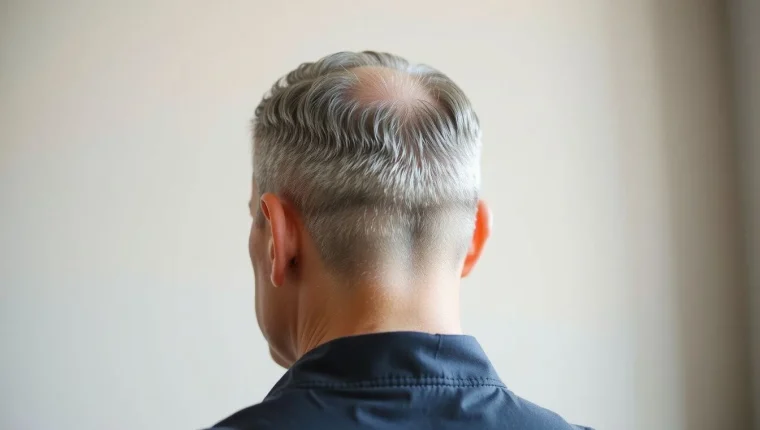
Frontal male pattern baldness usually starts with a receding hairline at the temples that moves backward over time to form a distinct M, U, or V shape. This is not random shedding. It is androgenetic alopecia, a hereditary condition driven by the sensitivity of hair follicles to dihydrotestosterone (DHT).
Men often notice the change in photos before anyone else does: the forehead looks taller, the corners thin out, and styling becomes harder. The earlier you recognize the pattern, the more options you have. Treatment decisions depend on how far the recession has progressed, your age, and whether you want to slow, stop, or restore hair loss.
Understanding the signs and the available treatments helps you act with clear expectations instead of guesswork.
What Frontal Male Pattern Baldness Looks Like at Each Stage
Frontal hair loss rarely advances at the same pace in every man, yet the pattern it follows is remarkably consistent. Clinicians commonly describe it using the Norwood scale, which maps progression from a minor recession to complete loss across the top of the scalp. In the earliest stage, often called Norwood I, the hairline remains essentially unchanged, and any thinning is subtle enough to escape notice. Norwood II introduces shallow recession at the temples, forming the first visible “M” shape. By Norwood III, those recessions deepen into distinct triangular areas of bare skin while the mid-frontal forelock stays intact. Stages IV and V bring the recession and crown thinning together, leaving a bridge of hair that gradually narrows. In advanced stages, that bridge disappears entirely, and the frontal and vertex zones merge into one continuous bald area.
The key point is that each stage reflects how far miniaturization has progressed, not simply how much hair has been lost. Recognizing where you fall on this spectrum helps determine which treatments are likely to work and how much regrowth is realistic.
How DHT and Genetics Drive Hairline Recession

Hairline recession is not random. It follows a predictable biological script written by two forces working together: hormones and inherited traits. The central player is dihydrotestosterone, or DHT, a potent androgen converted from testosterone by the enzyme 5-alpha reductase. In genetically susceptible men, DHT binds to receptors in hair follicles along the frontal hairline and temples, triggering a process called follicular miniaturization. Over successive growth cycles, affected hairs become thinner, shorter, and lighter until they stop emerging altogether.
What makes this process so selective is androgen receptor sensitivity. Not all follicles respond to DHT the same way. Hair on the back and sides of the scalp typically carries fewer sensitive receptors, which is why it often survives while the frontal hairline recedes. This pattern is inherited, though the genetics are polygenic rather than tied to a single gene.
Inheritance can arrive from either side of the family. A father with a receding hairline raises risk, but so can maternal uncles, since the X chromosome carries one relevant receptor gene. Age, stress, and overall health can influence how quickly the process unfolds, but they do not cause it. The underlying driver remains the interaction between DHT and a genetically primed scalp.
Why Early Hairline Thinning Is Often Mistaken for Normal Aging
Early hairline thinning is easy to dismiss because it develops so gradually that it blends into the everyday changes men expect with age. Most people picture aging hair as an overall thinning or a receding crown, so a slight softening at the temples or a few extra hairs on the pillow rarely raises concern. What makes this stage deceptive is that the process driving it is not ordinary aging at all. It is miniaturization, the progressive shrinking of individual follicles that defines androgenetic alopecia, and it begins long before visible loss becomes obvious.
Several everyday factors reinforce the assumption that nothing unusual is happening:
- Slow, incremental change: Because follicles shrink over months and years, each small shift is unnoticeable against the previous day’s appearance.
- Normal shedding confusion: Losing 50 to 100 hairs a day is expected, so increased shedding at the hairline gets attributed to stress, weather, or a bad haircut.
- Family history blind spots: Men often look only at their father’s hair, ignoring maternal relatives who may carry the same androgen receptor sensitivity.
- Mature hairline myth: A slight recession at the temples is widely accepted as a normal adult hairline rather than an early disease signal.
The practical consequence is a lost window. Treatments for androgenetic alopecia work best while follicles are still active, and once miniaturization advances far enough, regrowth becomes far harder to achieve. Recognizing that early thinning follows a patterned, progressive course rather than a random age-related decline is what allows men to seek evaluation before the change becomes permanent.
Diagnosing Frontal Hair Loss: Tests That Confirm Androgenetic Alopecia
Diagnosing frontal hair loss begins with recognizing that not all shedding is the same. A dermatologist typically starts with a detailed history: when thinning began, how quickly it progressed, whether hairs on the pillow or in the shower drain increased, and which family members lost hair and at what age. This history often points toward androgenetic alopecia before any instrument touches the scalp, because the pattern and timing of loss follow a predictable script.
The most useful bedside test is the hair pull test, performed by gently tugging a bundle of about 60 hairs from several scalp regions. Shedding four to six hairs is normal; pulling out more than that suggests active shedding, though it does not by itself confirm a cause. A trichoscopy exam goes further. Under magnification, a dermatologist looks for hair diameter diversity above 20 percent, peripilar signs, and a shift toward vellus-like hairs in the frontal and temporal zones. These findings are considered hallmark evidence of androgenetic alopecia.
When the diagnosis remains unclear, a scalp biopsy can settle it. A 4 mm punch sample is taken from an active area and examined for a reduced terminal-to-vellus ratio and miniaturized follicles. Blood tests for ferritin, thyroid function, and vitamin D help rule out telogen effluvium, thyroid disease, or nutritional deficiencies that can mimic or worsen the condition. Because early frontal thinning is easily confused with a maturing hairline, combining history, trichoscopy, and selective lab work produces a diagnosis reliable enough to guide treatment.
Treatment Options for Receding Hairlines and Their Realistic Results

No treatment restores a hairline to its original density, and understanding that ceiling is what separates informed decisions from expensive disappointment. Options fall into three tiers: medical therapy, surgical restoration, and cosmetic camouflage.
Topical minoxidil and oral finasteride remain the most studied medical treatments. Finasteride blocks DHT conversion and can slow or partially reverse recession in men who still have active follicles, though results take six to twelve months and vary by androgen receptor sensitivity. Minoxidil extends the growth phase but rarely rebuilds a receded temple. Both work best on thinning areas, not slick bald zones.
Hair transplantation moves DHT-resistant follicles from the back of the scalp to the frontal hairline. Results are permanent but limited by donor supply, and surgeons cannot create density that was never there. Candidates with stable loss do best; those with rapid ongoing recession may continue losing native hair around grafts.
Cosmetic options — scalp micropigmentation, fibers, and hair systems — offer immediate visual improvement without biological change. They suit men who want coverage without medication or surgery, but require maintenance and honest expectations. Matching the right option to your stage and goals matters more than choosing the most aggressive one.
FAQs
What are the earliest signs of frontal male pattern baldness to watch for?
The earliest signs of frontal male pattern baldness typically appear as a gradual thinning or slight recession along the temples and the front of the hairline. You may notice your hairline taking on a subtle M-shape, with the corners receding faster than the center, or see more hair than usual on your pillow and in the shower. These changes are often accompanied by miniaturized hairs at the temples that feel finer and shorter than the rest. Catching these signs early matters because frontal hair loss responds best to treatment before the follicles fully shrink.
How does androgenetic alopecia differ from other types of hair loss at the hairline?
Androgenetic alopecia at the hairline produces a characteristic gradual recession that follows a predictable pattern, typically forming an M-shaped or V-shaped temple recession rather than the diffuse thinning seen in conditions like telogen effluvium. Unlike traction alopecia or alopecia areata, which can create patchy or localized loss, frontal male pattern baldness results from genetically driven miniaturization of hair follicles along the frontotemporal region. This miniaturization causes hairs to become progressively finer and shorter before disappearing, and the process usually spares the occipital and temporal sides of the scalp.
Which treatments are most effective for regrowing hair lost to frontal male pattern baldness?
For frontal male pattern baldness, FDA-approved options such as topical minoxidil and oral finasteride are the most reliable for slowing loss and promoting regrowth, though results are often more modest at the hairline than on the crown. A newer option, oral minoxidil (prescribed off-label), and topical finasteride may also help some men. Because frontal follicles are more resistant to medication, hair transplant surgery remains the most effective way to restore a receded hairline, often combined with medication to maintain results.