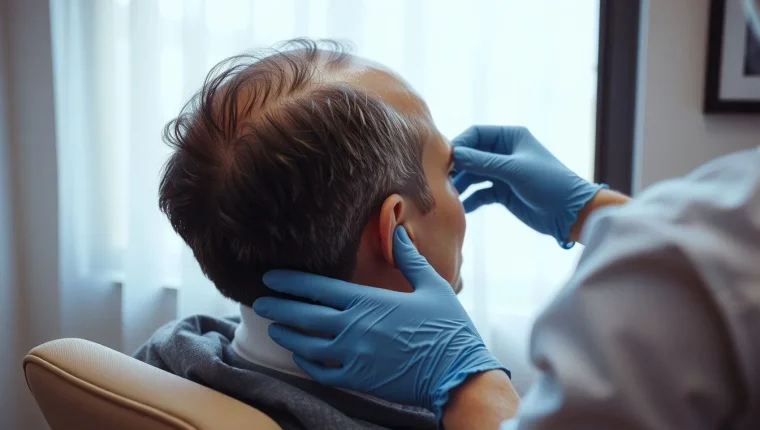
Finding more hair in your brush, on your pillow, or in the shower drain is unsettling, especially when thinning shows along the part or hairline. This is common and often signals a recognized hair loss disease rather than random shedding. Hair loss has distinct causes and forms: some types are temporary and reversible, while others follow a progressive pattern tied to genetics, hormones, or underlying health conditions. The type, timing, and rate of loss shape what care makes sense. Understanding these differences helps you recognize what you may face and act clearly instead of guessing.
Understanding Hair Loss Disease: Causes and Mechanisms
Hair does not grow continuously; it cycles through three phases. Most strands are in the anagen phase, an active growth period lasting several years. A short transitional phase follows, then a resting phase, after which the strand is shed and replaced. Because each follicle moves through this cycle independently, losing roughly 50 to 100 hairs a day is normal rather than a sign of disease.
Problems begin when this rhythm is disturbed. A cycle can be interrupted in several ways: the growth phase may shorten, follicles may spend too long resting before new growth starts, or inflammation and scarring may damage the follicle itself. Each disruption tends to have a different underlying driver.
Hormonal shifts, including thyroid imbalance and androgens, can push follicles into resting earlier than expected. An immune reaction may target growing follicles directly, while inherited sensitivity can gradually shrink them over time. Physical or emotional stress, illness, surgery, and nutritional deficiencies can also divert energy away from hair production.
The mechanism behind the loss is what ultimately determines its type, which is why the same visible thinning can point to very different conditions.
Types of Hair Loss Disease and How They Differ
Hair loss is not one condition but a family of conditions, and the differences between them matter more than most people expect. The most common form, androgenetic alopecia, follows a recognizable pattern: a receding hairline and thinning crown in men, and a widening part with diffuse thinning over the top of the scalp in women. It is driven by genetics and hormones, tends to progress gradually, and is often permanent without treatment.
By contrast, telogen effluvium is a reactive shedding condition. It appears suddenly, often weeks after illness, surgery, severe stress, or nutritional deficiency, and it spreads across the whole scalp rather than following a pattern. It is usually temporary once the trigger resolves. Alopecia areata behaves differently again: the immune system attacks hair follicles, producing smooth, round patches that can appear anywhere on the body.
Two other forms are worth recognizing. Traction alopecia results from prolonged pulling on the hair, commonly from tight styling, and can become permanent if the tension continues. Scarring alopecias, though less common, destroy the follicle itself and cause permanent loss, which makes early recognition important.
These distinctions are not academic. Pattern, permanence, and who is typically affected separate conditions that can look similar from the outside, and identifying the type is what guides the diagnostic steps and treatment choices that follow.
Recognizing Symptoms and Early Warning Signs

Everyone sheds hair daily, and the line between normal turnover and a genuine problem is often narrower than people expect. An average person loses roughly 50 to 100 strands a day, and this number rises with washing, brushing, or seasonal shifts. The key difference is not a single day’s count but a sustained change: more hair than usual in the drain, on the pillow, or in the brush for weeks rather than days.
Pattern matters as much as amount. Thinning along the part, a widening crown, or a receding hairline points to a different process than diffuse shedding across the whole scalp. Watch for scalp clues too—itching, scaling, redness, pain, or patches of smooth, bare skin—since these suggest inflammation or another condition rather than simple shedding.
Timing helps separate harmless fluctuation from a warning sign. Shedding that follows illness, stress, or a major life change usually appears two to three months later and settles on its own. When increased loss continues beyond six months, or when hair no longer regrows, that persistence is the signal to seek a professional evaluation rather than wait further.
Diagnosing Hair Loss: Tests and Evaluation
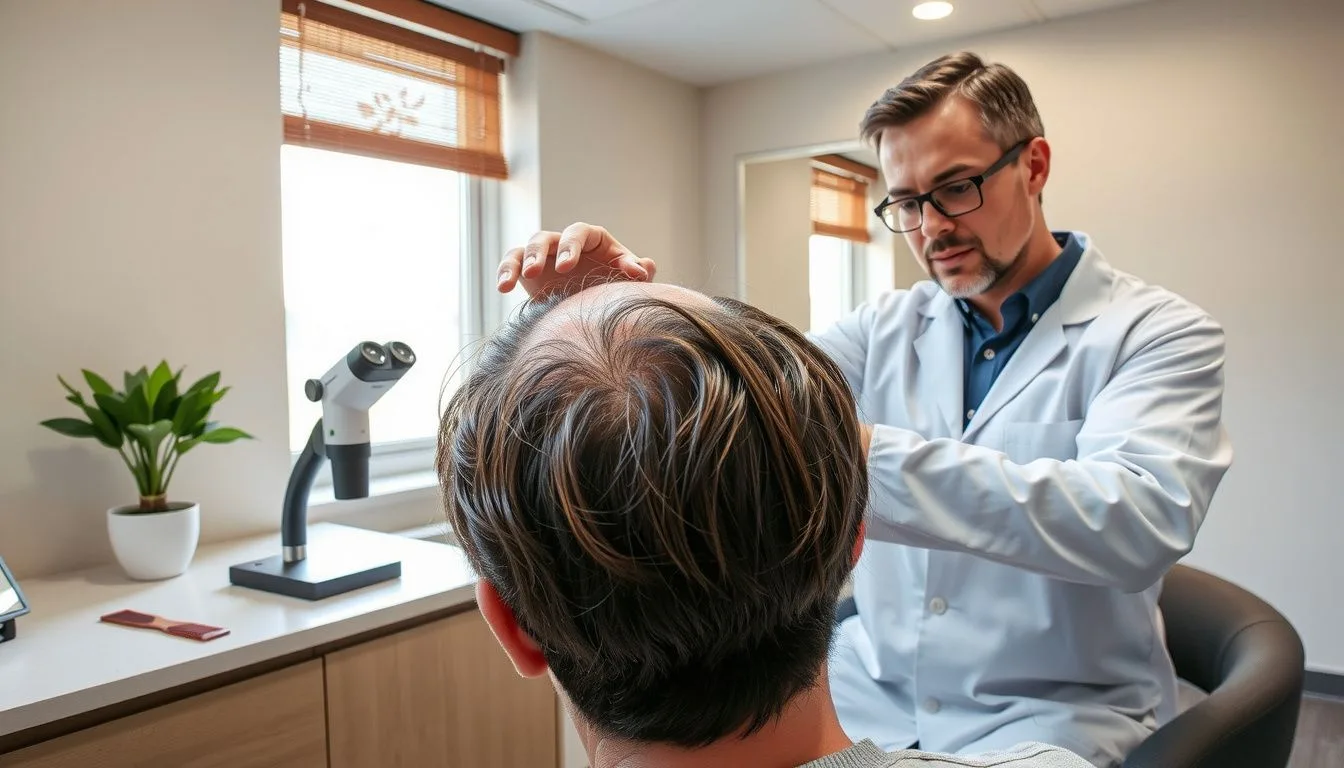
Evaluation begins with a conversation and a close look, not a lab report. A clinician first asks about the timeline of shedding, recent illnesses, major stress, medications, diet, and family history, since these details often point toward a cause before any test is ordered. The pattern matters too: diffuse thinning across the whole scalp suggests a different process than a receding hairline or a single smooth patch.
During the scalp examination, the clinician checks for redness, scaling, broken hairs, and scarring, and may gently pull a small group of hairs to see how easily they release. This simple hair pull test helps confirm whether shedding is currently active. A dermatoscope, a magnifying tool, lets the examiner view hair shafts and follicles up close, revealing miniaturized hairs or unusual shapes that distinguish one condition from another.
Additional tests are used selectively, not routinely. Blood work may check iron stores, thyroid function, and vitamin levels when a nutritional or hormonal trigger is suspected. If an autoimmune cause is possible, a small scalp biopsy can clarify the diagnosis. Together, these findings narrow the picture and shape the plan that follows.
Treatment Options and Daily Care Strategies
Treatment falls into two broad groups: clinical options that aim to slow loss, support regrowth, or correct an underlying cause, and daily habits that protect the hair and scalp you still have. Which clinical route fits depends on the diagnosed type, so an accurate evaluation comes first. For pattern-related thinning, treatments such as topical minoxidil or prescription medications may be considered, while reactive shedding usually improves once its trigger—illness, stress, or a nutritional gap—is addressed. When an autoimmune or scarring process is involved, more targeted therapy may be needed. The key is that treatment must match the diagnosis, since the same remedy rarely works across different forms of loss.
Daily care supports whatever treatment you pursue. Wash gently with a mild shampoo, avoid tight hairstyles and harsh chemical treatments, and limit heat styling. Eat a balanced diet with adequate protein and iron, manage stress where possible, and treat the scalp kindly rather than aggressively. Consistency matters more than intensity: results build over months, not days.
Set realistic expectations. Improvement is often gradual, and some types of loss respond better than others. Follow your plan steadily, track changes with photos, and return to your clinician if progress stalls.
FAQs
What are the most common types of hair loss disease affecting both men and women?
Androgenetic alopecia, also known as male or female pattern hair loss, is the most common type of hair loss disease in both men and women. Telogen effluvium is another frequent form, typically triggered by stress, illness, or nutritional deficiencies, and causes diffuse shedding across the scalp. Alopecia areata, an autoimmune condition that produces patchy bald spots, affects both sexes as well.
How can you tell whether excessive shedding is a sign of a hair loss disease or just normal seasonal thinning?
Normal seasonal shedding is usually temporary and moderate, often lasting a few weeks in spring or fall, and it does not leave visible bald patches or persistent thinning. In contrast, hair loss disease typically causes prolonged, heavy shedding that exceeds roughly 100 hairs per day, noticeable scalp exposure, or widening of the part. You can also watch for accompanying signs such as scalp itching, redness, scaling, or breakage, which point toward an underlying condition rather than routine shedding. If the shedding continues beyond two to three months or worsens, a dermatologist can confirm the cause through examination and, if needed, blood tests or a scalp biopsy.
Which treatments and daily care habits actually help slow down or reverse hair loss disease?
Treatment depends on the type of hair loss disease, so a dermatologist may recommend topical minoxidil, oral medications like finasteride for androgenetic alopecia, corticosteroid injections for alopecia areata, or prescription treatments for underlying medical conditions. Daily care habits that support hair health include eating a balanced diet rich in protein, iron, and vitamins, avoiding harsh chemical treatments and tight hairstyles, and washing gently with mild shampoo. Managing stress, quitting smoking, and treating conditions such as thyroid disorders or anemia can also slow progression. Most forms of hair loss cannot be fully reversed, but consistent treatment and good scalp care often reduce further shedding and improve regrowth.