A widening part or a receding hairline rarely happens overnight. It appears in photos, the mirror, and the sink drain, often leading to the same question: is this normal aging or something with a name and treatment path? When thinning follows a recognizable shape — a receding front, a thinning crown, or a part that slowly broadens — it is often pattern alopecia, a medically recognized condition rather than random shedding or bad luck.
Pattern alopecia is driven by genetics and hormone sensitivity acting on specific areas of the scalp, which is why it looks different from stress-related or nutritional hair loss. Understanding what causes it, how far it has progressed, and which treatments actually work gives you a real basis for decisions instead of guesswork.
What Pattern Alopecia Actually Is
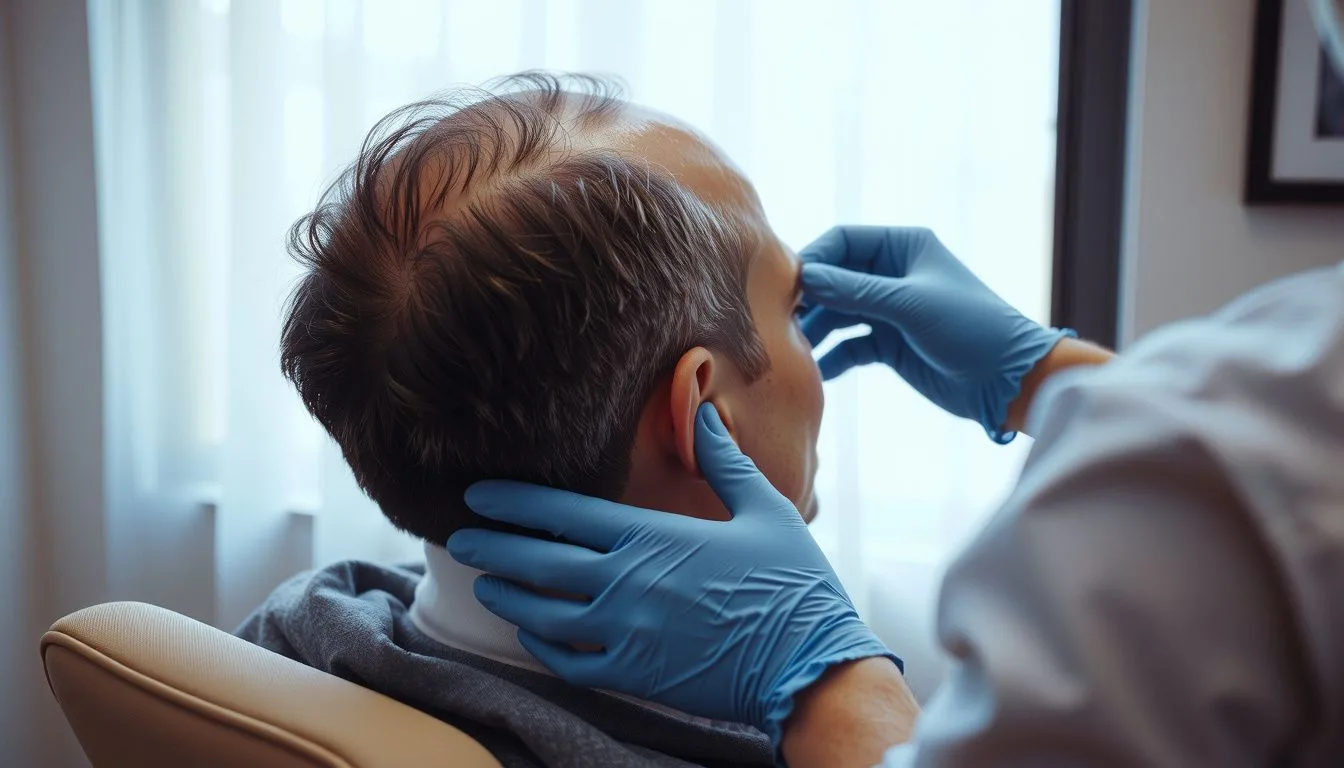
Pattern alopecia is a specific diagnosis, not a general term for any hair shedding. Its defining feature is a predictable, progressive thinning that follows a recognizable shape on the scalp — a receding hairline and thinning crown in men, or a widening part and diffuse thinning over the top of the head in women. This patterning reflects where genetically susceptible follicles sit, which is why the sides and back of the scalp usually stay dense even as the top thins.
That pattern separates it from conditions that can look similar at a glance. Telogen effluvium causes sudden, widespread shedding after stress, illness, or nutritional shifts, and it is typically temporary. Alopecia areata produces smooth, circular bald patches that can appear anywhere. Traction alopecia follows tight hairstyles and concentrates along the hairline. None of these follow the inherited, androgen-driven distribution that defines pattern hair loss.
It affects both sexes, though it often presents differently and at different ages — a distinction that shapes how each case is assessed and staged.
How Hormones and Genetics Drive Hair Follicle Miniaturization
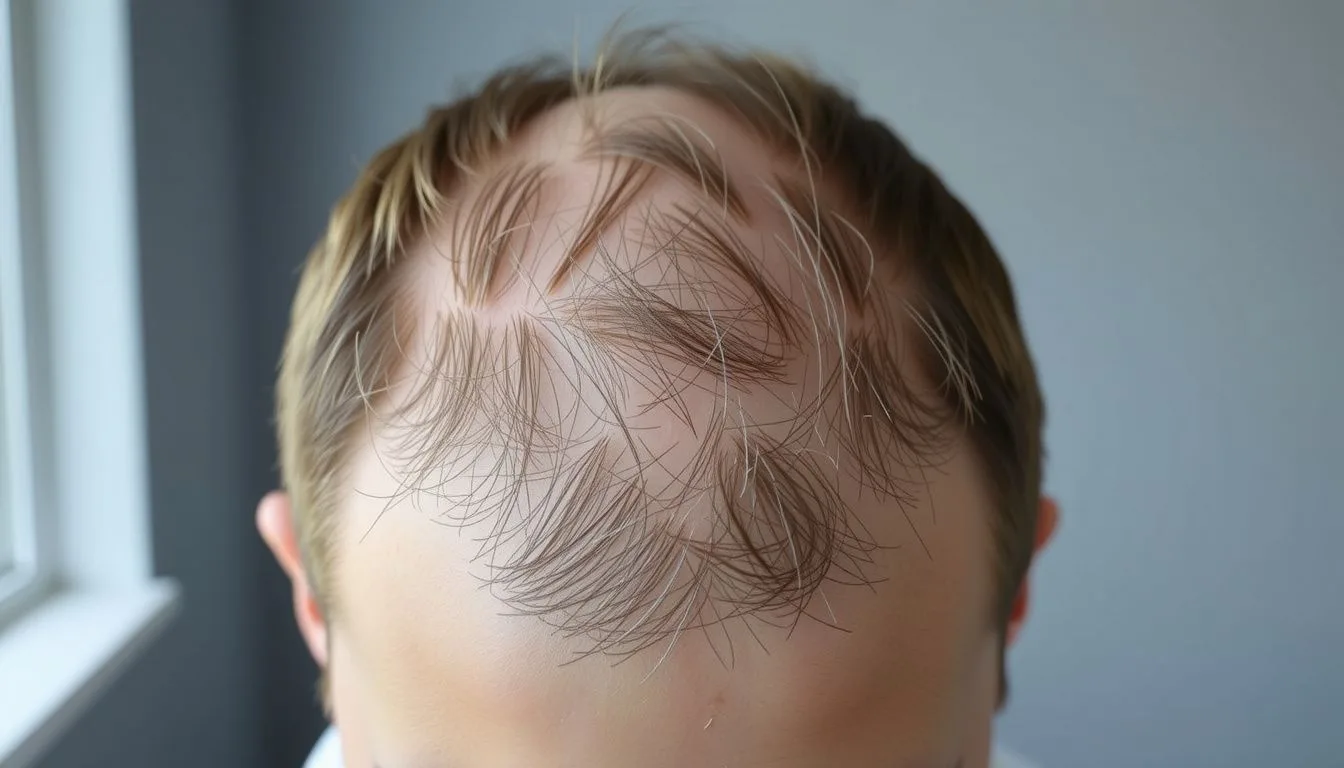
Hair thinning does not happen at random. It follows a predictable sequence because two forces work together: circulating hormones and the inherited sensitivity of specific follicles to those hormones.
The main actor is dihydrotestosterone (DHT), a potent androgen converted from testosterone by the enzyme 5-alpha reductase. DHT travels through the bloodstream and binds to receptors inside susceptible hair follicles. In follicles genetically programmed to respond, this binding triggers a gradual shift in the growth cycle: the anagen (growth) phase shortens while the resting phase lengthens. Over successive cycles, each new hair emerges thinner, shorter, and less pigmented until the follicle produces only a fine, nearly invisible strand.
This process is called follicle miniaturization, and it explains why thinning is progressive rather than temporary. Crucially, genetics determine which follicles carry the vulnerable receptors. That inherited susceptibility is why balding follows a recognizable pattern — temples, crown, and mid-scalp in men, a widening part in women — instead of spreading evenly across the entire scalp.
Follicles on the sides and back of the head typically lack this sensitivity, which is why they remain resistant to the same hormonal environment that shrinks follicles elsewhere.
Recognizing the Norwood and Ludwig Stages
Staging matters because the Norwood and Ludwig systems turn a vague worry into a shared reference point. Clinicians use these scales to judge severity, track change over time, and decide when a treatment is worth starting. For men, the Norwood scale follows a seven-stage progression, beginning with a receding hairline at the temples and advancing to loss across the crown and mid-scalp. For women, the Ludwig system describes three stages of diffuse thinning that centers on the part while the frontal hairline usually stays intact.
The two scales are not interchangeable, so the table below places them side by side. Find the pattern that most closely matches your own and note the stage; repeating this check every six to twelve months gives you an objective record rather than a memory-based guess.
| Norwood (Male) | Typical Pattern | Ludwig (Female) | Typical Pattern |
|---|---|---|---|
| I–II | Minimal to slight temple recession | I | Mild widening of the central part |
| III | Deepening temple recession, early M-shape | II | Noticeable part widening with reduced density |
| IV–V | Recession plus crown thinning, bridge remains | III | Diffuse thinning across the top, part clearly visible |
| VI–VII | Temple and crown loss merge; bridge gone | Advanced | Extensive top-of-scalp thinning, frontal hairline retained |
Note where you land, then watch whether that position shifts. Which treatments suit an early stage versus an advanced one is a separate question, and it is where the next section picks up.
Medical Treatments That Slow or Reverse Thinning
Medical treatment for thinning hair falls into two broad groups based on how they act: those that slow or stop further follicle miniaturization, and those that stimulate regrowth from follicles that are still active. Topical minoxidil and oral finasteride are the most established options. Minoxidil prolongs the growth phase and widens the follicle, while finasteride blocks the conversion of testosterone into DHT, the androgen that drives miniaturization in genetically susceptible follicles. Both work best when started early, while follicles are still capable of producing visible hair.
These treatments are maintenance-oriented rather than curative. They require continuous use, and any benefit typically fades within months of stopping. Where they tend to work best also depends on stage. Early thinning on the Norwood or Ludwig scale usually responds more reliably, while advanced stages with significant follicle loss leave less to work with. Procedural options such as platelet-rich plasma or low-level laser therapy may complement these treatments, though evidence for them is generally weaker and results vary. For advanced or stabilized loss, medical therapy often becomes a bridge to surgical restoration, which is where the next section picks up.
Surgical Restoration and Realistic Long-Term Expectations
Hair transplantation does not create new follicles. It relocates them. Follicles taken from the back and sides of the scalp — the donor area — are largely resistant to the androgen sensitivity that drives thinning elsewhere, which is why they tend to keep growing once moved into a receding hairline or thinning crown.
That same biology sets the limits. Donor supply is finite, so the number of grafts available for a given session is capped. More importantly, surgery does not stop the underlying process: native hair that was not transplanted can continue to miniaturize and shed around the restored areas.
This is why long-term results depend on continued medical support alongside the procedure. The realistic goal is improvement and stability — a fuller, better-framed hairline maintained over time — rather than a permanent, complete reversal.
FAQs
What are the most common causes of pattern alopecia in both men and women?
Pattern alopecia is primarily driven by genetics and the sensitivity of hair follicles to dihydrotestosterone (DHT), a hormone derived from testosterone. In men, this typically produces a receding hairline and thinning at the crown, while women usually experience diffuse thinning along the part line with preservation of the frontal hairline. Hormonal shifts such as those occurring during menopause, pregnancy, or thyroid dysfunction can accelerate the condition in women. Age, family history, and certain medical conditions or medications further contribute to follicle miniaturization and progressive hair loss in both sexes.
How can I tell which stage of pattern alopecia I am experiencing?
Doctors classify pattern alopecia using standardized scales such as the Norwood-Hamilton scale for men and the Ludwig or Sinclair scale for women, which map hair loss along the temples, crown, and part line. You can compare your own hairline, thinning zones, and overall density against these visual charts to estimate your stage, but self-assessment is often imprecise. A dermatologist or trichologist can confirm the stage through scalp examination and, when needed, trichoscopy. An accurate staging matters because it guides which treatments, from minoxidil to hair transplantation, are most likely to help.
What treatment options work best for early versus advanced pattern alopecia?
For early pattern alopecia, topical minoxidil and oral finasteride or dutasteride are the most effective first-line treatments because they slow hair loss and can stimulate regrowth while follicles are still active. Advanced pattern alopecia, where follicles have miniaturized or scarring has occurred, responds poorly to medication and usually requires hair transplantation or advanced therapies such as platelet-rich plasma or low-level laser therapy. Combining medical therapy with surgery often gives the best long-term results in advanced cases by preserving existing hair and improving graft survival.


