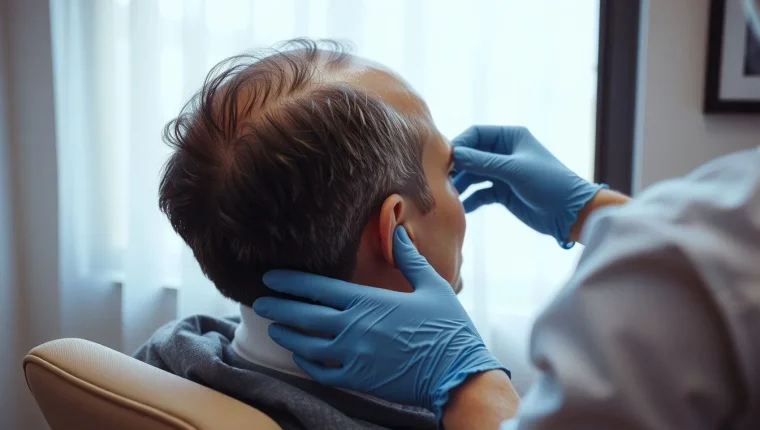
Around menopause, many women notice more hair in the brush, a wider part, or a less full ponytail. This shedding is common and usually not random. Shifting estrogen and progesterone levels affect hair growth, while stress, thyroid changes, low iron, and some medications can add to or mimic the problem. The causes of hair loss in men get more attention, but midlife hair thinning in women has distinct drivers. Most cases trace to a few identifiable factors, and separating hormonal shifts from health and nutrition issues is the first step toward addressing what is happening.
How Menopause Triggers Hormonal Changes That Affect Hair Growth
Hair growth follows a repeating cycle with three main phases: an active growth phase called anagen, a short transitional phase, and a resting phase known as telogen, after which the strand sheds and a new one begins. At any given time, most follicles are actively growing, while a smaller percentage rest and eventually fall out. This balance keeps daily shedding within a normal range and allows new strands to replace lost ones without noticeable thinning.
Estrogen and progesterone help sustain follicles in the active growth phase and prolong the time they spend producing hair. As menopause approaches and these hormone levels decline, more follicles shift prematurely into the resting phase. The result is a larger proportion of hairs entering the shedding stage at once, so more strands fall out while fewer new ones are actively growing. This shortens the overall growth phase and lengthens the shedding phase, which is the core mechanism behind menopausal hair changes.
Meanwhile, androgens such as testosterone remain relatively stable even as estrogen drops, creating a shift in the androgen-to-estrogen balance. This relative androgen dominance can gradually miniaturize some follicles, especially along the frontal hairline and crown, producing finer, shorter strands over time. Together, these hormonal shifts explain why shedding increases and regrowth slows during this transition.
Why Women Notice Thinning Hair During Perimenopause and Early Postmenopause

During perimenopause, estrogen and progesterone levels do not decline in a smooth, predictable line. They swing, spike, and dip unpredictably from cycle to cycle. Because these hormones help keep hair in its growing phase, each fluctuation can push a larger share of follicles into shedding at once. This is why many women describe their hair loss as erratic: a few calm months followed by a heavy shed, then another quiet stretch.
Timing varies widely. Some women notice increased shedding in their early forties, while others see it only in the final year before their last period or during the first year after. Once hormone levels settle into a stable postmenopausal range, shedding often slows, though density may not fully return.
The visible pattern tends to be diffuse rather than patchy. Hair thins evenly across the whole scalp, and the part may gradually appear wider. Some women also notice more hair on their pillow, in the shower drain, or wrapped around a brush. Unlike the receding hairline or crown baldness associated with pattern loss, this midlife shedding usually spreads across the entire head.
Medical Conditions and Medications That Worsen Hair Shedding After Menopause
Menopause often takes the blame for midlife shedding, but it is rarely the only factor at work. Several medical conditions that become more common in the years around menopause can independently disrupt the hair cycle and intensify loss. Telogen effluvium, a stress-driven shedding phase in which a large share of follicles enter rest at once, is frequently triggered by chronic illness, major surgery, or severe emotional stress. Autoimmune conditions such as thyroid disease and lupus can also attack or stall follicles, while polycystic ovary syndrome may keep androgen levels high enough to thin hair at the crown. Anemia and iron deficiency, both more prevalent after menstrual patterns change, reduce the oxygen and nutrients reaching the follicle and can prolong shedding.
Medications deserve equal attention. Certain drug classes are well known to push follicles into shedding or to interfere with growth, including some antidepressants, blood thinners, beta blockers, and hormone therapies. Because women in this life stage often take several prescriptions at once, the cumulative effect can be easy to overlook. If shedding began or worsened after a new medication was started, that timing is worth noting. Reviewing your full health history and medication list with a clinician can clarify whether an underlying condition or a prescription, rather than menopause alone, is driving the problem.
Nutritional Deficiencies and Thyroid Issues Linked to Midlife Hair Loss
When hair thinning continues despite stable hormone levels, two often-overlooked contributors deserve attention: thyroid dysfunction and nutrient shortfalls. Both become more common in midlife and both are frequently reversible once identified. An underactive thyroid slows metabolism across every cell, including hair follicles, pushing more strands into a resting phase that ends in shedding weeks later. An overactive thyroid can do the same. Because fatigue, weight shifts, and mood changes overlap with menopause itself, thyroid problems are easily missed.
Nutrient status matters just as much. Low ferritin, the stored form of iron, is one of the most common findings in women with persistent shedding, even when hemoglobin looks normal. Vitamin D, B12, and zinc deficiencies can also weaken the hair cycle. Reduced stomach acid and changes in absorption after menopause make these shortfalls more likely.
The encouraging news is that correcting a thyroid imbalance or replenishing a deficiency often restores normal growth within months. If shedding persists, ask your clinician about checking thyroid function, ferritin, vitamin D, and B12 rather than assuming the loss is permanent.
When to Seek Help: Warning Signs That Midlife Hair Loss Needs Medical Attention

Not every increase in shedding after menopause requires a doctor’s visit, but some patterns clearly do. Normal hormonal shedding tends to be diffuse, gradual, and stable over months. By contrast, rapid hair loss that develops over weeks, comes out in large handfuls, or leaves visible patches on the scalp is a signal that something beyond fluctuating hormones may be involved.
Pay attention to changes in the scalp itself. Redness, scaling, itching, pain, or areas of smooth, shiny skin where hair no longer grows can point to conditions such as alopecia areata, scalp infections, or scarring forms of hair loss that need prompt evaluation. These are not typical features of menopausal thinning.
Accompanying symptoms also matter. Unexplained fatigue, weight changes, irregular heartbeat, cold or heat intolerance, or new facial hair growth may suggest a thyroid problem, a nutrient deficiency, or a hormonal imbalance that requires testing rather than watchful waiting. If shedding continues for more than six months, worsens steadily, or causes significant emotional distress, that alone is reason enough to seek help.
A dermatologist or gynecologist can assess the pattern of loss, review medications and lab results, and confirm whether the cause is hormonal, nutritional, or something else entirely. Early evaluation makes treatment more effective and prevents unnecessary worry.
FAQs
Can menopause directly trigger the causes of hair loss in men as well as women?
No, menopause cannot directly trigger hair loss in men because men do not experience menopause or its associated hormonal shifts. However, the same underlying cause, namely a decline in estrogen relative to androgens such as DHT, drives androgenetic alopecia in both sexes. In men, this pattern typically results from inherited sensitivity to DHT rather than from menopausal changes. Recognizing this shared hormonal mechanism helps clarify why treatments like finasteride or minoxidil may benefit both men and women.
Which hormonal shifts during menopause are most closely linked to thinning hair?
Declining estrogen and progesterone levels during menopause shorten the hair growth phase and increase follicle miniaturization, which makes thinning most noticeable. Rising androgen activity relative to estrogen can also shrink hair follicles on the scalp, particularly in women with a genetic predisposition. These hormonal shifts often overlap with age-related changes, so the thinning tends to be gradual and diffuse rather than sudden.
How soon after menopause should you seek help if shedding becomes noticeable?
Seek help as soon as you notice increased shedding that persists beyond a few weeks, rather than waiting for it to resolve on its own. Because menopause-related hair loss often involves hormonal shifts and can overlap with other causes such as thyroid disorders or nutritional deficiencies, early evaluation helps identify the underlying trigger. A doctor or dermatologist can then recommend appropriate treatment before the thinning becomes more advanced.