A receding hairline changes more than a photo. It changes how you check the mirror, how you angle your head in meetings, and how much time you spend deciding whether to cover it, treat it, or ignore it. Once the corners of the hairline recede, the natural question is whether anything can restore them. Hair transplant for a receding hairline is one option, but it is not a simple decision. Restoring a hairline requires planning before a procedure: your pattern of loss, donor supply, and goals determine what is realistic. Candidacy, design, technique, and recovery shape the final result, and each deserves review before you commit.
Who Is a Good Candidate for a Hair Transplant for a Receding Hairline

Not everyone with a receding hairline is a suitable candidate for surgery, and candidacy depends on several factors that go well beyond the visible thinning itself. The most important is a stable donor supply: a transplant works by moving healthy, genetically resistant hair follicles from the back and sides of the scalp to the thinning front, so you need enough dense, durable donor hair to support the result. If that reserve is limited or already weakening, the outcome may not meet expectations.
The pattern and pace of your loss also matter. A receding hairline that has stabilized is generally easier to treat than one that is still advancing rapidly, because the surgical plan can be built around a predictable shape. Age plays a role too: younger patients often face ongoing loss, which can leave transplanted hair looking isolated as surrounding native hair continues to thin.
General health rounds out the picture. Conditions that impair healing, uncontrolled medical issues, or certain medications can affect both safety and graft survival. A transplant may also be premature if your loss is minimal or still evolving, in which case medical treatments or simply monitoring the situation could be the wiser first step.
How Hair Loss Patterns Determine Your Transplant Strategy
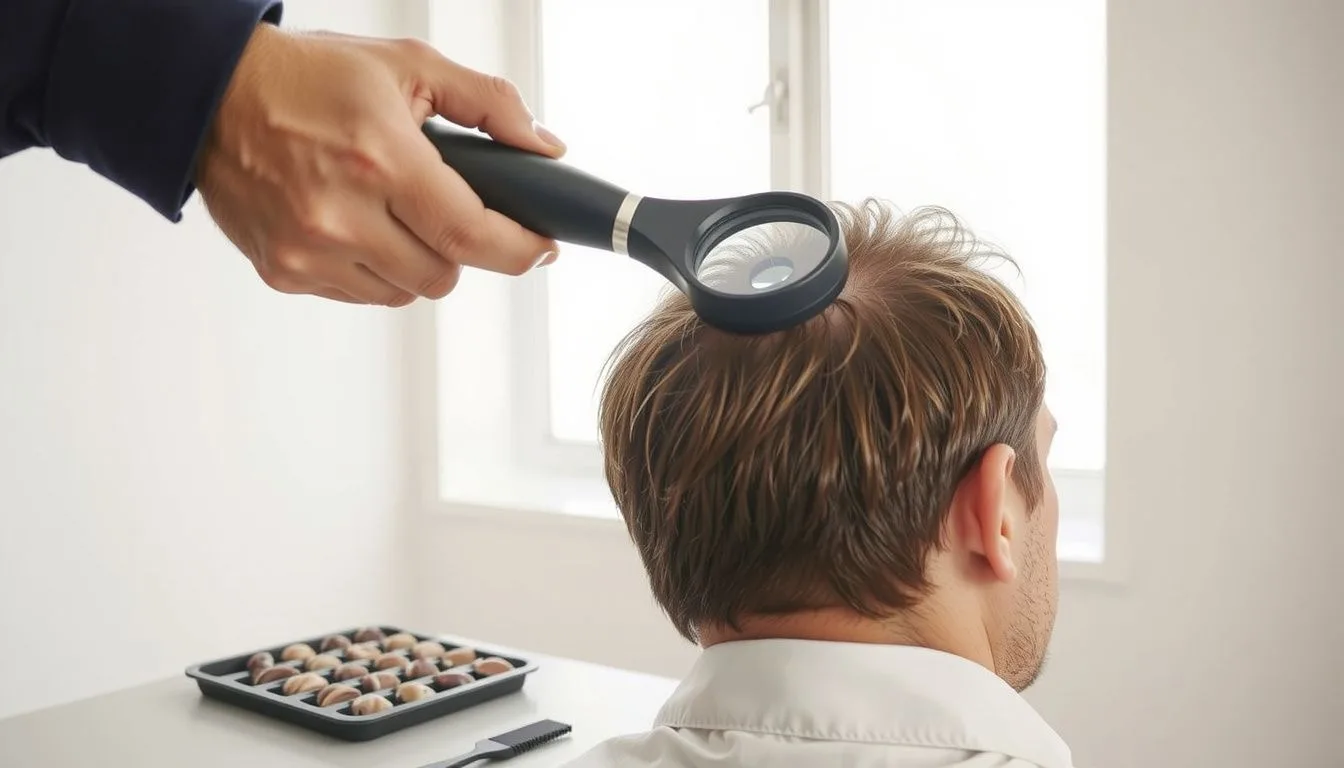
A receding hairline is rarely an isolated line that stops where it starts. It is usually the visible edge of a broader pattern that will keep changing, and that pattern, not the current hairline alone, decides where grafts go and how densely they can be placed. Two people with the same amount of frontal loss can need very different plans if one is losing hair mainly at the temples while the other is thinning across the mid-scalp and crown.
The direction and extent of loss set the budget. A limited, stable recession leaves more donor hair available for a dense frontal band, while a wider pattern forces a more conservative approach, spreading grafts to protect the donor supply for areas that may thin later. Density is therefore prioritized where it matters most visually, usually the front and the transition zone behind it, rather than spread evenly across the whole scalp.
This is why planning looks forward, not just at today’s mirror. A hairline rebuilt to match current loss can look wrong within a few years if balding continues behind it. Mapping the likely progression first keeps the result coherent as hair loss evolves.
What Happens During a Receding Hairline Transplant Procedure
A receding hairline transplant begins long before the first incision, with a planning session that maps out exactly where grafts will go. Your surgeon reviews your photos, measures the dimensions of the balding zones, and draws a proposed hairline directly on your scalp. This drawing sets the graft count and determines the angle and direction each follicle will be placed, so the result follows your natural growth pattern rather than sitting in a straight, artificial line.
On the day of surgery, the donor area at the back of the scalp is cleaned and numbed with local anesthetic. Grafts are then extracted one by one, either through follicular unit extraction or by removing a thin strip of tissue. You remain awake throughout, and most patients report only mild pressure or a faint scratching sensation. Once harvested, the grafts are kept in a cool solution while the recipient sites are prepared.
The surgeon then creates tiny incisions across the receding hairline, matching the density and angle planned earlier. Each graft is inserted individually, which is the most time-consuming stage. A single session typically runs between four and eight hours, depending on the number of grafts. If your donor supply cannot cover the full area in one sitting, your surgeon may recommend a second procedure months later to add density.
Techniques That Shape Natural-Looking Results
A hairline that forms a perfectly straight line or a uniform row of grafts almost always reads as artificial. Real hairlines are uneven, with slight irregularities and a soft, feathered edge where hair thins gradually rather than stopping abruptly. The techniques that create a natural result are built around mimicking this irregularity rather than imposing order on it.
Surgeons place grafts in irregular, non-linear patterns so no two rows repeat. Single-hair grafts are used at the very front to soften the transition, while denser multi-hair grafts sit further back. Each graft is angled to match the direction and curl of the surrounding hair, so new growth blends with existing strands instead of standing apart.
What separates a convincing outcome from an obvious one is rarely the label of a single technique. It is the surgeon’s judgment: how the hairline is designed, where density is built, and how grafts follow the natural growth pattern. Skill and design decisions matter more than any one method’s name.
Recovery Timeline and Long-Term Maintenance After Surgery
Recovery after a hairline transplant follows a predictable sequence, but the timeline is measured in months rather than days. In the first week, the scalp is tender and small scabs form around each graft site. These crusts typically fall away within seven to ten days, and most people can return to desk work while avoiding strenuous exercise or direct sun exposure for a short period.
Between weeks two and eight, many patients notice their transplanted hairs shedding. This is expected and does not mean the grafts have failed. The follicles remain dormant beneath the skin before entering a new growth phase. Shock loss of nearby native hair can also occur, but this is usually temporary. Visible new growth generally begins around the third or fourth month, with early density that looks thin and uneven.
From month six onward, the hairline starts to mature. By twelve to eighteen months, the final density and texture are largely established. Because the remaining natural hair continues to thin over time, the long-term result depends on how stable the donor area stays and how future loss is managed. Maintenance may include medication, periodic review, or planning for a second procedure if the hairline recedes further. Understanding this ongoing change helps set realistic expectations rather than expecting a permanent, unchanging result.
FAQs
How soon after a hair transplant for a receding hairline will I see visible growth?
Most patients notice early signs of new growth around three to four months after a receding hairline transplant, when fine, thin hairs begin to emerge. Visible, cosmetically meaningful growth typically develops between six and nine months as the transplanted follicles mature and thicken. The final, fullest result usually becomes apparent at twelve to eighteen months, once all grafts have fully grown in and the hairline settles into its mature shape.
Can a hair transplant restore a receding hairline without causing an unnatural, straight hairline?
Yes, a skilled surgeon can restore a receding hairline while keeping it natural by designing an irregular, slightly uneven front line that mimics the subtle variations of real hair growth. Rather than placing grafts in a straight row, the surgeon typically creates micro- and macro-irregularities, softens the transition zone, and angles each graft to match the direction of your existing hair. This approach avoids the "doll's hair" look and produces a hairline that frames the face believably.
What factors determine whether I am a good candidate for a hair transplant for receding hairline?
Candidacy for a receding hairline transplant depends mainly on the stability of your hair loss, the quality and density of your donor hair at the back and sides of the scalp, and your overall health. A surgeon also assesses whether your expectations are realistic and whether your pattern of loss matches what a transplant can effectively restore. Age matters, since younger patients with early or unpredictable loss may be advised to wait until the pattern stabilizes.