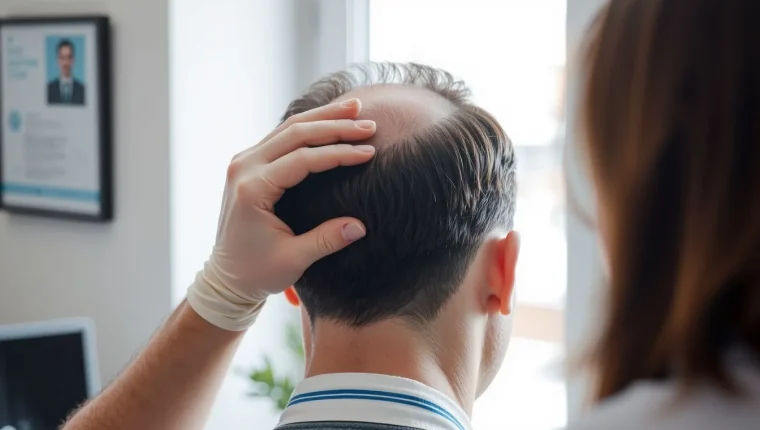
Noticing thinning hair or a receding hairline usually leads to searching for a clinic. That step matters more than most people realize. Choose a provider that can diagnose the cause and plan honestly, rather than one with the most advanced-sounding treatment. A clinic that skips proper evaluation can waste your money and delay effective care. Judging quality means checking credentials, understanding what a real consultation looks like, questioning technology claims, and recognizing warning signs before you commit. This guide covers these checks so you can compare clinics with confidence.
Why the Right Clinic Matters More Than the Treatment Itself

Most people begin their search the wrong way around. They read about a laser device, a transplant method, or a new topical formula, decide it sounds convincing, and then look for someone who offers it. This sequence feels efficient, but it quietly hands control of the outcome to marketing rather than medicine. A treatment is only as good as the assessment behind it, and that assessment depends almost entirely on who performs it.
The same procedure can produce very different results in two different settings. One provider screens candidates carefully, identifies the underlying cause of hair loss, and turns people away when a treatment is unsuitable. Another offers the identical treatment to everyone who walks through the door. The clinic, not the label on the device or the syringe, determines which of those experiences you get.
What a strong provider actually controls is broader than the procedure itself. It shapes the quality of the initial diagnosis, the honesty of candidacy screening, the structure of aftercare, and the realism of what you are told to expect. A clinic that gets these elements right will often steer you away from the treatment you originally wanted — and that is a sign of competence, not a lost sale.
This is why the search is better framed as choosing a diagnostic partner rather than browsing a menu of services. The right partner asks questions before recommending anything, explains why one option fits your situation and another does not, and stays accountable for how things develop afterward. Start there, and the treatment decision becomes far clearer.
What Credentials and Licenses to Verify Before Booking

Credentials matter because they are facts that can be checked against official records, not claims that live only on a clinic’s website. A clinic can describe itself as “leading” or “advanced” without any proof, but a medical license number, a registration status, and a recognized board certification either exist in a public register or they do not. For a patient, this distinction is practical: it separates a provider who is legally accountable for your care from one who is simply good at advertising.
Before you book, verify these items independently:
- Practitioner license: Confirm each doctor’s license number through your state or national medical board’s online lookup tool, and check for any disciplinary history.
- Clinic registration: Ensure the facility itself is registered as a medical or surgical practice where one is required, rather than operating only as a commercial business.
- Specialty training: Look for documented training in dermatology, plastic surgery, or a dedicated hair restoration fellowship, since general practice alone does not cover surgical hair procedures.
- Board certification: Verify certification with the issuing board directly, as some boards use official-sounding names without recognized accreditation.
- Procedure-specific authorization: Check whether the clinic holds any permits required for the specific techniques it offers.
Confirm every item through the regulator’s own database or a direct phone call, not through the clinic’s website or a sales representative. Screenshots and framed certificates displayed in a lobby are marketing materials; the official register is the verifiable source. If a clinic resists giving you a license number or the register shows a mismatch, treat that as a serious warning sign rather than an administrative detail.
Evaluating Consultation Quality and Diagnostic Approach
A rushed consultation and a diagnostic one can look similar from the waiting room. The difference shows up in what actually happens during the appointment. A sales-driven visit moves quickly toward a package, a price, and a start date, often before anyone has examined your scalp or asked about your history. A genuine diagnostic consultation does the opposite: it slows down, gathers information, and only then discusses treatment.
A proper hair loss evaluation examines several things. The practitioner should map the pattern of loss across your scalp, noting where thinning begins and how it has progressed. They should take a medical and family history, since thyroid issues, medications, hormonal shifts, and genetics all shape both cause and treatment. A close look at scalp condition matters too, because inflammation, scaling, or scarring point to different diagnoses than ordinary pattern baldness. When these pieces are missing, the consultation is guessing.
How findings are explained tells you just as much. A strong clinic walks you through what it observed, what it suspects, and which tests or steps would confirm it. You should hear more than one possible cause discussed, along with why certain options fit your case and others do not. If every visitor receives the same recommendation regardless of their situation, that is a signal worth noticing.
After the appointment, rate what you experienced. Were your questions answered directly? Did the provider explain reasoning rather than just assert conclusions? Did they recommend further evaluation when the picture was unclear, or push immediately toward a purchase? These criteria help you judge whether you received a real assessment or a well-rehearsed pitch.
Comparing Technology, Techniques, and Realistic Outcomes
Advertised technology tells you what a clinic owns, not what it can achieve for your specific type of loss. A laser cap marketed for “regrowth” behaves very differently on early diffuse thinning than on a receded hairline where follicles have already stopped producing visible shafts. Before you are impressed by a device name, ask what it is actually approved or intended to do, and whether your diagnosis matches that use.
Evidence questions separate real capability from marketing language. Ask what percentage of patients with your pattern see measurable change, over what timeframe, and how that is tracked. A clinic confident in its results will describe averages and ranges, not guarantees. Just as importantly, ask who is a suitable candidate — a strong sign of honesty is a clinic that turns some people away.
Every technique has limits, and a trustworthy provider states them before you pay. The table below compares common options by typical use and stated limitations.
| Technology / Technique | Typically Used For | Stated Limitations |
|---|---|---|
| Topical minoxidil | Early thinning; supporting existing follicles | Requires ongoing use; limited effect on dormant follicles |
| Oral medication (e.g., finasteride) | Pattern hair loss in appropriate candidates | Not suitable for all patients; possible side effects; needs medical review |
| Low-level laser therapy | Mild to moderate thinning as an adjunct | Modest results; not a stand-alone solution for advanced loss |
| Platelet-rich plasma (PRP) | Supporting density in selected cases | Variable response; multiple sessions; evidence still debated |
| Hair transplant (FUE / FUT) | Restoring density in stable, donor-rich areas | Depends on donor supply; cannot stop ongoing loss; surgical risks |
Realistic outcomes sit within ranges, not promises. A clinic that admits what a technique cannot do is giving you the most useful information you will get before committing.
Red Flags, Cost Traps, and Questions to Ask Before You Commit
Certain behaviors show up before a price is ever mentioned, and they are worth treating as warnings rather than quirks. A provider who cannot answer basic questions about your pattern of loss, who speaks only in guarantees, or who pushes you to book the same day is signaling how the entire relationship will run. Vague answers about who performs the procedure, what happens if results fall short, or how complications are handled are equally telling. When you ask for documentation and the conversation turns evasive, that avoidance itself is the answer.
- Pressure to decide immediately — limited-time discounts or same-day-only pricing exist to prevent comparison, not to reward you.
- Unclear total pricing — ask for a written quote covering consultation, procedure, follow-up, and revision, not a starting-from figure.
- Add-ons bundled as necessities — supplements, serums, or packages presented as required for the main treatment to work deserve scrutiny.
- Financing framed as urgency — credit offers tied to signing today shift focus from your diagnosis to a payment schedule.
- No clear revision or refund policy — a clinic confident in its work states in writing what happens if outcomes disappoint.
Before committing, ask who will perform each step, how many similar cases they handle monthly, what the realistic outcome range is for your situation, and what the total cost includes. Then watch how the answers arrive. Direct, documented responses suggest a provider you can work with; hesitation, deflection, or a return to sales language tells you to keep looking. A clinic that respects your questions is the one most likely to respect your scalp.
FAQs
What qualifications should I look for in a hair loss clinic before booking a consultation?
Look for a clinic that employs licensed, board-certified dermatologists or surgeons who specialize in hair restoration, since general practitioners may lack the focused expertise required for accurate diagnosis and treatment. Check that the clinic offers proper diagnostic tools such as trichoscopy or scalp biopsies, and that it presents a range of evidence-based options rather than pushing a single procedure. Verifiable patient reviews, transparent pricing, and a willingness to discuss realistic outcomes and potential risks are also strong indicators of a trustworthy provider.
How can I tell if a clinics treatment options are genuinely tailored to my type of hair loss?
A clinic that truly tailors its approach will first confirm your specific type of hair loss through diagnostic tools such as trichoscopy, blood tests, or a scalp biopsy before recommending any treatment. It should then explain why a given option suits your condition, stage, and medical history rather than offering the same package to every patient. Ask directly what alternatives exist for your diagnosis and whether the plan will be adjusted based on your response over time, since vague or one-size-fits-all answers are a clear warning sign.
What red flags suggest a hair loss clinic may not be worth your time and money?
Be wary of any hair loss clinic that guarantees specific results, pressures you into a same-day decision, or refuses to discuss the underlying causes of your hair loss before recommending treatment. A clinic that relies on aggressive sales tactics, hides pricing, or pushes expensive packages without a proper diagnosis is a clear warning sign. Legitimate providers offer a thorough consultation, explain realistic outcomes, and let you take time to consider your options. If the staff cannot clearly identify who will perform the procedure or what qualifications they hold, you should look elsewhere.